Classical Civilizations of China and the Western Hemisphere
Early World15
In both China and in the Western Hemisphere "classic" cultures had developed by the Common Era (CE), which inspired and influenced subsequent states and cultures in these areas for centuries. In the eighth century BCE China acquired the technology to refine iron from iron ore to produce iron tools and weapons through contact with Mesopotamia via the vast Eurasian Steppe. Iron tools enabled Chinese farmers to expand acreage. For example, farmers could now use these superior tools to transform tropical forests in the Yangtze River Valley in South China into rice fields and Irrigation canals. Consequently as food production increased, so did population. The end of the Bronze Age in China and the beginning of the Iron Age coincided with political changes within China. In 771 BCE the ruler of the Western Chou (or Zhou) Dynasty moved the capital from western to eastern China to escape incursions from warlike, nomadic tribes from the Eurasian Steppe. Consequently the Chou Dynasty became known as the Eastern Chou Dynasty. This flight from invaders resulted in a loss of prestige for this dynasty in the eyes of the vassal states. The vassals, who ruled the different states in China continued to recognize the Chou ruler as their overlord in name, but, just like Medieval European dukes and counts, they increasingly ran their domains as fully independent states. As the population continued to expand, these states competed for control of fertile farmland to support their populations.
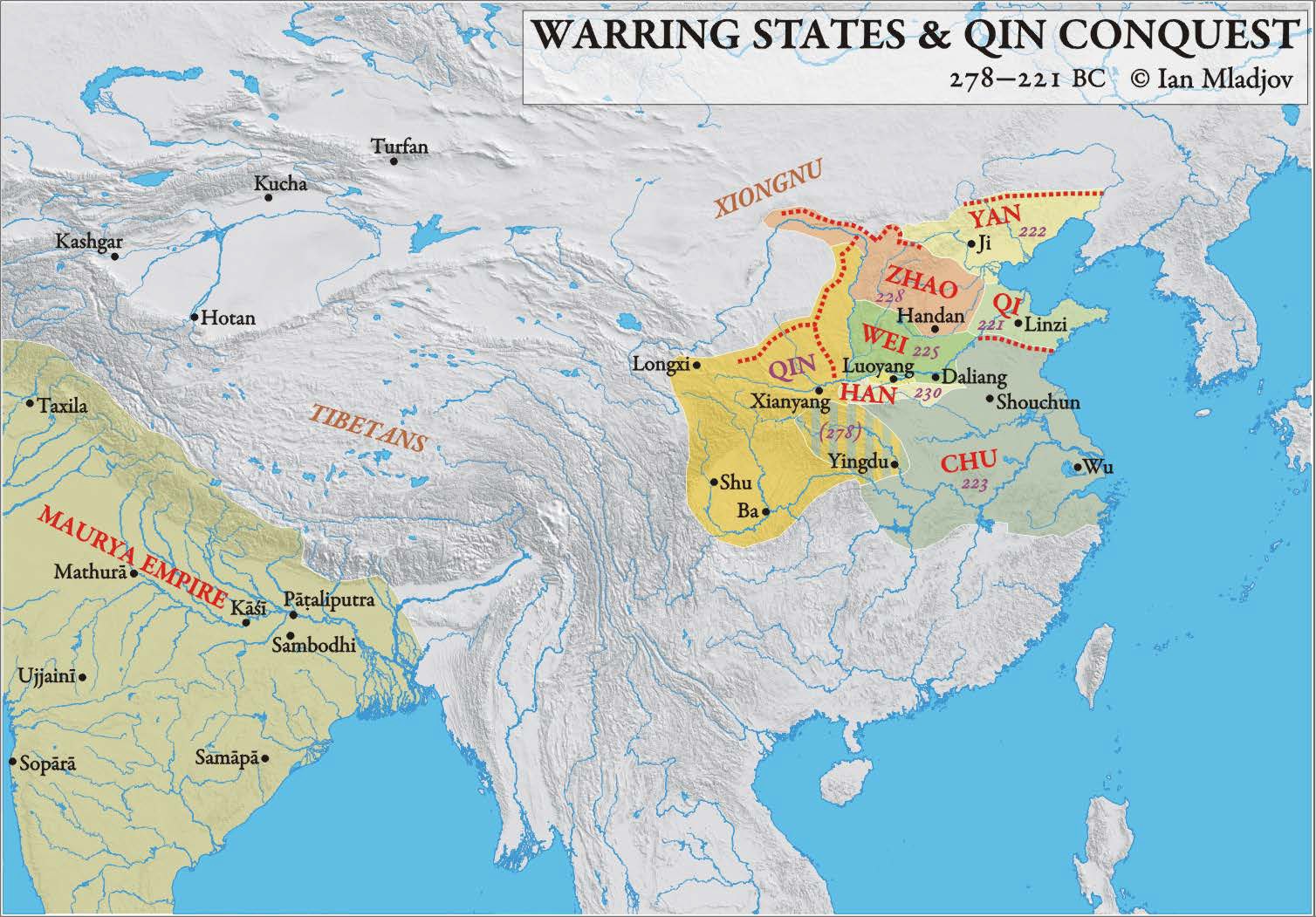
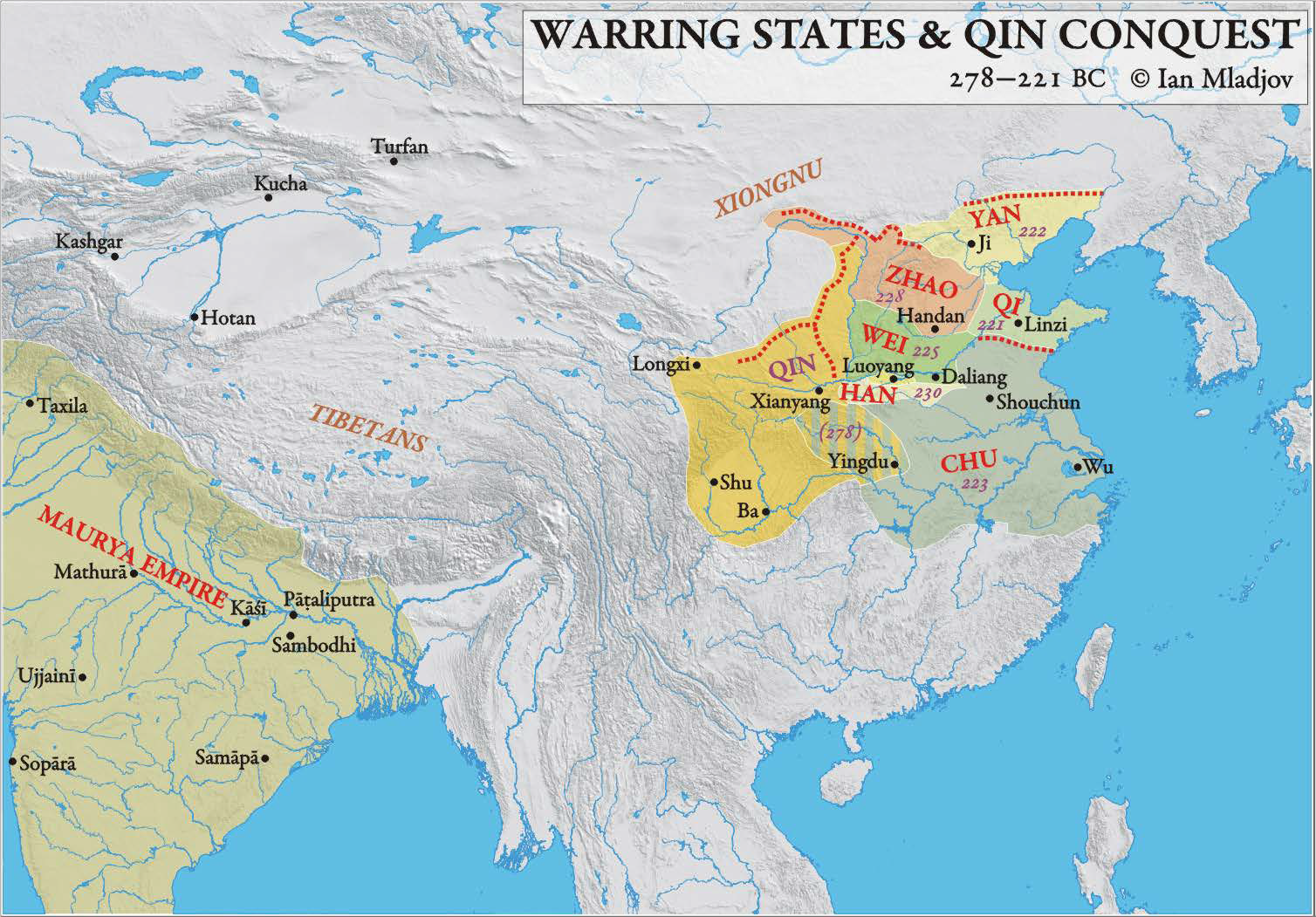
Map of Warring States Period
This competition for land resulted eventually in a constant state of war between these states in the Era of Warring States (481 - 256 BCE). These wars greatly disrupted Chinese society. The "dukes" that ruled these states in these wars discovered that large armies could be recruited from the common peasants and equipped with iron weapons. Such armies proved more effective in battle than the smaller armies of the earlier Bronze Age that relied on Chinese aristocrats with their horses and chariots. Moreover, rulers of these states also found that these same peasants could serve as loyal bureaucrats in their government. Consequently in this period Chinese aristocrats saw their privileged position as warriors and government officials under threat.
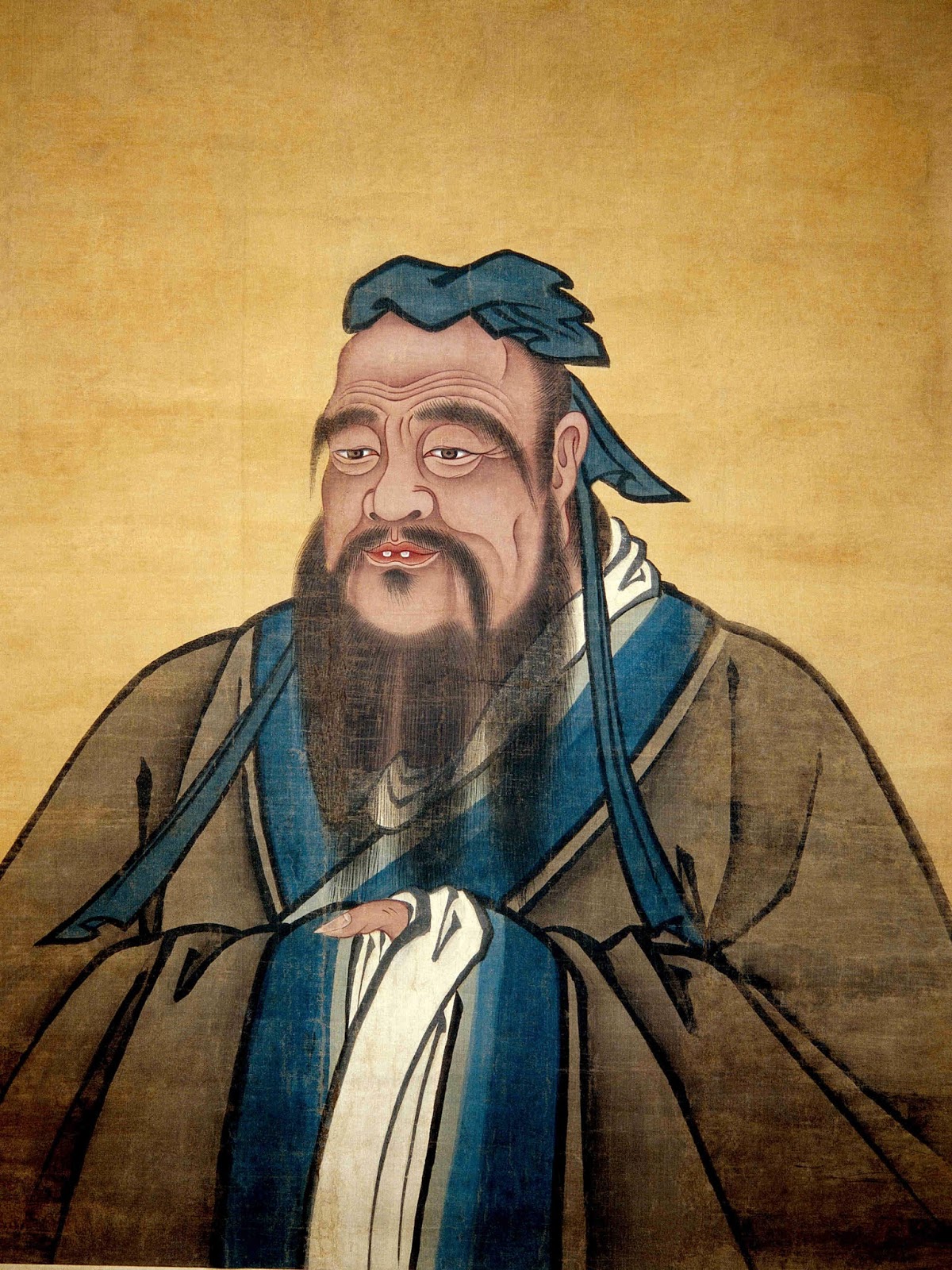
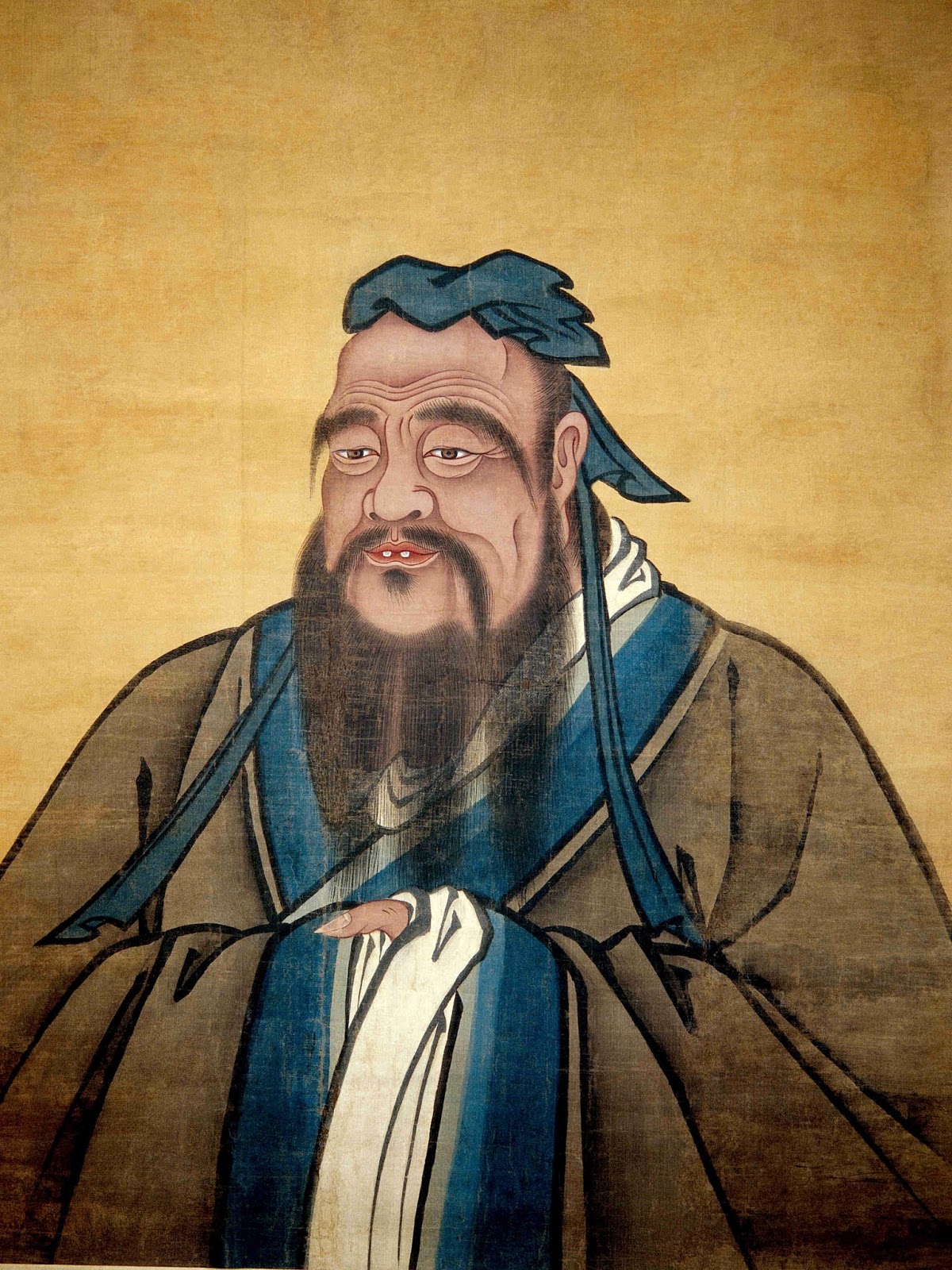
This period of war and social change in China coincided with a era of intellectual achievement, which witnessed the life and teaching of the Chinese sage, Confucius (551 - 479 BCE). Confucius was born into a family of Chinese aristocrats, but he came to assert that a true aristocrat or "gentleman" (Chun-Tzu) did not hold this exalted status due to inherited wealth or skills as a warrior, but based on one's education and personal character. Confucius developed a curriculum which he maintained would train a person to become such a gentleman. This curriculum included the intensive study of certain "classic" traditional works of poetry, history, and divination (study of signs and omens), which taught students to be good, upright "gentleman". Confucius maintained that people were generally good by nature, but they needed the guidance of a well educated, morally upright elite of such educated gentleman if government and society was truly to flourish. Confucius hoped that one of the rulers in China would adopt his educational program to train its bureaucrats. Confucius' efforts to achieve this goal were not successful in his lifetime, but Confucius did inspire his followers to continue his work. Confucius' students recorded their conversations with their teacher in a written work, the Analects.
In this period of war and social change, Confucius' followers competed with other philosophical approaches for support from Chinese rulers and the Chinese people. In the third century BCE Legalists, like Confucianists, wanted Chinese states to adopt their particular approach to government. Legalists, however, maintained that people are by nature evil. Consequently a strong state only by the threat and use of force could coerce the population into obeying laws to maintain law and order. Followers of Taoism (From Tao or "the way"), however maintained that governments were a corrupting influence. People achieved happiness not from a well ordered state, but from living a life in harmony with nature, a life of peace and quiet, living off the land. A certain Lao-Tzu was reportedly an ancient, legendary sage who taught the principles of Taoism, which also incorporated elements of ancient Chinese Shamanism. Shamanism is a term used by modern scholars to refer to certain specialists and their beliefs in different traditional cultures who claim to have the ability to contact and manipulate supernatural beings.
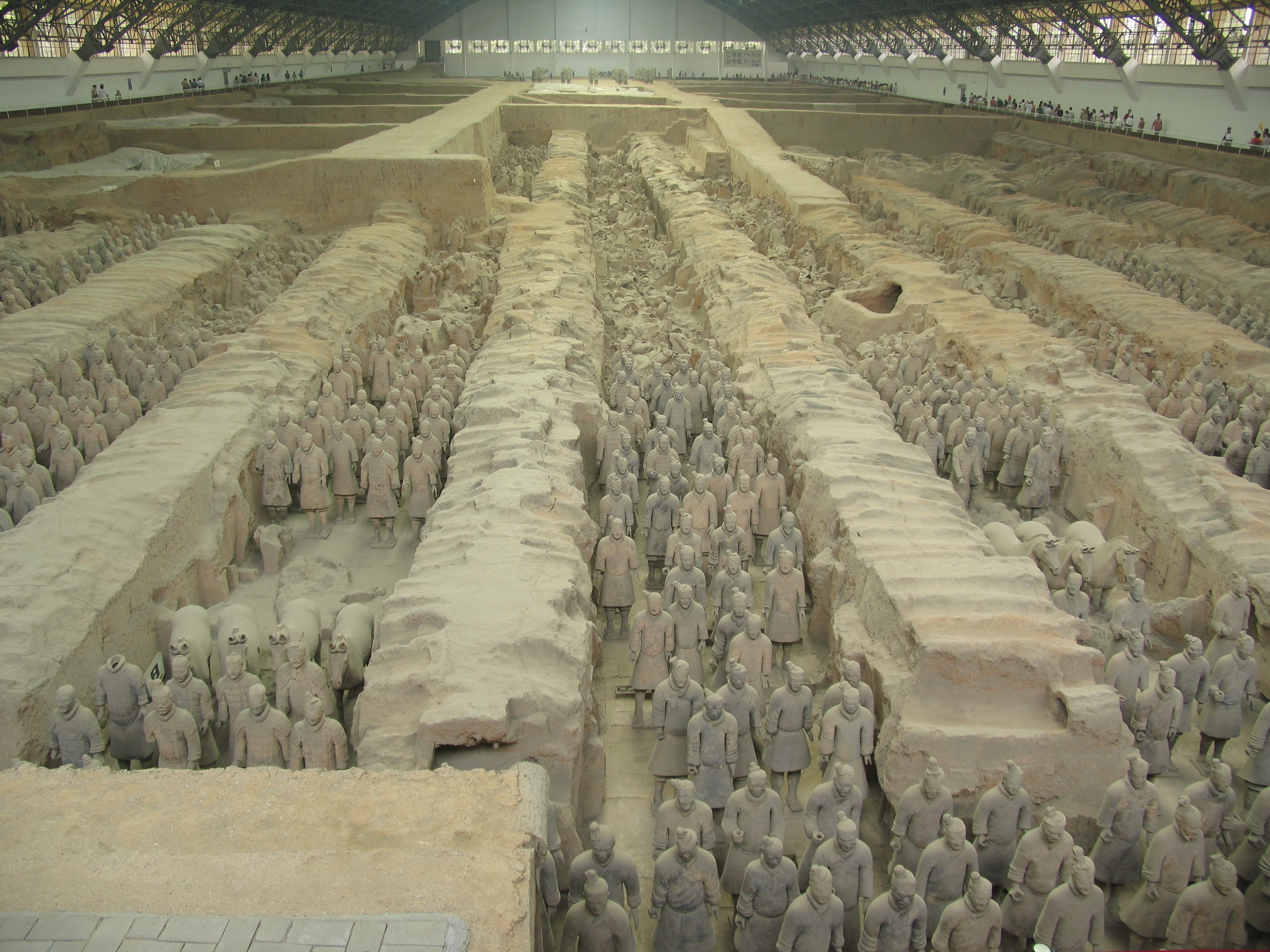
The Era of Warring States came to an end with the unification of China by the "Duke" or ruler of Chin, Quin Shi Huang (246-210 BCE). Chin or Qin was a region in modern northwest China that was located adjacent to the Eurasian Steppe. The area was therefore subject to frequent raids by warlike nomads from the steppe. Consequently, the rulers of Chin had developed an effective army to defend their domain from these attacks. Quin Shi Huang used this military to conquer the other states in China and replace the Eastern Chou Dynasty that had ended in 256 BCE. Quin Shi Huang realized that the Chou Dynasty had traditionally enjoyed the reverence and respect of the people. To win that loyalty for his new regime, he installed himself as the first "Emperor" (Huangdi), which was a new title. To create this title, Quin Shi Huang employed Chinese characters which in the past described great gods and heroes. By applying this title to himself, this first "Emperor" was indicating that he was the divine "Son of Heaven". All subsequent Chinese emperors would use this title. Quin Shi Huang also divided up his empire into provinces or Prefectures, which were governed by Prefects, whom he appointed, thus creating a centralized state bureaucracy. Quin Shi Huang embraced the Legalist philosophy of government, and he desired to create a strong, military state. Consequently, he increased the size of his army by drafting large numbers of peasants into this force, so that he could maintain law and order. He also drafted large numbers of peasants for public work projects such as irrigation canals and fortifications. Under this emperor fortifications were built along the northern border of the empire that separated China from the warlike tribes of the Eurasian Steppe. Eventually through the work of successive emperors over centuries, the Great Wall of China would arise. Another great construction work was the building of his tomb. In 1974 Chinese farmers uncovered this massive tomb. Qin Shi Huang ordered the fabrication of thousands of life-size terracotta statues of soldiers, court officials, and servants and placed these statues in his tomb with the belief that these figures would come alive in the land of the dead in the Underworld as his attendants.
Quin Shi Huang hoped to establish a dynasty of his own, but shortly after his death in 210 BCE, massive rebellions erupted among the Chinese peasants, who resented the high taxes and forced labor imposed on them by that emperor. Civil war also broke out among the generals and their armies who were competing with one another for the throne. In 206 BCE, one of these generals, Kao Tsu, defeated his rival generals and ascended the throne as emperor. Kao Tsu founded the Former Han Dynasty (206 -8 BCE). The emperors of this dynasty maintained the centralized state bureaucracy of the previous regime. but they replaced Legalism with Confucianism as the official philosophy of the state. Government officials now were required to receive training to become Chun-Tzu based on the educational program designed by Confucius. Positions in the state bureaucracy were now based on merit since appointments to these positions depended on how well candidates performed on exams, which tested their knowledge of Confucius' teachings. Over time these government officials earned the respect and admiration of people in towns and villages across China, who recognized these Chun-Tzu as community leaders. These Chinese "gentlemen" developed into a hereditary elite class in China since these Chun-Tzu had the wealth and resources to provide a proper Confucian education for their sons, so that sons usually followed in their father's footsteps and became government officials themselves. The ranks of this elite class were not however closed to new members. Chinese gentleman sometimes would provide scholarships for the talented sons of common farmers and artisans, so that they could receive an education, enter into government service, and become Chun-Tzu.
Hereditary succession did not always result in competent emperors assuming the throne. Ancient Chinese historians observed that the quality of successive emperors in a dynasty declined over time in a process which they called the "Dynastic Cycle". The system through which emperors chose their heirs and successors did not create a healthy environment for young members of the imperial family. Each emperor usually had several hundred wives from different parts of the empire. Emperors chose the son of the favorite wife as the heir and successor as emperor. This favorite wife and mother of the future emperor was known as the Dowager Empress, and wielded enormous power and influence in the government. Since any one of the many wives of the emperors could potentially be the mother of the next emperor, all the wives were kept secluded in the royal palace, so that they would not be tempted to sleep with any man other than the emperor. All males who worked in the palace as servants had their testicles removed as children as a protective measure. Among this group of women there were often conspiracies and plots against each other, as they all competed for the affection of the emperor and the position of Dowager Empress. Their sons therefore grew up in a toxic environment, whose only friends were loyal emasculated eunuch servants in the palace. When these young men became emperors, they often lacked the temperament and the leadership skills to govern as a result of their upbringing. Often they turned to the eunuchs who had been their friends in their youth to assist them in governing the empire. Unfortunately these eunuchs also lacked the education and skill to govern , and they often devoted their time in government to acquiring wealth for themselves. Consequently the later emperors of the Former Han Dynasty were weak and ineffective rulers.
Due to this weakness of the central government under these later emperors, powerful landowners at the local level were able to seize the land of their poorer neighbors and accumulate power for themselves as the central government was powerless to reign in their lawlessness. This situation would result in the end of the Former Han Dynasty. Wang Mang was a government official who was promoted to high positions in the state since he was a close relative of the Dowager Empress. In 8 BCE, Wang Mang deposed the last emperor of the Former Han Dynasty and assumed the position of emperor himself. Wang Mang's main goal as emperor was to restore the central government by breaking the power of large landowners. He ordered that the estates of these landowners be broken up and their lands be redistributed to poor peasants. Incursions from nomadic tribes from the Eurasian Steppe, the Hsiung No, disrupted Wang Mang's program for land reform. When Wang Mang was not able to crush these tribes, who may be related to the later Huns, his army lost confidence in his leadership. In 23 CE these troops assassinated Wang Mang. Ancient Chinese historians maintained that military defeats and natural disasters were signs that an emperor had lost the Mandate of Heaven. Without the blessing of the heavenly deities, an emperor lost his authority to rule.
The death of Wang Mang was followed by civil war as rival generals and their armies fought one another for the throne. In 25 CE Guangwu, who was a member of the Han family, defeated his rivals and ascended the throne as the founder of the Later Han Dynasty (25-220 CE). Under Guangwu Chinese armies defeated the steppe nomads and secured the eastern end of the Chinese Silk Road which sent Chinese silk westward across the Eurasian Steppes of Central Asia. The Later Han Dynasty, however, suffered from the same deficiencies as the Former Han Dynasty, and later emperors were weak and ineffective rulers. Over time local large landowners accumulated more lands and came to dominate at the local level as the central government weakened.
Without a strong central government and an effective military, China was susceptible to raids by steppe nomads. By the third century CE, China was invaded by different tribes such as the Hsien Pi, the Toba, and the Juan Juan. Historians maintain that these tribes were the ancestors of later steppe nomads, the Mongols, the Turks, and the Avars. By 220 CE, the Later Han Dynasty collapsed along with China's unity. In south China along the Yangtze River Valley, six different dynasties came to power between 220 and 589 CE. In northern China over that same period of time, sixteen different dynasties ruled. Some of these dynasties in the north were descended from steppe peoples who had settled in China and adopted Chinese language and culture. One such dynasty, the Northern Wei Dynasty (386-534 CE) included some emperors who converted to Mahayana Buddhism and patronized Buddhist teachers and missionaries. Buddhism, however, never replaced Confucianism as the dominant philosophy in China. All these dynasties desired to restore the glory and unity that China had experienced under the Han Dynasty. To this day ethnic Chinese people refer to themselves as Han people.
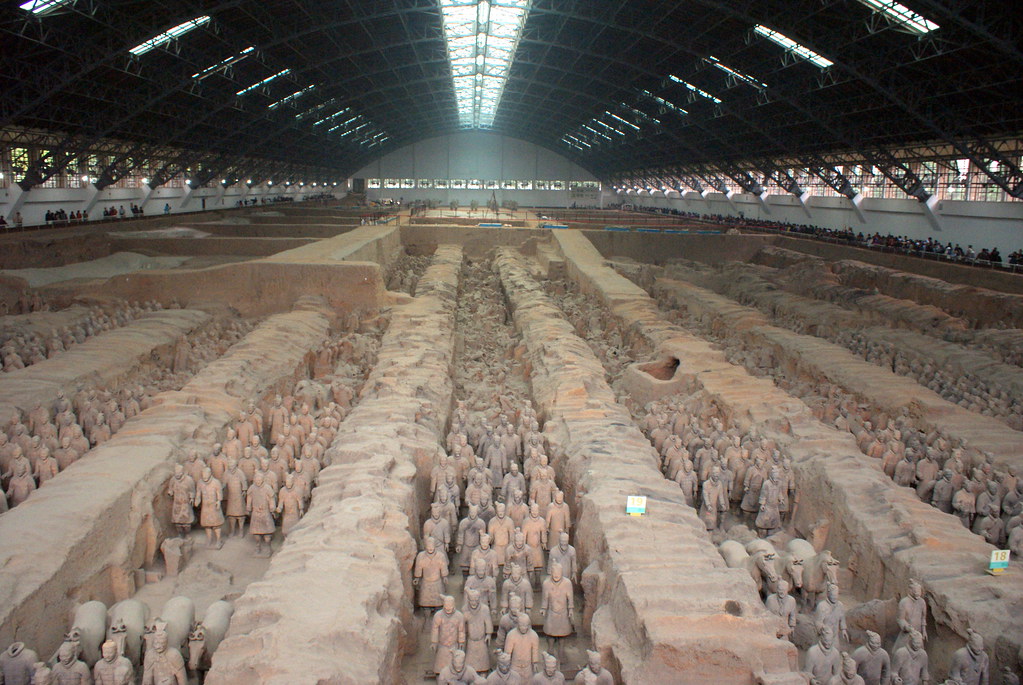
Tomb of the First Emperor
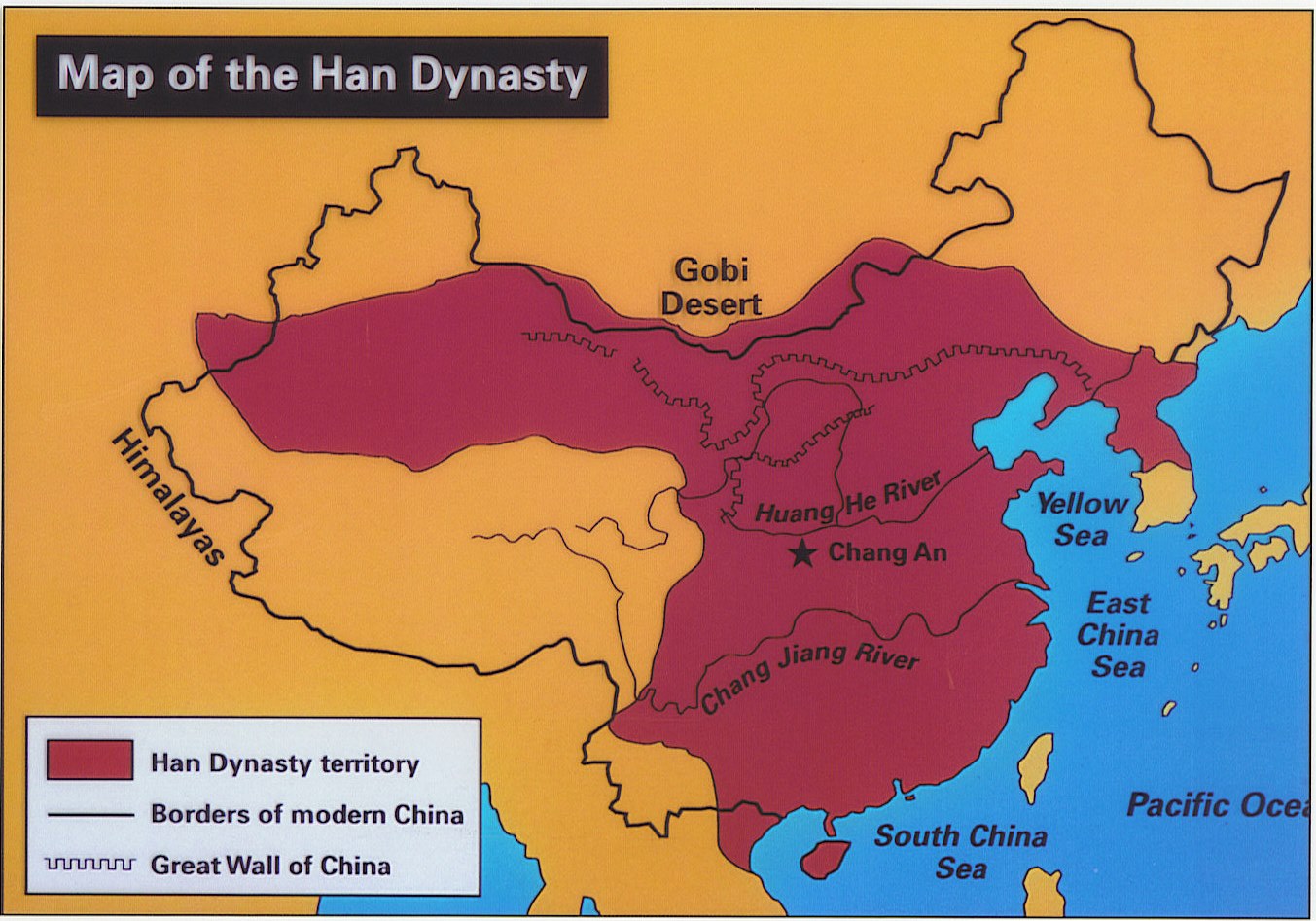
Map of Han Dynasty Empire
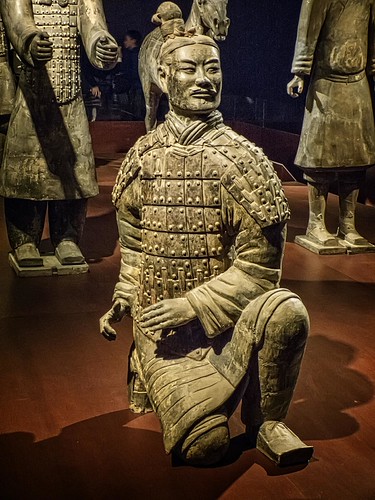
Close up of terracotta figure
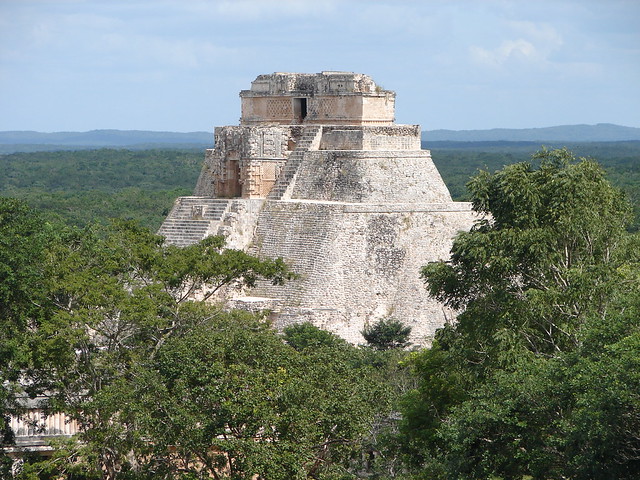
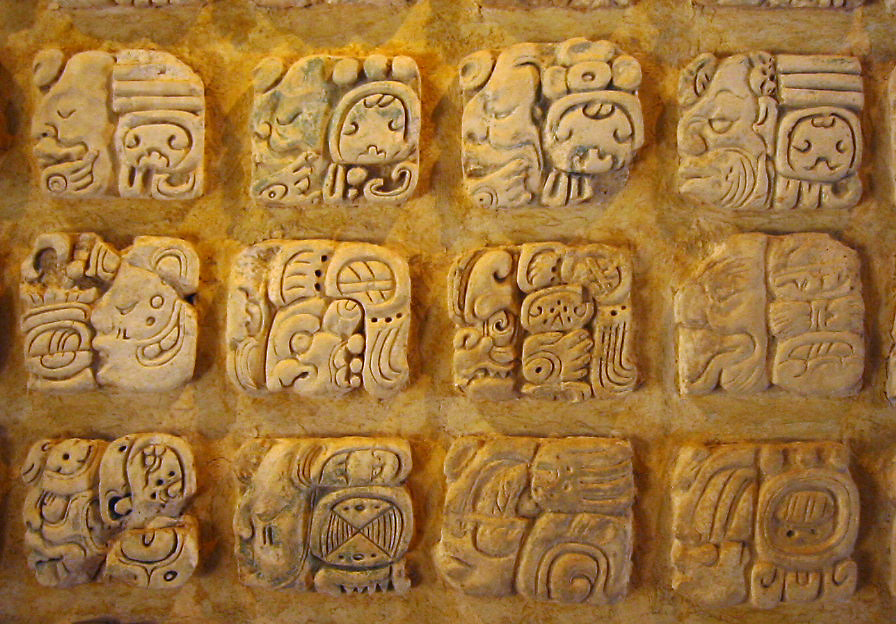
In the early centuries of the Common Era in Central America and Mexico great empires emerged which inspired later states in this region. The Mayan civilization covered the modern countries of southern Mexico, Guatemala, and Belize. Historians divide the history of the Maya into the Pre-Classic (400 BCE -300 CE), Classic (300 -900 CE), and Post-Classic (900-1500 CE) periods. The Pre-Classic period witnessed the development of Mayan civilization. At the site of Cerros (50 BCE) in the Yucatan Peninsula of southern Mexico and at the site of El-Mirador (50 CE) in Guatemala, archaeologists have uncovered early Mayan cities. Like the Olmec, the Mayans built their cities around ceremonial centers which were large stone pyramids constructed around a central plaza or square. The Mayans also invented their own written script, which historians refer to as Mayan Hieroglyphics. Modern scholars have deciphered this script, which is often preserved in stone inscriptions placed on square pillars. From these inscriptions, we learn that the Mayans all shared a common culture in respect to their language and religion, but were divided politically into numerous city - states ruled by priest-kings. These states were often at war with one another as some kings attempted to impose members of their families as vassal rulers over subject city-states. These priest kings in their cities also built temples to the gods and "ball courts" for the playing of a ritual game involving a rubber ball that is comparable to modern soccer and basketball.
In the Classic period, Mayan civilization reached its peak. This region was able to support a very large population through raised fields of maize and other crops and a complex irrigation system that drew water from natural springs (cenotes). By 500 CE, the city-state of Tikal in modern Guatemala had emerged as the dominant city-state, ruling over an empire numbering perhaps as many as 500,000 people. After 800 CE, there is archaeological evidence for population decline as well as warfare and mass destruction. Some historians argue that environmental degradation occurred due to extended drought or overuse of agricultural land and resulted in this population decline. Other historians have argued that constant wars alone led to this decline.
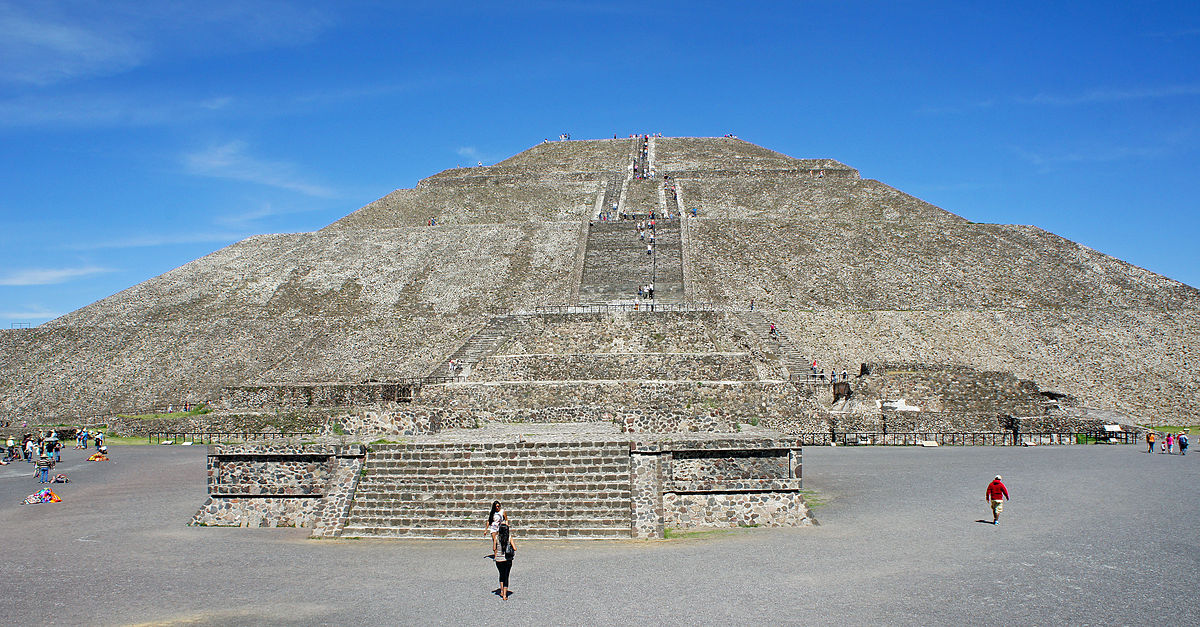
Contemporary with the Mayan Classic period was the civilization of the ancient city of Teotihuacon (100 -750 CE) which was located near modern Mexico City in central Mexico. The residents in this city constructed the massive Pyramid of the Sun around 100 CE, which remained the largest man made structure in the Western Hemisphere until modern times. People in Mexico when Europeans first arrived in the region 500 years ago reported that the builders of this pyramid were mighty warriors who struck fear in the hearts of their neighbors. Archaeology would appear to substantiate these traditions since there is archaeological evidence that the rulers of Teotihuacon forced people from other parts of Mexico to work as slaves in the fields surrounding the city. According to these same traditions the people of Teotihuacon among their gods especially honored the fertility deity, Quetzalcoatl, the "feathered serpent" god. Even after the city of Teotihuacon was destroyed by unknown attackers around 750 CE, the people in this region continued to worship this deity.
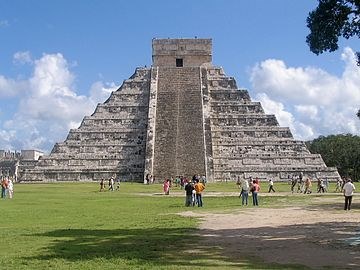
Mayan Pyramid
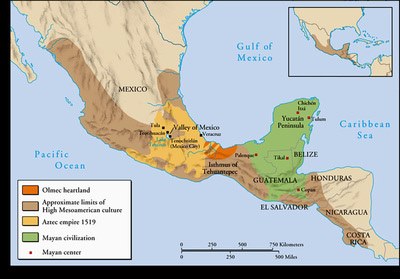
Ancient Mesoamerica

Mayan Hieroglyphics
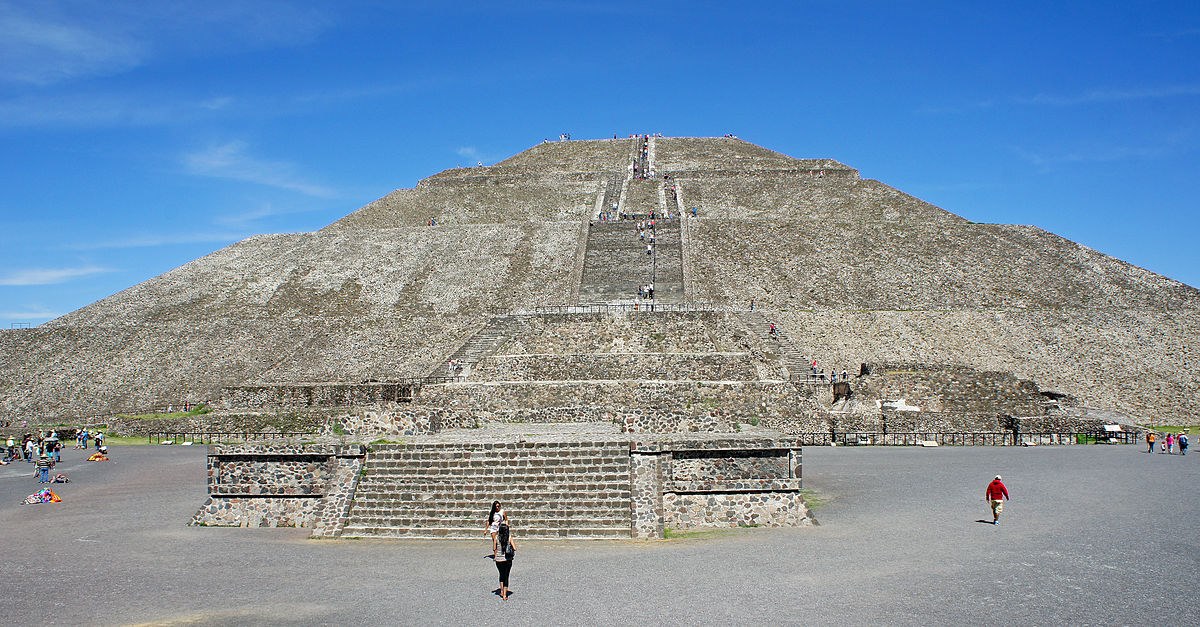
Pyramid of the Sun
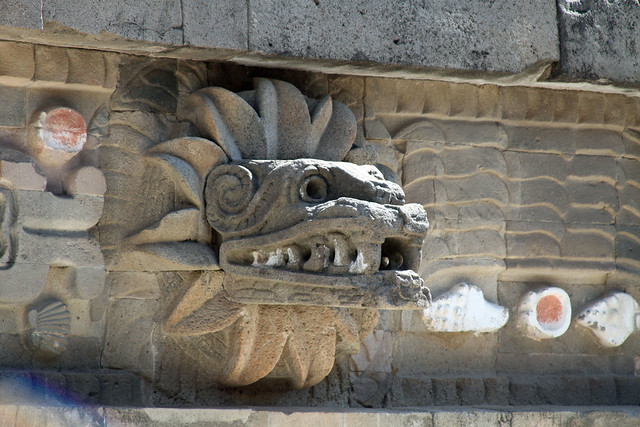
Quetzalcoatl
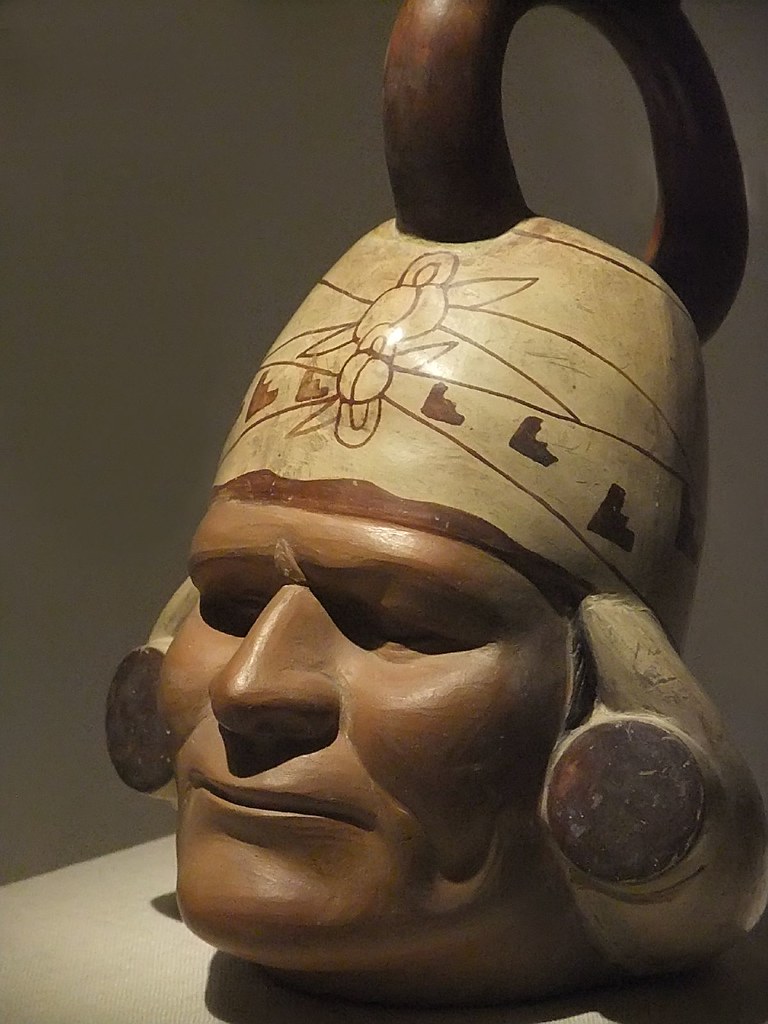
The Moche Civilization (100-700 CE) emerged in modern Peru in the fertile river valleys between the Andes Mountains and the Pacific Ocean. The Moche at sites such as Cerro Blanche in 100 CE constructed massive pyramids of brick that were brightly colored and served as places of religious ritual and the palaces of the ruling elite. Moche paintings from their well executed ceramic vessels often portray men in colorful costumes torturing and executing their human victims. In 1987 archaeologists at the site of Sipan in Peru uncovered the tomb of a wealthy man who was dressed in such an elaborate costume. Historians now maintain that the Moche was ruled by priest-kings and elite priest-warriors who engaged in human sacrifices. After 700 CE the Moche cities were deserted. Historians maintain that catastrophic rain, that is still an occurrence in Peru, destroyed the irrigation systems that supported agriculture in the region, and famine and population decline followed.
In the high mountain valleys of the Andes in modern Peru and Bolivia, the civilization of Tiwanaku developed around 600 CE. The people of this region learned how to raise maize and potatoes in raised fields even in these cold, high elevations. The city of Tiwanaku and its surrounding area may have had a population as high as 50,000. The people built ceremonial centers for their religious rituals that consisted of a large, elevated stone platform with ceremonial gates with carved stone reliefs. The people of Tiwanaku especially worshiped the creator god Viracocha. The later Inca would view the people of Tiwanaku as their ancestors and would continue to worship Viracocha centuries after Tiwanaku declined around 1000 CE.
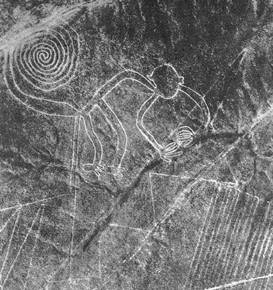
In the river valleys of southern Peru the Nazca civilization (100 -800 CE) flourished. The Nazca used wool from Alpacas and Llamas to produce colorful garments, which they used to wrap their dead in their tombs. They also built pyramids of brick in their ceremonial center. The Nazca are most well known for the construction of giant geoglyphs of various animals and other strange creatures that they etched in the dry desert soil in area adjacent to this ceremonial center.
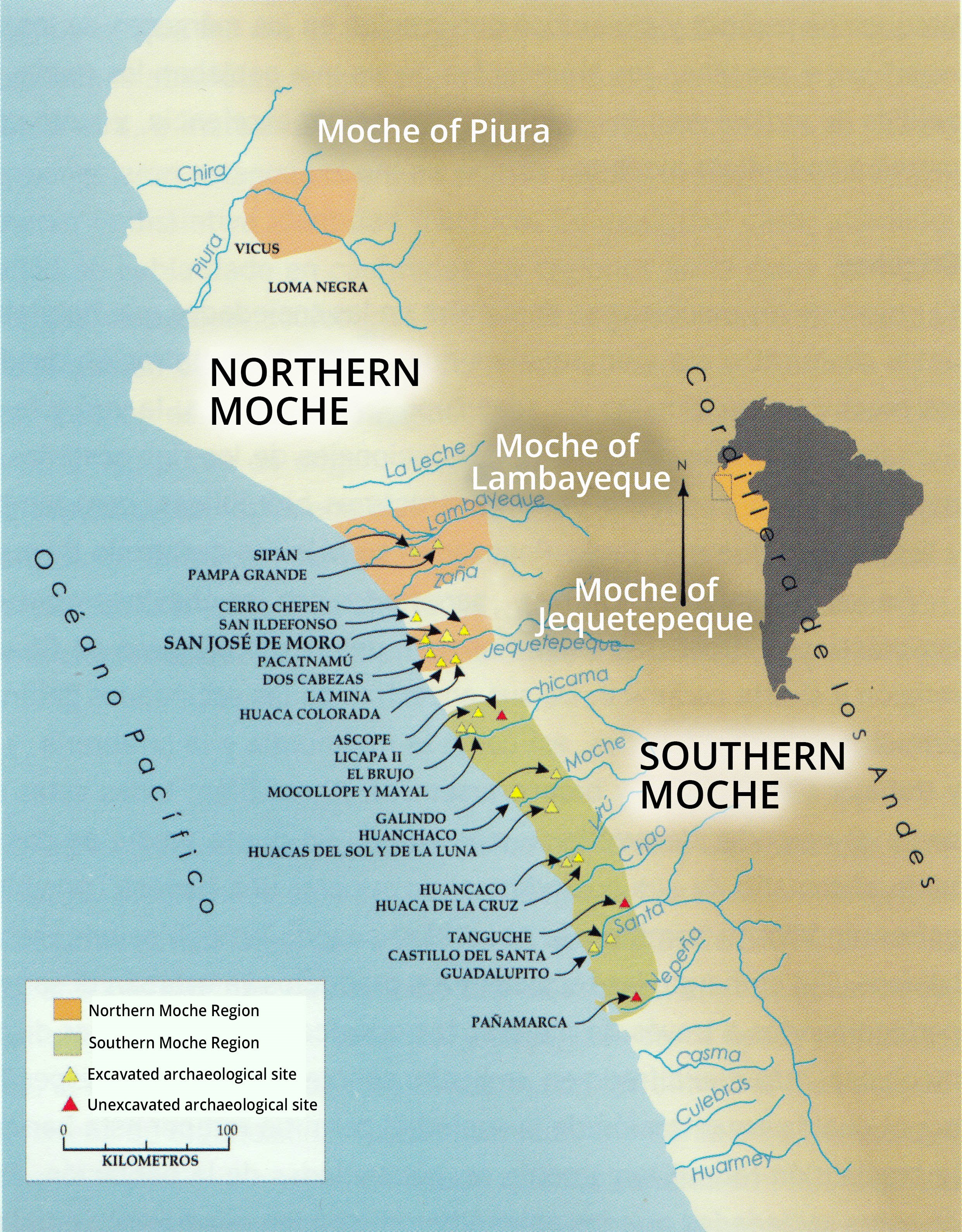
Moche Map
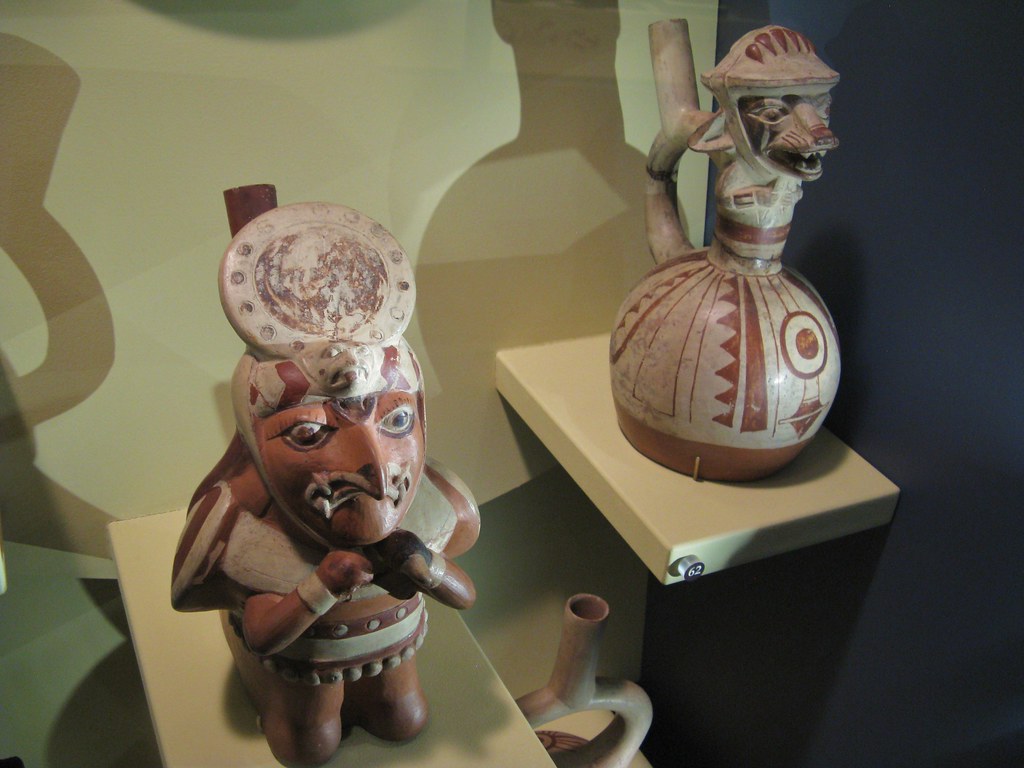
Moche Ceramics
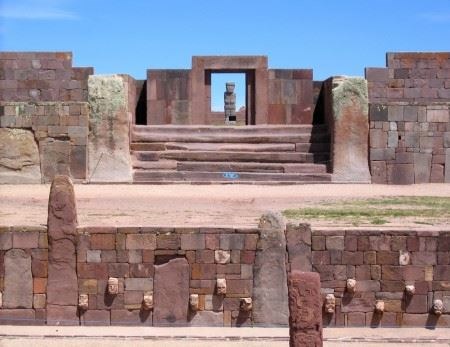
Tiwanaku Ceremonial Center
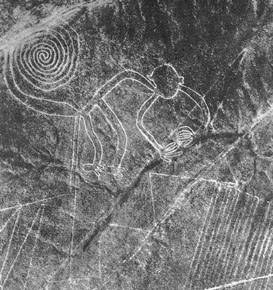
Nazca Geoglyph