Classical India
Early World14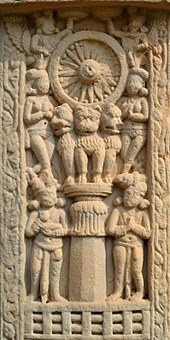
Following the collapse of the Haruppan civilization and the migration of the Aryans into the Indus River Valley from Central Asia around 1600 BCE, complex culture in the region disappeared until the advent of the Iron Age (800 BCE) when complex culture revived and expanded south into the Ganges River Valley. The centuries that followed witnessed the emergence of new states and empires and the production of "classic" works of poetry, philosophy, and art within the subcontinent of India, which would inspire and influence cultures across East Asia especially. The new religion of Buddhism, for example. which arose in India in this period, is practiced today by just over one-half billion people.
The Aryan people that migrated into the Indus River Valley in the Bronze Age produced hymns to praise their gods. This collection of hymns, the Rig-Veda was originally orally composed and transmitted from generation to generation by poets since writing didn't reemerge in India until sometime after 500 BCE. Historians maintain that the oldest of these hymns may date as far back as 1400 BCE. Hindus still today view these hymns as holy scripture as these hymns praise such deities as Varuna (sky god) and Indra (rain and war god), which Hindus worship. Historians also study the Rig-Veda to reconstruct the Aryan society of the Late Bronze Age "Vedic" culture. Based on these studies, these Aryans possessed a culture more simple than complex. Rajas were warlords who measured their wealth in cattle and led their tribes into battle, usually to steal cattle from rival tribes. These Rajas also took pride in their horses and chariots.
After 800 BCE, the ability to process Iron from Iron ore and produce iron weapons and tools first appeared in India probably through trade with Mesopotamia. The introduction of iron tools enabled farmers to advance to the south into the Ganges River Valley and transform thick tropical forest into fertile rice fields. Consequently, the population increased and conditions arose for the reemergence of cities and complex culture. Archaeologists at Ujjain in the upper Ganges River Valley in central India have uncovered a large city that around 600 BCE was protected by massive brick walls. The period, 800-600 BCE, saw the production of great epic poems in India, which like the Rig-Veda, were originally composed and transmitted orally. The Ramayana, for example, recounts the great feats of the hero Rama. Like the Rig-Veda, Hindus today view these epics as holy scripture.
Historians have examined these epics to understand the society of this period. By this time the Raja was not merely a war chief, but a king ruling over an organized kingdom. Historians maintain that the Hindu castes (Varna) developed in this period. In ancient Indian society, one could only be born into a distinct social class since movement from one social class to another was impossible. This society recognized four distinct castes, Brahmans (priests), Kshatriya (warriors), Vaishya (artisans, merchants, farmers), and Shudra (tenant farmers, slaves, landless laborers). In this society, the Brahmans and Kshatriya were the elite, aristocratic classes.
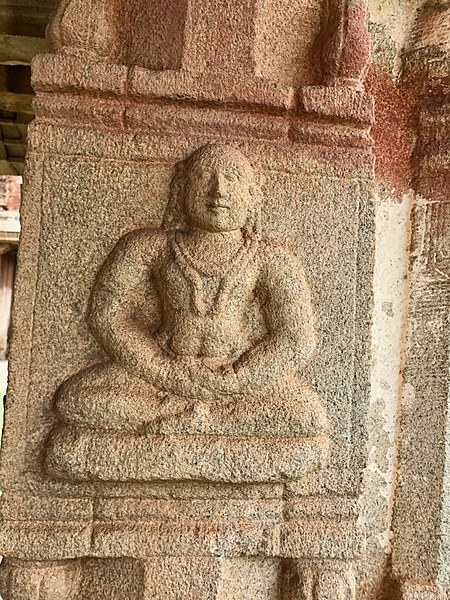
The Age of the Upanishads was a period (600 -400 BCE) of intellectual achievement, in which the Upanishads were composed. The Upanishads were prose works that preserved the dialogues between a renowned Yogi (sage/teacher) and students concerning philosophical topics. This same period also was marked by dramatic political and economic changes. Around 500 BCE, The Persian Empire expanded to the Indus River Valley. The Persians introduced a written script to India. The Persian government used the Aramaic script that was based on the Phoenician alphabet for record keeping in their empire. In India this script was the basis for a new written script, Sanscrit, which the Indians used to record in writing the Rig-Veda, their great epic poems, and the Upanishads. The Persians also introduced coinage into India. Together writing and coinage stimulated economic growth. At this time, the first powerful Indian empire emerged, the kingdom of Magadha with its capital at Pataliputra along the Lower Ganges River.
The Upanishads created a philosophical system for the Hindu religion, which contrasted ultimate reality (Brahman) from the sensory world of illusion (Samsara) that human beings perceive with their senses. Each human soul (Atman) was trapped in Samsara. Even death was no escape from this sensory world since the soul was reincarnated or reborn into a new body. Karma or cosmic justice determined if a person would be reincarnated to a better or worse life. However if a person lived a life in harmony (Dharma) with nature and other human beings, that person could achieve release (Moksha) from Samsara and achieve unity with Brahman, thereby avoiding reincarnation.
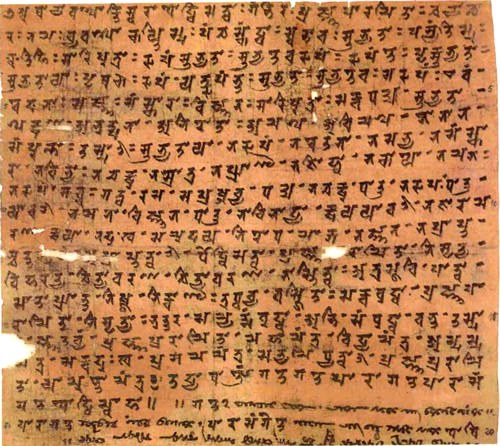
Sanscrit
The Age of the Upanishads also was the period of the religious teacher and philosopher, Siddhartha Gautama (566 – 486 BC), the "Buddha" or "Enlightened One". He reportedly was a young Raja or prince in northern India, who gave up his privileged life with his wife and family to wander in search of the meaning of life. Eventually, after much suffering, he achieved enlightenment as the Buddha and soon attracted many followers. His teachings were transmitted orally by his followers for several centuries until they were written down beginning in the third century BCE. Buddha's teaching were encapsulated in the "Four Noble Truths". First, life is full of suffering. Second, this suffering results from a person's desires. Third, happiness comes from stopping desire. Fourth, the Dharma of Buddha leads to Moksha and Nirvana. According to Buddha, a harmonious life (Dharma) was one of compassion for others and self-sufficiency. He stressed that human beings should live a life of moderation ("The Middle Path") and suppress strong desires for wealth and physical pleasure. Through such a life, a person could achieve release (Moksha) from the cycle of reincarnation and become one with Nirvana (reality). His followers who were especially dedicated to Buddha's teachings lived in communities, like Christian monks, that were often located near a Stupa, a circular mound that contained relics (i. e. clothing, body parts) of the Buddha or other Buddhist holy men.
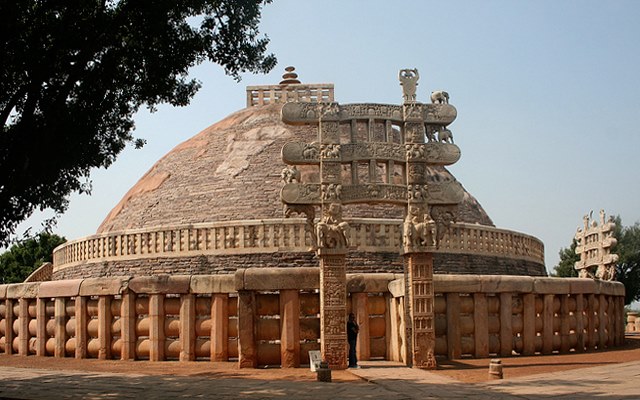
Stupa
Beginning in the fourth century BCE, the Indian subcontinent was dominated by a series of great empires, culminating in the mighty Gupta Empire of the fourth century CE. The first of these empires was the Mauryran Empire. Chandragupta (321 - 297 BCE) founded this empire. He seized the throne of Magadha and from there advanced westward and conquered the Indus River Valley, which was in chaos due to the death of Alexander the Great and the wars of his successors. The Mauryan Empire was organized very much like the Persian Empire in that the king appointed governors over the provinces who collected tribute from the provinces for the king. Chandragupta's main adviser during his reign was a Brahman priest, Kautilya, who was reputedly the author of the Arthashastra, which became an authoritative manual for government in India and in southeast Asia in the centuries that followed. In this work Kautilya maintained that the key element in good governance was a strong ruler who had the support of an army to punish wrongdoing and maintain peace. Chandragupta's grandson Ashoka (272 -230 BCE) converted to Buddhism and used the resources of his empire to spread his religion. For example, he had the teachings of Buddha inscribed on stone pillars which he erected across his empire. Soon after the death of Ashoka, the Mauryan Empire collapsed, as its provinces broke free and became independent kingdoms.
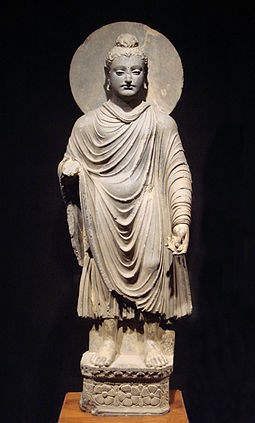
Over the next century, the dominant state in India was the Kingdom of Bactria. Bactria (modern eastern Afghanistan) was a province of the Hellenistic Seleucid Empire. In 264 BCE the Seleucid governor of Bactria, Diognetus, rebelled against the Seleucid king and declared himself king of Bactria. Around 200 BCE, the Bactrian king invaded and conquered the Indus River Valley. The most famous of the Bactrian kings over India was Menander (around 150 BCE), whose kingdom stretched from the Indus River Valley to the upper Ganges in central India. Like Ashoka, Menander converted to Buddhism and became a Buddhist holy man known in India by the name of Milinda. The Greek colonists who settled in Bactria and in India introduced their arts into the region, which influenced Indian sculpture, painting, and architecture. By the end of the second century BCE the Bactrian kingdom collapsed due to constant civil wars between rival claimants to the throne, whose existence is only known by the coins that they issued as kings.
In the first century BCE, northern India was subjected to repeated incursions by nomads from Central Asia who established kingdoms in the region. The Pahlavas were Parthians originally from the Iranian plateau whose kingdoms in the Indus River Valley were vassal states of the Parthian Empire. The Sakas were another Iranian tribe from Central Asia who were the enemies of the Parthians. Around 50 CE another Iranian tribe from Central Asia, the Kushans invaded the region from what is today northwest China and carved out a large empire that included the modern countries of Afghanistan, Pakistan, and northern India. The rulers of this Kushan Empire (50 -250 CE) profited from their control of the Silk Road through Central Asia, which brought Chinese silk to the Roman Empire. The Kushan rulers also controlled the ports along the Indian Ocean in northern India where Roman merchants purchased Indian spices. Gold and silver from the Roman Empire in this way enriched the treasuries of Kushan rulers.
Around 150 CE, the Kushan ruler Kanishka converted to Buddhism and sent out Buddhist missionaries across Asia. By this time Buddhism had evolved into two different forms, Mahayana ("greater vehicle") and Hinayana ("lesser vehicle") Buddhism. Hinayana Buddhism adhered closely to the original Buddhism of Siddhartha Gautama and became the dominant form of Buddhism over much of southeast Asia. Kanishka converted to the Mahayana Buddhism, which would become the dominant form of Buddhism over northeast Asia, including eventually China, Korea, and Japan. Mahayana Buddhism maintains that certain superior beings who had been released from the cycle of reincarnation, willingly delayed union with Nirvana, so that they could help human beings live better lives. These superior beings were Bodhisattvas or "saints". Followers of Mahayana Buddhism worship and adore a particular Bodhisattva and hope through this faith in the Bodhisattva for guidance and aid from this entity.
In the third century the wars and chaos in the Roman Empire disrupted trade for the Kushan Empire, whose rulers lost the steady stream of precious metals from the Roman Empire. This financial loss coincided with the rise of the Sassanid Persian Empire. Under the reign of the Shah, Shapur I (239 -272 CE) this Persian Empire expanded to the Indus River Valley, and the Kushan Empire fell.
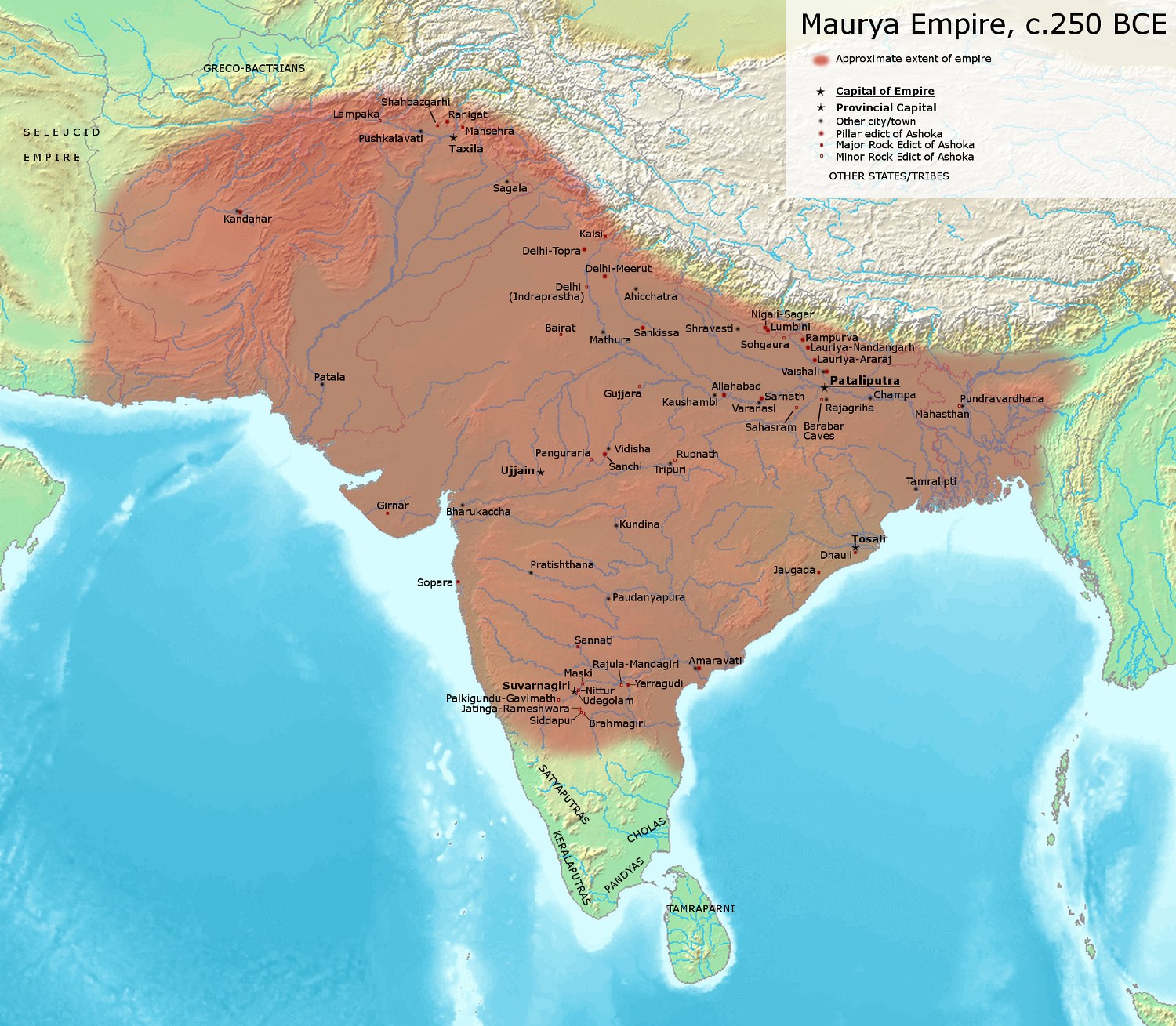
Mauryan Empire
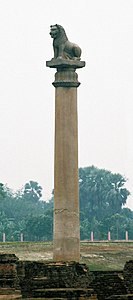
Pillar of Ashoka
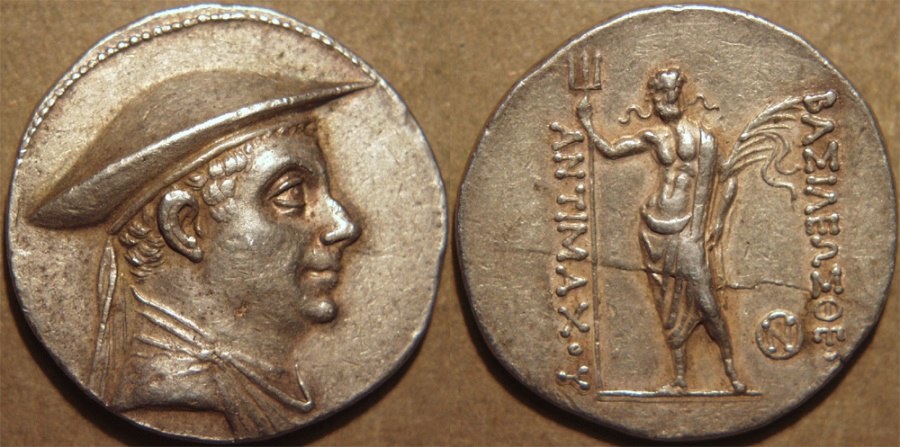
Coin of Bactrian king
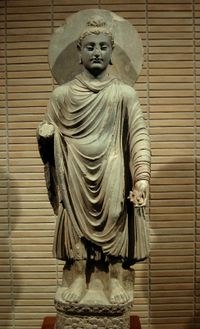
Greco-Buddhist sculpture
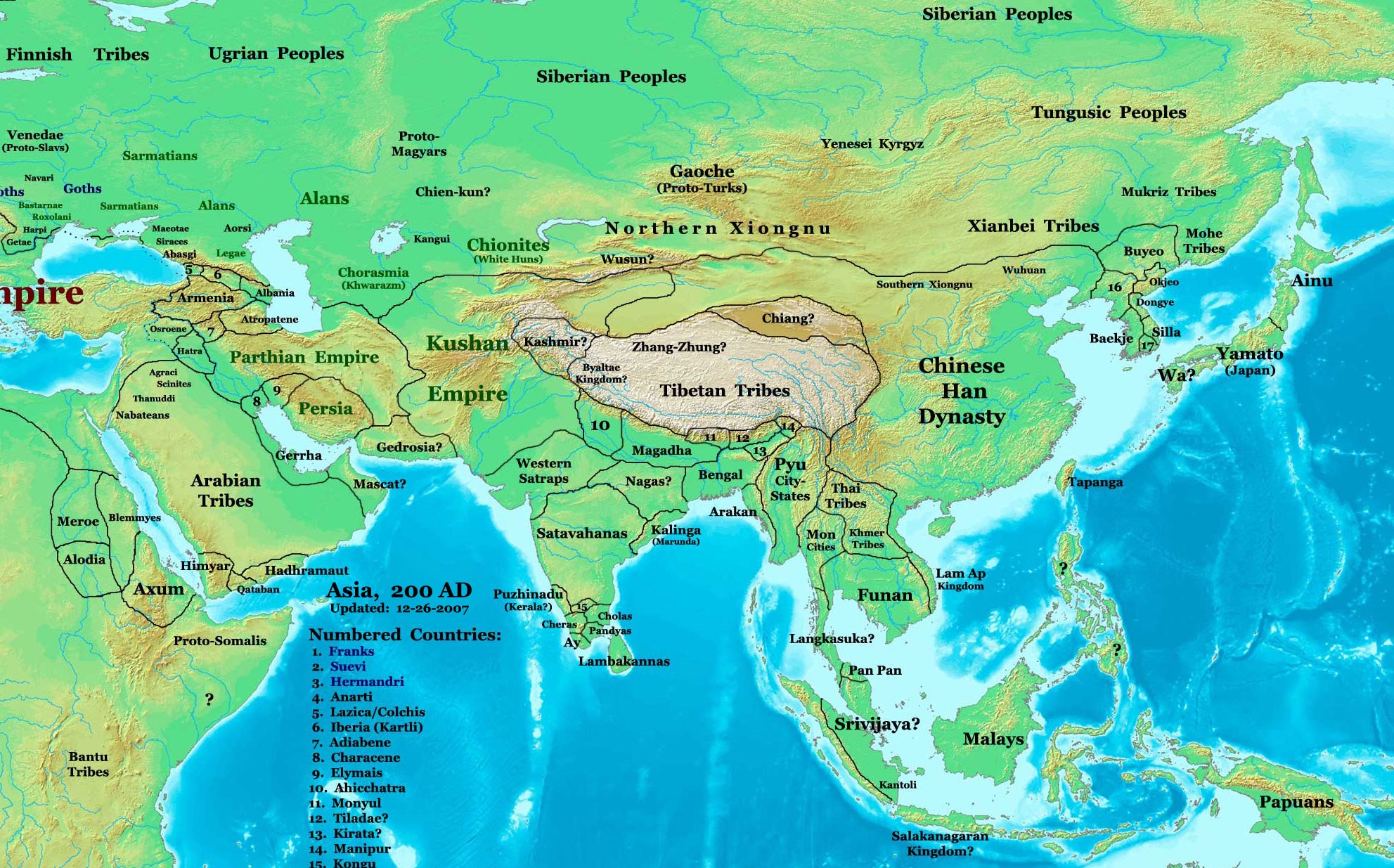
Kushan Empire
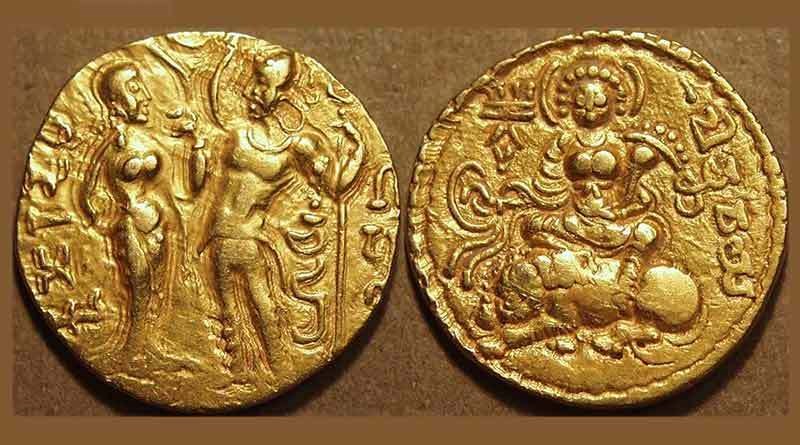
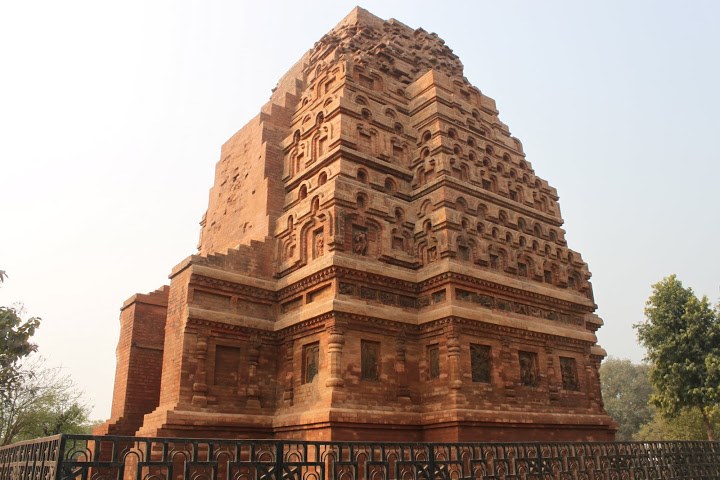
After the collapse of the Kushan Empire in the third century, the Gupta Empire in northern India arose in the fourth century. Chandragupta II (330 CE) was the king of ancient Magadha, the former capital of the Mauryan Empire. Chandragupta II through his military campaigns forced neighboring kings to be his vassals and pay him tribute. Under the Gupta Empire India over the next century experienced peace and prosperity. Temples were constructed, and poetry and songs were composed that served as models for artists and poets for centuries. In this period members of the Brahman (priestly class) attended schools, where they studied diverse subjects such as philosophy, mathematics, and medicine. This period witnessed the invention of "Hindu" numerals (0,1,2,3...). The invention of the number symbol for zero (0), allowed this numerical system to be far superior to previous systems. The use of this numerical system also made possible the invention of Algebra by Indian mathematicians.
Around 450 CE Huns from Central Asia invaded India and shattered the Gupta Empire. These Huns settled in northern India , and the vassal states of the Gupta Empire became independent. However, the glory and achievements of the Gupta Empire were not forgotten. Harsha (606 - 648) briefly united the kingdoms of the former Gupta Empire in northern India. After his death, this empire disintegrated and afterwards India was divided into numerous small kingdoms ruled by princes known as Rajputs ("little kings") since their domains were so small.
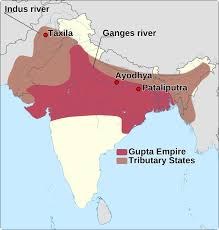
Gupta Empire
Gupta Temple