The Islamic World
Early World17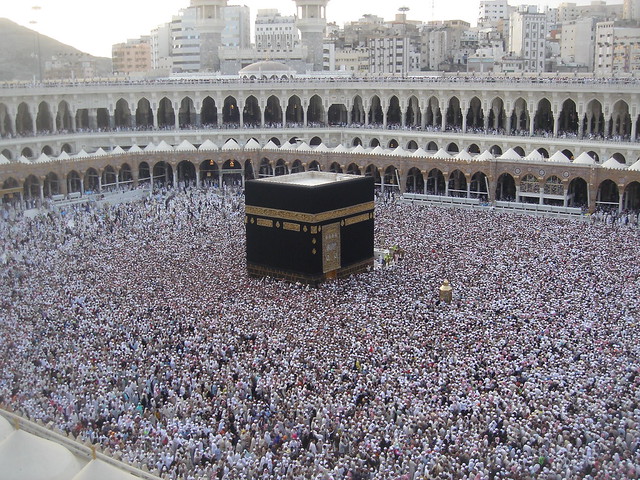
Several centuries following the fall of the Roman Empire, the new religion of Islam among the Arabs of the Arabian Peninsula sparked the rise of a new distinctive Arab civilization, which drew from the traditions of Classical Greece and Rome. During the era of the Roman and early Byzantine Empires, most Arabs inhabiting this peninsula were nomads, living in tents and raising livestock. The Arab Bedouin tribes even today maintain this traditional lifestyle. Some Arabs, however were in contact with these empires. In the second century CE, the Roman Empire conquered the Arab Nabataean Kingdom (modern Jordan), and Arabs fought in the Roman army. In the third century CE Philip "the Arab" was briefly a Roman Emperor. By the sixth century CE the cities of Mecca and Medina in the Arabian Peninsula were wealthy trading cities, where caravans stopped and rested on their way to bring spices and other luxury goods to the Byzantine Empire. Mecca was also a holy city among Arabs as it was the location of the Kaaba, a sacred stone, which Arabs venerated since they believed that their gods had sent the stone from the heavens. In the sixth century the Prophet Mohammed (570 - 632 CE) was born and raised in Mecca.
The religion of Islam is based on the teachings of the Prophet Mohammed. In his youth Mohammed was a merchant in Mecca. Over the years he came to believe that the Arab sky deity, Allah was the same God worshiped by Jews and Christians. By the time Mohammed reached middle age, he spent increasingly more time alone in prayer to Allah. While in prayer, Mohammed claimed that the Archangel Gabriel appeared to him in a vision and ordered him to write down what he was told. For the rest of his life, Mohammed continued to have these visions. Shortly after Mohammed's death in the mid-sixth century, these writings of Mohammed were assembled into a single book, the Koran (or Qoran), which became holy scripture for Islam and even today can only be read in the Arabic in which it was originally written. All translations of the Koran into other languages are "intepretations" of the Koran.
When Mohammed begin to preach in Mecca after these visions occurred, the local authorities feared that Mohammed's teachings were a threat to city's status as a holy city. Since his life was in danger in Mecca, in 622 CE Mohammed fled south to the city of Medina. Here he enjoyed great success in converting the city's population to his religion, and the city formed the first Umma or "community" of Muslims ("followers of Islam"). Mohammed became the political and spiritual leader of this community. The flight or Hijrah of Mohammed for Muslims marks the beginning of a new epoch in world history with 622 CE as year one of this new era. In 630 the cities of Medina and Mecca went to war. After Mohammed's army captured Mecca, Mohammed "purified" the Kaaba by removing the idols that had been erected around it. According to Mohammed, Mecca was the holy city for Muslims since Allah had sent the Kaaba to Abraham and his son Ishmael, who was the ancestor of the Arab people. The Old Testament had told the story of Abraham and his son, Ishmael, but made no mention of the Kaaba. Before his death in 632 CE, Mohammed successfully united many of the Arab tribes in the Arabian Peninsula under his leadership after they converted to Islam.
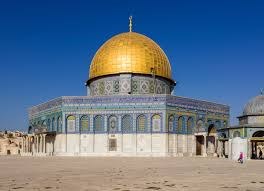
The teachings of Mohammed as preserved in the Koran and are encapsulated in the "Five Pillars of Islam". The first of these pillars is the belief that there is no God, but Allah, and Mohammed is his Prophet. Like Judaism and Christianity, Islam is a monotheistic faith. Mohammed identified Allah with both Yahweh and the Christian God. According to Mohammed, the prophets of the Old Testament and Jesus of the New Testament were all prophets of Allah. After Mecca and Medina, Jerusalem, the holy city for Jews and Christians, is the third holy city of Islam. Jews and Christians, however, had perverted and corrupted the teachings of these prophets. Therefore Allah had sent the Prophet Mohammed to instruct mankind regarding the correct path to salvation. To become a Muslim one must have faith in Allah and submit to His laws and commandments, so that one can enter Paradise after death. Allah punishes wicked unbelievers (infidels) after death in Hell. The term "Islam" refers to this submission to Allah's laws and commandments. The second pillar of Islam requires all Muslims to fast during the day during the holy month of Ramadan. During this time of fasting, Muslims are expected to ask Allah for forgiveness for their wrongdoing and sin. The third pillar requires Muslims to give alms (or charity) to the poor. Allah, as a loving and merciful deity, expected Muslims to show love and compassion toward each other. The fourth pillar required all Muslims to make a special pilgrimage or visit to the holy city of Mecca. Finally the fifth pillar required Muslims to pray to Allah five times each day, while facing in the direction of Mecca. In addition to the Koran, there arose certain "traditions" (Hadith) concerning the life and teachings of Mohammed. From the Hadith and the Koran together there arose in the centuries after Mohammed'd death a body of laws (Sharia) to govern Muslim communities. Muslim clerics or lawyers, however developed competing schools of laws due to different "traditions" regarding Mohammed's life and teachings.
After the death of Mohammed, elders among the Arab tribes elected a successor (Caliph) to Mohammed as the spiritual and political leader of the Umma or community of Muslims. The first four Caliphs were elected to this position in this manner. Over this period of time Arab armies went to war against the Byzantine and Persian Empires and conquered vast territories very rapidly. Arab armies conquered Syria in 635, Iran and Iraq in 637, and Egypt in 641. As a result of the Arab invasion, the Persian Empire collapsed as many Iranian tribes in the Iranian Plateau converted to Islam. These wars resulted from the Muslim doctrine of Jihad or "Holy Struggle". In the Koran and the the Hadith, Mohammed spoke of the greater and lesser Jihad. The greater Jihad was the internal struggle between good and evil in an individual's soul. The term "Islam" can be translated as "peace" besides "submission" as submission to Allah's laws ends this internal struggle and brings peace to the soul. The lesser Jihad required Muslims to fight against evil and unbelief so that all mankind submits to Allah's laws. In the seventh century Muslims engaged in this lesser Jihad by waging war against unbelievers in the Byzantine and Persian Empires. Their success was due in part to the religious fervor of the Arab warriors since the Koran and the Hadith taught that a man who died fighting in a jihad would enter Paradise regardless of any sins committed in that man's lifetime. The military success of the Arabs also resulted from the exhaustion of the Persian and Byzantine Empires after their long wars against each other. Moreover in both Syria and Egypt, the Monophysite Christians welcomed Arab rule after years of persecution under the Byzantine Empire. The Koran forbid any forced conversion of Jews or Christians. When Muslims conquered these areas, the non-Muslim population was free to practice their faith as long as they paid a special tax (Jizya).
The fourth elected Caliph, Ali (655- 661) wanted to place his son as his successor as Caliph since his son's mother was Fatima, the daughter and only child of the Prophet Mohammed. Muawiyah, the leader of the powerful Umayyad clan of Mecca opposed this plan and a civil war broke out between the supporters of Ali and Muawiyah. After the assassination of Ali in 661, Muawiyah became Caliph and arranged for his own son Yazid to succeed him as Caliph in 680. Hussain, the son of Ali challenged Yazid's claim to the Caliphate, but Hussain died in the Battle of Karbala in Iraq in that same year. This struggle for succession resulted in permanent split among Muslims between Shia (followers of Ali) and Sunni (orthodox) Muslims. Initially the issue that divided the two groups concerned the succession to the Caliphate, but over the centuries Shia Muslims divided into a number of different sects as the Shia Muslims recognized certain Imams ( religious leaders of the Muslim Umma) as divinely inspired holy men, whose teachings were authoritative and supplemented the Koran and the Hadith. Sunni Muslims, who have always been in the majority in terms of number of followers, recognize only the Koran and the Hadith as divinely inspired and authoritative.
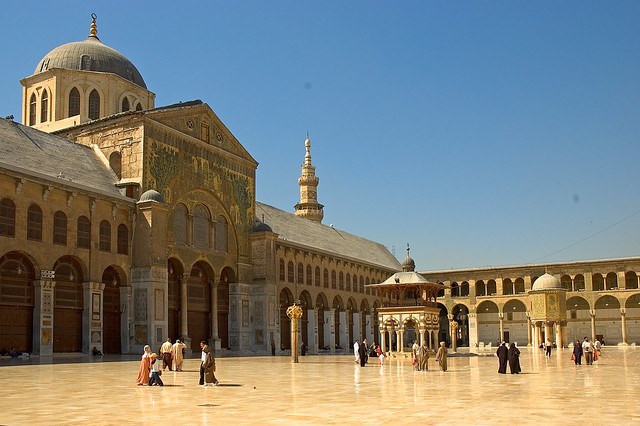
Under the Ummayad Dynasty of Caliphs, Damascus in Syria replaced Mecca as the political capital of an expanding Arab Empire. Arab armies continued to wage war on the Byzantine Empire and the empire continued to grow. In 698 Arab armies conquered Carthage in Byzantine North Africa. The Arab armies founded a new city, Tunis, and Carthage was afterwards deserted. Back in 641 Arab armies had likewise founded Cairo in Egyptian Delta after the conquest of Egypt to serve as an administrative center. The Moors and Berbers of North Africa in modern Algeria and Morocco (the Maghreb) converted to Islam after they were defeated by Arab armies. In 711 An army of Arabs and Moors invaded Spain and conquered the Visigothic Kingdom, which had been weakened by civil wars among rival claimants to the throne. Arabs subsequently referred to Muslim Spain as Andalusia.
The Ummayad Caliphate, however faced opposition among some Arabs. Abu Abbas was the head of the clan, which was the traditional rival of the Ummayad clan, and many Arabs believed that he was the rightful Caliph. Abu Abbas enjoyed especially strong support among Arabs and Iranian Muslims in eastern Iran. In 750, the supporters of Abu Abbas defeated the forces of the last Ummayad Caliph, Marwan II. Afterwards, the army of Abu Abbas hunted down and executed the leaders of the Ummayad family. One of the members of the Ummayad clan, however, Abd al-Rahman escaped death, fled to Spain, and established himself as the independent ruler (Emir) in Spain by 756. Abu Abbas, meanwhile, became the new Caliph and moved the capital from Damascus to the newly founded city of Baghdad in Iraq, near Ctesiphon, the former capital of the Sassanid Persian Empire. Under this new Caliph, Arab armies advanced eastward into Central Asia and defeated a Chinese army at the Battle of Talas in 751, which was fought in what is today Kazakhstan. After this victory, Turkish tribes in this region rebelled against Chinese rule and converted to Islam. The most talented and accomplished Caliph of the subsequent Abbasid Dynasty was Harun al-Rashid (786-809). Under this Caliph, Baghdad was the largest and wealthiest city in the world with a population of over one million people.
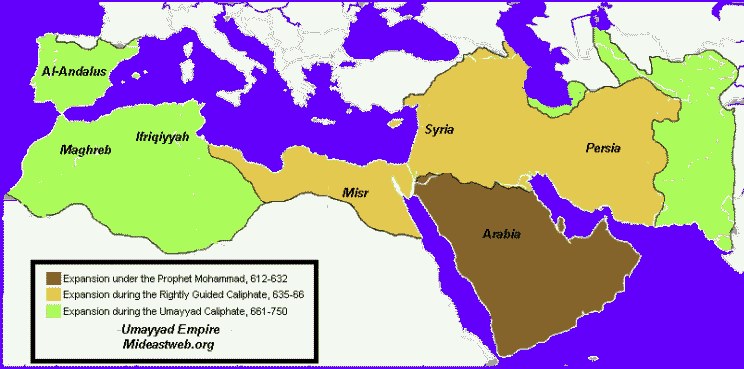
Expansion of the Arab Empire
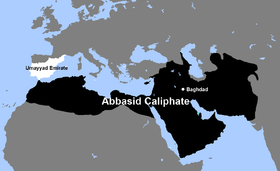
Map of Abbasid Caliphate
In the ninth century the effectiveness of the central government in the Abbasid Empire declined as the Caliphs in Baghdad devoted their time to building elaborate palaces and a life of luxury, leaving the task of government to the head minister (vizier). Throughout the empire over this period, local warlords (Emirs) established independent hereditary kingdoms (Emirates). Arabs, who had migrated out of the Arabian Peninsula, had intermarried with families in their new homes and created strong ties with local communities, that in time were stronger than their loyalty to the Abbasid Empire. In areas adjacent to Arabian Peninsula such as Palestine, Syria, Iraq, Egypt, and North Africa, due to this Arab migration, Arabic eventually largely replaced the local, native languages as the predominant language. These Emirs and their Muslim subjects however still continued to view the Abbasid Caliph as their spiritual leader.
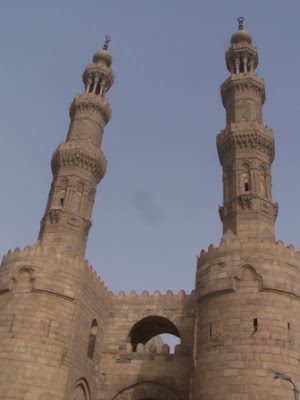
By the end of the ninth century though the spiritual authority of the Abbasid Caliph was not unchallenged. In 890 Mohammed al-Habib, a Shia Muslim, claimed to be a descendant of Ali and Fatima, and the true Caliph. His followers seized control of what is today Libya in North Africa. In the tenth century, this Fatamid Dynasty extended their control to Egypt and made Cairo their capital. In 929, the Ummayad Emir in Spain, Abd al-Rahman III declared himself to be the true Caliph. Until 1030, Cordoba in Spain was a capital city of a Caliphate along with Cairo in Egypt (Fatamids) and Baghdad in Iraq (Abbasids).
Arab dynasties continued to rule over the Muslim states in the Islamic world until the emergence of the Seljuk Turks after 1000. The Seljuks were a family of Turkish warlords (Sultans) who by 1000 had united a host of Turkish tribes in the Eurasian Steppe under their leadership in Central Asia ( in the area of modern Kazakhstan ). The Seljuk Turks in the 11th century conquered Iran and in 1055 captured Baghdad. These same Seljuk Turks conquered most of Asia Minor from the Byzantine Empire after the Battle of Manzikert in 1071. The Seljuk Turks as Muslims recognized the spiritual authority of the Abbasid Caliph, but they ruled over the Arab and non-Arab population in much of Western Asia. Turkish regimes would continue to rule over Arab peoples in this region until the early 20th century.
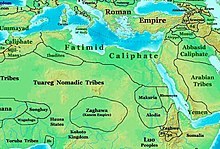
Islamic World in 1000
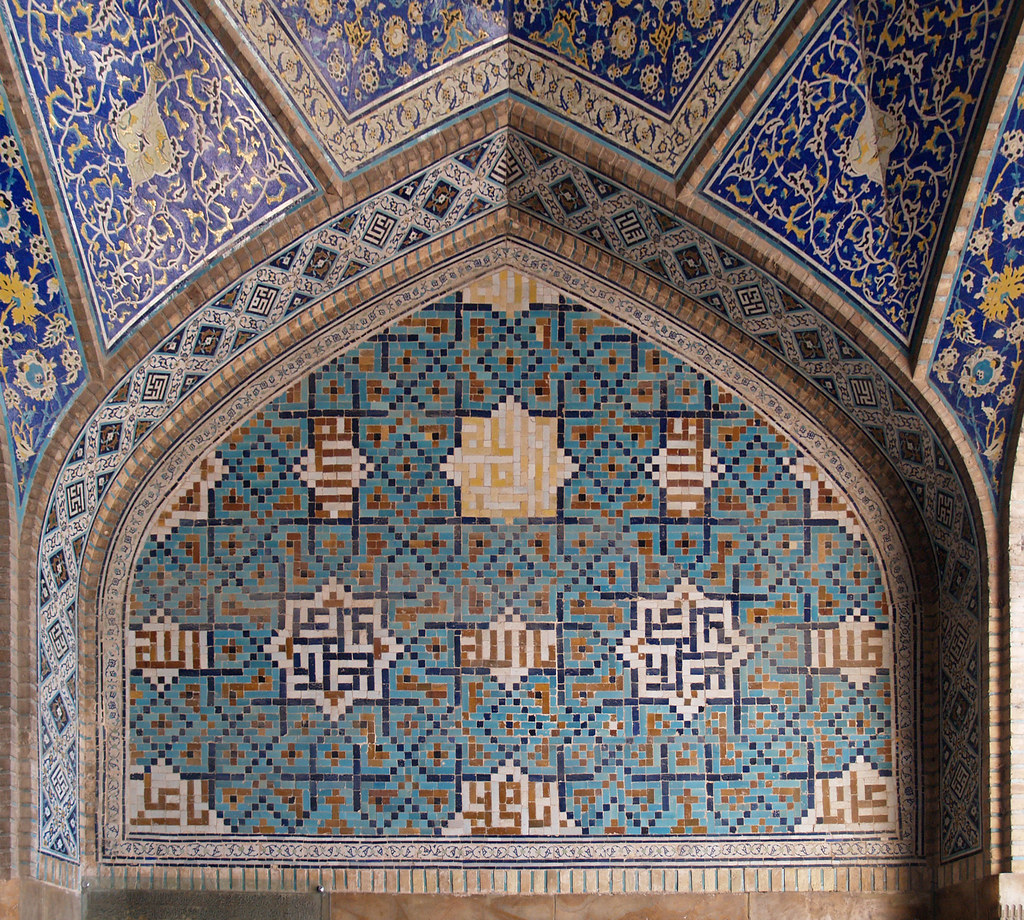
Arabic Islamic civilization was an heir to the classical tradition of Greece and Rome especially in regard to its vibrant and flourishing cities. Cities such as Damascus, Baghdad, Cairo, Tunis, and Cordoba served as administrative and political capitals for Emirs and Caliphs. Because of the religious requirement to provide charity, wealthy Muslims and rulers were very generous in providing public amenities in these cities. Mosques were places of public worship where Muslims came to pray and hear a sermon from a Muslim cleric on Fridays. Mosques also sometimes possessed a school (madrassa) where children learned Arabic to read the Koran. Cities also possessed public baths since Muslims were expected to be ritually clean before worship. These cities also included public hospitals to treat the sick and and hotels (caravanserais) where merchants and other travelers could rest and find food and refreshment. Trade in the Arab cities in this period flourished. The use of a common language (Arabic) facilitated commerce. New technology also benefited trade. Though contact with India, Arabs adopted Hindu numerals, which became known as Arabic numerals by Europeans since they learned about this numerical system through trade and other contacts with Arabs. The Arabs also acquired knowledge of Algebra from India, and the word "Algebra" is derived from Arabic. The adoption of this new mathematical technology enabled Arabs to develop more advanced methods of accounting and credit in their business dealings. For example, a buyer could write a "check" ( a word derived from Arabic) to purchase an item, which the seller could cash at a later time.
Large cities such as Cairo and Baghdad were also home to universities, where students studied Sharia law, medicine, and theology. Graduates of these universities often were employed as officials in Muslim states. These clerics were a well respected class of professionals in Muslim society that were known as the Ulama. Sons often followed their fathers in this profession. At these universities, works on medicine, mathematics, and philosophy by ancient Greek writers were translated into Arabic and studied by students and scholars. Muslim scholars attempted to demonstrate that the philosophy of Plato and Aristotle was in harmony with the teachings of the Koran. One of the greatest of these Muslim philosophers was Avicenna, who was a Persian physician and mathematician teaching in Baghdad around 1000. Avicenna's efforts to harmonize revelation (doctrines of the Koran) and reason (doctrines of Aristotle) influenced later Medieval Christian "Scholastic" theologians who made this same effort, but with the Christian doctrines of the New Testament. Some Muslim poets and scholars were influenced by the Greek philosophy of Neoplatonism, which was an interpretation of Plato's philosophical system in Late Antiquity that focused on an individual's spiritual union with God after a period of contemplation and intellectual awakening. In Islam a Sufi was a holy man who had achieved such a union with Allah and came to be revered by their fellow Muslims.
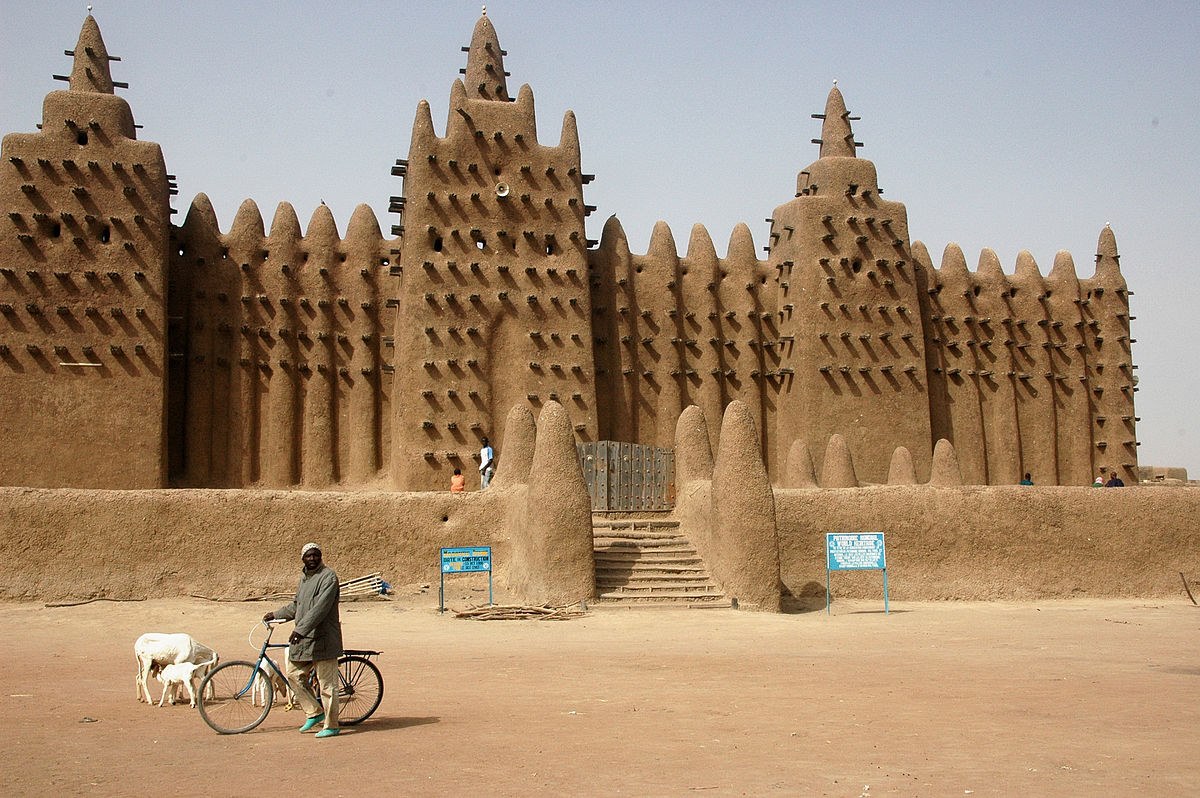
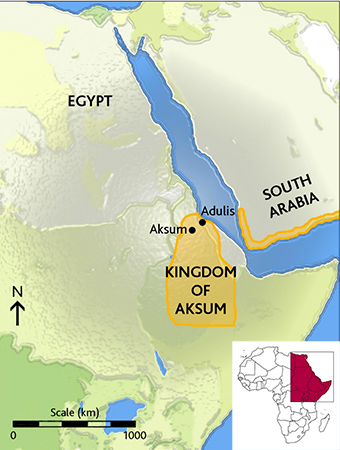
The spread of Islam into North Africa eventually sparked the rise of powerful new kingdoms and states in Sub-Saharan Africa. The vast Sahara Desert separates North Africa along the coast of the Mediterranean Sea from the rest of the continent of Africa (Sub-Saharan Africa), which was an isolated area where cultures evolved with little contact with other regions. Nonetheless, flourishing cultures developed in the Savannah, tropical grasslands just to the south of the Sahara, and in the rain forests of central Africa. People in the Savannah domesticated millet by 6000 BCE , whereas the inhabitants of the rain forests had domesticated yams (sweet potatoes) by 2000 BCE. By 400 BC the Nok culture of central Africa in modern Nigeria shows signs of a complex culture with its mastery of iron technology and its elaborate terracotta figures, which exhibit evidence for specialization. The first great empire in Sub-Saharan Africa was Aksum (or Axum) located in Northeast Africa in modern Ethiopia as well as North and South Sudan. The kings of Aksum after 300 CE controlled the Red Sea coast and could therefore control trade between the Late Roman Empire and the Gupta Empire in India. The wealth from this trade enabled these kings to control its vast empire. In the fourth century CE, the kings of Aksum converted to Christianity. This Ethiopian Church became a Monophysite Church like the Coptic Church in Egypt. The Church in Aksum adapted the Coptic script to develop its own script, Ge'ez so that the Holy Scriptures were available in their own language. After the rise of Islam, the Aksum Empire collapsed, but the Ethiopian Church survived in the mountains of Ethiopia.
The rise of Islam introduced Arabs and their camels to North Africa and the Sahara Desert. The camel was domesticated by Arabs as early as the the third millennium BCE and was well suited as a draft animal in a hot, dry environment. With the camel, Arab merchants crossed the Sahara Desert in search of gold, ivory, salt, and slaves. Arabs referred to the areas south of the Sahara as the "Land of the Blacks" or "the Sudan". Arabs prized slaves from this region, and the Fatamid Caliphs trained a whole army of slaves that were acquired from this region. In Sub-Saharan Africa trading cities, such as Gao and Timbuktu along the Niger River, arose as a result of this Arab trade.
Control of these trade routes resulted in a series of empires in western Africa. These empires used the revenues from this trade to build their armies and empires. The first of these empires was Ghana (990-1180). The rulers of this empire converted to Islam and even imported Arab clerics as administrators, but their subjects still practiced their native polytheistic religions. Another such great empire was Mali. Under its greatest king Mansa Musa (1320), the capital of this empire, Timbuktu, became a center of Islamic scholarship and the home of a university.
Islam and trade also resulted in the emergence of Swahili trading cities along the east coast of Africa, along the Indian Ocean. In the first century CE, Bantu peoples from Central Africa began migrating to the east and south to East Africa and South Africa. Bantu peoples shared a common language, iron technology, and an economy focused on cattle raising. With the rise of Islam, Arab merchants sailed down the coast of East Africa and established trading posts. The mixture of Bantu and Arab culture in these trading posts resulted in a distinctive Swahili culture. The trading posts developed into city-states by 1200 ruled by "Sultans" such as at Mogadishu in modern Somalia and Zanzibar in modern Tanzania.
The growth of these Swahili city-states sparked the emergence of a complex culture in South Africa in modern Zimbabwe and Zambia. Swahili merchants along the east coast traded with the Bantu peoples of the interior for cattle hides, salt, and gold. Between 900 and 1500 the rulers of the Shona established a powerful kingdom in this region that drew revenue from this trade. Shona kings built massive stone palaces (Zimbabwe) whose ruins still impress visitors today. The Shona didn't convert to Islam. They instead continued to practice their polytheistic religion and revere their kings as gods.

Ruins of Zimbabwe
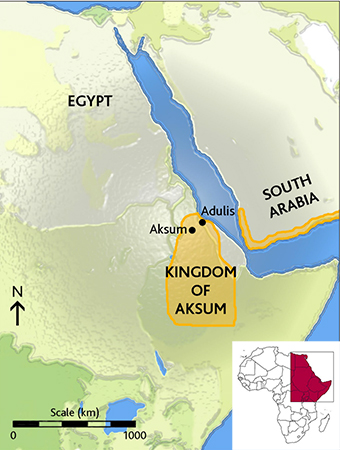
Map of Aksum
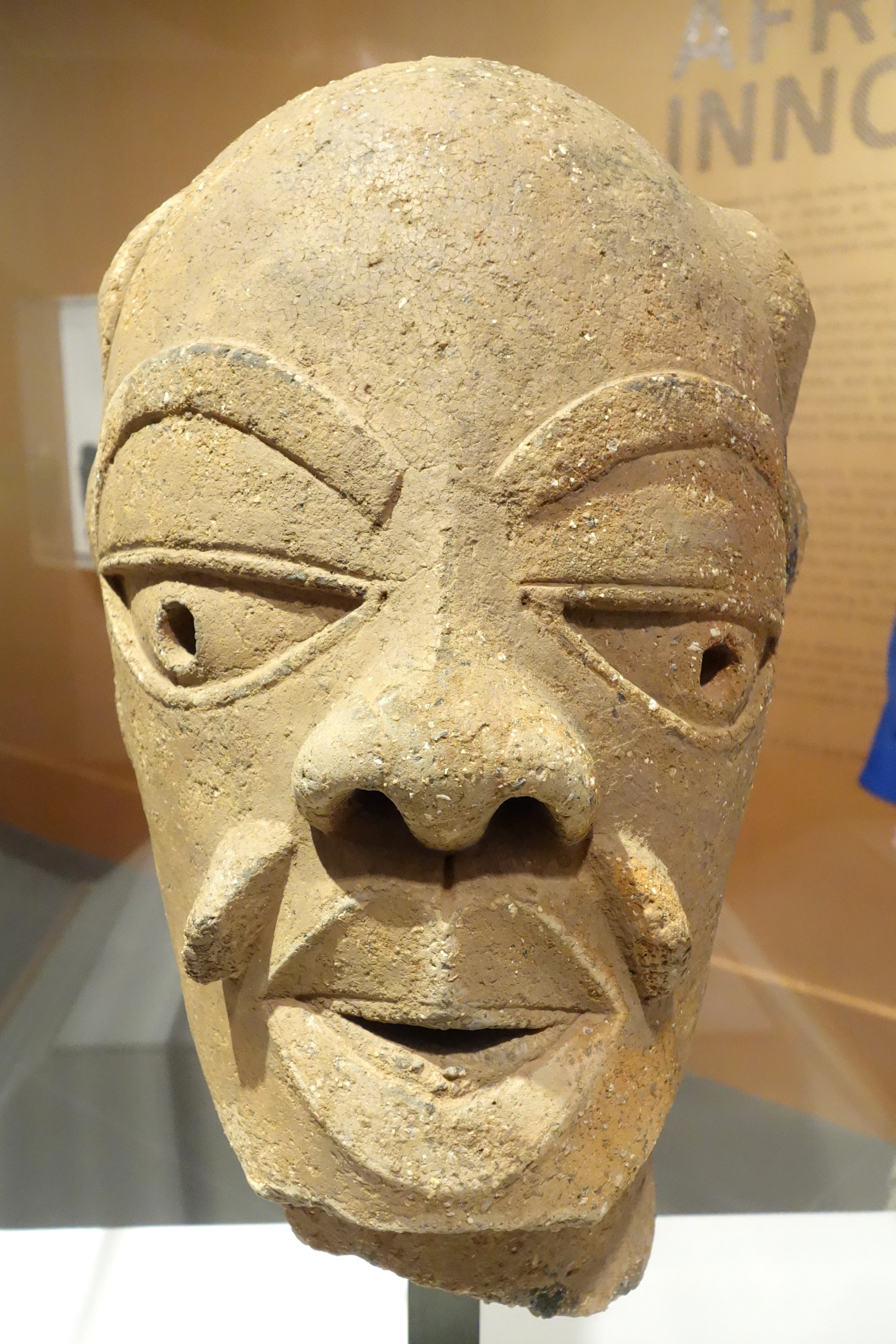
Nok Terracotta figure