Empires of the Steppe
Early World24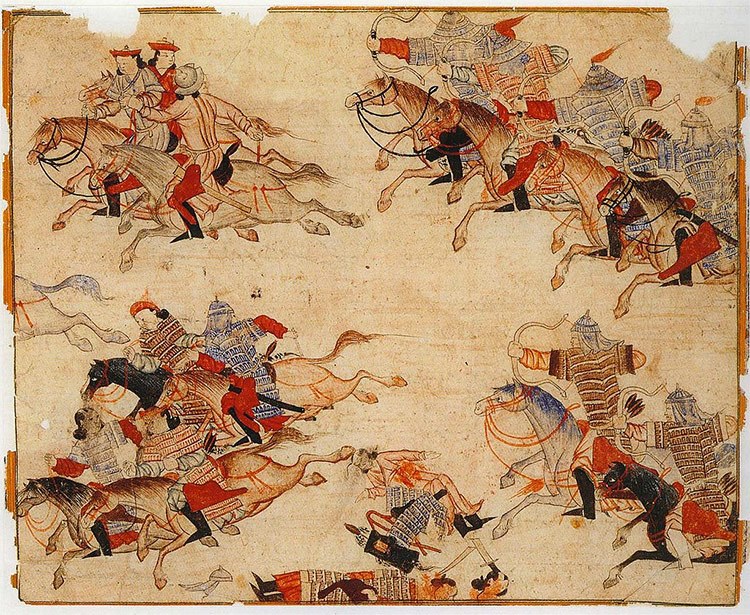
After 1000 nomadic tribes from the steppes of Central Asia periodically united under charismatic leadership and carved out massive empires due to their skills as mounted warriors. The rise and expansion of such empires impacted diverse peoples over a wide swathe of territory, Russia in Eastern Europe, Mesopotamia and Syria in Western Asia, India in South Asia, and China in East Asia. Migrations and trade over long distances also stimulated the emergence of complex cultures and new empires in Southeast Asia, the South Pacific and in North and South America.
The Turkish tribes (Turkoman peoples) of Central Asia converted to Islam after the Battle of Talas in 751. With the decline of the Abbasid Caliphate in the 9th century, the Saminid Emirs ruled over Iran after 900. These Emirs often recruited Turkoman warriors from Central Asia into their armies. Around 1000 a Turkoman warlord, Suboktigin who was in the service of the Saminid Emir, rebelled and overthrew his employer, and with his Turkish warriors carved out an empire of his own in what is today Eastern Iran, Afghanistan, and Pakistan. The Sunni Muslim Emirs of this Ghaznavid Empire (1000-1200) also waged a Jihad against the small Hindu kingdoms (Rajputs) in northern India and forced these kings (Rajas) to pay heavy tribute. At their court, these Sultans employed the Persian language and adopted the title Shah for themselves, the traditional name for a Persian king.
Shortly after 1000 a different group of Turkoman tribesmen in Central Asia joined together under Togrul Beg, who founded the Seljuk Dynasty of Sultans. These Seljuk Turks advanced westward and captured Baghdad in 1055 in Mesopotamia. After the Battle of Manzikert in 1071, these Turks advanced into Asia Minor. The Seljuk Dynasty didn't practice primogeniture, as was the case in Medieval Europe with the advent of Feudalism. The eldest son did not automatically inherit his father's lands and social position. Among the Turks and other nomadic people of the steppe, the member of the clan who was the bravest and strongest became the leader of the family. Within the Seljuk dynasty, there arose disputes as to who deserved to be the leader of the family and hold the title of Sultan. Consequently by 1100 the Seljuk Empire was divided into a number of separate Sultanates under the control of different branches of this family, such as the Sultanate of Rum in western Asia Minor. This division of the Seljuk Empire enabled the Crusaders of the First Crusade (1096-1099) to conquer Palestine and Syria.
After the dissolution of the Seljuk Empire, Saladin (1137 - 1193) , an ethnic Kurd from northern Iraq, founded an empire. Saladin recruited large numbers of Turks into his forces. Under his command his army of Sunni Muslim Turks conquered the Shiite Fatimid Caliphate in Egypt and captured Jerusalem from the Crusader Kingdom of Jerusalem in 1187. Saladin founded the Ayyubid Dynasty of Sultans, whose empire included Mesopotamia (Iraq), Syria, Palestine, and Egypt. The Ayyubid Sultans, like the previous Fatamid Caliphs of Egypt, acquired large number of slaves and trained them to be fierce warriors (Mamluk). Many of these slave warriors were of Turkish origin. In 1250 these Mamluk warriors rebelled against the last Ayyubid Sultan and elected one of their own as the new Sultan. Even though these Mamluk Sultans were of Turkish origin, they adopted the Arabic culture of Egypt, just as the Turkish Ghaznavid rulers in Iran had adopted Persian culture.
In the 13th century Western Asia faced a new wave of nomadic warriors from the Steppe, the Mongols. Genghis Khan in 1206 united the Mongols tribes of the Steppes north of China. The ability of the Mongol warriors to shoot arrows accurately while engaged in complicated maneuvers on horseback made Mongol "hordes" of horsemen into formidable armies. Mongol armies by 1241 advanced into Russia, Poland and Hungary and devastated these areas. According to some estimates, Mongol forces may have slaughtered over one million people as they advanced across Asia and Europe. A grandson of Genghis Khan, Hulagu Khan advanced his forces across Iran and in 1258 captured and sacked Baghdad. Hulagu ordered the execution of the last Abbasid Caliph. In 1260 Hulagu's army invaded Syria where it was met by a Mamluk army under the command of the Sultan Qutuz. At the Battle of Ain Jalut a Mongol force for the first time suffered defeat. Hulagu in 1261 retreated back to Iran and established a dynasty, the Ilkhanid Dynasty (1261 -1335) which ruled over Iran and Iraq. Hulagu converted to Islam, and his successors adopted the title Shah and the Persian language for their court, just as Hulagu's cousin, Kublai Khan had adopted Chinese culture and became a Chinese emperor. The Ilkhanid Empire was one of four Khanates that were established by the descendants of Genghis Khan. Kublai Khan as "Great Khan" ruled over China and Mongolia, while the Chagatai Khanate controlled Central Asia, and the Golden Horde dominated Russia. This Mongol Empire allowed for trade, travel, and the transmission of ideas and technology (printing and the compass) across the length of Asia and Europe. An Italian merchant and explorer, Marco Polo traveled across Asia from Italy and visited the court of Kublai Khan. Marco Polo's account of his travels would later inspire another Italian explorer, Christopher Columbus, in 1492 to search for a new trade route to the riches of the Far East.
The last great conqueror of the Steppe was Timur the Lame or Tamarlane (1336-1405). Around 1360 Timur with the support of Turkoman warriors seized control of the Chagatai Khanate in modern Uzbekistan. Timur's forces conquered an empire that stretched from northern India to the borders of Asia Minor and Syria. Timur established a dynasty, the Timurid Dynasty, that ruled over Iran until 1494. As with previous dynasties in this region, these rulers adopted Persian culture and the title of Shah.
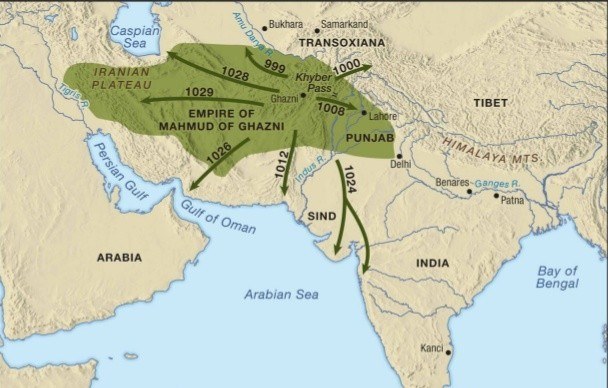
The Ghaznavid Empire
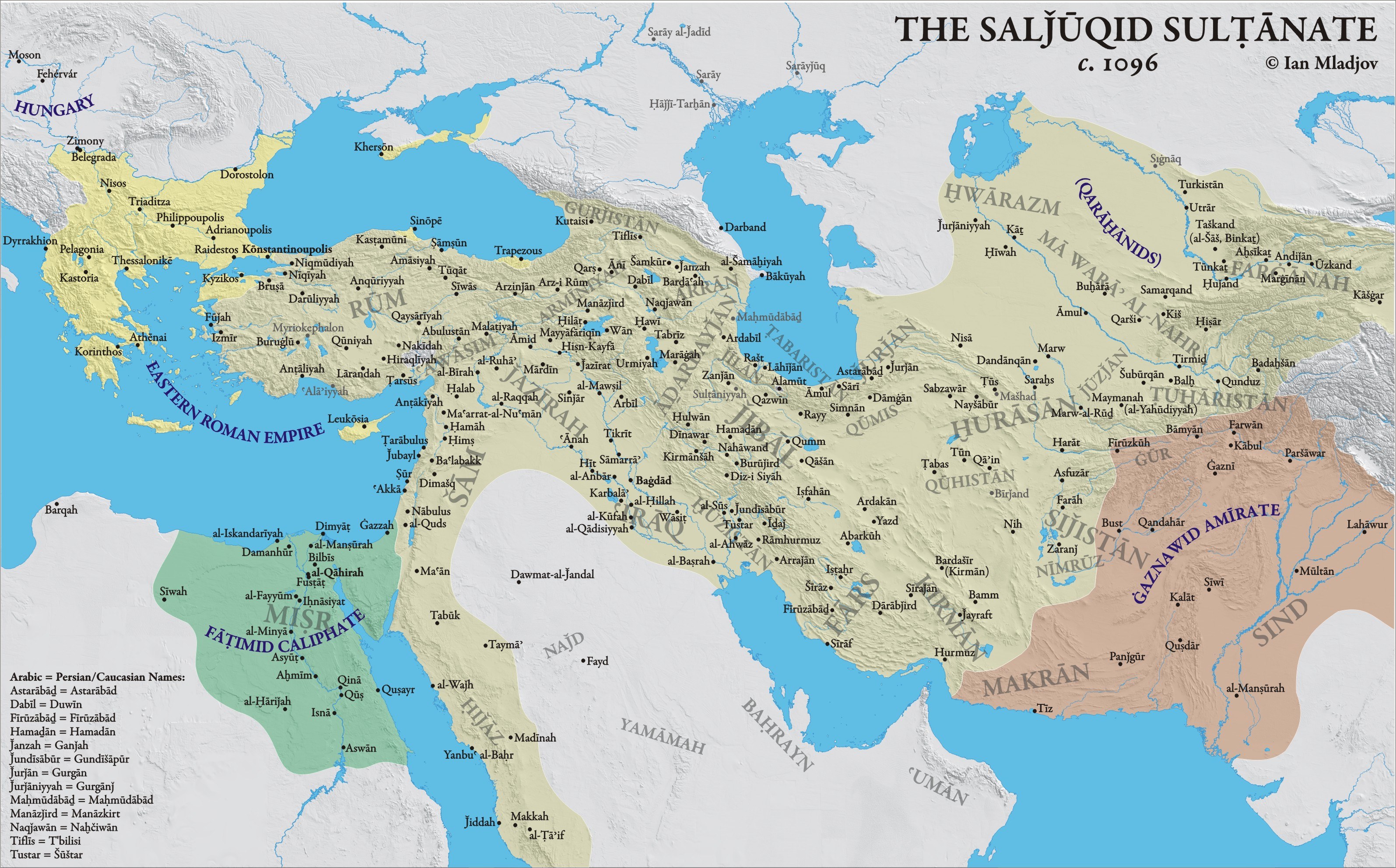
The Seljuk Empire
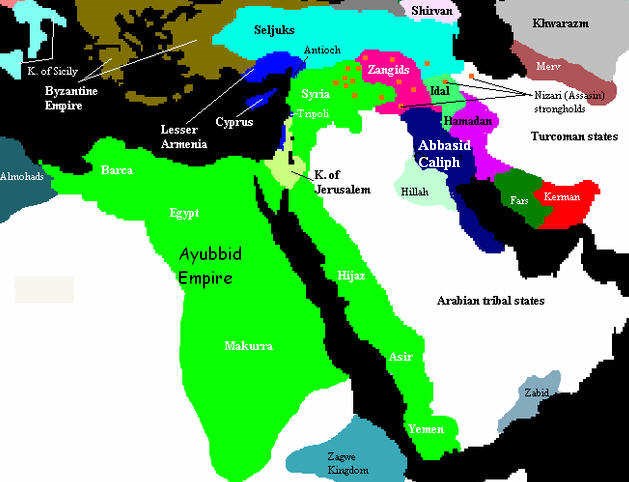
The Ayyubid Empire
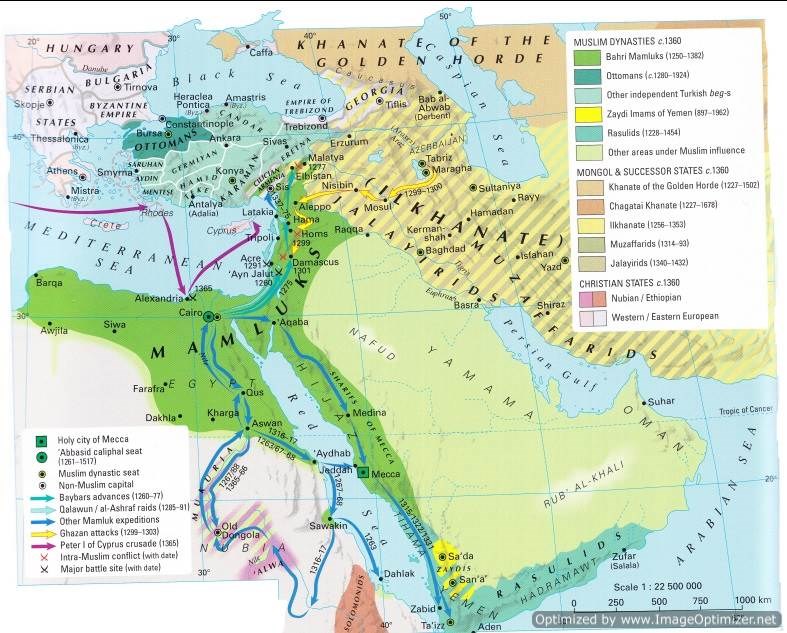
The Mamluk and Ilkhnanid Empires
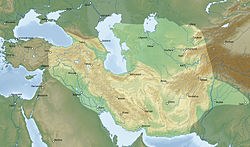
Timur's Empire
Steppe nomads from Central Asia also invaded and occupied the Indian sub-continent, while immigrants and merchants from India spread Indian culture across Southeast Asia. After 1000 the rulers of the Ghaznavid Empire launched deep raids into northern India against the small Rajput kingdoms of this region. After the collapse of the Ghaznavid Empire, in 1206 a Turkish warlord Qutb al-Din Aibak led his Turkish warriors into northern India and established a dynasty of Sultans that ruled over northern India based out of the city of Delhi. The Sultanate of Delhi (1206 - 1550) imposed heavy taxes on the non-Muslim, largely Hindu population, which composed the majority of their subjects. Converts to Islam became exempt from these taxes. Even though the majority of people in this region spoke Hindustani, these Sultans refused to employ Sanscrit as the written language of their court because of the association of this script with sacred Hindu texts. Instead these Sultans adopted Persian as the language of their court.
South India remained independent of Muslim rule. In this region people spoke Tamil, which was not an Indo-European language like Hindustani. This Tamil speaking population were Hindus, but they developed their own versions of sacred Hindu texts in their own language. Between the 9th and 13th century, the Tamil Chola Dynasty ruled over southern India. Around 1000 the Chola fleet dominated the islands of modern Indonesia (Java, Sumatra). Modern historians know of these Chola kings only by the stone inscriptions and impressive temples that they constructed.
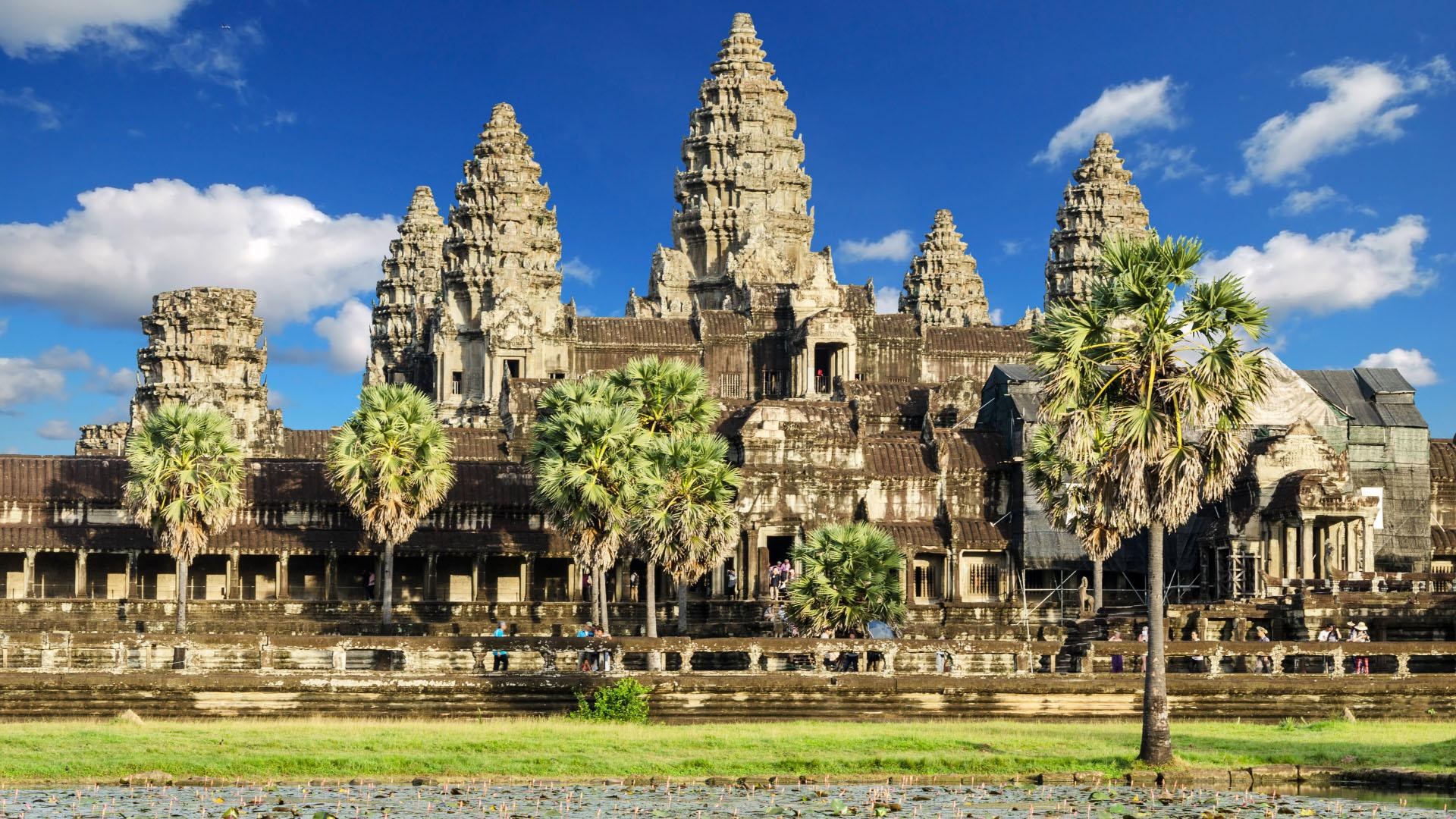
Immigrants and merchants from India influenced the development of complex cultures in Southeast Asia. Rice farming introduced from China around 5000 BCE flourished along the river valleys of this region: the Red River (Vietnam), Mekong River (Cambodia), Chao Phraya River(Thailand), and the Irrawaddy River (Myanmar). Complex cultures first developed in this region beginning in the first century CE. The leaders of powerful clans established kingdoms (Mandalas). These kings' political power derived from their control of the trade in iron and salt to Indian and Chinese merchants. In 43 CE the Han Empire conquered the Red River Valley, and that region(modern Vietnam) became under Chinese cultural influence, much like Korea. In the rest of this region, the Mandalas were under largely Indian cultural influence. Brahman priests from India even served as ministers and administrators for these kings. The first great empire of this region was the Angkor Kingdom of the Khmer people of the Mekong River Valley (modern Cambodia). The founder of this empire Jayavarman I (r.802-847) conquered the surrounding Mandalas, whose kings became his vassals. Jayavarman I declared himself to be the incarnation of the Hindu deity Shiva and "protector" (Varman) of the Universe. In the 12th century Jayavarman II constructed the massive Angkor Wat temple complex in honor of Shiva. The Angkor Empire declined and collapsed in the 15th century after Muslim merchants from India began to dominate trade in the region with the establishment of the Delhi Sultanate. The Pagan Empire of the Irrawaddy River valley rivaled the Angkor kingdom. The kings of the Burman peoples founded this empire in the 9th century based in the city of Pagan. These kings embraced Hinayana Buddhism and by 1000 Pagan was a city of Buddhist shrines (Stupas) and monasteries. In the late 13th century, however,the armies of Kublai Khan destroyed this empire.
Powerful kingdoms also emerged in the islands of what is today the nation of Indonesia. The kingdom of Srivijaya arose among Malay speaking peoples on the island of Sumatra in the seventh century. By 1000 This kingdom competed with the Chola Empire of India as a great naval power. The kings of Srivijaya converted to Mahayana Buddhism, which was the form of Buddhism prevalent in China, Korea, and Japan. This kingdom's major rival was the Medang Empire based on the island of Java. Between the 8th and 12th century, when this kingdom flourished, the kings of Medang may have switched from Hinduism to Mahayana Buddhism. This religious change may have resulted in a change in the ruling dynasty of the kingdom. The Medang kings constructed both massive Hindu temples and Buddhist shrines. After the 13th century, as Muslims Indians replaced Hindu and Buddhist Indians as the merchants operating in this region, local kings converted to Islam and adopted the title Sultan. After 1400 the Muslim Sultanate of Malacca based in modern Malaysia was the dominant state in the region. Today Indonesia is the largest Muslim country in the world.
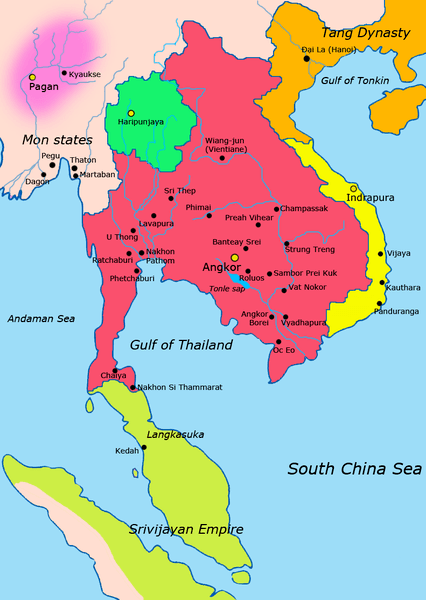
Kingdoms of Southeast Asia
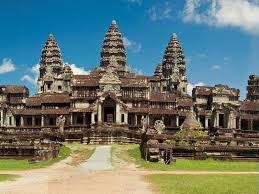
Angkor Wat temple
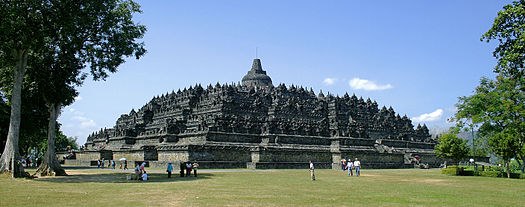
Buddhist Shrine of Medang Kingdom
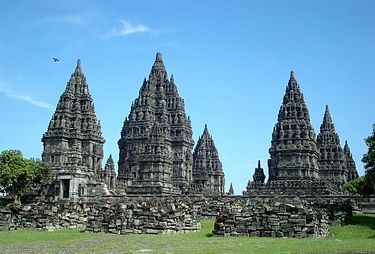
Hindu Temple of Medang Kingdom
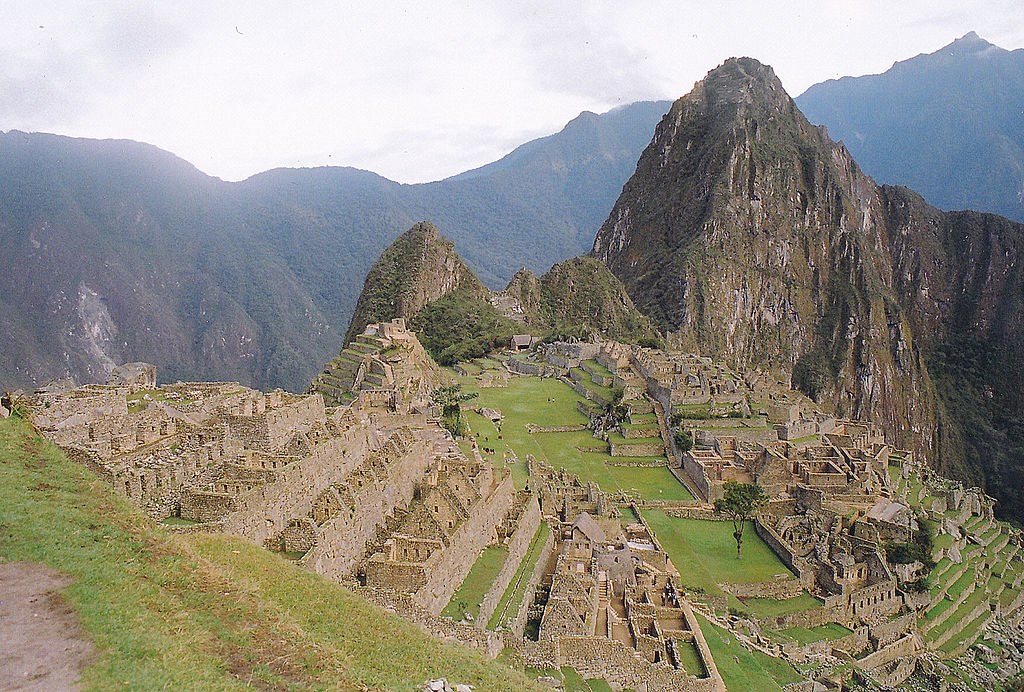
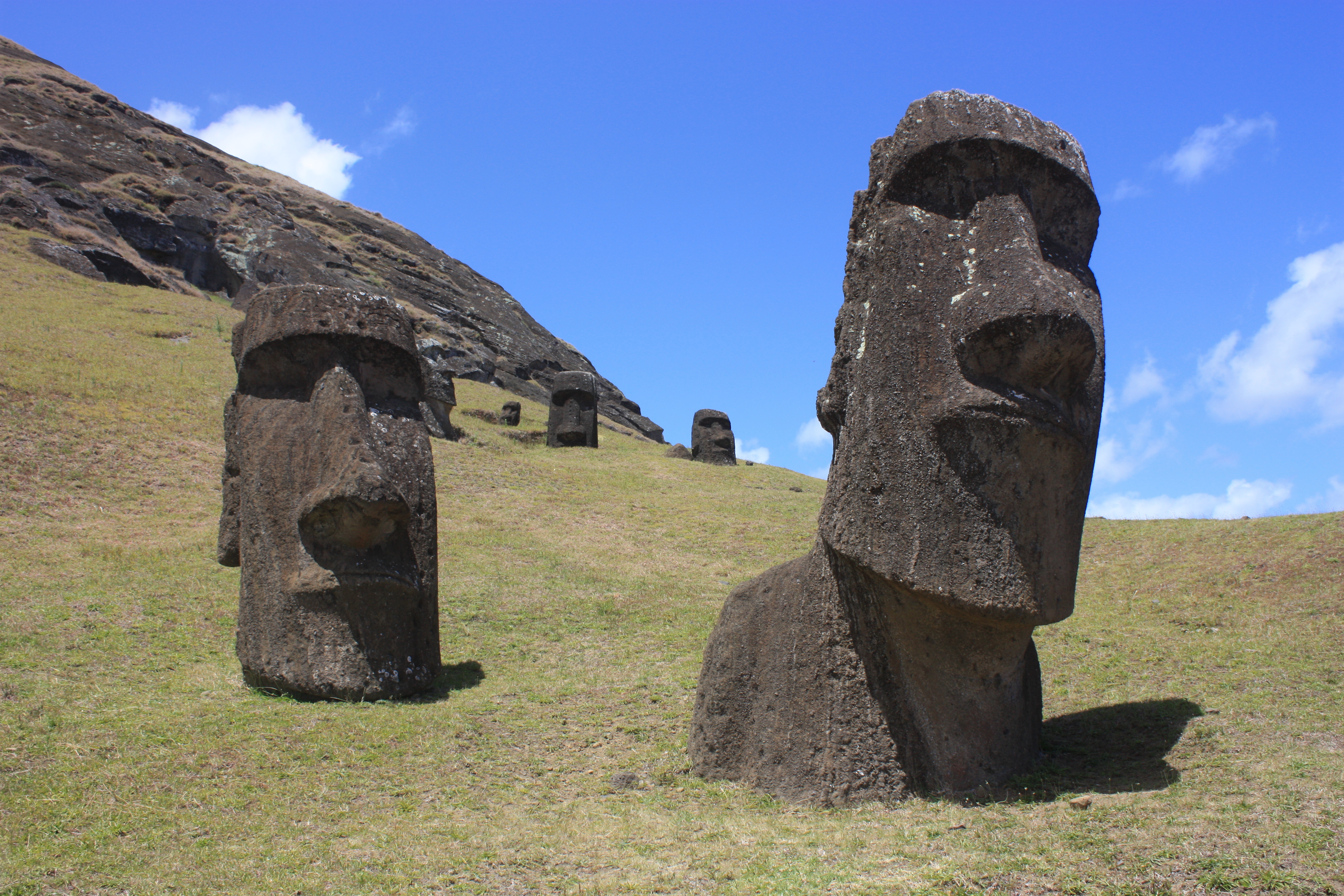
Just as the invasion and migration of steppe nomads shaped the history of Asia, the movements of peoples in the South Pacific and the Americas resulted in the emergence of new complex cultures and empires. The Polynesian peoples began migrating eastward across the South Pacific to various islands from the island of Taiwan perhaps as early as 3000 BCE. These people settled the islands of the Philippines, New Guinea, New Zealand, Fiji, Tonga, Samoa, and Tahiti. By 500 CE these expert sailors reached Hawaii and Easter Island (Rapa Nui) off the coast of South America. The economy of these Polynesian cultures was based on fishing as a well as raising livestock (chickens, pigs) and crops (taro, banana, yams). The construction of monumental structures by these cultures is the evidence for the emergence of complex cultures. For example by 1400 Hawaiians were building temples (heiau), which often consisted of large stone platforms. On Rapa Nui, the inhabitants beginning around 1200 constructed monumental statues with oversize heads.
In the Americas, new migrations resulted in the creation of new empires. After the collapse of the empire of Teotihuacon around 750 CE, new peoples around 800 arrived in the central highlands of Mexico from the semi-desert plateau of northern Mexico. The Toltecs from this region possessed a simple culture and spoke the Chichimeca language. After settling in central Mexico, the Toltecs carved out an empire by 900, which covered much of what is today the nation of Mexico. The Toltecs compelled subject peoples to pay tribute to them with precious goods such as jaguar pelts as well as the feathers and shells of certain sacred birds and sea creatures. The Toltec Empire embraced elements of the complex cultures which had existed within this empire. For example the capital of the empire, Tula, included a ceremonial center consisting of a central plaza surrounded by stone, pyramid temples and monumental ball courts, which one would also find in Mayan cities. The Toltec also worshiped the fertility deity, Quetzalcoatl, of the ancient city of Teotihuacon, and the jaguar rain god, Tlaloc of the Olmec.
The king of the Toltecs ruled in alliance with leading Toltec, noble clans. After 1200, civil war erupted between these ruling families, and consequently the Toltec Empire broke into three separate kingdoms. One of these kingdoms, Tepanec, began recruiting into its armies large numbers of Aztecs, who were another Chichimeca people, who inhabited the plateau of northern Mexico. In 1426, the king of the Aztecs, Itzcoatl, revolted against the Tepanec kingdom and conquered it. The Aztecs in the 15th century built an extensive empire that included much of the modern nation of Mexico. Aztec warriors went into battle to secure war captives to sacrifice to their main deity, the sun god, Huitzilopochtli. The Mayans and the Toltec had both sacrificed war captives to their gods, but the Aztecs practiced this ritual on an industrial scale, reportedly sacrificing up to 20,000 captives at one time. The Aztec king expected each of the Aztec clans to provide him with warriors and laborers. The Aztecs also imposed heavy tribute on subject peoples, which was collected in kind and included foodstuffs such as corn and cocoa beans as well as precious materials. The Aztec capital city, Tenochtitlan (modern Mexico City), like the earlier Toltec capital, included a ceremonial center consisting of a plaza surrounded by stone temple pyramids, and monumental ball courts. The Aztecs also worshiped the same ancient deities as the Toltec, Quetzalcoatl and Tlaloc. The arrival of the Spanish in 1519 would result ultimately in the collapse of this Aztec Empire.
The growth of the Toltec and Aztec Empires allowed for trade and the transmission of ideas to the area north of Mexico in what is today the United States, where complex cultures arose. The Mississippian Culture in the Mississippi river valley and its tributaries raised maize as its main crop by the first centuries CE. This culture built immense mounds of earth, just as did earlier "Mound Builder" cultures in this same region, but the Mississippian culture constructed pyramid shaped mounds, which functioned as temples and places of residence for the local ruler. The Mississippian city located at Cahokia near St. Louis, Missouri, included numerous pyramids by 1000 CE. The largest of these pyramids, Monks Mound, remained the largest single, man-made structure in the United States until the early 20th century. Cahokia in its heyday (1100) may have possessed a population numbering over 40,000. In what is today the state of New Mexico, the Anasazi Culture at the site of Chaco Canyon around 1000 constructed massive buildings (pueblos) out of mud-brick (adobe). The buildings consisted of hundreds of rooms, as well a large monumental, sunken circular plazas (kivas) for religious rituals and cisterns to capture rain water. In Chaco Canyon roads connected the different pueblos. The large population that built these structures raised maize and other crops through the use of an complicated irrigation system in this dry, arid region. The elites at Chaco Canyon also imported cocoa from the south, and a chocolate drink was consumed here as among the Toltecs and later Aztecs.
In South America, the Inca built a massive empire that included most of the west coast of this continent. The Inca, like the Toltec and Aztec, originally possessed a simple culture. The Inca were organized into clans (Ayllu) and inhabited the high mountain valleys of the Andes Mountains in what is today southern Peru and Bolivia. The Tiwanaku civilization had formerly inhabited this region before its collapse around 900 CE. Around 1400 these clans united under a single king, Viracocha Inka, who established a dynasty of kings. The Inka revered these kings as gods and descendants of the sun god, Inti. Inca warriors went into battle to conquer lands and impose tribute that could be consecrated to the worship of their king upon his death. The Inca armies conquered the Chimu Empire (1100 - 1450), which controlled the fertile river valleys of Peru between the Andes Mountains and the Pacific Coast. The Chimu kings had built their empire by installing vassal rulers over different areas and demanding that these vassals pay tribute in kind and provide the Chimu king with laborers. After the conquest of the Chimu Empire, the Inka adopted this system for their own empire. To maintain control over their empire, the Inca constructed massive fortresses in different parts of their empire and a complex road system to connect them. The Inca kings also required local nobles to live at the Inca capital at Cusco as hostages to keep subject peoples in line. The Inca did not have a written script for record keeping for such a vast empire, but they kept records using an elaborate system of knots of rope (Quipu). The arrival of Spanish invaders in 1531 precipitated the fall of this empire.
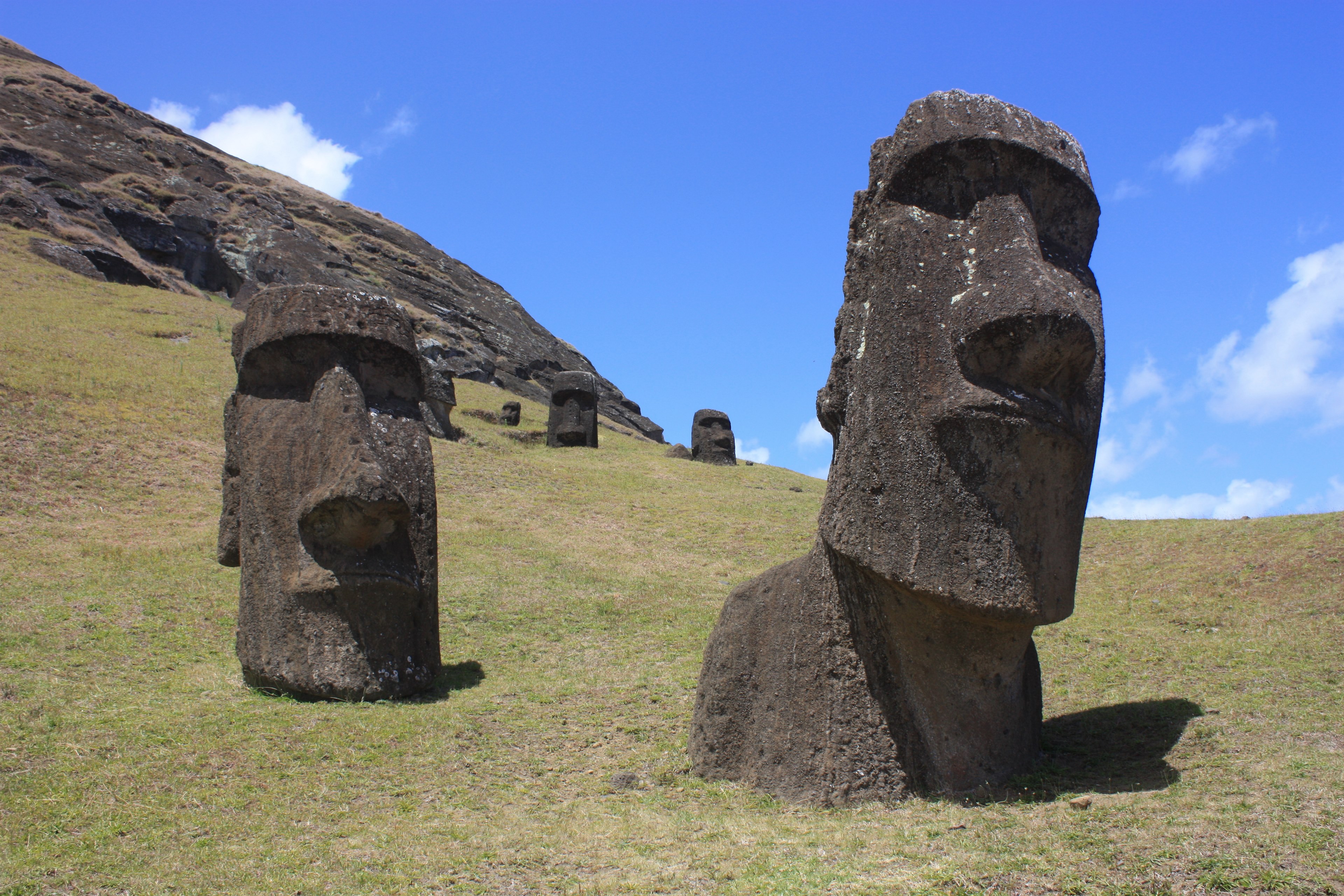
Easter Island Statues
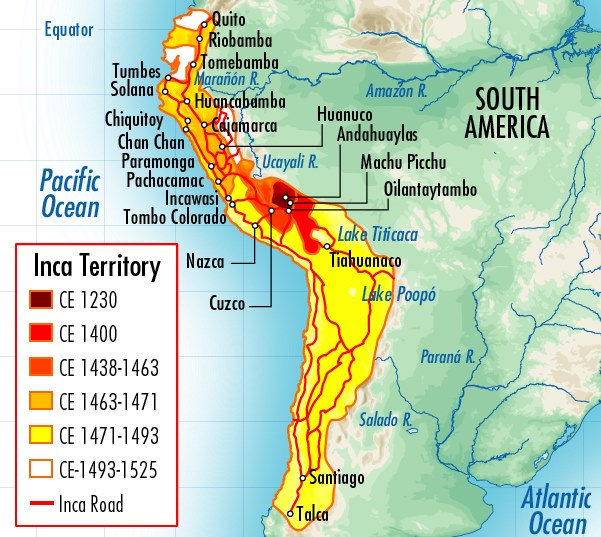
Inca Empire
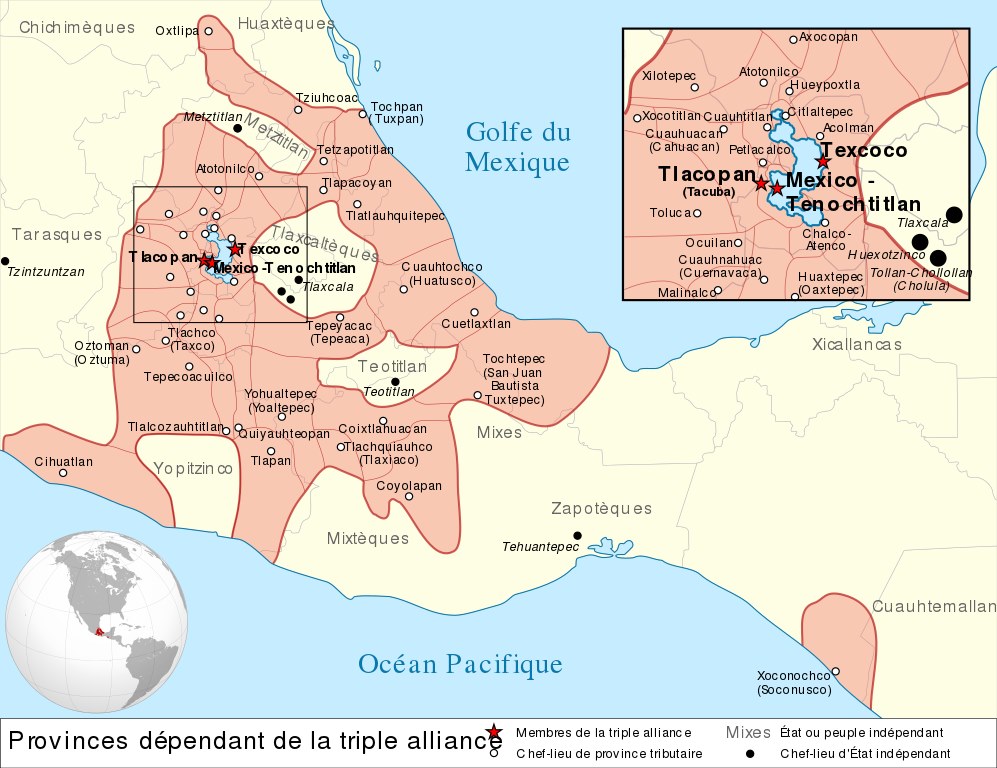
Aztec Empire