The Reformation
Modern World1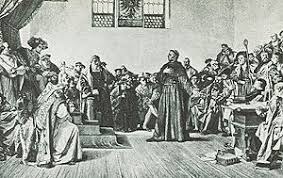
During the Early Modern Era (c. 1500 - 1750) European society experienced sweeping economic, political, social, and religious change and transformation. This era witnessed the advance of Capitalism, an economic system in which individuals accumulate as personal property, capital (goods used to produce other goods - i. e, land,tools) through buying and selling goods in a market where the laws of supply and demand establish the prices for these goods. During the Early Modern Period, markets for goods continuously expanded and some individuals accumulated vast amounts of property and capital. This economic expansion especially enriched the emerging Middle Class or Bourgeoisie. In the preceding Medieval Period, European society consisted largely of a mass of landless, agricultural workers or peasants and an elite landowning nobility. But in that same period beginning around 1000, a new class of people arose who earned their living through trade and manufacturing and lived in the emerging cities and towns (Burg - German, Bourg - French, Borough - Old English), from which the term Bourgeoisie arose. In the Early Modern Period, the size and collective wealth of this social class vastly expanded. The growth of capitalism resulted to some degree from the Age of Exploration and Discovery in the Early Modern Period. European explorers discovered new lands in the Western Hemisphere, Asia, and Africa in search of new trade routes and markets. Europeans also established colonies in the Western Hemisphere (North and South America) in particular, which set the stage for the growth of trade routes across the Atlantic Ocean (Transatlantic Trade) between Europe, Africa, and the Western Hemisphere. The Early Modern Period also experienced the continual growth of centralized, bureaucratic states across Europe. In Western Europe, these states were emerging as nation-states, a state where a people or nation share a common language and culture. In Central and Eastern Europe, however, these states were multi-ethnic empires, where a dynasty of rulers governed a number of different ethnic groups with each ethnic group possessing its own unique culture. During this period of rapid political, social, and economic change, a religious movement, the Reformation, swept across Europe and divided and polarized European society. Consequently some Europeans embraced the new Protestant Churches, which emerged from this movement, while other Europeans remained loyal to the Roman Catholic Church under the leadership of the Papacy in Rome.
The Reformation developed as a religious movement in a period of intense social anxiety in Europe during rapid social and economic change. In this time of stress and worry, people often turned to their faith for comfort and support. One cause of anxiety was the fear of a horrific death from disease. The Black Plague or Bubonic Plague first struck Europe in 1348, but this disease continued to strike down the population periodically in the centuries that followed. Infestations of fleas on rats and livestock carried this disease from Central Asia and across Europe. By 1500 and over the next century, another source of anxiety was economic and social insecurity. Beginning around 1450, Europe began experiencing a warming climate, which lasted until the end of the 16th century. This period of rising temperatures brought temporary relief to Europeans, who had been living in a Little Ice Age prior to 1450. The rising temperatures of the period 1450 to 1600 resulted in longer growing seasons for crops such as wheat and larger harvests, which, in turn, resulted in population growth. People with access to a plentiful supply of food were well nourished and less likely to die from hunger or epidemic diseases, which strike down people especially who are malnourished. As the population grew, demand for goods also expanded with the corresponding growth of markets. The introduction of vast amounts of precious metals (silver and gold) into Europe in the later 16th century after the Spanish conquest of the Aztec and Inca Empires in the Western Hemisphere accelerated the growth of the market economy. People with coins of silver and gold in hand were ready and eager to purchase goods on the market. This economic expansion allowed inventive entrepreneurs the opportunity to amass large fortunes. The acquisition of such fortunes, however, stirred up social unrest and economic fears when those possessing this newfound wealth were non- noble commoners. Less successful commoners and the elite nobility viewed these entrepreneurs as greedy, pretentious men, who had forgotten their proper place in the hierarchical social order, which traditionally drew a sharp distinction between the aristocratic landowning elite and the mass of common people. Society did not expect commoners to serve in positions of leadership or to engage in elite activities such as wearing fine clothes or riding in a horse drawn carriage or entertaining guests with a feast of meat and wine. These were positions and activities reserved for the elite nobility. Non-nobles with money who engaged in such activities were a dire threat to the social order. It is perhaps not a coincidence that the leading Protestant reformers, Martin Luther, Ulrich Zwingli, and John Calvin were commoners. Luther’s father was a miner, Zwingli’s was a peasant, and Calvin’s was an account clerk. The parents of all these reformers sacrificed and saved to send their children to a university, where they could receive an education and afterwards raise their social status through service in the church or government. In contrast, one of the leading Catholic reformers, Ignatius Loyola, the founder of the Jesuit Order, was a Spanish nobleman who was a soldier and knight prior to entering the ministry.
The Roman Catholic Church in 1500
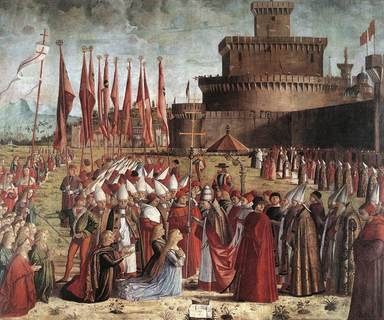
As people across Europe turned to their faith in this period of anxiety, they were often disappointed with the leadership of the Roman Catholic Church. During the preceding Medieval period and especially after 1000 CE, the Catholic Church in Western and Central Europe had developed into a centralized, hierarchical organization under the leadership of the Popes based in Rome. The Pope was Christ's representative or vicar on earth and the Pope's power in the church was unchecked. In the 15th century, the Pope was not merely a spiritual leader, but he also ruled directly over a large section of Central Italy known as the Papal States. These Popes therefore often obtained their position because of their administrative and political skills, and not due to their spiritual gifts and piety. The Popes of this period were often very worldly men and far from model Christians. For example, Rodrigo Borgia or Pope Alexander VI (r. 1492 - 1503) was infamous for his elaborate, wild parties and for his beautiful mistress. He also used his power as Pope to advance the interests of his family through his efforts to carve out a principality for his illegitimate son, the ruthless and violent Cesare Borgia. The conduct and worldly reputation of such Popes shocked and disgusted Christians across Europe, who wanted to reform the church and end its corruption.
The Italian Renaissance
The Italian Renaissance provided reform minded Christians with the tools to demand church reform. The Renaissance was a "rebirth" of the art and literature of Classical Greece and Rome, which arose originally in the Italian city-states of North Italy in the 14th and 15th century. Renaissance artists and writers modeled their works on the artwork and writings of ancient Greek and Roman artists and writers. Renaissance Humanists collected ancient works of art and manuscripts as sources of inspiration. Around 1350, the Italian poet, Petrarch first began to search out and assemble ancient texts and became the "Father of the Humanists". The conquest of the Byzantine Empire in 1453 by the Ottoman Turks resulted in the migration of Byzantine scholars to Italy, who brought ancient Greek manuscripts with them. 1453 was also the year in which the first printed book, the Gutenburg Bible was published in Germany. The invention of the printing press allowed for the mass publication and circulation of the ancient works that Humanists had collected. Humanists not only collected ancient manuscripts; they also maintained that the study of ancient Greek and Roman mathematics, philosophy, rhetoric, and poetry would promote human excellence and virtue. The advancement of literacy and education that resulted from the Renaissance provided Europeans who wanted to reform the church with the intellectual skills to question the doctrines and practices of the Catholic Church. Moreover, due to the work of the Humanists the works of early Christian writers who wrote in ancient Latin and Greek were now in circulation. As more educated Christians read the works of these early Christian writers such as Saint Augustine (c. 400 CE), they contrasted the corrupt church of their own day with the ancient Christian Church, which provided a model for church reform.
The Reformation and Society
The historical study of the Reformation often focuses on the leading thinkers of this era and the ideas that they espoused, but in this period, millions of Europeans, both men and women, either enthusiastically embraced the church reforms advocated by Protestants or passionately defended the traditions of the Roman Catholic Church. The spread of reform would not have been possible without the work of many women, who have remained largely anonymous. For example, Katharina von Bora, was a former nun, who married the Protestant German reformer, Martin Luther. She operated a farm and a brewery to support her husband’s work as a teacher and author while also running a hospital. Teresa of Avila was a Spanish nun and noblewomen of the 16th century, on the other hand, who inspired Roman Catholics with her writings on prayer and mystical faith during the Catholic Reformation.
The appeal of Roman Catholicism and the Protestant churches to the masses varied from region to region often depending on the culture of a region. In the Netherlands, for example, the Dutch speaking, rural areas embraced the Protestant faith, whereas the more city based Flemish and Walloon speaking areas remained faithful to the Roman Catholic Church. Northern Germany with its large trading cities converted to the Protestant faith, whereas rural, Southern Germany remained Roman Catholic. In France, Paris, the royal capital, was a Roman Catholic stronghold, while large areas in the south of France converted to Protestantism. In Poland, the German-speaking residents of the cities were Protestants, whereas the ethnic Poles in the countryside were Roman Catholic. In the British Isles, northern England, the Scottish Highlands, and most of Ireland were pockets loyal to the Roman Catholic Church in this mostly Protestant region.
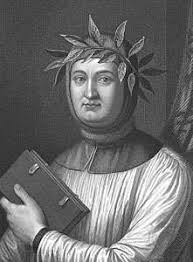
Petrarch
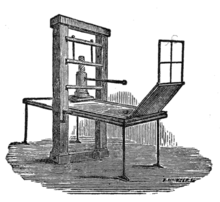
Early printing press
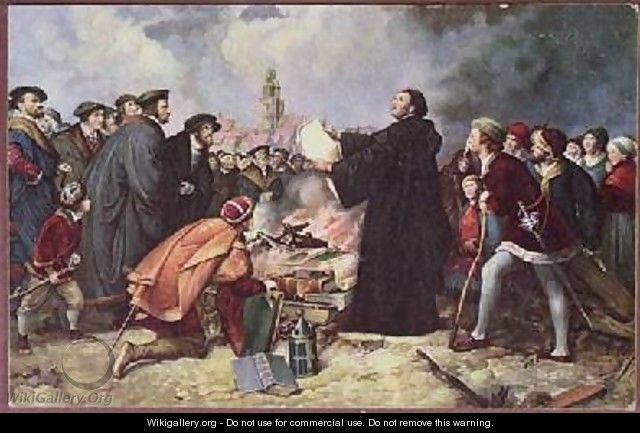
The Protestant Reformation began with activism of the reformer, Martin Luther (1484-1546). He was born and raised in the German principality of Saxony in the Holy Roman Empire, a loose confederation of German states. Martin Luther's father, Hans, was a commoner, a prosperous miner, who scrimped and saved so that his son could attend a university, which usually only the very wealthy could afford to attend. At the University of Erfurt where students could study either Law, Medicine, or Theology, Martin Luther, against the wishes of his father, chose to study Theology instead of Law. Luther also became a monk and was ordained as a Catholic priest in 1507. In 1512 Luther became a professor of theology at the University of Wittenberg in Saxony. By this time, the influence of the Italian Humanists had spread north to the rest of Europe, and Luther learned and studied Classical works in ancient Greek as well as Latin. He also studied the original Greek text of the New Testament, and he learned Hebrew, so that he could study the Old Testament in its original language. Over the course of his studies in Christian theology, he became increasingly concerned that the teachings and doctrines of the Catholic Church of his day were not based on teachings of the Bible. Martin Luther remained silent with these concerns until the arrival of Johann Tzetzel in Wittenberg in 1517. Tzetzel was a Dominican friar, who had received a commission from Pope Leo X to sell indulgences and raise money for the construction of a new Saint Peter's Cathedral in Rome. At this time Christians believed that people, who were sinners, after death went to a place known as Purgatory, where their souls were "purged" of their sins after much suffering, so that their souls could enter Heaven and eternal bliss in a purified state. Christians also believed that the Pope, as Christ's representative on Earth, had the authority to grant an indulgence, which would allow a person to escape from the horrors of Purgatory. Christians could purchase an indulgence from the Pope for a small fee so that the souls of their deceased loved ones, suffering in Purgatory, could be released from this torture and enter Heaven. Tzetzel was an accomplished preacher and salesman, and he urged large crowds in Wittenberg to purchase indulgences for the loved ones, describing in lurid terms the horrors and suffering in Purgatory. Tzetzel's activities in Wittenberg greatly angered Luther since he believed that Tzetzel was misleading the people with false teachings. Luther in his own study of the Bible could find no scriptural basis for the idea of Purgatory. In fact Luther in his opposition to the selling of indulgences drew inspiration directly from the New Testament - Romans 1:17, and based on this passage he maintained that human beings received salvation from their faith in Christ alone as opposed to any action that they could take such as purchasing an indulgence or suffering in Purgatory. Jesus Christ's suffering and death on the cross alone cleansed all sins from faithful Christians who believed that Jesus was the Son of God. In response to Tzetzel in 1517 Luther issued his 95 theses, in which he listed 95 statements which challenged the practices and teachings of the Catholic Church. Because of this printing press, the 95 Theses was widely published and circulated across Germany.
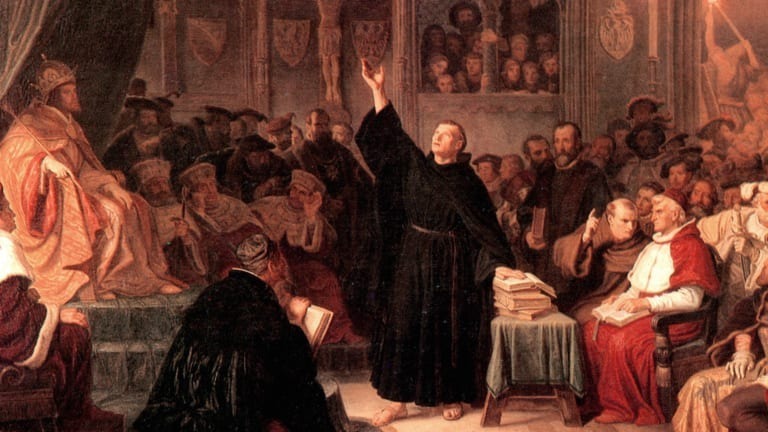
The rapid circulation of the 95 theses stirred up controversy in the Holy Roman Empire. Luther through letters and public sermons continued to criticize the Papacy. In 1521 the Holy Roman Emperor Charles V summoned an imperial diet (assembly) at the city of Worms, where representatives from the different principalities of the Holy Roman Empire assembled to discuss Luther's challenges to the Pope and the Catholic Church. Charles V invited Luther to attend this diet and present his case. At this meeting, however, Martin Luther refused to recant his views. and the diet condemned Luther as a heretic whose views ran contrary to the teachings of the Catholic Church. Before Luther could be punished for this crime by execution, Frederick the Wise, the Elector of Saxony, provided a safe haven for Luther at his castle at Wartburg. Frederick was the ruler of Saxony and one of the seven "Electors" who elected the Holy Roman emperor. At Wartburg under the protection of Frederick, Luther continued to write letters and sermons to encourage and educate other champions of Church reform across the Holy Roman Empire and the rest of Europe. In 1530 another imperial diet convened at Augsburg and again condemned Luther as a heretic, At this diet, however, some of the princes assembled "protested" this condemnation and instead supported Luther. Hereafter, supporters of Luther became known as "Protestants". Over time this term referred to all the new churches which broke away from the Roman Catholic Church.
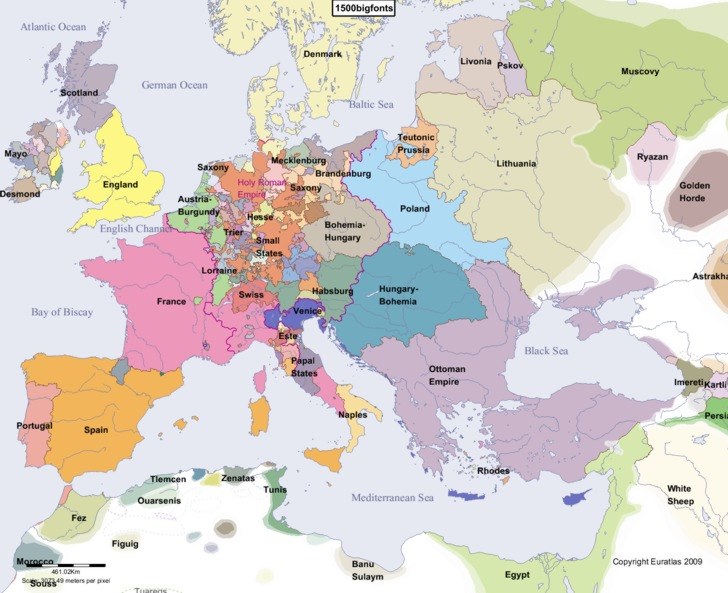
Europe in 1500
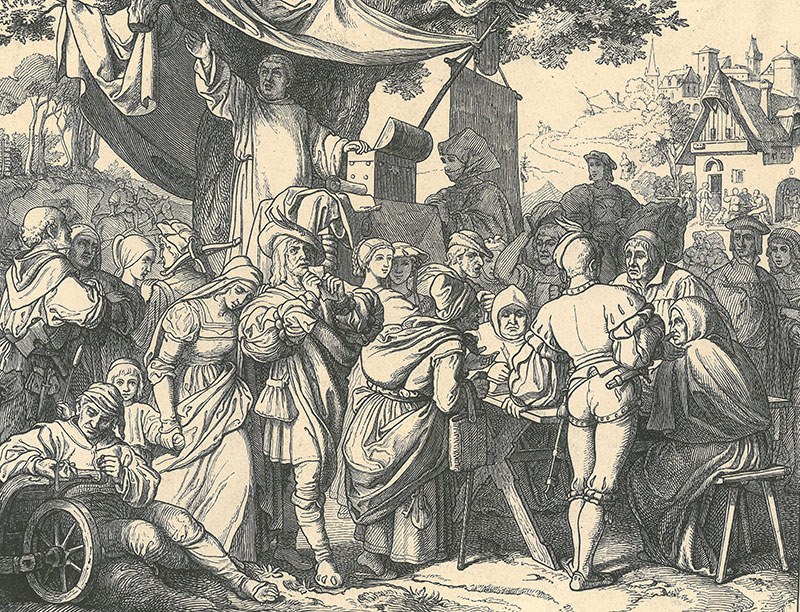
Johann Tzetzel
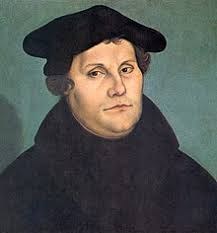
Martin Luther
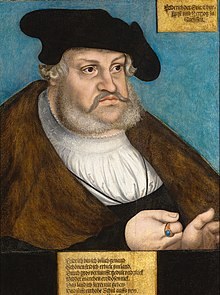
Frederick the Wise
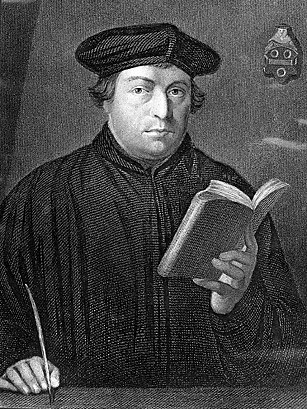
Over time Luther became convinced that the Catholic Church under the leadership of the Pope in Rome was a corrupt and evil institution under the control of the Devil. He urged true Christians to establish new "reformed" churches. Those churches that followed Luther's teachings became known as "Lutheran" churches. Lutheran churches sprung up by the mid-16th century across northern Germany, Central Europe, and Scandinavia. One of the key tenets of the Lutheran Church as well as other Protestant churches was the belief that individual Christians escaped eternal damnation in hell by their personal faith in Jesus Christ as their savior and redeemer. The Roman Catholic Church also maintained that only faith in Jesus Christ could save sinners from hell, but only the Roman Catholic Church could provide this salvation through the sacraments or rituals such as baptism and communion, which only ordained clergy could provide. Martin Luther, however, maintained that these sacraments were not a means of salvation, but instead an outward expression of the inner faith of the individual Christian.
Martin Luther also stressed that all teachings of true Christian churches must be based directly on the words of Holy Scripture (Old and New Testaments of the Bible) alone. For example, in the New Testament (Mark 14:22-24) during the Last Supper Jesus declares that the bread and wine of the Passover feast is his body and blood. Luther maintained that Christians during the sacrament of communion through their faith ate the spiritual body and blood of Christ when they consumed bread and the wine in this ritual. Luther rejected the Roman Catholic doctrine of Transubstantiation, which the Catholic theologian Thomas Aquinas (around 1250) had proposed. Aquinas had employed the terminology of the pagan Greek philosopher, Aristotle, to explain how the ordained priest transformed ordinary bread and wine into the body and blood of Christ during the sacrament of communion. Luther also rejected other Catholic practices and teachings which he maintained had no basis in Holy Scripture such as penance, indulgences, Purgatory, pilgrimages, and relics.
The Lutheran Church also rejected the Roman Catholic doctrine that the ordained clergy served as a bridge between God and the individual Christian. Instead Luther emphasized that every Christian through faith could enjoy a direct, personal relationship with Jesus Christ. Martin Luther, for example, maintained that Christians ought to read Holy Scripture for themselves instead of relying on clergy to interpret the Bible for them. Martin Luther therefore completed a translation of the Bible into German by 1534, so that ordinary German folk could read the Bible for themselves. Up to this point the Bible in Western and Central Europe had only been available in the Latin Vulgate Bible. In the fourth century CE Saint Jerome had translated the Hebrew and Greek of the Old and New Testament into this Latin translation of the Bible. By Luther's day, however only a small minority of educated clergy and laymen could read the Vulgate Bible. Luther translated the Hebrew and Greek of the Old and New Testament into the vernacular German spoken everyday by Germans at that time. In so doing, Luther firmly established vernacular German as a literary (written) language. Since Luther maintained that the ordained clergy were not the means by which Christians were saved though the sacraments and the interpretation of Holy Scripture, he rejected the Roman Catholic teaching that required all clergy to be set apart from the rest of society by practicing celibacy (abstaining from sex). According to Luther, clergy were no higher in God's sight than any other Christian. He envisioned clergymen or pastors simply as leaders and teachers within the church. Luther therefore maintained that clergy could marry and father children just like any other Christian. Luther himself, a former monk married Katharina von Bora, a former nun, and fathered six children.
Luther's ideas had a radical political and social impact on the Holy Roman Empire. Luther's stress on the equality of all Christians before God caused peasants across Germany to wonder why their aristocratic landlords controlled their local churches and imposed heavy rents and fees on them. In 1524 peasants across Germany rose up against their landlords in the Peasant's Rebellion. By 1525 the rebellion was over after aristocratic armies massacred over 30,000 men, women, and children. Luther condemned the rebels, maintaining that equality among Christians was a spiritual state only and impossible in a sinful, material world. The Protestant princes of the Holy Roman Empire viewed Luther's rejection of clerical celibacy and Purgatory as justification for abolishing monasteries and confiscating large tracts of valuable farmland that had belonged to these monasteries. Over the centuries Christians had provided these monasteries with land so that the celibate monks in these monasteries could devote their time to praying for souls' release from Purgatory. Due to Luther's teachings, these monasteries had no reason to exist from a Protestant perspective . Protestant princes enriched themselves by selling confiscated lands. The increased wealth of these Protestant princes from these sales served to strengthen their power and influence in the Holy Roman Empire at the expense of the emperor and the central government of the empire. Luther's ideas therefore contributed to further political fragmentation of the Holy Roman Empire.
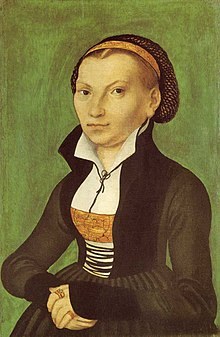
Katharina von Bora
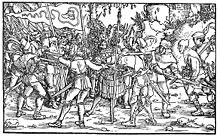
Peasants Rebellion
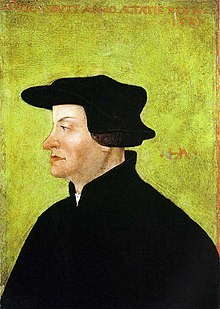
In the 16th century some Protestant reformers maintained that Luther's criticism of the Roman Catholic Church didn't go far enough toward restoring a truly reformed Christian church. Consequently there arose of number of different Protestant churches or denominations. One such reformer was Ulrich Zwingli (1484-1531). He was one of nine children born to a prosperous peasant farmer in the Swiss Confederation, an alliance of independent towns in modern Switzerland. Although a commoner, Zwingli, like Luther, attended a University, the University of Basel, which was under the influence of Renaissance Humanism. In 1506 Zwingli earned a degree in Theology and was ordained as a Catholic priest. In 1519 Zwingli became the priest at the main cathedral in the leading Swiss city of Zurich. Beginning in that same year, Zwingli in his sermons challenged the teachings of the Roman Catholic Church. In 1523 Zwingli published his 67 Articles in which he laid out his criticism of the Roman Catholic Church. In 1524 Zwingli married Anna Reinhard and would father four children. Zwingli was largely in agreement with Martin Luther except in regard to his views regarding the church service (liturgy) and the sacrament of communion. Martin Luther had posted little objection to rituals and customary prayers of the Roman Catholic Mass. In Lutheran churches the church service was largely identical to those of the Roman Catholic Mass except that the service was in the vernacular language rather than in Latin, and worshipers partook of both bread and wine, whereas in Roman Catholic churches only the priest partook of both bread and wine, while the lay people took only bread. Zwingli, however, maintained that the church service must be radically changed so that Christian worship was more in line with the practices of the early Christian Church as depicted in the Book of Acts in the New Testament. Zwingli proposed that church services simply focus on the study of Holy Scripture through the sermon by the pastor and congregational prayer. Instead of prepared, customary prayers, Zwingli proposed that prayers be spontaneous as the pastor and the congregation was moved by the Holy Spirit. Zwingli also objected to "images" in church buildings such as statues and stain glassed windows since he maintained that such images could lead to idolatry. He also opposed all pomp and ceremony in the church that might distract from the worship of God, so he opposed candles, incense, special vestments (clothes) for the pastor, and even musical instruments, all of which one would find in a Roman Catholic Church service. Zwingli also rejected the idea that the spiritual body and blood of Jesus Christ was present in the bread and wine in the sacrament of communion. Drawing, for example, from passages in Luke 19 in the New Testament, Zwingli insisted that the purpose of this sacrament was simply to remember and commemorate Christ's suffering and death on the Cross. Zwingli successfully convinced the city of Zurich to embrace his church reforms. He also urged the city to wage war on Swiss towns that had refused to leave the Roman Catholic Church. In 1531 Zwingli died in battle in the Kappel War in which the Protestant and Roman Catholic cities in the Swiss Confederation waged war against one another.
Zwingli didn't found his own Protestant church denomination, as did Luther, but his ideas for Church reform spread rapidly across Europe due to the printing press and the advance of literacy at this time. Zwingli's focus on reforming the church based on the depiction of the early Christian Church in the New Testament inspired the emergence of new Anabaptist churches. Since Jesus himself was baptized as an adult in the New Testament accounts, some reformers maintained that all Christians ought to be baptized as adults as well, instead of following the Roman Catholic tradition of infant baptism, which had been the practice of Christian churches as early as the second century CE. Anabaptists, who had already been baptized as infants, had themselves "rebaptized" as adults. Conrad Grebel was a merchant and pastor, who originally was a strong follower of Zwingli in Zurich , but in 1525 he broke with his mentor and advocated adult baptism, which Zwingli opposed. Grebel died in 1526, but his ideas as expressed in his letters and sermons survived his death. Menno Simons (1496-1561) founded one of the most successful Anabaptist churches (the Mennonites). Simons was born to a peasant family in the Netherlands. He was ordained as a Catholic priest in 1516, but in 1536 he renounced his Roman Catholic faith and emerged as the leader of the Anabaptists in the Netherlands and Germany by 1540. Mennonite churches largely embraced the reforms proposed by Zwingli, but their defining characteristic was their practice of adult baptism. In the early 17th century through the efforts of Mennonite missionaries, the first Baptist churches arose in England. English Baptists founded the first of many Baptist churches in England's American colonies in Providence, Rhode Island in 1638.
Some Anabaptists in the 16th century gained a reputation as dangerous radicals since some Anabaptists maintained that true Christians ought to practice communism and share all their wealth in common as described in the Book of Acts (4:32-37) in the New Testament. Some Anabaptists also believed that the world was in its last days, as described in the Book of Revelations in the New Testament. These Anabaptists viewed the existing governments of their day as under the Devil's control. For example, John of Leiden in the Netherlands was a Dutch tailor, who became an Anabaptist and travelling preacher. In 1532 he began preaching in the German city of Munster. He convinced the city's residents to expel the Roman Catholic Bishop from the city. John became the new leader of the city and demanded that the city residents share their wealth with one another. He also rejected the idea of traditional marriage and insisted that all residents have sex with one another freely. Eventually John declared that he himself was Jesus Christ. He had a special gold crown made for himself and he demanded the people worship him as God. In 1534 the exiled Bishop raised an army and overthrew John's regime in Munster.
Fausto Sozzini or Socinus (1539 - 1604) also departed radically from the teachings of the Roman Catholic Church as well as from other Protestant churches. He was born and raised in Sienna in Italy and worked as a merchant. In 1570 he published his influential work, On the Authority of Sacred Scripture, in Latin, which was still the language of scholarship. Socinus rejected the idea of the Trinity based on his study of New Testament. Instead he maintained that God is a single person, instead of three persons. Followers of Socinus were thus known as Unitarians. Socinus also rejected the divinity of Jesus Christ, viewing Jesus as a divinely inspired man rather than the Word of God made man and the second person of the Trinity. In his study of the New Testament, Socinus employed a rational approach, and he dismissed the miracles in the Bible such as the virgin birth and the resurrection of Jesus as mere legends. He accepted only the ethical teachings of Jesus as genuine. In the 16th and 17th century, Unitarian Churches sprung up in Hungary, Poland, and the Netherlands.
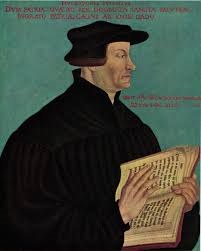
Ulrich Zwingli
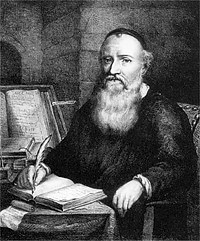
Menno Simons
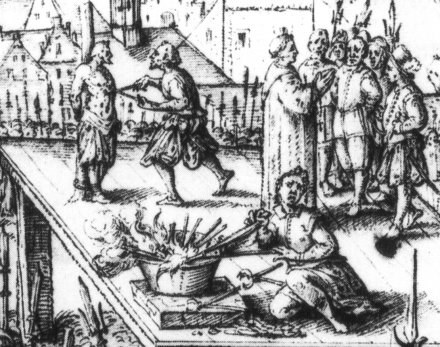
Execution of John of Leiden
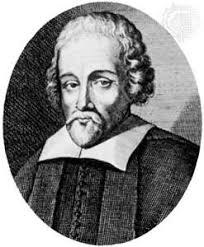
Fausto Sozzini (Socinus)
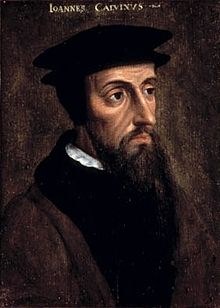
Another very prominent Protestant reformer was John Calvin (1509-1564), whose teachings inspired the foundation of a number of Calvinist churches across Europe in the 16th century. John Calvin was born and raised in northern France. His father worked as a clerk and notary for the Roman Catholic Church, and he wanted his son to become a Catholic priest. Instead, Calvin decided to study law at a number of different French colleges. While in college in the 1530's Calvin converted to the Protestant faith. In 1537 Calvin left France where the Protestant faith had been banned, and settled in the Swiss city of Geneva, whose inhabitants spoke French, as opposed to German as in the Swiss city of Zurich. In Geneva Calvin emerged as a leader in this Protestant community. In Geneva Calvin devoted much time to his life work, the Institutes of Christian Religion, which was originally written in Latin. In this work Calvin was hoping to construct a well defined Protestant theology that incorporated the ideas of both Luther and Zwingli. For example in his view regarding the sacrament of communion, he accepted the view of Zwingli that this sacrament served as way to commemorate the sacrificial suffering and death of Christ on the cross, but Calvin also maintained that God was present in the bread and wine as the Holy Spirit, the third person of the Trinity. Like Zwingli, Calvin wanted to reform the church based on depiction of the early church in the New Testament. Calvin therefore rejected the hierarchical organization of the Roman Catholic Church. Instead Calvin maintained that each church or congregation of Christians be independent from other congregations and elect their own pastors or elders (Presbyters). Consequently Calvinist churches are also known as congregational churches.
Calvin in his theology stressed the concept of Predestination, which had been developed by the influential Christian theologian, Saint Augustine in the early fifth century CE. According to Calvin, God, before time began, had predestined or determined which souls would enjoy eternal joy in Heaven and which souls would suffer eternal damnation in Hell. Calvin thereby rejected the notion that human beings possessed free will to determine their own eternal fate. Human beings could only be sure of their fate in the afterlife by their lifestyle and the company that they kept. If they were godly, hard working, sober, and self- disciplined people, who were faithful to their spouses and responsible parents, while spending their time with like-minded people, they could be assured of a blessed afterlife. But if they were impious, lazy, adulterous drunks, who hung out with a crowd engaged in immoral behavior, an eternity in Hell was their predestined fate in the afterlife. Since hard working, diligent people often obtain a fair degree of financial security, critics of Calvinism have pointed out that Calvinists often have equated economic prosperity and the successful acquisition of wealth with godliness and piety, the so-called "prosperity theology". In the early 20th century the famed sociologist, Max Weber coined the term "protestant work ethic" to discuss the economic impact of Calvin's theology. According to Weber, followers of Calvin' theology devoted their lives to hard work and self-discipline, which resulted in economic growth and the advancement of capitalism in those areas where Calvinists were numerous.
In Geneva, Calvin founded the University of Geneva as the first Protestant seminary to train pastors and missionaries. Calvinist missionaries established churches across Europe in the 16th and 17th century. In Germany, the Netherlands, and Hungary, the Calvinist churches were simply known as the "Reformed Church". Across southern France Calvinists became known as Huguenots. In Scotland, the Calvinist churches were organized into the Presbyterian Church. In England the Calvinists were divided into Puritans and Separatists. Since Calvinists in England faced persecution, Separatists (the Pilgrims) founded the colony of Plymouth in 1620, and Puritans founded the Massachusetts Bay Colony in 1630 in North America.
The Protestant Reformation resulted in large areas of Europe defecting from the Roman Catholic Church, However many Christians in Italy, Spain, and France, for example, remained loyal to this church. Some church reformers wished to end corrupt practices in the Roman Catholic Church, while still supporting this institution. For example the Dutch Humanist, Erasmus of Rotterdam (1466-1536) and the English Humanist Thomas More (1478-1532) were both vocal critics of corruption and abuses within the Roman Catholic Church , but both refused to abandon this church. In fact the English king Henry VIII executed Thomas More on the charge of treason when More refused to reject the Pope as the head of the Church. Eventually reform did take place within the Roman Catholic Church in the 16th century as a response to the defection of so many Christians to the Protestant churches. Historians refer to these reforms as the Counter-Reformation or the Catholic Reformation.
Since the Roman Catholic Church possessed a strict hierarchical structure, sweeping reform within the church could only be implemented from the very top of the hierarchy by the Pope himself. Pope Paul III (Alessandro Farnese, r. 1534-1549) ) was an unlikely reformer. He belonged to a powerful, aristocratic family in Central Italy. He had become a Cardinal in the church through nepotism since his older sister, Giulia was the mistress of Pope Alexander VI. Pope Paul III however, summoned the Council of Trent in 1545 to address the issue of church reform. Earlier Popes had resisted summoning such a council for fear that that a church council could limit the authority of the Papacy within the church. The Council of Trent convened for nineteen years until 1563. The members of the council debated whether to adopt the reforms proposed by Martin Luther or to affirm support for existing church practices and doctrines. In general church leaders from northern Europe at this council tended to support Luther's ideas, whereas church leaders from Spain and Italy were more conservative and wished to see no changes in practices and doctrines. In the end the conservatives were victorious in this debate. The focus of reform therefore in the Counter- Reformation was on ending abuse and corruption within the church rather than adopting new doctrines or practices. For example, the Council of Trent affirmed the belief in Purgatory and in papal indulgences, but condemned the selling of indulgences as a fund raising scheme. The Council also sought to purge the church of uneducated, corrupt priests by requiring priests to receive more education and training.
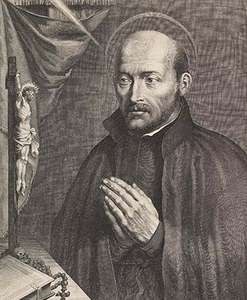
The Counter-Reformation also witnessed a grass roots revival among Roman Catholics and renewed a sense of mission. The Society of Jesus or Jesuits was front and center in this revival. Ignatius Loyola (1491-1556) was the founder of this new religious order within the Roman Catholic Church. Loyola was in his youth a soldier from an aristocratic Spanish family. After a brush with death due to an injury in battle, Loyola decided to devote his life to Christ, spending up to seven hours a day in prayer. He wandered through Spain, France, and Italy, preaching and serving others. Eventually Pope Paul III in 1540 allowed Ignatius and his followers to organize the Society of Jesus as a new order of priests. With his military background Loyola organized the Jesuits along the military lines. Loyola was the first Superior General of the order. These Jesuits committed themselves to preaching the doctrines of the Roman Catholic Church to Protestants in Europe and heathens in Asia and the Western Hemisphere. The Jesuits also established schools and colleges across Europe whose curriculum was shaped by Renaissance Humanism. Protestants, however, came to view Jesuits as tools of the Devil.
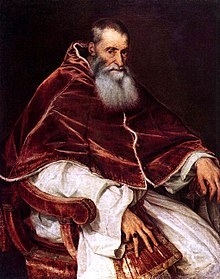
Pope Paul III
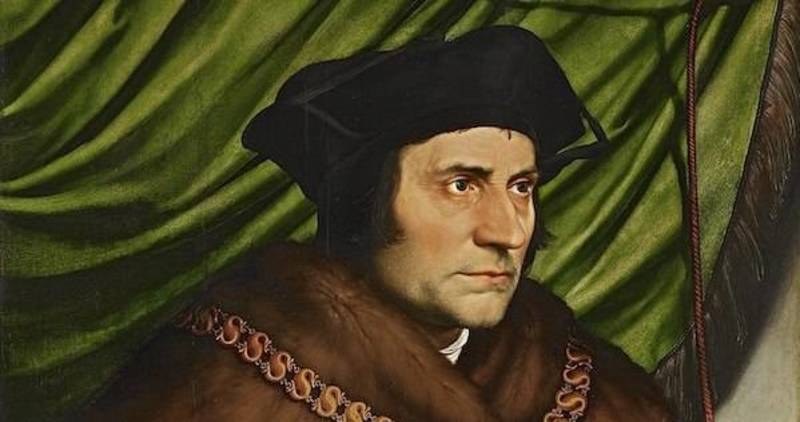
Thomas More
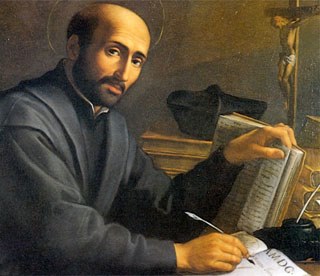
Ignatius Loyola
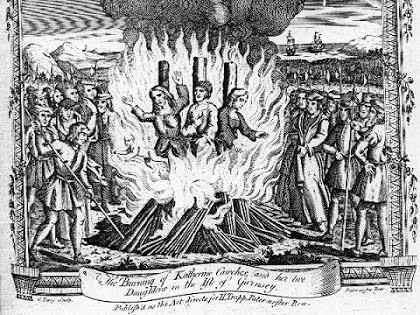
The Reformation had a long lasting impact on the history of Modern Europe. On the positive side, the Reformation established the basic principles of human rights, freedom of conscience in particular. In his own defense at the Diet of Worms in 1521 Martin Luther proclaimed that he could not recant his views without violating his conscience. During the Reformation, there arose some voices calling for religious toleration. For example, William of Orange (1533-1584) was a statesmen and leader of the Dutch Republic who maintained that the state could not impose a religion on its people. The Dutch Republic became one of the few places in Europe where people could practice their faith without fear of persecution. However across most of Europe in this period, the government did persecute "heretics" whose religious views did not conform to the official, established religion of the state. In both Protestant and Roman Catholic states such non-conformists faced imprisonment, heavy fines, and even death (burning at the stake). Another legacy of the Reformation were the various religious wars of the 16th and 17th centuries. Religious rivalries between Roman Catholics and Protestants was a factor in many of the destructive wars of this era. Lastly, the Reformation promoted literacy and education for the masses. Both the Protestants, Martin Luther and John Calvin, and the Roman Catholic Ignatius Loyola, were strong advocates for education and literacy. The Reformation witnessed the establishment of new schools and colleges across Europe. The advancement of literacy due to the Reformation even transformed some areas of Europe. Scotland, for example, was a region on the margins of Europe with little natural resources. Due to the Protestant Reformation, literacy rates in Scotland skyrocketed since the Presbyterian Church pushed for even the poorest peasants to read so that they could read the Bible for themselves. This increase in literacy also enabled the Scots to advance their education in other areas as well. By the 18th century, Scotland was one of the most advanced regions in Europe in terms of its science and industries. The Reformation through its emphasis on literacy and education helped set the stage for the later Scientific Revolution.