The Age of Exploration and the Spanish Empire
Modern World2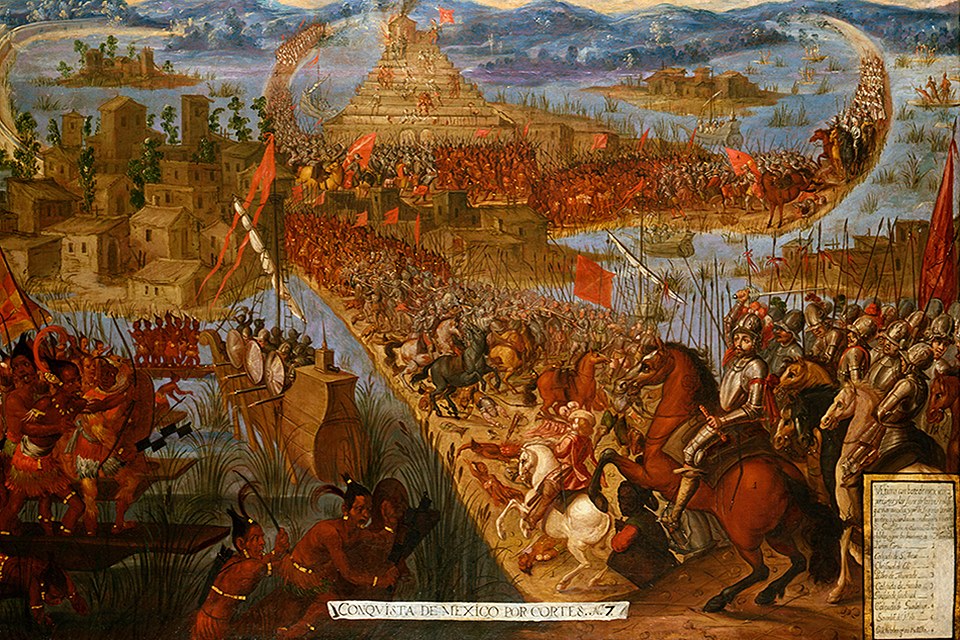
In the 16th century during the Age of Exploration and Discovery, European explorers traveled to Asia, Africa, and the Western Hemisphere, which became known to Europeans as the New World since Europeans had been previously unaware of the existence of North and South America. The kingdom of Spain, an emerging nation-state in Western Europe, acquired a vast empire in this New World through the conquest of the the mighty Aztec and Inca Empires. The vast wealth that Spain drew from this empire enabled the kings of Spain in the 16th century, Charles V (r. 1516-1555) and his son, Philip II (r. 1555 - 1598) to become the most powerful and dominant monarchs in Europe in this period.
Both Charles V and Philip II were members of the powerful Hapsburg Dynasty, whose origins lay in southern Germany. Charles V by the age of 19 in 1519 inherited an immense realm in Europe from his ancestors. Charles' grandfather Maximilian I was the Archduke of Austria and Holy Roman Emperor. Charles' grandmother was Mary of Burgundy, the heiress of the Duchy of Flanders (The Netherlands and Belgium today). Maximilian married Mary in 1477 to prevent her archenemy Louis XI of the Valois Dynasty of France from seizing Flanders for himself. In 1496 the son of Maximilian and Mary, Philip the Handsome married Joanna, the eldest daughter of Ferdinand of Aragon and Isabella of Castile. The marriage of Ferdinand and Isabella in 1479 had united their two kingdoms into the kingdom of Spain. The marriage of Joanna and Philip sealed an alliance against a common enemy, the Valois Dynasty of France. Ferdinand was also the king of the island of Sicily and his family, the House of Aragon, also claimed the kingdom of Naples in Southern Italy. The Valois king of France, Charles VIII, the son of Louis XI, however, had claimed Naples for himself and invaded Italy in 1495 to make good this claim. The union of Philip and Joanna resulted in the birth of the future Charles V in 1500. In 1506 after the death of Philip, Charles, age six, inherited Flanders from his father. Charles grew up in Flanders and French was his native language. In 1516, after the death of his maternal grandfather, Ferdinand, Charles inherited, at the age of 16, the thrones of Aragon and Castile as well as the kingdom of Sicily since Ferdinand had no sons and Charles was the son of Ferdinand's and Isabella's eldest daughter, Joanna. In 1519, Maximilian died, and Charles inherited the Duchy of Austria from his paternal grandfather. The Electors of the Holy Roman Empire then elected Charles to succeed his grandfather as Holy Roman Emperor, Charles V (one of the Electors was Charles' younger brother, Ferdinand, as the king of Bohemia).
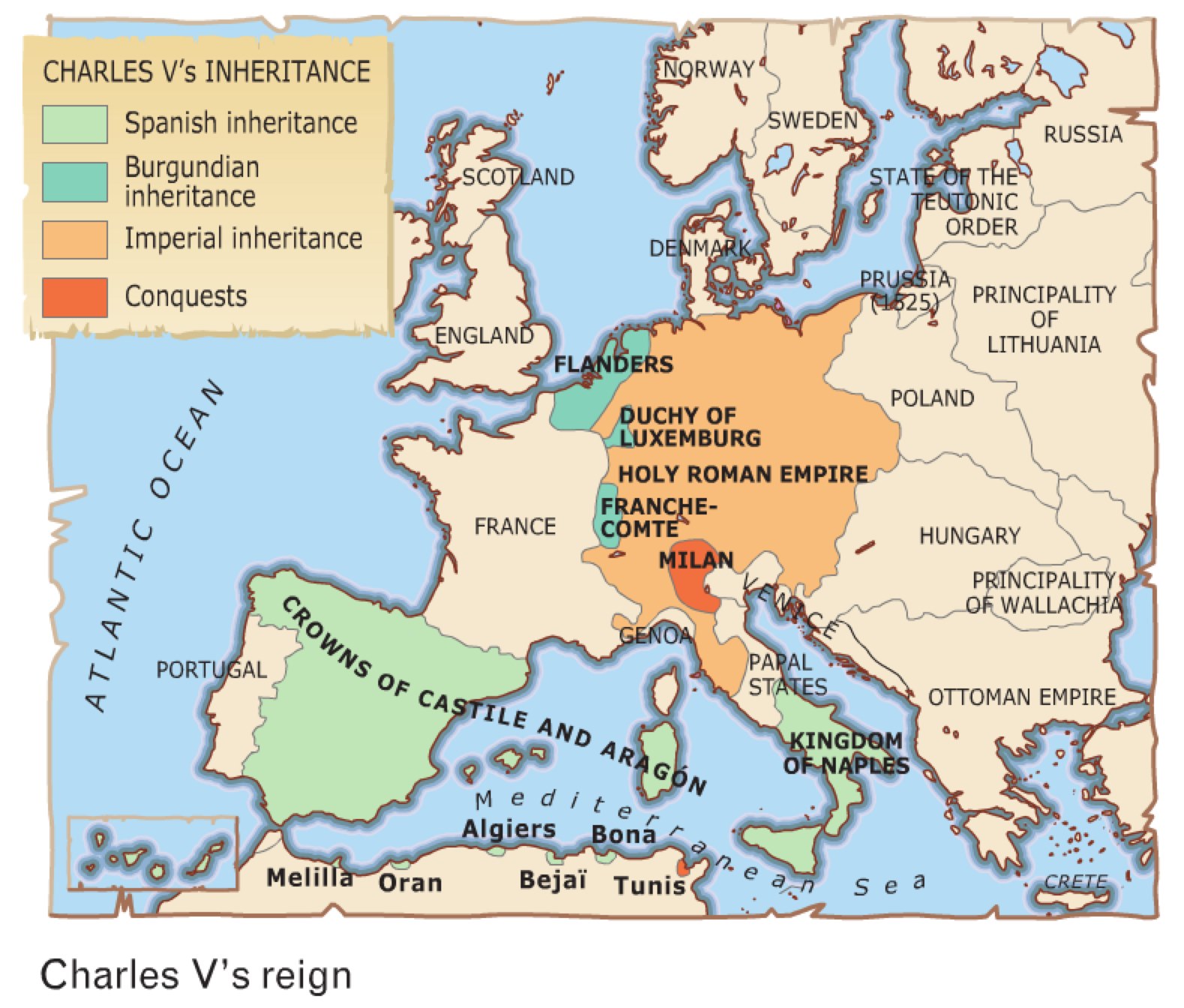
European Empire of Charles V
Charles V reigned at the dawn of the modern era, but this king's world view was deeply rooted in the previous Medieval era. As a traditional aristocrat Charles desired to expand the wealth and prestige of his family. As Holy Roman Emperor, he viewed himself as the universal leader of Christendom or the "Kingdom of Christ". Charles believed that it was his duty to protect the one holy Catholic Church both from Muslim "infidels" and Protestant 'heretics". During his long reign, Charles did succeed in expanding the holdings of the Hapsburg family and defending his lands from attacks by the Muslim Ottoman Empire, but he was not able to crush the rising Protestant churches or unite the Holy Roman Empire under his leadership.
During the reign of Charles V, the Hapsburg family permanently acquired the kingdoms of Hungary and Bohemia (the Czech Republic today). Charles's sister Mary in 1515 had married Louis II Jagiellen, the king of Hungary and Bohemia, while Charles' younger brother, Ferdinand married Anne, Louis' sister. In 1526 the Ottoman Empire invaded Hungary and crushed the Hungarian army at the Battle of Mohacs. Louis II died in this battle without any children to inherit the throne. The great landed nobility of Hungary and Bohemia in this time of crisis met in their respective diets (assemblies) and elected Ferdinand, Louis' brother-in-law, as the king of these two kingdoms. The Hapsburg family also had a legitimate claim to the thrones of both kingdoms since the Hapsburg Holy Roman Emperor Albert II had briefly been king of both kingdoms before his untimely death in 1439. Ferdinand also served as Charles' representative in Austria and from there directed the defense of Hungary from the Ottoman Turks, who had already occupied most of the Hungarian kingdom. Ferdinand solidified the Hapsburg claim to Hungary and Bohemia by winning the support of the landed nobility. First, Ferdinand created an effective frontier force (the Grenzers) to wage war on the Ottoman Turks by recruiting soldiers among Croats and Serbs, whose own homelands had been previously overrun by the Turks. The Grenzers received land grants from the Hapsburg crown for their military service, and they remained fanatically loyal to the Hapsburg dynasty until its collapse in the early 20th century after World War I. Ferdinand also won the support of the landed nobility by granting these nobles the authority to demand that common peasant farmers perform labor services for them without pay (the so-called robot).
In addition to Bohemia and Hungary, the Hapsburg family also inherited the throne of Portugal. In 1526 Charles married Isabella, the daughter of Manuel I of Portugal. Charles' sister Catherine in 1526 married John III of Portugal, the son of Manuel I. In 1578, the grandson of John III, Sebastian of Portugal died in battle in his war against the Sultan of Morocco. Since Sebastian died young without any children, the throne passed to his nearest male relative, Philip II of Spain, the son of Charles and Isabella. Philip II thus inherited the kingdom of Portugal and its far flung overseas empire, which included territories in India, east and west Africa, and Brazil in South America.
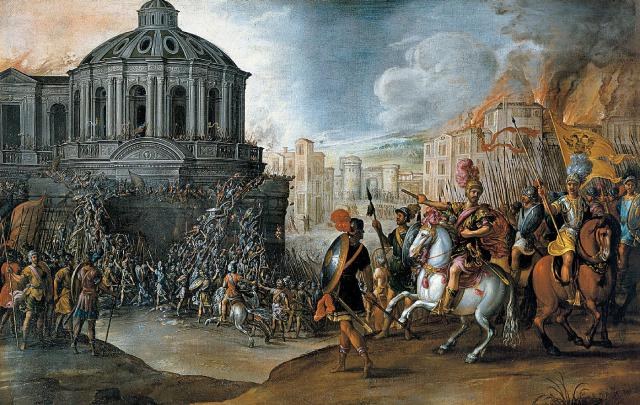
Charles V also defeated his rival the Valois king of France, Francis I (r. 1515 - 1547) for domination of Italy. The Valois dynasty contested the Hapsburg claim to Naples and also sought to control the Duchy of Milan in northern Italy as well. In 1525 Charles V led his army to victory over the French forces at the Battle of Pavia in northern Italy. Francis I became a prisoner of war and withdrew his claims to Naples and Milan to secure his release from captivity. In 1527 Charles' army sacked and pillaged the city of Rome since the Pope, Clement VII, had previously allied the Papal States with Francis I and France. Charles' victories secured Hapsburg control of Naples and Milan, which enabled the Hapsburg family to dominate the small states in Italy.
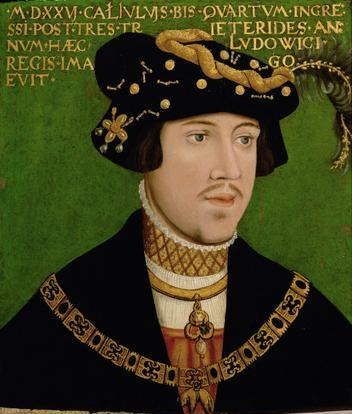
Louis II Jagiellen
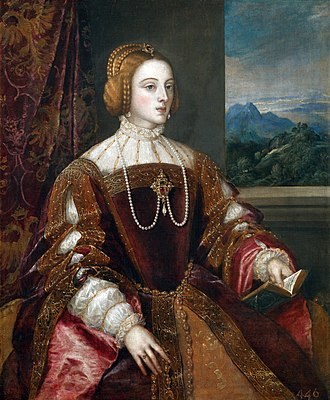
Isabella of Portugal
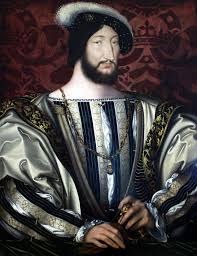
Francis I
Charles V acquired the most wealth as king of Spain since his reign occurred as the infamous Spanish Conquistadors were amassing a vast empire for Spain in the New World. Spain's claims to lands in the New World began prior to the reign of Charles in Spain. In 1492 Charles' grandparents, Ferdinand and Isabella, authorized the Italian explorer, Columbus of Genoa, to find a new water route across the Atlantic to China and the Far East. Columbus's incentive to find such a route was to access the vast wealth of the Far East. In the mid-13th century, the Italian merchant, Marco Polo of Venice, had traveled across Central Asia and made his way to the court of the Chinese emperor, Kublai Khan. Marco Polo's account of the wealth and power of China and other eastern lands fired up the imaginations of Italian merchants and sailors in the Italian city-states of Venice and Genoa, who traded goods for the silks and spices from these eastern lands in eastern Mediterranean ports such as Constantinople and Alexandria. These ports were the western terminus of trade routes that linked east and west Asia. Columbus himself came from a family of sailors in Genoa. In Columbus' time, the cost of doing business in these ports had increased since these ports were under the control of hostile Muslim states such as the Ottoman Empire that charged Christian merchants high custom duties. Columbus' idea was to sail west across the Atlantic and reach China and India while bypassing the Ottoman Empire. Columbus may have influenced by the new ideas in Italy in circulation due to the Italian Renaissance. Humanists published the works of ancient Greek scientists and philosophers. The most famous Greek geographer and astronomer, Ptolemy (second century CE) had pointed out correctly that the earth is spherical. In addition he had vastly underestimated the circumference of the globe. Based on Ptolemy's notions, Columbus determined that he could sail west, across the Atlantic and eventually reach China and the Far East. Columbus took his idea to Spain since Spain was located along the Atlantic Ocean. The ports of Spain would therefor benefit from a new direct trade route to the Far East. After receiving his commission from the Spanish monarchs, Columbus made his voyage westward, but instead of landing in China, Columbus landed on an island in the Bahamas in the Caribbean Sea. Columbus however thought that he had landed on islands off the coast of India, and he referred to the Lucayen people of these islands as "Indians". Even though Columbus "discovered America", he died in 1506 believing that he had explored islands near India.
News of Columbus' discoveries circulated rapidly at a time when other European explorers from Western Europe were setting out from ports on the Atlantic coast in search of new lands. In 1497 the Portuguese explorer, Vasco de Gama sailed from Portugal down around the southern tip of Africa and into the Indian Ocean, thereby discovering an actual, direct ocean route from Western Europe to India, and ultimately the Far East. Another Portuguese explorer, Pedro Cabral, in 1500 landed on east coast of South America in what would become in the 16th century the Portuguese colony of Brazil. In 1497 an Italian explorer from Venice in the service of Henry VII of England, John Cabot, explored North America's east coast from Newfoundland to New England, hoping to find a "Northwest Passage" which would provide a direct water route to the Far East. Another Italian explorer in the service of Francis I of France, Giovanni Verrazano in 1522 explored the North American east coast from Florida to New England in a search to find this same reputed passage, which doesn't actually exist. A Spanish explorer, Ferdinand Magellan led an expedition (1519-1522) that for the first time in history circumnavigated the globe. The printing press allowed for the rapid spread of the news of these discoveries. In 1507 a German printer Martin Waldseemuller published a new map of the world based on the observations of the Italian explorer, Amerigo Vespucci who in 1501 had explored lands in the Caribbean and the coast of Brazil. Waldseemuller named the lands described by Vespucci "America" in honor of this explorer.
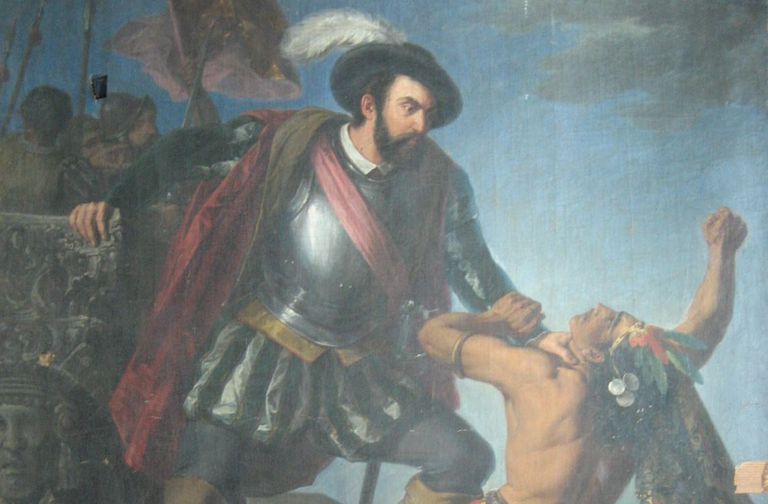
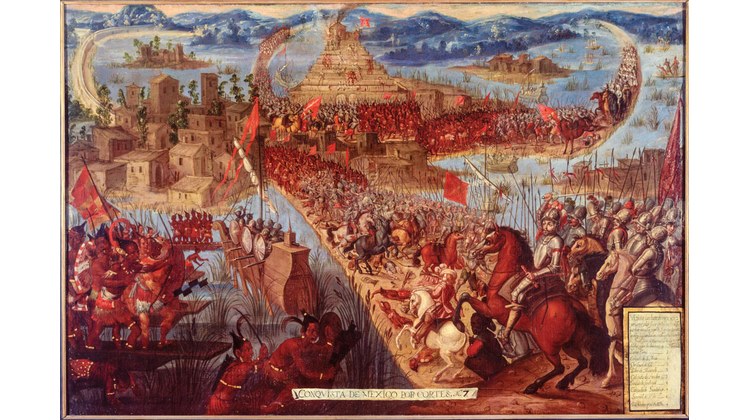
Spain profited more than other western European nations from this "Age of Discovery" due to the conquests of the Conquistadors (the "Conquerors") during the reign of Charles V. In Spain for centuries men had earned wealth and land as warriors in the service of their king and the Catholic Church. After the invasion of the Iberian Peninsula by Arab and Moorish armies in 711 CE, Christian warriors under the command of their kings in Spain waged an ongoing war against these Muslim occupiers in a conflict known as the Reconquista or "reconquest". When this war ended in 1492 with the expulsion of the Muslims from Spain, these warriors quickly turned their attention to the New World where they saw an opportunity to acquire wealth and land and wage war against the heathens of this region for their king and in the name of the Catholic Church. The two most famous of these Conquistadors were Hernan Cortes and Francisco Pizarro. In 1519 Cortes was the Spanish governor of Cuba, which the Spanish had recently conquered from the native Taino people. Cortes set sail for Mexico after hearing tales about the mighty Aztec Empire. Even though Cortes' force numbered only in the hundreds, his relatively small band of soldiers was able to defeat Aztec armies much larger in size for a number of reasons. First the Spanish possessed superior weapons such as iron armor, swords and pikes as well as firearms. The Spanish also possessed horses, which were initially very terrifying to the Aztecs. In battle the Spanish army enjoyed a tactical advantage. The Spaniards fought as a disciplined unit to kill their enemies, whereas Aztec warriors fought battles as individual warriors and tried to capture the enemy to provide human sacrifices for their gods. The Spanish also benefited from the unpopularity of the Aztec empire among the native population of Mexico. Cortes formed an alliance with the enemies of the Aztecs, the Tlexcalans, who provided the Spanish with food and supplies. Cortes' success in his diplomacy was due to the advice that he received from his concubine, Malinche, a native woman,who served as his interpreter. In 1521 Spanish armies sacked Tenochtitlan, the Aztec capital, which was renamed Mexico City.
Francisco Pizarro was inspired by Cortes' success. In 1531 he led a small band of soldiers to Peru in South America to conquer the Inca Empire. Pizarro's army possessed the same military advantages over the Inca forces that the Spanish enjoyed in the conflict with the Aztecs. In addition, The Spanish profited from the ideology of the Inca Empire. The subjects of the Inca ruler believed that the ruler was a living god. After Pizarro was able to capture the Inca ruler, Atahualpa, the Inca frantically surrendered massive amounts of precious metals to the Spanish as ransom. The Inca Empire was also at this time in a weakened state since Atahualpa had just defeated his brother Huascar to win the throne in a bloody civil war. In 1533 Pizarro executed Atahualpa, and Pizarro's forces sacked the Inca capital at Cuzco.
In both the former Aztec and Inca Empires the Spanish over the course of the 16th century consolidated their control over these regions and exploited its wealth. The Spanish were able to exert domination over these areas as the native population was decimated by epidemic diseases such as small pox which the natives contracted from the Spanish and other European explorers. The transfer of such diseases as well as crops from the Old World to the New World and vice-versa is known as the Columbian Exchange. The Spanish also took advantage of a compliant native population. The peasant masses in these former empires were accustomed to paying heavy taxes and performing labor services for the Aztec and Inca ruling elites. After the Spanish conquest, these peasant masses had new masters. The Spanish government enacted in these territories the Encomienda. As a reward for their military services, the Conquistadors received lands from the king and the slave labor of the residents of these lands as long as these landlords supported efforts by the Catholic Church to convert the natives to the Christian faith. Due to numerous complaints regarding the cruelty of Spanish landlords toward their native slaves, Charles V ended this practice in 1542 by royal decree and abolished the enslavement of natives. The indigenous population however continued to work as tenant farmers for their Spanish landlords. After the termination of the Encomienda, the Spanish government still exploited the labor of the indigenous population through the Repartimiento. Spanish authorities required native villages every year to provide a pool of laborers who worked in gold and silver mines, which were owned and operated by the Spanish royal government. Charles V set up a system of government in this new Spanish Empire to control the region and extract its resources. The Spanish king appointed the governor or viceroy of New Spain. Charles V also established the audiencias which were special councils that administered this colony. In 1524 Charles V also created the Council of the Indies, which was composed of the king's top advisers, to oversee the governance of this empire.
Since epidemic diseases and warfare nearly wiped out the entire native population of the Caribbean Islands and took a heavy toll on the native populations of Mexico and Peru, the Spanish Empire in the New World in the 16th century faced a severe labor shortage. To meet this labor shortage, the Spanish began importing enslaved labor from Africa. African slaves became highly prized since in their native Africa, the majority of Africans were accustomed to heavy, agricultural labor in a tropical environment. Portuguese merchants in the sixteenth century dominated this slave trade. Portuguese merchants had initiated trade with African states in West Africa in the 15th century. Initially these merchants were interested in African gold and ivory, but they began acquiring slaves as the demand for this human commodity expanded in the New World in the 16th century. Slavery had previously existed in African states. Slaves in African societies tended to be convicted criminals, war captives, and debtors. Slavery was not typically a permanent social condition, and African slave masters often freed their slaves as a reward for loyalty and service. The expansion of the African slave trade with European slave traders is reflected in the experiences of the West African kingdom of Kongo. Around 1491 the king of Kongo, Joao was friends with Portuguese merchants and converted to Catholicism. However, after his son, king Afonso, in 1526 condemned Portuguese merchants for kidnapping and selling his subjects as slaves, these merchants encouraged hostile African states to attack Kongo and interfered in the internal affairs of the Kongo kingdom. so that the Portuguese could continue in the slave trade unimpeded. In 1575 Portuguese settlers and soldiers occupied the coastal region of the former Kongo kingdom and founded the Portuguese colony of Angola, which became a base for the Portuguese to export African slaves.
In the 17th century, the African slave trade really expanded rapidly due primarily to European demand for sugar and tobacco, which flourished in hot, tropical environments. In the Caribbean Islands and Brazil especially, planters raised these cash crops utilizing African slave labor. Thousands of Africans died from disease and starvation during the infamous Middle Passage as Africans were packed into ships and transported from Africa across the Atlantic Ocean to destinations in the New World. By the 17th century however the Portuguese no longer dominated the African slave trade, as English, Dutch, and French slave traders expanded their operations. Moreover, in the 17th century the English, the Dutch, and the French all established colonies of their own in the New World and challenged Spanish domination in that region.
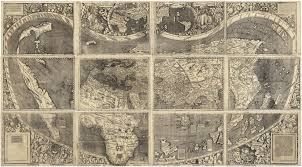
Waldseemuller's map of the world showing "America"
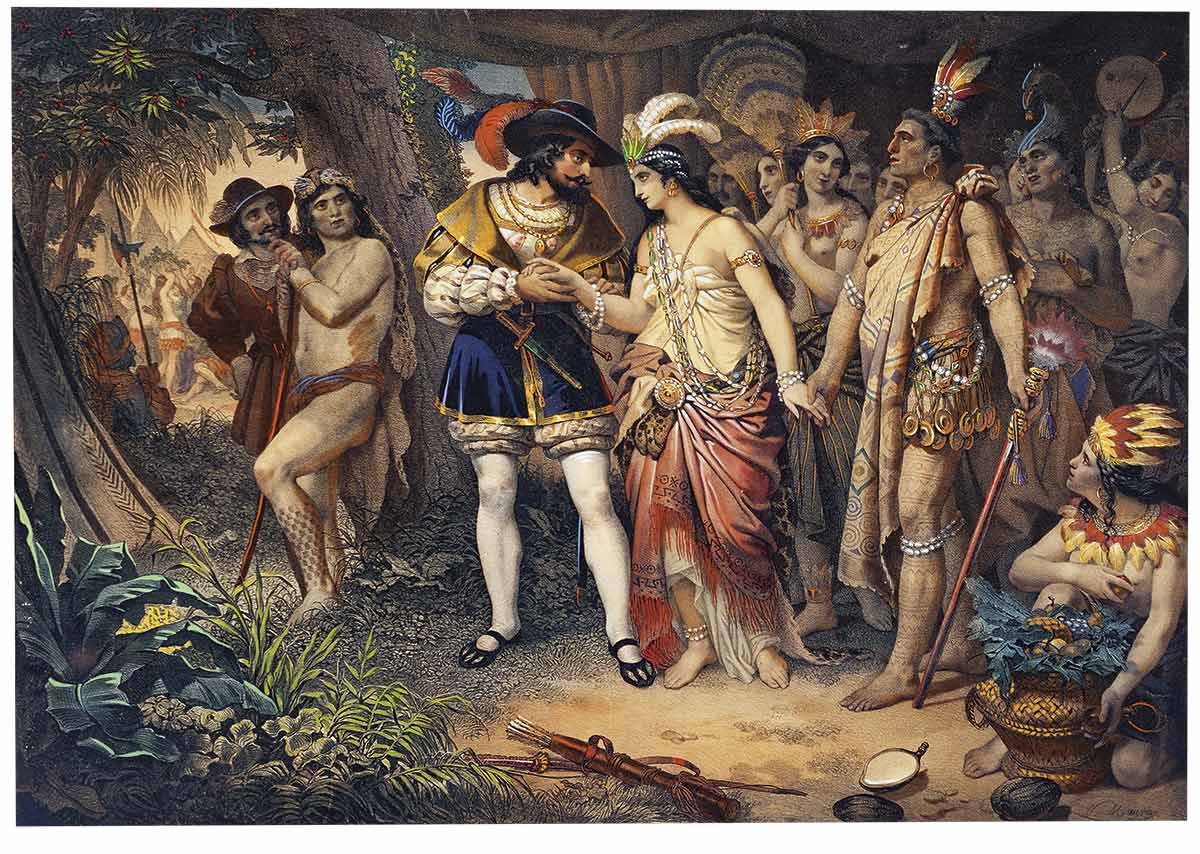
Cortes and Malinche
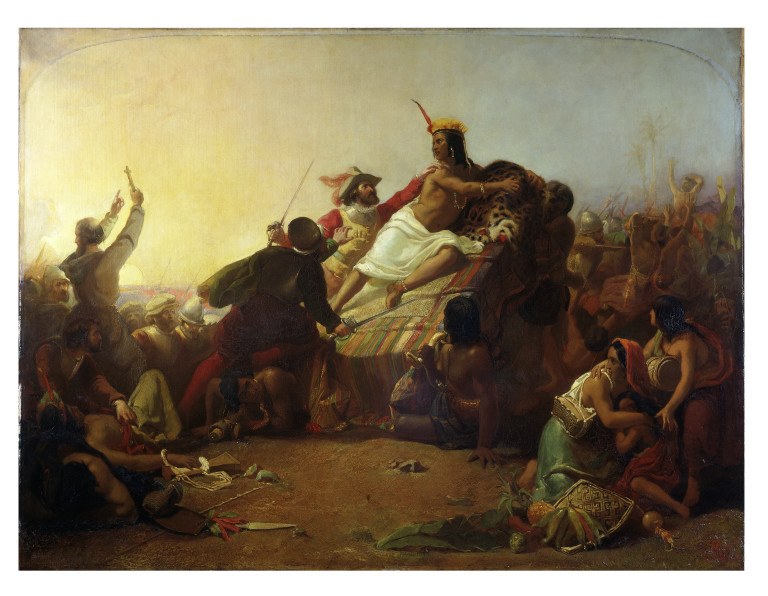
Pizarro and Atahualpa
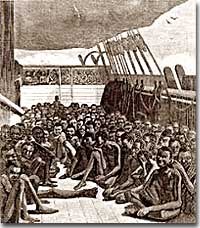
The Middle Passage
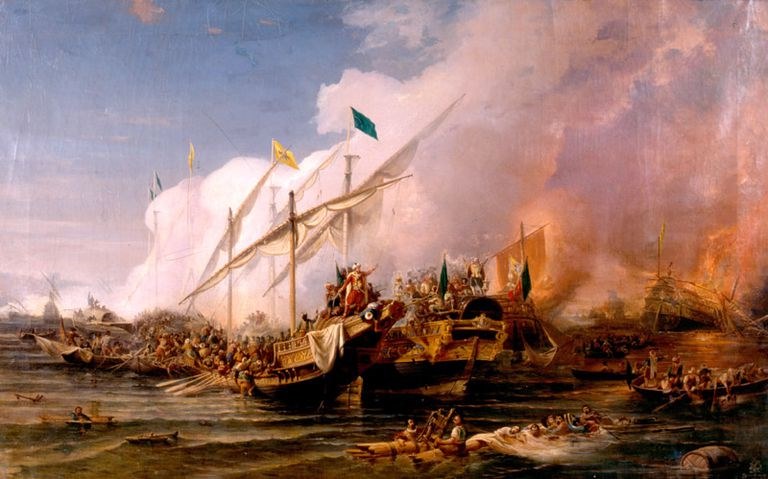
During his long reign Charles V, the emperor did successively add to the wealth and power of the Hapsburg dynasty, but he enjoyed much less success in waging war against the "enemies" of Christendom, the Muslim Ottoman Turks and the Protestant "heretics" who threatened the unity of the Holy Roman Empire and the Catholic Church. In the war against the Turks, Charles was on the defensive. After the Turkish conquest of Hungary in 1526, Turkish armies advanced against Vienna in Austria in 1529 and again in 1531, only to be turned back by Charles' armies. Charles also faced the Ottoman fleet in the western Mediterranean. In the 16th century the Ottoman Empire expanded across North Africa and acquired control of the ports of Tripoli (modern Libya) and Algiers (Algeria). The Ottoman naval commander Barbarossa Hayreddin Pasha led the Turkish fleet to victories over Spanish forces. Charles V feared that the surging Ottoman fleet could stir up a rebellion of the Moriscoes in Spain. The Moriscoes were former Muslims in Spain who had ostensibly converted to Catholicism in 1492 to avoid expulsion. Charles' fear of Turkish expansion was compounded when his old enemy Francis I of France formed an alliance with the Turks in 1535. Francis in 1536 also mounted another unsuccessful attempt to seize the duchy of Milan in Italy from Charles, while Charles was occupied with the threat of the Turks. In 1544 Charles led his armies in an invasion of northern France, and Francis sued for peace.
Charles was also not able to crush the Protestants in the Holy Roman Empire. The Lutheran princes of the Holy Roman Empire organized the Schmalkaldic League in 1531 to oppose Charles V since Charles expressed strong support for the Roman Catholic Church. In 1530 Charles V had become the last Holy Roman Emperor to be crowned emperor by the Pope. These German princes also feared that the great power and wealth of Charles posed a threat to their independence within their own principalities. In 1551 these Protestant princes were allied with Henry II of France (the son of Francis I) whose forces defeated Charles' armies and captured the city of Metz. Henry II was Roman Catholic, like Charles V, but the Hapsburg family was the enemy of the House of Valois. In 1552 Charles sued for peace with the Protestant princes, and the war in Germany ended with the Peace of Passau. In 1555 Charles V and the Protestant princes of the Holy Roman Empire agreed to a peace treaty, which became known as the Peace of Augsburg. Under the terms of this treaty, each prince of the empire was free to choose whether his principality and his subjects were either Lutheran or Roman Catholic. The Peace of Augsburg maintained a uneasy peace between Protestants and Roman Catholics in Germany until the outbreak of the Thirty Years War in 1618.
In the year of that treaty in 1555, an exhausted and sickly Charles V decided to abdicate his throne and retire to a monastery in Spain. He left the the throne of Spain as well as his lands in Italy and the Netherlands to his son Philip, while leaving the Duchy of Austria to his younger brother, Ferdinand, who was already king of Hungary and Bohemia. Subsequently through the 17th century, the Hapsburg family was divided into Spanish and an Austrian branches. Charles V died in 1558.
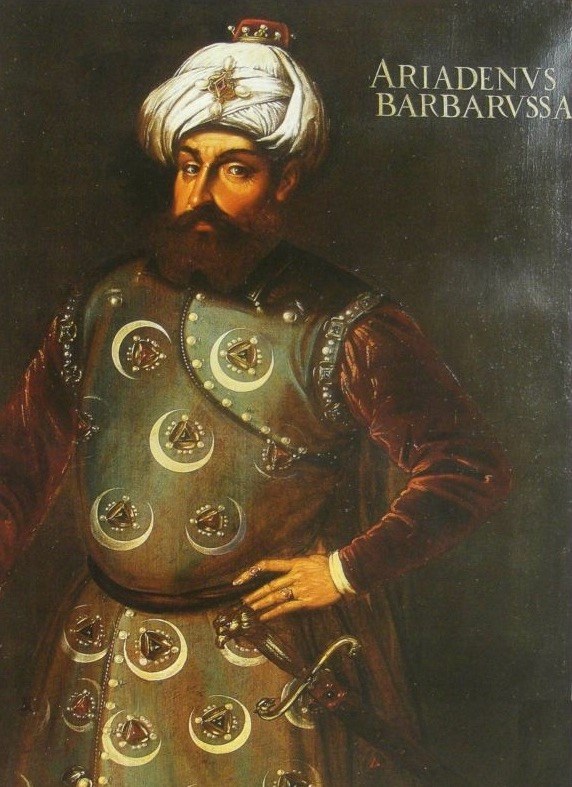
Barbarossa Hayreddin Pasha
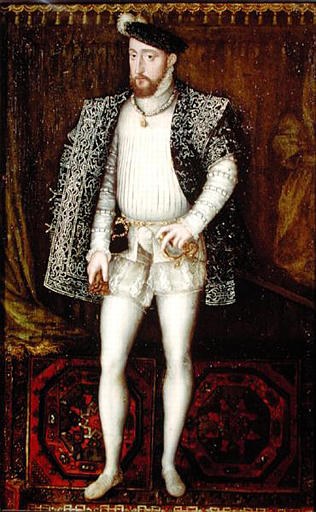
Henry II of France