Philip II and the "Golden Age" of Spain
Modern World3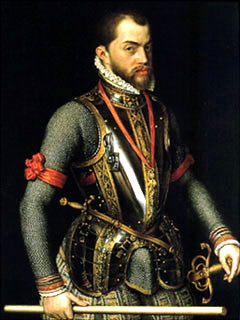
In the second half of the 16th century, Spain dominated the world stage with its vast empire in Europe and the Western Hemisphere during the reign of Philip II (1555 -1598). Philip's territories included the former empires of the Aztecs and Incas in Mexico and South America as well as the Netherlands and lands in Italy. In 1578 he inherited the throne of Portugal and its overseas empire. The massive influx of gold and silver from the royal mines in the New World provided Philip with the financial resources to wage wars across Europe to advance his interests and those of Spain, which in his eyes were identical. Like his father, Charles V, Philip sought to expand the territories of the Hapsburg family and to defend Christendom and the Roman Catholic Church from the Muslim Ottoman Empire and Protestant "heretics".
Even though Philip's policies were rooted in a Medieval mindset, Philip constructed a modern, centralized bureaucracy to govern his extensive empire. Philip used the precious metals of the New World to build a large bureaucratic structure, whose officials he appointed and oversaw. Philip reportedly spent his days and nights pouring over reports from his officials, writing and dispatching letters to these officials, and conferring with his advisers. His father, Charles V, had allowed local aristocrats in his various territories to administer their respective regions, but Philip appointed only his own trusted men and family members to govern these same territories. Many of these appointed officials were Spaniards from Castile in central Spain where Philip II grew up. The Hapsburg Empire was therefore much more centralized under Philip than under his father. Also unlike his father Charles, Philip II preferred to remain in Spain rather than travel frequently across his territories. He built his primary residence, the Escorial, which was both a royal palace and monastery, just outside Madrid, which under Philip II became the capital of the Spanish Empire. Madrid during Philip's reign went from being a village to being one of the largest cities in Europe with a population of 100,000. The city's population expanded rapidly as royal bureaucrats with their servants and staffs move there to be in proximity to the king.
In the administration of his kingdom, Philip's policies foreshadowed the Absolutism of the following century. In an Absolute Monarchy, political power is concentrated in the hands of the monarch, whose authority is in theory unlimited since there is no legal or institutional structures to keep this authority in check. In Spain prior to Philip's reign, the power of the king was held in check by the regional Cortes. Each region of Spain had its own Cortes, which was an elected body that represented the landed aristocracy and wealthy commoners in the towns. The monarch could not raise taxes without the approval of the Cortes. Kings also issued laws with the approval of the Cortes to obtain these new taxes. Philip, however, did not need the Cortes to secure funding for his government since he could draw revenue from the silver and gold mines of the New World. Consequently, he could simply rule by decree since winning the approval of the Cortes was no longer necessary. Traditionally, the landed aristocracy had exercised political power through participation in the Cortes, but under Philip, the landed aristocracy instead sought positions in Philip's royal bureaucracy as a way to wield political power and influence. In addition, royal bureaucrats were exempt from paying taxes. Therefore these aristocrats had a vested interest in supporting the unlimited authority of the king and his bureaucracy.
Philip II was a controversial figure in his own day. Protestants across Europe portrayed this king as a dark and evil person. Philip II reportedly laughed out loud only once in his life, when he heard the news that 30,000 Protestant men, women, and children had been slaughtered by Roman Catholics in France in the Saint Bartholomew Day Massacre. The walls of the Escorial were adorned with paintings of the sufferings of Christian martyrs since Philip supposedly took secret pleasure in these depictions of cruelty and torture. Philip reportedly murdered his own son, Charles. Protestants also propagated the "Black Legend" that portrayed the Spanish Empire under Philip as a force for evil tyranny and oppression,which cruelly treated its many victims. Many Protestants also in this period assumed that the Pope was an actual agent of Satan. The people of Spain, who were predominantly Roman Catholics, had a very different perspective. Philip II remained a very popular king in Spain due to his devotion to the Roman Catholic Church. The paintings of martyrs in the Escorial reportedly only served to inspire Philip to serve God in the face of adversity. His son,Charles, died tragically from natural causes. In the eyes of the Spaniards, Philip was a father figure,who worked tirelessly for the good of the Spanish people and the Roman Catholic Church.
During the reign of Philip, Spain was involved in a multitude of very expensive wars that were primarily directed against the Ottoman Empire and various groups of Protestants. To pay for these wars, Philip borrowed huge sums of money from primarily Italian, Flemish, and German bankers, so that he could pay his Spanish troops as well as mercenaries from across Europe. Philip then used the gold and silver from the New World to pay off these debts. Consequently this gold and silver circulated all over Europe as it passed through the hands of these bankers. These precious metals from the Spanish Empire therefore didn't enrich most Spaniards. Toward the end of the reign, Philip II even had to raise taxes on Spaniards as the costs of these wars was not even covered by New World gold. Since the Spanish landed aristocracy were often bureaucrats, they were exempt from paying these taxes, which fell on the peasants and townspeople.
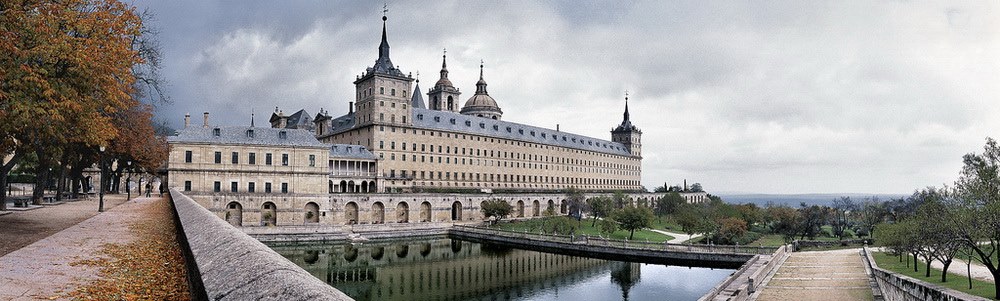
Escorial
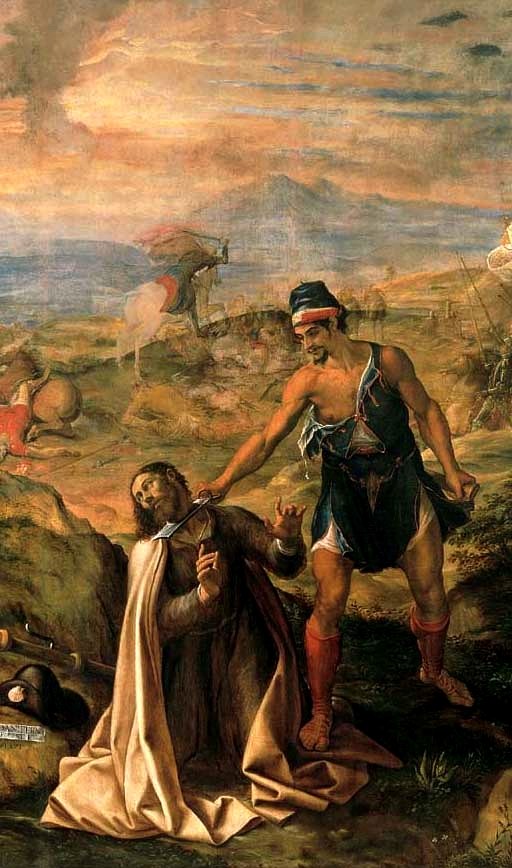
Painting from the Escorial
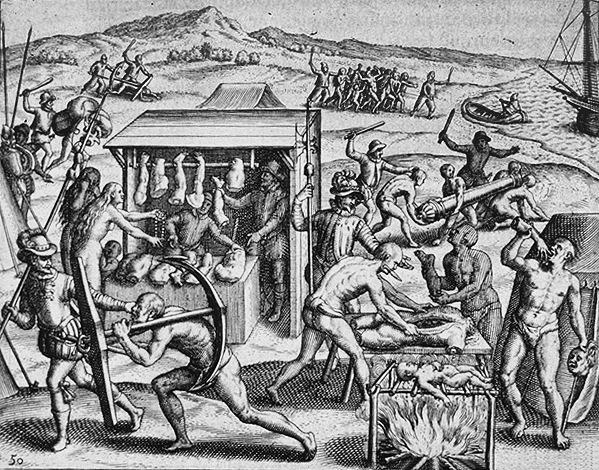
Portrayal of the "Black Legend".
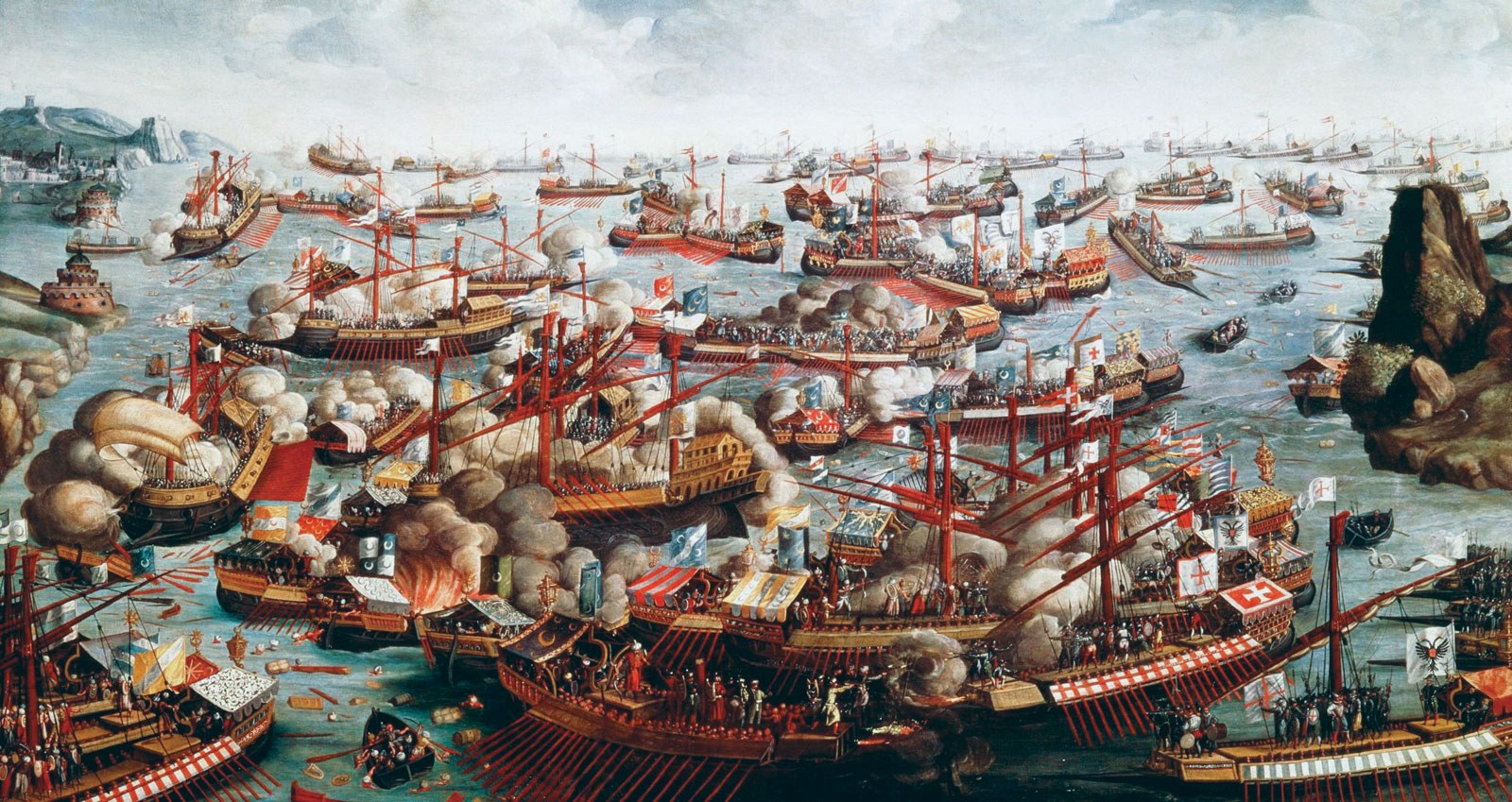
When Philip II ascended the throne in 1555, the Ottoman fleet still dominated the Mediterranean Sea and posed a threat to Spain. In 1565 a force of the Knights Hospitaller and Spaniards drove back an Ottoman assault on the Mediterranean island of Malta. Philip II organized a Holy League to finance and build a naval fleet to challenge the Ottoman fleet. The league's members included Spain, the Italian city-states of Venice and Genoa, and the Papal States. At the naval Battle of Lepanto in 1571, the allied fleet under the command of Philip's half-brother, John of Austria, decisively defeated the Ottoman fleet off the coast of western Greece. This Spanish victory ended Ottoman naval supremacy in the Mediterranean Sea.
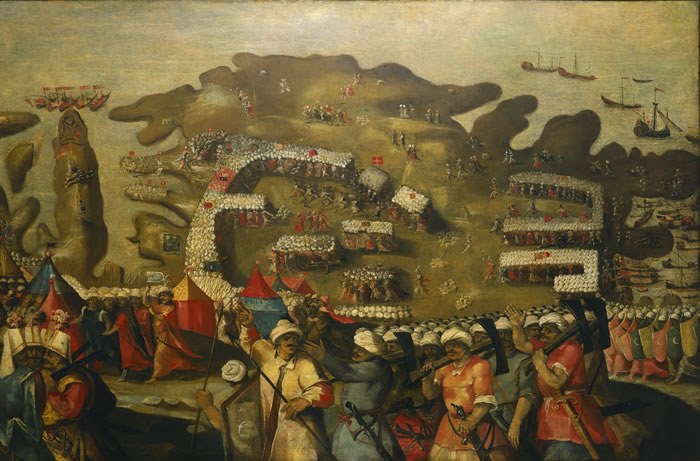
Siege of Malta
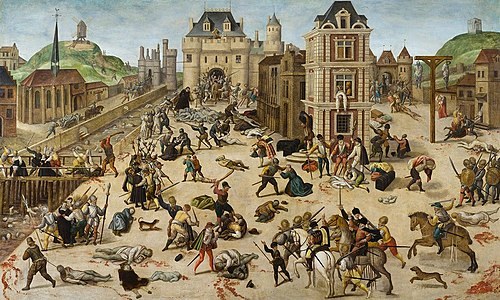
Philip II inherited from his father, Charles, the ongoing struggle against of The Valois dynasty of France. In 1559 Philip II and Henry II ended this war after Henry II surrendered all claims to lands in Italy. In France however, over time Philip II came to direct his attention not against this rival family, but against the rising tide of Protestants in France, who were Calvinists and also known as Huguenots. In France civil war erupted between Roman Catholics, who were predominant in northern France, and Huguenots, who were concentrated in southern France. The weak, royal government at this time was not able to maintain peace and order at this time. Henry II in 1559 died unexpectedly due to injuries in a joust. His eldest son, Francis II died of illness the next year in 1560. His younger brother Charles IX (r. 1560 -1574) therefore assumed the throne. Since he was only a boy at this time, the queen mother, Catherine de Medici served as regent. Catherine was a member of the Medici family of dukes of Tuscany in Italy, but as a foreigner and woman, Catherine didn't command the respect of the French landed aristocracy. At the regional level these aristocrats ran local governments through their control of the provincial estates, which were elected bodies that represented the landed aristocracy and wealthy commoners in the towns. These aristocrats saw a weak royal government as an opportunity to expand their power and privileges. In southern France some aristocrats even became Huguenots in defiance of the royal government. Catherine was Roman Catholic, but she was in no position to impose her religion on these aristocrats.
The religious conflict in France intensified after the Saint Bartholomew Day Massacre in 1572. Catherine and perhaps Philip II may have played a role in instigating this massacre of Protestants across France. Catherine was concerned with the rising influence of the Huguenot leading aristocrat, Gaspard de Coligny on her young son, Charles, who viewed Coligny as a trusted adviser. During this massacre Catholics murdered Coligny and many of his supporters. The death toll of this massacre may have been as high as 30,000, but some historians maintain that it didn't exceed 5000. As a result of this event, the religious war in France accelerated.
Turmoil and fear further intensified after the death of Charles IX in 1574. Since Charles died childless, the throne passed to his younger brother, Henry III. Since Henry III was known to be a homosexual and didn't father any children, French Catholics feared that he would die childless and the French throne would fall his nearest male relative, his cousin, Henry, the King of Navarre, who was a Huguenot. Navarre was a small kingdom located in the Pyrenees Mountains that separated France from Spain. The French Catholics under the leadership of Henry of Guise therefore organized a Holy Catholic League with the financial backing of Philip II to wage war on the Huguenots and prevent Henry of Navarre from ever assuming the throne of France. Henry III however felt threatened by the growing power and influence of Henry of Guise, so in 1588 Henry III murdered Henry of Guise. Fearing Guise's Catholic supporters, Henry III fled to Navarre to his cousin's court, but in 1589 a Dominican friar and supporter of Guise murdered Henry III to avenge the murder of Henry of Guise.
In 1589 Henry of Navarre assumed the French throne as Henry IV. He was the first king of the Bourbon Dynasty of French kings. French Catholics, however rejected Henry's claim to the throne. With the backing of Philip II, the Catholic League based in northern France continued to challenge Henry's status as king of France. In 1594, however, Henry IV very publicly converted to the Roman Catholic faith. After this conversion, Catholic opposition to his reign in northern France and in the area around the royal capital, Paris, came to an end. Henry IV reportedly exclaimed that "Paris was worth a mass", a mass being the name of the Roman Catholic ritual celebration of communion.Henry IV didn't forget his Huguenot allies. In 1598 Henry IV issued the Edict of Nantes. This edict guaranteed Huguenots freedom to practice their religion. This edict also granted to Huguenot towns self-government and the right to fortify their towns against attacks by hostile Catholics. The Edict of Nantes effectively ended decades of war between Roman Catholics and Huguenots in France. The edict was also a defeat for Philip II who had invested time and money in efforts to crush the Protestants in France.
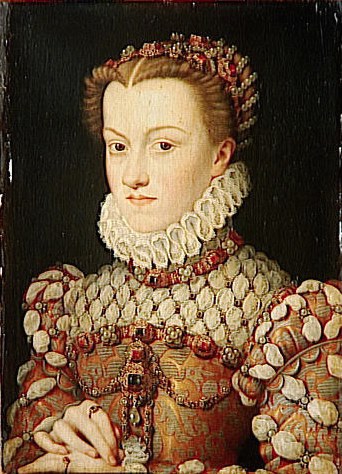
Catherine de Medici
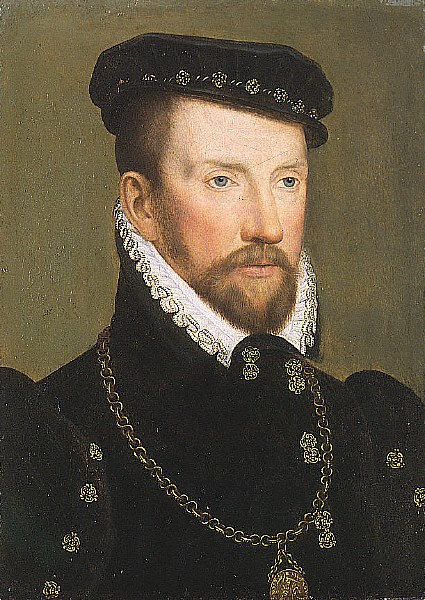
Gaspard de Coligny
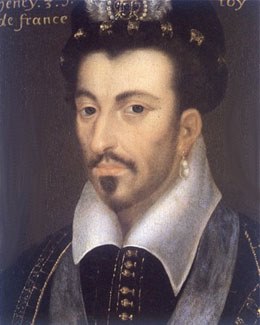
Henry III
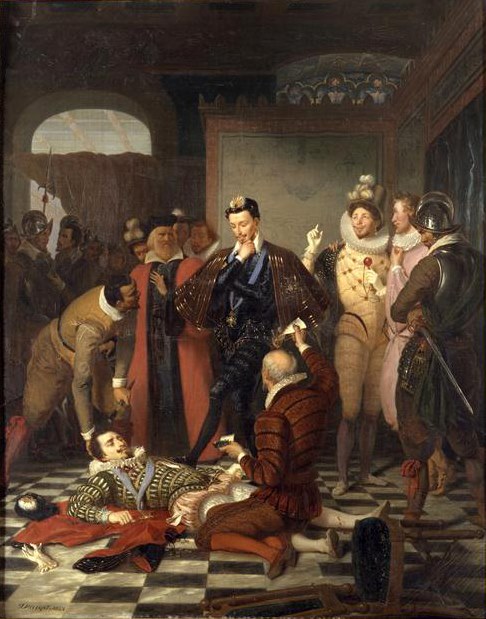
Murder of Henry of Guise
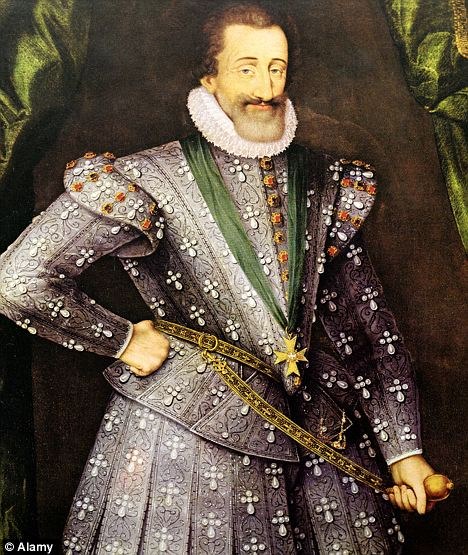
Henry IV
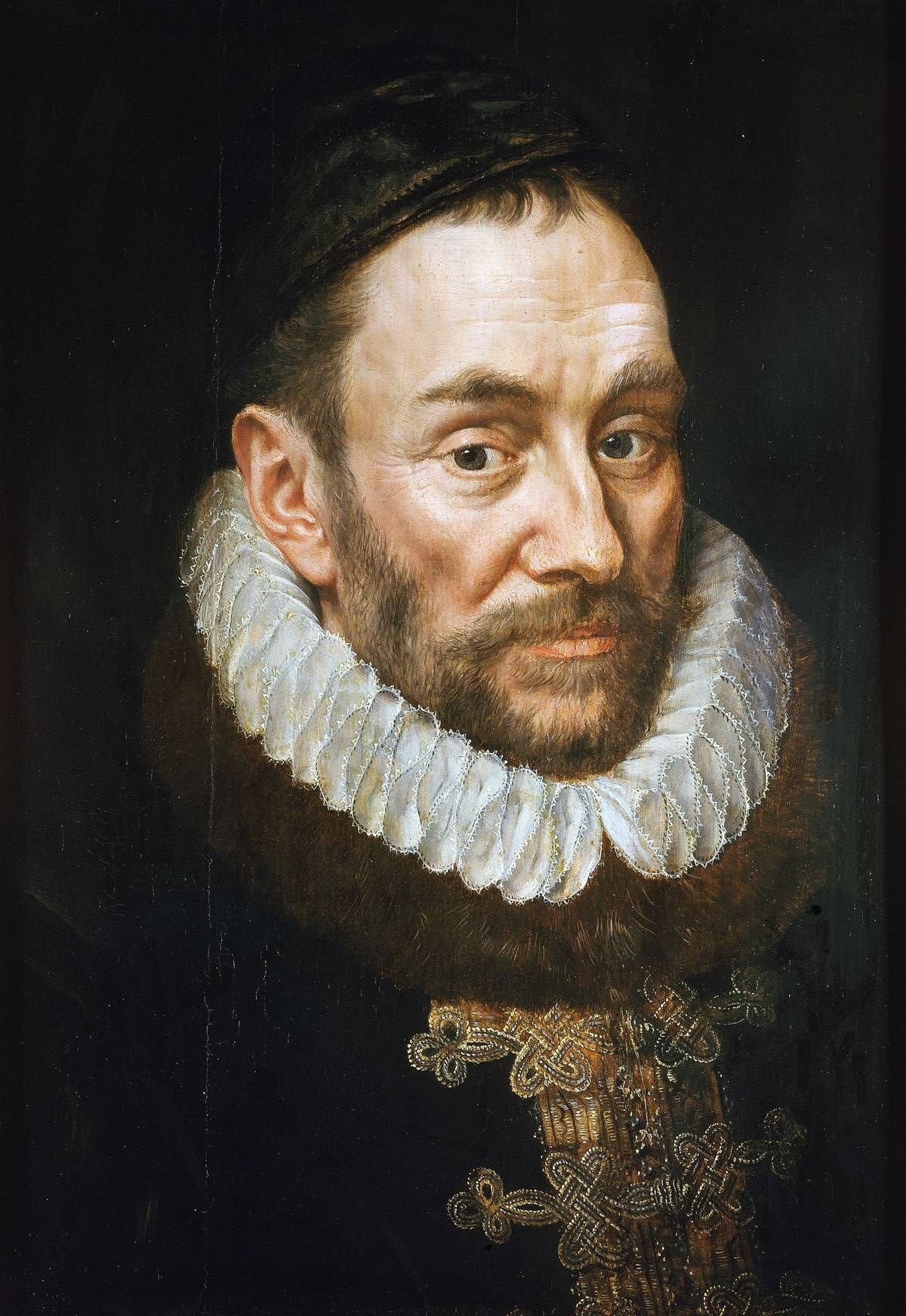
Beginning in 1568 Philip II also faced a revolt against his government in the Netherlands. The Netherlands or Low Countries is the region in northwestern Europe where the Rhine River empties into the North Sea. The population speaks Walloon, a dialect of French, and Flemish, a German dialect, in the southern Netherlands, and Dutch, a German dialect, is spoken in the north. The region contained many prosperous commercial cities such as Ghent and Bruges. Merchants from the Netherlands were active in the North and Baltic Seas, and woolen fabrics manufactured in this region were highly prized across Europe since the Middle Ages. In each region the landed aristocracy, the wealthy townspeople,and the clergy elected representatives to the provincial assembly or Estates. The Estates from these provinces in turn elected representatives to the Estates -General. Traditionally, the Duke of Flanders chose the Stadtholder, who served as the governor -general or chief executive of the duchy. Charles V grew up in the Netherlands, and during his reign as Duke of Flanders, he allowed the Estates-General to govern the region without much interference. Philip II, however, ruled more forcefully over the Netherlands. He appointed his sister Margaret to serve as his representative in the Duchy. Consequently, unlike his father, his government was very unpopular in the Netherlands, whose elites did not appreciate Philip's interference in their internal affairs. Philip's government also imprisoned and executed Protestants as "heretics". Calvinist and Mennonite churches had arisen in the northern region especially among the Dutch.
In 1568 Protestant, Dutch sailors known as the "Sea Beggars" or Geuzen were attacking Spanish ships arriving in the Netherlands to show their opposition to Philip's government and his persecution of Protestants. A prominent aristocrat in the Netherlands, William of Orange also known as William the Silent supported the Geuzen and raised and led armies to wage war against Spanish rule. The outbreak of this conflict in 1568 would lead the Dutch to seek independence from Spain. Not everyone in the Netherlands was in agreement with this armed uprising. The Walloons and Flemish in the southern Netherlands remained primarily Roman Catholic; they often became angry when militant Protestants smashed church windows and sculptures in Roman Catholic churches or desecrated communion wafers to show their rejection of Roman Catholicism. In 1578 representatives from the provinces in the southern Netherlands convened at the city of Arras, formed the Union of Arras, and affirmed their loyalty to Philip II as their ruler. This region thus became known as the Spanish Netherlands. In response, in 1578 representatives from the Dutch provinces in the northern Netherlands met at the city of Utrecht and formed the Union of Utrecht. These provinces later declared their independence from Spain as the United Provinces, which became a commonwealth or republic. The Estates-General of the United Provinces elected William of Orange to be the Stadtholder. William held this position until his assassination in 1584 by a Catholic loyalist. After William's death, it became customary for the Estates-General of the United Provinces to elect a member of the House of Orange to serve as Stadtholder. William had converted to the Calvinist faith in 1573, and the Calvinist Reformed Church became the established church in the United Provinces. However William had always advocated for freedom of conscience and opposed religious persecution. After William's death the Dutch Netherlands remained one of the few regions in Europe where people enjoyed religious freedom. Philip II rejected the United Provinces' declaration of independence, and war between Spain and the Dutch Netherlands continued off and on even after Philip's death in 1598, until 1648, when Spain formally accepted the independence of the Dutch Netherlands. This conflict became known as the Eighty Years War (1568-1648)
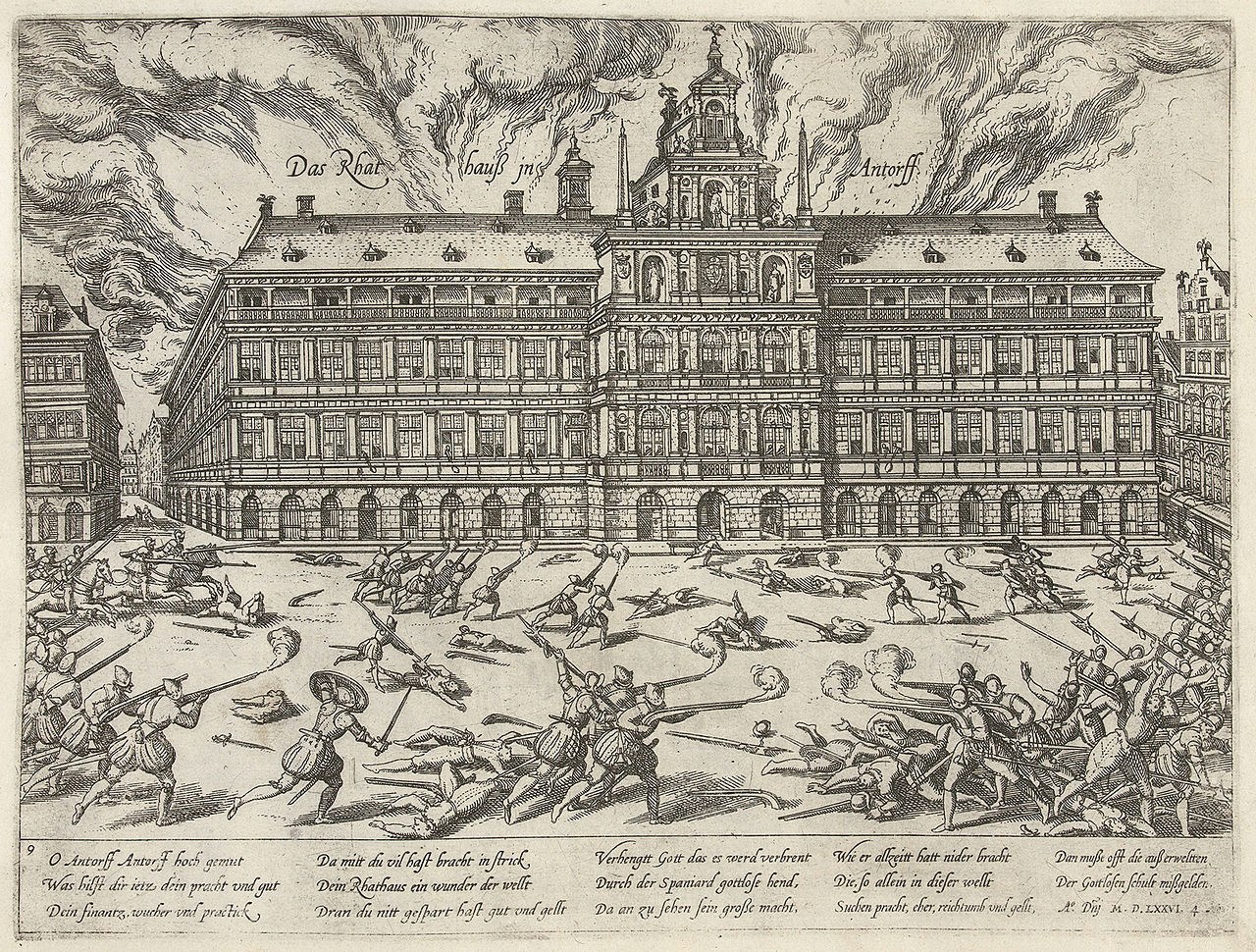
Sack of Antwerp by Spanish forces in 1576
England as the largest Protestant state emerged a Philip's greatest enemy during the reign of the English queen, Elizabeth I (r. 1558-1603). However, at the beginning of the 16th century, the kingdoms of Spain and England were allies, and Philip II briefly reigned as king of England before Elizabeth assumed the throne in 1558. Elizabeth's father, Henry VIII (r. 1509-1547) was married to Catherine of Aragon, the daughter of Ferdinand and Isabella of Spain. This marriage had been arranged by Henry VIII' father, Henry VII (r. 1485-1509) to seal an alliance between the kingdoms of Spain and England. Henry VII originally arranged this marriage for his eldest son, Arthur, but he replaced Arthur with his younger son, Henry, after Arthur's untimely death. The union of Henry VIII and Catherine, however, failed to produce a male heir. Henry VIII feared that without a male heir to succeed him on the throne, England would face civil war upon his death, such as had plagued England in the previous century during the Wars of the Roses. Henry VIII therefore desired to annul his marriage with Catherine, so he could marry his mistress Anne Boleyn, who, he hoped, could bear him a son. In order to set aside his first wife, Henry VIII required the Pope's permission since the Roman Catholic Church forbid divorce. Henry argued that his marriage with Catherine was invalid and against Holy Scripture since Catherine had first been married to his brother Arthur. Catherine, however, maintained that her marriage with Arthur had never been consummated. The Pope, Clement VII, took Catherine's side and refused the allow Henry to set aside Catherine, who happened to be the aunt of the Holy Roman emperor, Charles V. In response, the English Parliament (the English version of the Spanish Cortes and Estates-General in the Netherlands) passed the Act of Supremacy in 1534, which replaced the Pope with Henry VIII as the supreme head of the Church of England or Anglican Church. Henry VIII had already officially ended his marriage to Catherine and married Anne Boleyn, who gave birth to a girl, the future Queen Elizabeth I. When Anne could not produce a male heir to the throne, Henry accused her of adultery and had her tried in court and executed in 1536.
Even though the Anglican Church became independent of the Papacy through the Act of Uniformity, Henry VIII was not supportive of the ideas of Protestant reformers such as Martin Luther. However, as head of the Anglican Church in 1536 he ordered that English monasteries be closed and their lands and assets be seized by the royal government. The Lutheran princes in the Holy Roman Empire had also shut down monasteries in their lands. The Anglican Church did adopt Protestant reforms during the reign of Henry VIII's son, Edward VI (r. 1547-1553), who was the product of Henry VIII's third marriage. During this king's reign, the Archbishop of Canterbury, Thomas Cranmer instituted sweeping changes in this church through the publication of the Articles of Religion in 1549, which were based on the ideas of the Protestant reformers, Luther and Zwingli. Under the Articles of Religion, the Anglican Church retained the hierarchy of the Roman Catholic Church. However, Cranmer also translated the Catholic Mass from Latin into English in the Book of Common Prayer, and he allowed clergy to marry. Upon the death of Edward in 1553, his older sister, Mary, ascended the throne, as Edward was still a teenager and unmarried at the time of his death. Mary was the daughter of Catherine of Aragon and a devout Roman Catholic. During her reign (1553-1558), the Act of Supremacy was repealed and Cranmer's reforms reversed. Mary ordered the execution of many English Protestants, including Thomas Cranmer, and she acquired the nickname "Bloody Mary" from her Protestant enemies. Mary also married her cousin, Philip II of Spain, who became the king of England.
Since the marriage of Philip and Mary produced no children, Mary's younger half-sister, Elizabeth ascended the throne in 1558 upon the death of Mary. Unlike her sister, Elizabeth was Protestant, and in 1559 Parliament passed the Act of Uniformity, which restored the Protestant reforms that Cranmer had instituted under the Articles of Religion. Under the Act of Uniformity, Elizabeth, like her father, was the head of the Church of England. Philip II, however, rejected Elizabeth's claim to the English throne since he viewed her as an illegitimate child, as the marriage in his eyes between her mother Anne Boleyn and Henry VIII was invalid. Philip II supported the claim to the throne of England by Mary of Scotland or "Mary, Queen of the Scots" who was Roman Catholic and Elizabeth's closest relative, as they were both descended from Henry VII. Since Philip II supported numerous plots to assassinate Elizabeth and replace her with Mary, Elizabeth responded by providing aid to Philip II's Protestant enemies, the Huguenots in France and the Dutch in the Netherlands. English privateers ( the so-called "Sea Dogs" ), such as Francis Drake, with the queen's blessing also targeted Spanish ships in the Americas. Francis Drake in 1586 also sacked and burned the Spanish fort at St. Augustine in Florida along with other Spanish settlements in the Caribbean. In 1587 Elizabeth ordered the execution of her rival, Mary of Scotland, who had been living in exile in England after the Protestant Scottish nobility had forced her to abdicate the Scottish throne in 1567 on the grounds that she was an adulteress and murderer of her husband, Henry Stuart.
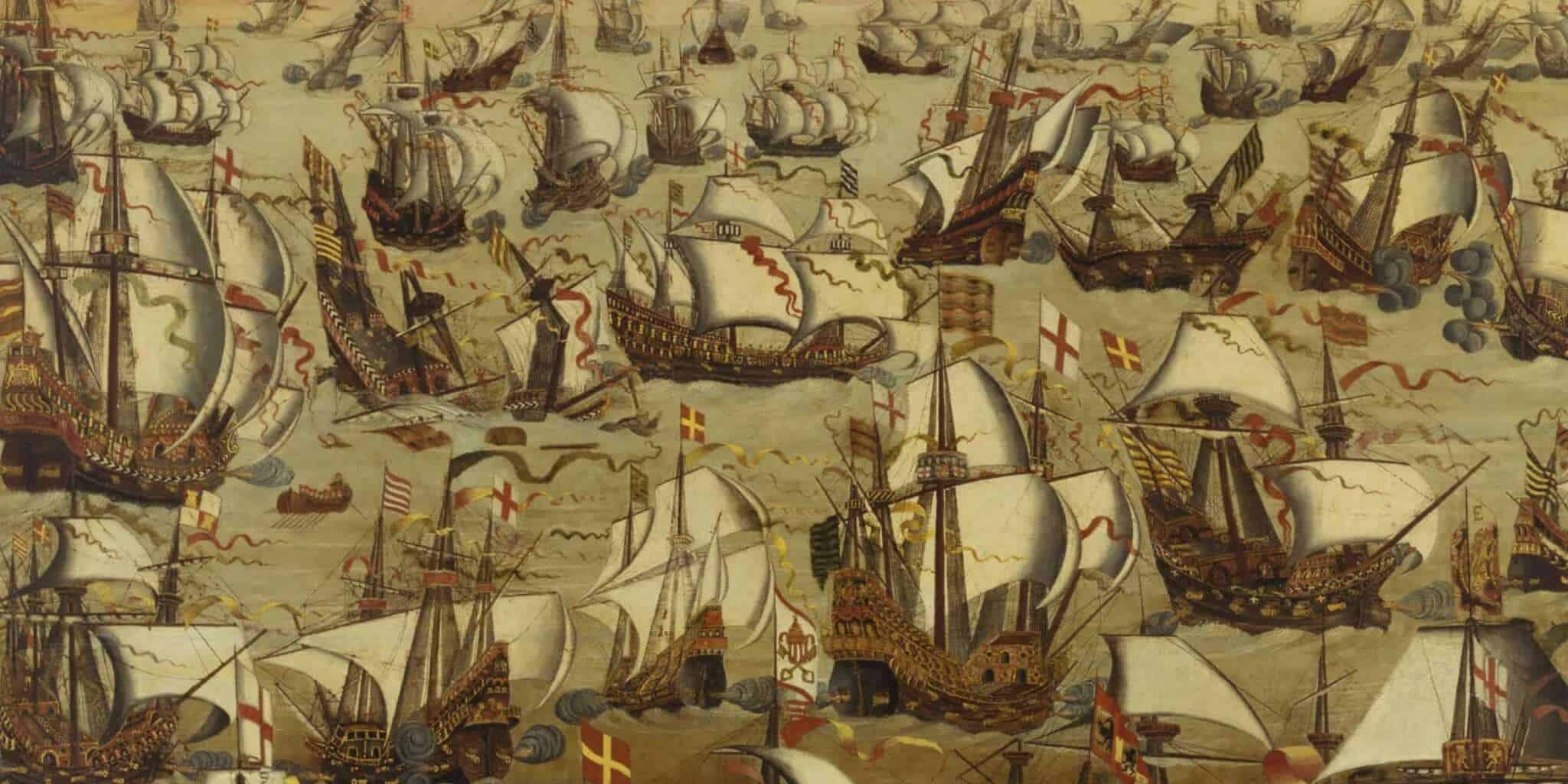
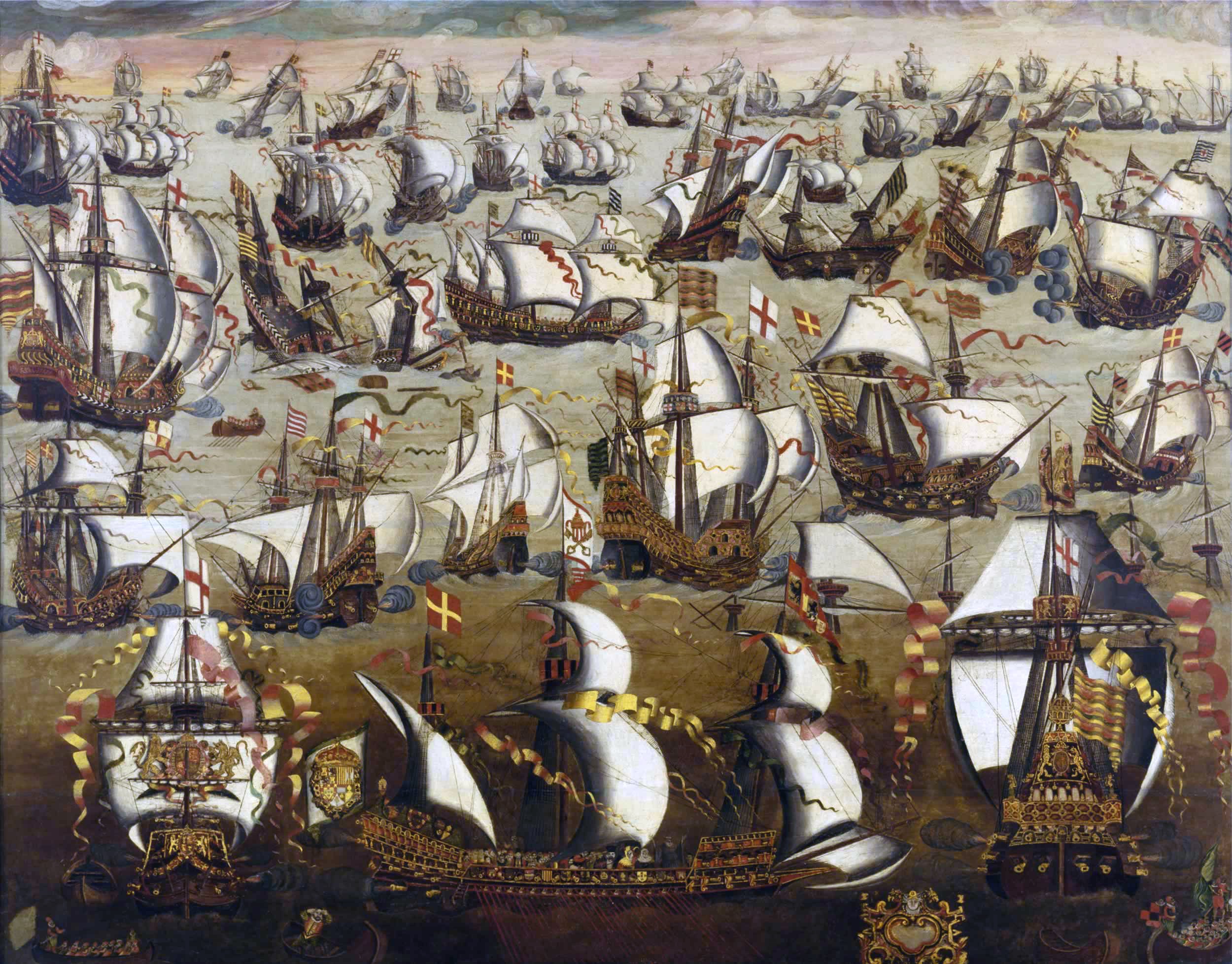
By 1587 Philip II had plans to invade England, overthrow Elizabeth, and restore Roman Catholicism as the established church in the land. To accomplish these goals, Philip assembled a massive fleet, the "Spanish Armada". In 1588 this massive fleet entered the English channel only to be stopped by a much smaller English naval force under the command of Francis Drake. Shortly thereafter, a violent storm scattered and destroyed the Spanish fleet. Many of the English viewed this weather event as a miraculous act of God since England in their view was engaged in a holy war against Roman Catholic Spain. Just as the Spanish loved and admired their Roman Catholic king, Philip II, the English loved their Protestant Queen, whom they affectionately referred to as the "Virgin Queen" since she never married. In 1586 when the English under the privateer, Walter Raleigh, attempted to establish an English colony in the New World at Roanoke, they named the region where they were colonizing, "Virginia" in honor of the queen. While this queen was quite popular in her realm, she was no less intolerant of religious dissenters than Philip II. Elizabeth imprisoned and executed Puritans and Separatists, who were English Calvinists, who wanted to either reform and "purify" the Church of England or "separate" from the Church of England entirely. Elizabeth also imprisoned and executed English Roman Catholics. In Ireland, where Elizabeth also reigned as queen, Elizabeth crushed Irish, Roman Catholics rebels and settled Protestant English colonists in areas where English military forces had massacred and removed the indigenous Irish population.
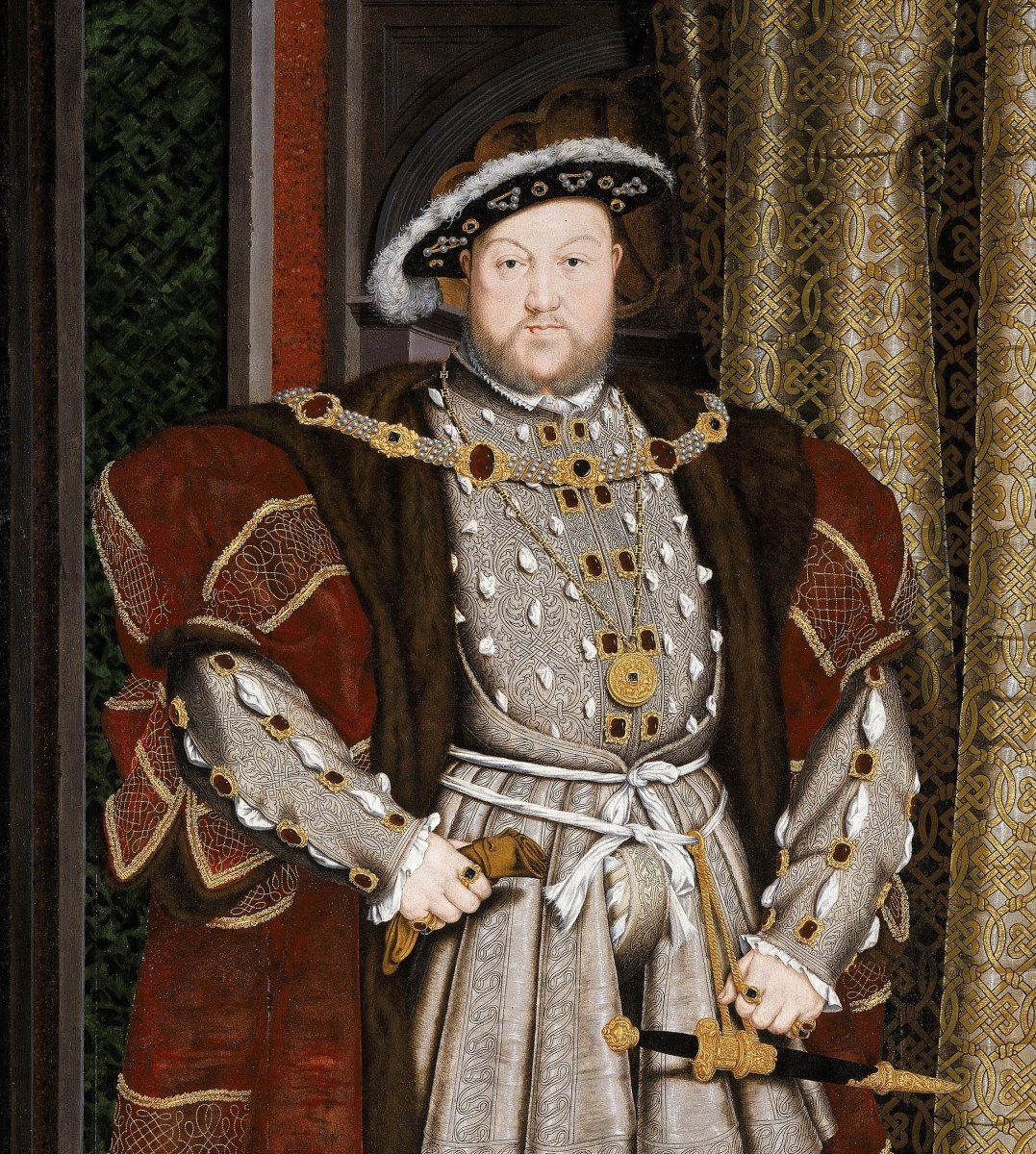
Henry VIII
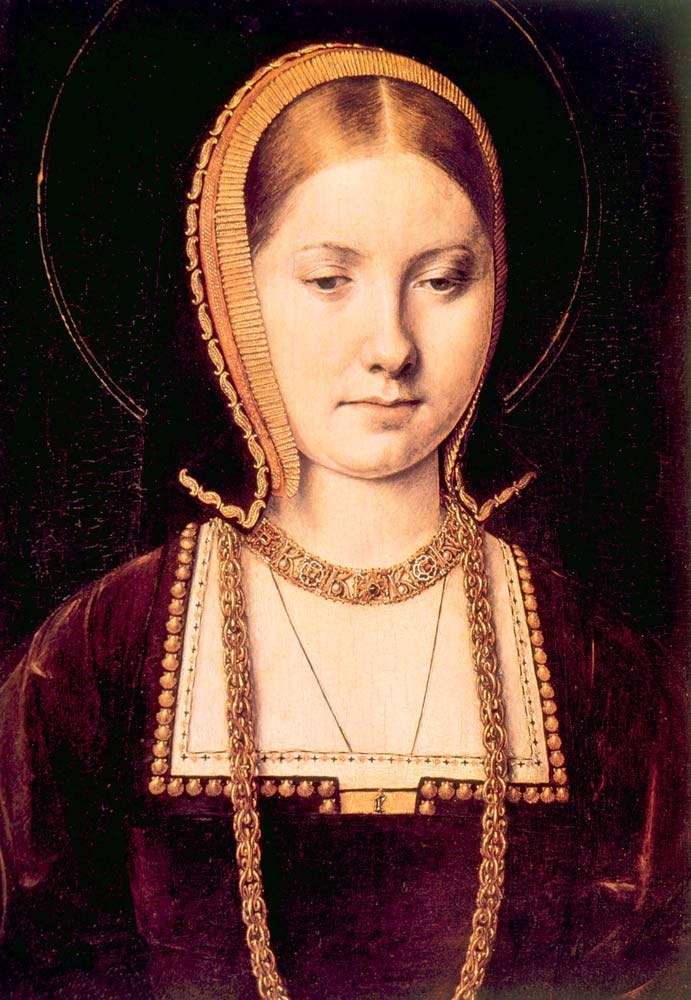
Catherine of Aragon
Anne Boleyn
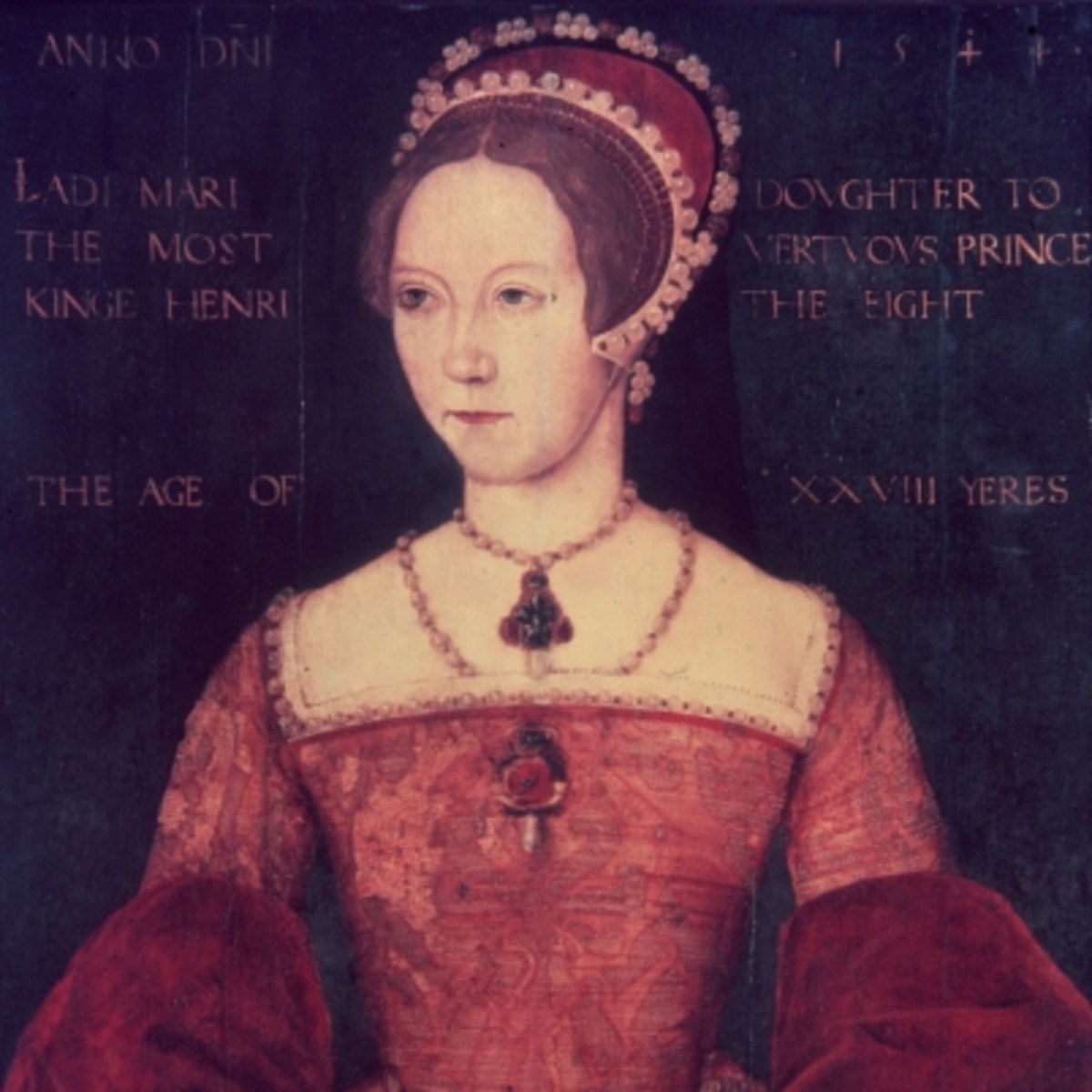
"Bloody Mary"
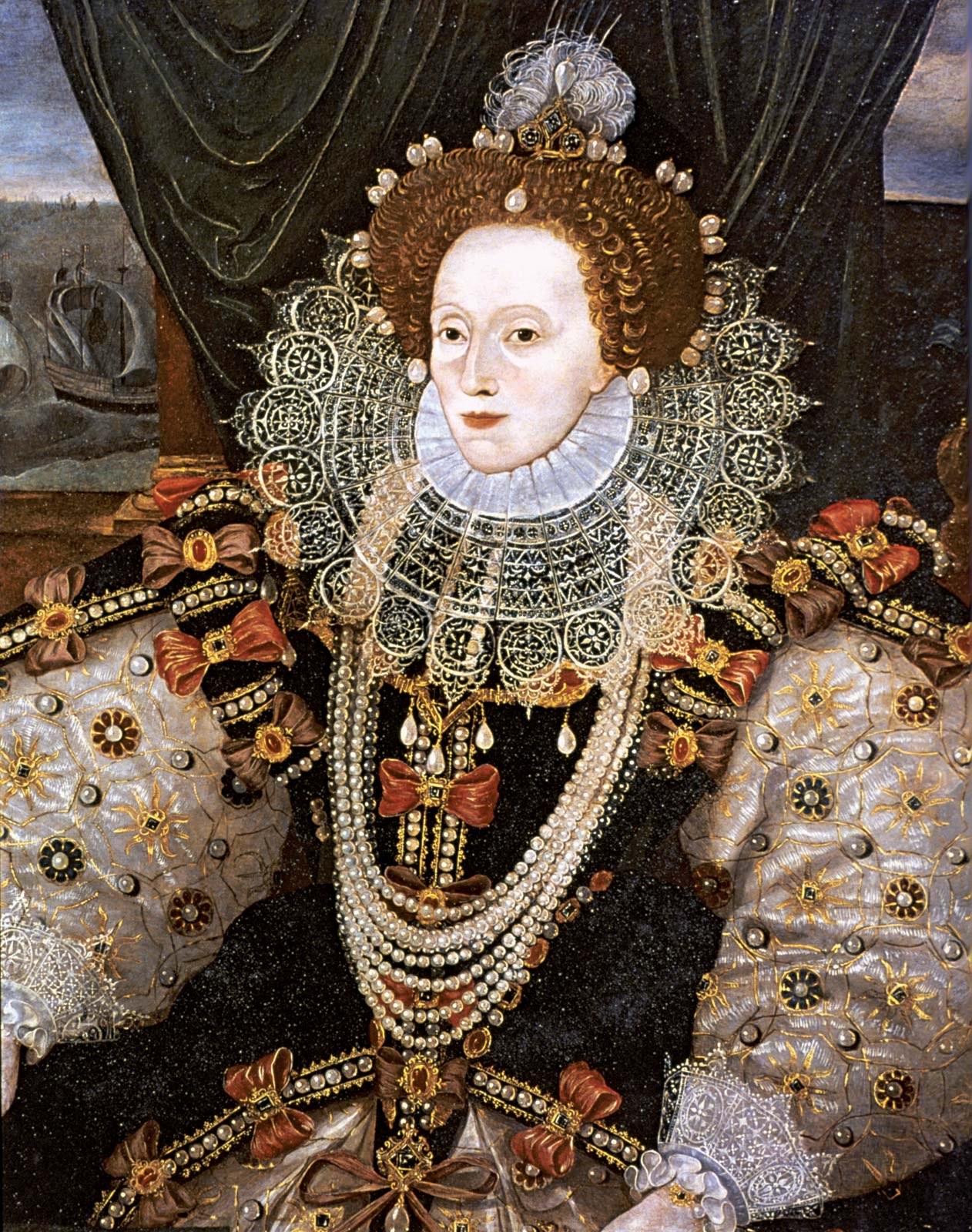
Elizabeth I
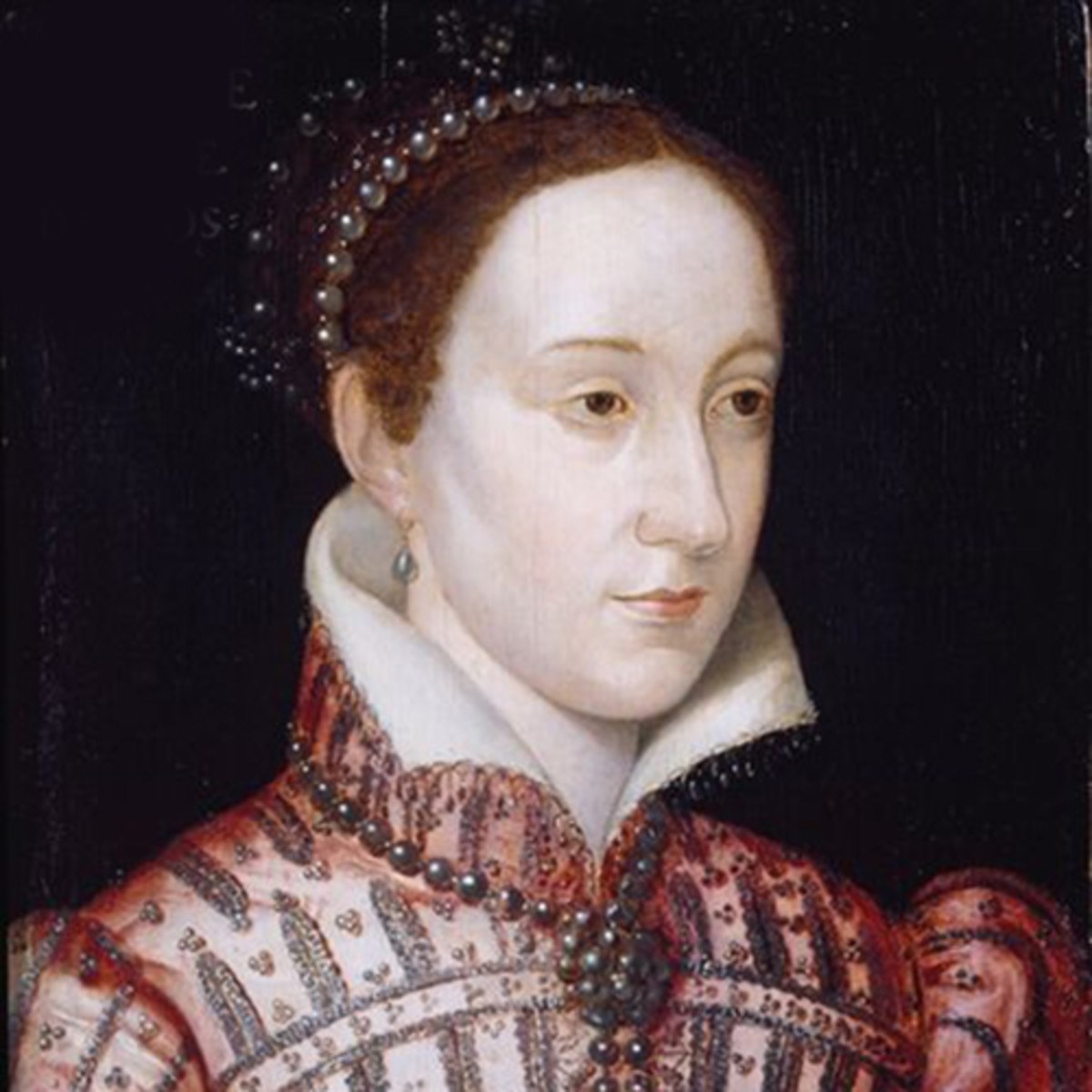
Mary, Queen of Scots
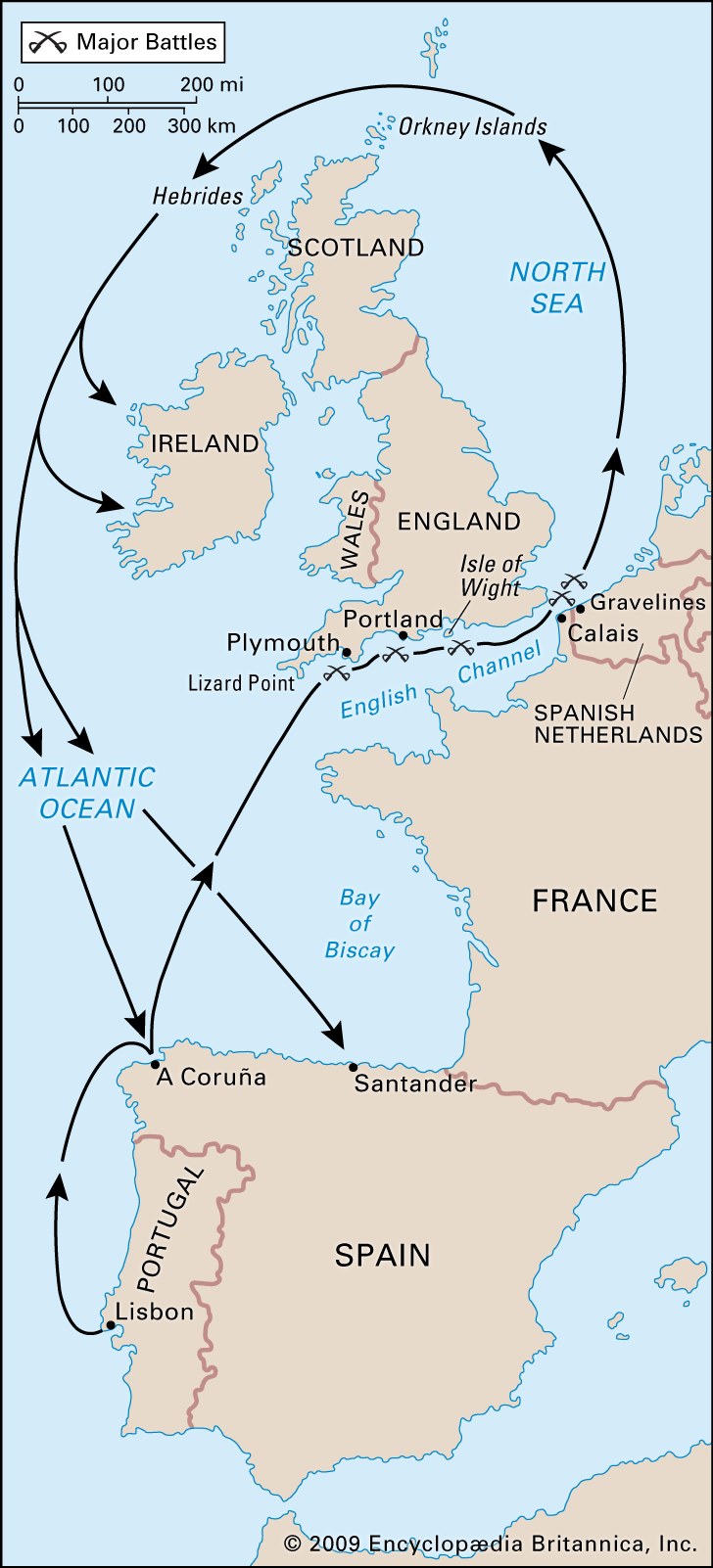
The route of the Spanish Armada