17th Century England and Constitutional Monarchy
Modern World4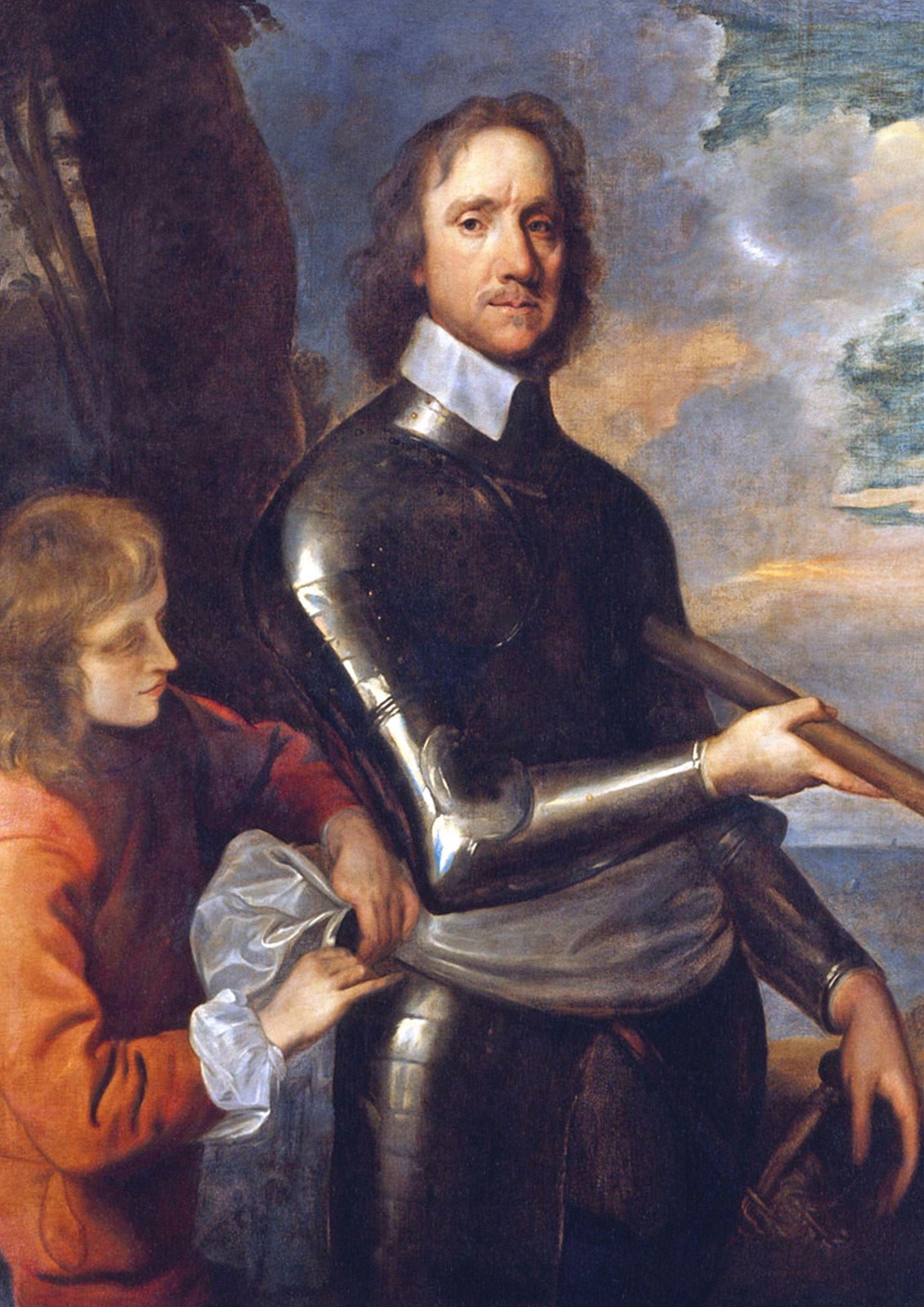
The Little Ice Age returned to Europe with a vengeance in the 17th century. Poor weather and crop failures resulted in famine and plague across Europe in this period. Peasant rebellions and urban uprisings were common in this chaotic century. Nonetheless the English, Dutch, and French all challenged Spanish and Portuguese domination in the New World, as these rising European powers also opened up new trading posts in Asia and Africa, while transatlantic trade expanded rapidly. In this century strong, centralized states emerged across Europe in the form of nation-states in western Europe and multi-ethnic empires in central and eastern Europe. Most of the states were Absolute Monarchies, following in the footsteps of the Spanish Empire of the previous decade. In these states unlimited and unchecked political power was concentrated in the hands of the monarch. In this century though, France, rather than Spain, emerged as the Absolute Monarchy par excellence. In some regions of Europe, Commonwealths (republics) and Constitutional Monarchies did arise, where the government and rulers possessed limited power and were subject to the rule of law. England developed in this period as the most prominent Constitutional Monarchy in Europe. The institutions and political traditions that developed in England at this time would come to shape the history and government of the United States of America in the next century.
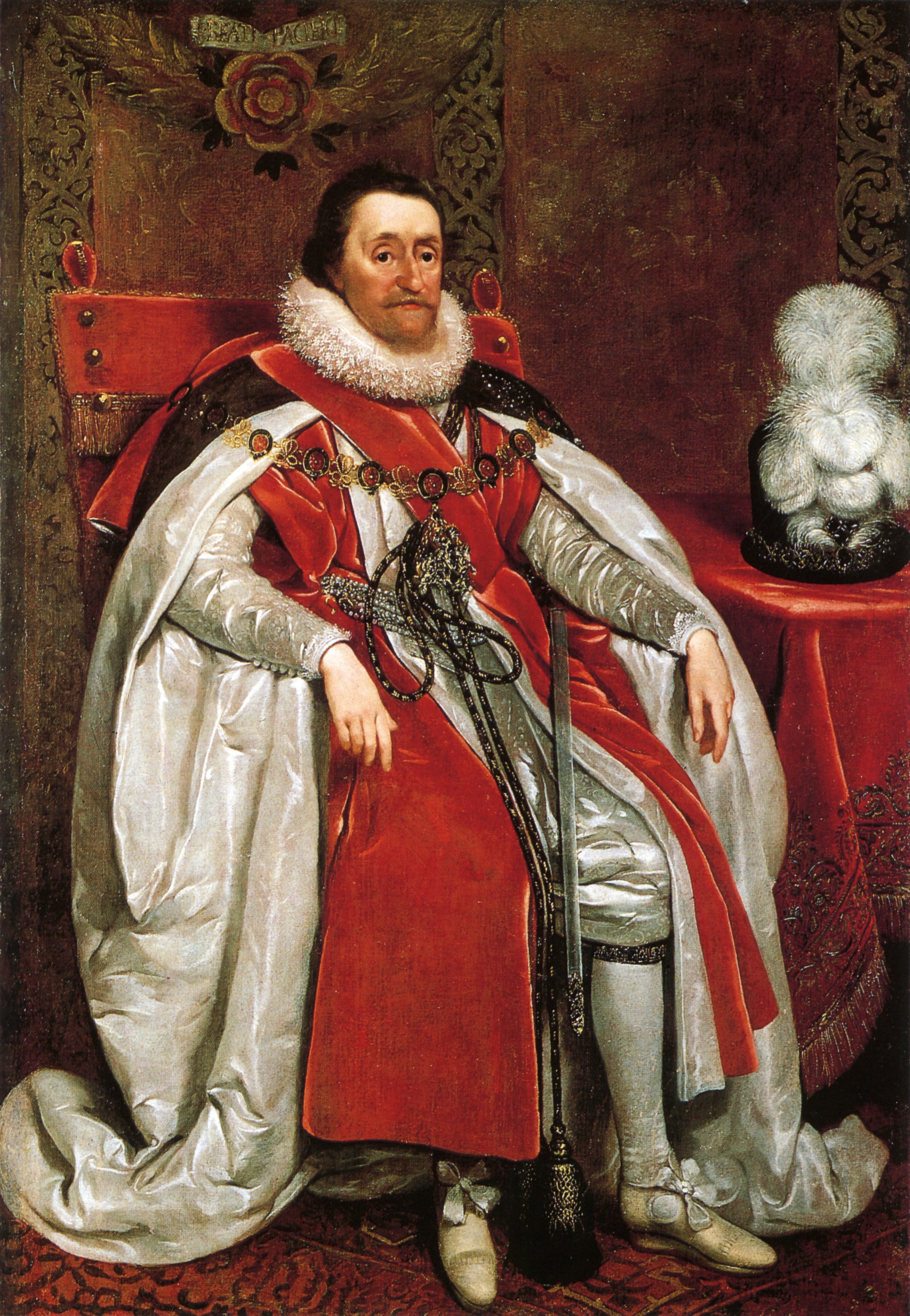
Upon the death of Elizabeth I in 1603, her nearest male relative, James VI of Scotland, the son of Mary, Queen of Scots and Henry Stuart assumed the throne of England as James I (r. 1603-1625), thereby uniting the kingdoms of Scotland and England. James fancied himself to be a scholar and theologian. He was known to interrupt the sermons of the clergy during church services, if he determined that the clergyman had spoken incorrectly. In 1611, James I authorized a group of scholars to produce a new translation of the Bible from its original Hebrew and Greek into English, which became known as the King James Bible. As a theologian, James also heartily endorsed the divine right of kings. According to James, the monarch was subject to no earthly authority, as kings received the right to rule from God and answered only to God. James asserted that to disobey a king was to disobey God Himself. James' views on this subject, however, conflicted with England's political traditions. In England the Parliament, like the Spanish Cortes, the French provincial estates, and the Dutch Estates-General, represented the land owning aristocrats and wealthy merchants. Parliament consisted of two legislative bodies, the House of Lords and the House of Commons. The House of Lords consisted of the great, hereditary nobles, and the monarch appointed its members. The House of Commons was an elected body. When the monarch summoned a new Parliament to meet, the propertied classes in each township or Borough elected representatives to serve in the Parliament. Only local aristocratic landlords (the so-called Gentry) and wealthy commoners, such as merchants, could vote in these elections. According to English political tradition, all new taxes had to be approved by Parliament. In addition the monarch signed into law the bills that had been drafted and approved by Parliament in order to receive support for new taxes from Parliament. Moreover, according to the English political tradition, all "freemen", that is land owning adult males, possessed certain rights. One of most important rights was the right to due process, which entitled all freemen to a trial by a jury of their peers , if they were accused of a crime. These English political traditions dated back to the Middle Ages and the Magna Carta (1215) issued by King John. According to English political tradition, the monarch's power was limited by such laws and charters issued by previous monarchs. King James, however, maintained that Parliament and such charters could not check his power, as he was a king appointed by God to rule.
During his reign, James largely ignored Parliament since he did not recognize its authority. When he first assumed the throne, Parliament granted the king "tonnage and poundage", which authorized James to collect custom duties on imports into the country and to collect tolls on river traffic and roads. Consequently whenever James needed more revenue, he simply raised the rates charged on imports and increased tolls, instead of summoning Parliament and requesting additional new taxes. These higher custom duties and tolls were very unpopular with merchants since their costs increased, while their profits decreased. In his efforts to raise revenue for his government and bypass Parliament, James I also angered the landed aristocracy. James was desperate for new revenue during his reign since he inherited an empty royal treasury and a ongoing war with Spain from Elizabeth I. During her reign, Elizabeth had raised revenue by selling land that had been seized from the monasteries by her father, Henry VIII. When James I came to the throne, this land had all been sold. James I therefore employed some dubious ways to raise revenue to pay for his government. In addition to the war against Spain, James enjoyed spending money on his friends and on elaborate galas at his court. One method of raising revenue was through wardships. As king and feudal lord over the landed nobility of England, all noble minors, who inherited feudal lands, were wards of the king until they became adults. While serving as ward and overseer of these landed estates, James drew revenue from rents and property sales from these estates, so that a minor often received a diminished estate when he reached adulthood and could run the estate himself. King James also raised revenue from forced loans. The king arrested and imprisoned wealthy aristocrats on false charges. Instead of a jury trial, the accused were tried by the Court of the Star Chamber, which consisted of the king's most trusted advisers. Those found guilty by this court could only be released from prison by "loaning" the king large sums of money even though they knew that the king would most likely not repay the loan. James also found a way to reduce costs for his army by billeting troops in the private homes of the wealthy. The king placed his soldiers in these homes and required the owners of these homes to pay out of their own pocket for the food and board for these soldiers. Wardships, forced loans, and billeting were practices of the king that greatly angered the landed nobility since they maintained that the king was violating their property rights as freemen by denying them due process of law, as the king was taking away their property without the approval of Parliament, while denying them a right to a fair trial by jury.
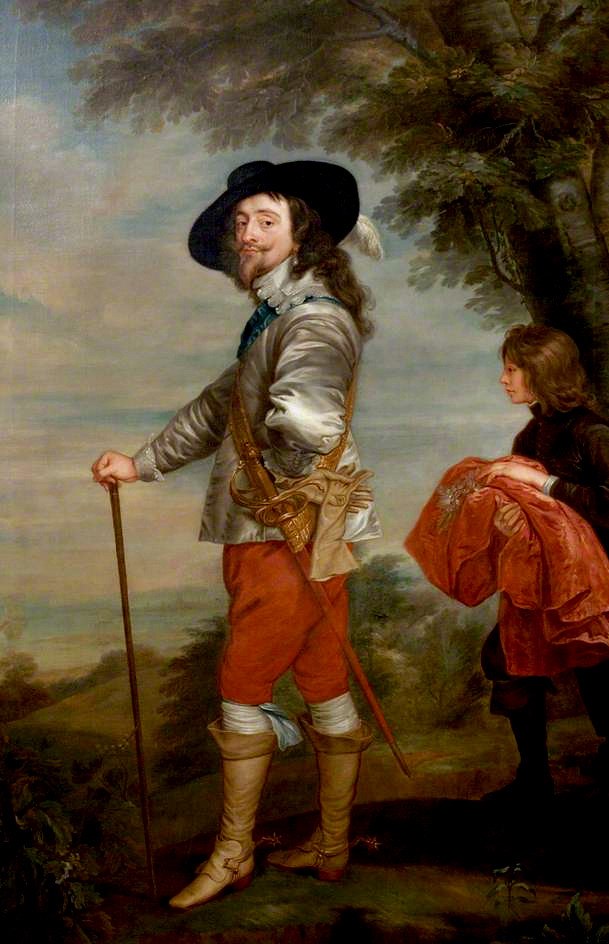
The son of James I, Charles I (r. 1625-1649) assumed the throne after the death of his unpopular father. Charles shared his father's views regarding the divine right of kings. During his reign he would clash with Parliament until the outbreak of the English Civil War in 1642 with England divided between the supporters of the king and the supporters of Parliament. In 1625 at the beginning of the king's reign, Charles summoned Parliament. In order to place limits on the king's authority, Parliament granted the king tonnage and poundage for only three years. Even though Charles collected custom duties and tolls as well as revenue from wardships and forced loans, as did his father, the royal treasury was empty in 1628. Charles I summoned Parliament in 1628 to request support for new taxes. Parliament, however, demanded that the king sign the Petition of Right if he wanted their approval for new taxes. This petition required the king to stop the practice of imprisoning his subjects without a trial by jury. The petition also demanded that the king stop billeting his troops in private homes. Instead of agreeing to these conditions, Charles dissolved Parliament in 1629 and ruled without summoning Parliament for the next eleven years (1629-1640), which became known as the period of his "personal rule".
During this period of "personal rule" opposition to the king among his subjects mounted. Charles continued to raise custom duties and tolls on river traffic and roads without Parliament's approval, and he continued to raise revenue through wardships and forced loans as well as station troops in private homes at the owner's expense. Moreover, the king debased the country's coinage by decreasing the percentage of precious metal in the coins, so that he could manufacture more coins to pay his costs. However the long term impact of this practice was inflation, as sellers raised their prices since the coins were of less value. The king's actions hurt not only merchants and aristocratic landowners, but also the landless poor, whose wages often didn't rise as fast as the rate of inflation, so that agricultural laborers and urban workers often couldn't afford to eat. The return of the Little Ice Age also resulted in poor harvests, food shortages, and higher food prices. In this period thousands of the desperate, landless poor migrated to the English colony of Virginia as indentured servants. In 1607 England had established its first successful colony in the New World at Jamestown in Virginia. The development of tobacco production in this colony created a high demand for agricultural workers for tobacco plantations. English indentured servants agreed to work as servants in Virginia without pay for up to seven years in return for passage by ship across the Atlantic from England to Virginia. These servants hoped to acquire land and new opportunities in the new land after their term of service was over. Unfortunately, more than half of these indentured servants died of hunger and disease before their terms ended.
Charles I' religious policies also stirred up opposition among the Puritans, who were a small, but vocal minority living in small towns and villages in primarily southern England. As head of the Church of England, Charles I supported the changes in the Anglican Church put into effect by William Laud, the Archbishop of Canterbury. Laud re- instituted much pomp and ceremony into the church service that had been eliminated by the Protestant reforms of Thomas Cranmer, a century earlier. Church services now included candles, incense, chanting, and elaborate vestments (clothing) for the clergy - all practices which were also common to Roman Catholic church services. Puritans denounced these "Papist" (Roman Catholic) practices. Charles' French, Roman Catholic queen, Mary, and the king's friendship with Roman Catholic Englishmen also raised suspicions among Puritans concerning the king's commitment to the Protestant faith. In 1632 Charles granted territory in the New World, just north of Virginia to George Calvert, a prominent Roman Catholic aristocrat. Calvert decided to make this territory a refuge for English Roman Catholics since Roman Catholicism was officially illegal in England. He named the territory Maryland in honor of the queen.
William Laud's greatest offense in the eyes of the Puritans, however was his support for the the theological doctrine of Arminianism. Jacob Arnim was a Dutch theologian who maintained that Christians have free will to choose to have faith in Jesus Christ as their savior. In 1618 the Calvinist Reformed Church in the Netherlands denounced this doctrine, as it ran counter to the Calvin's doctrine of Predestination. As fellow Calvinists, the Puritans in England also rejected Arminianism and Laud's support for this "heretical" teaching. In 1629 a group of disgruntled Puritans organized the Massachusetts Bay Company for the purpose of financing a colony in the New World, where Puritans could establish a "Bible Commonwealth" where there was "no king but Jesus". Already English Calvinist Separatists, the so-called "Pilgrims", had established in 1620 a colony in the New World for themselves at Plymouth,where they could practice their faith without fear of persecution. The Puritans envisioned their own colony as a place for Puritans to practice their faith without persecution, but also as a model for England of a "true" Christian community. This "New England" was to be a "city on a hill" that would inspire efforts to reform England and the "corrupt" Church of England. The Massachusetts Bay Company established its first settlements in New England at Boston in 1630, and over the next decade, over 20,000 Puritans migrated from England to this new colony.
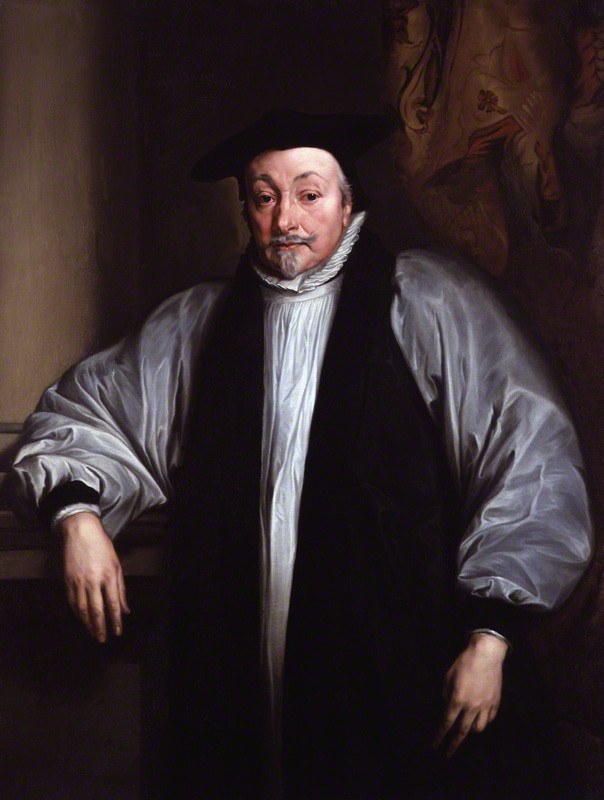
William Laud
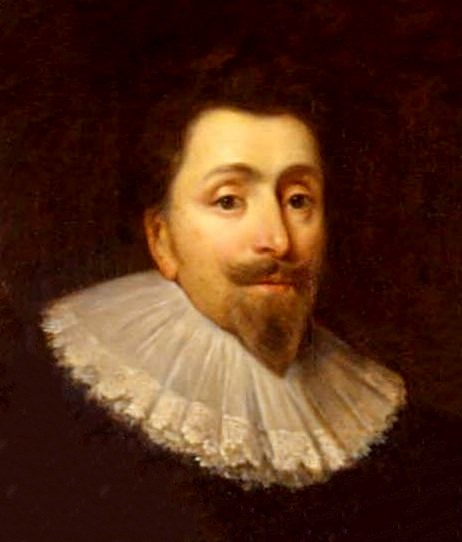
George Calvert
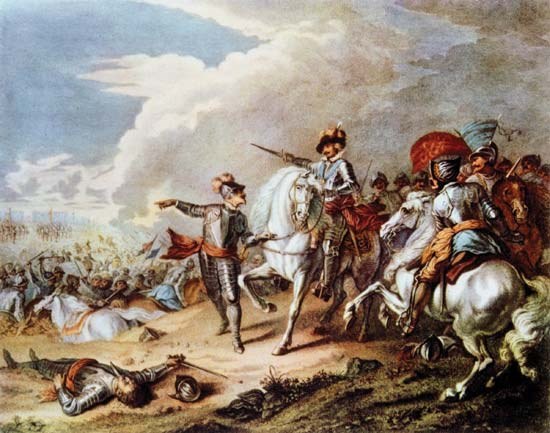
Charles' period of personal rule ended in 1640 when Charles summoned Parliament again when his treasury was empty, and he needed to raise taxes. The meeting of Parliament in 1640 would begin a chain of events that would lead to civil war in 1642. The king's treasury was empty by 1640 because of the outbreak of a rebellion in Scotland in 1638 known as the Bishops Wars. This rebellion began when Charles I attempted to impose the Church of England with its hierarchy of bishops on the people of Scotland. The Scots in the lowlands of the country had embraced the Calvinist Presbyterian Church, and they were faithful to their independent congregational churches. In response to the king's actions, these churches elected representatives to a church council or Kirk, and the Kirk urged the Scots to wage war against the king to protect their churches. This war proved very expensive to the king and quickly emptied his treasury
In 1640 the Parliament that was elected was dominated by critics of the king and prominent Puritans. Charles quickly dissolved this Parliament (the so-called Short Parliament) within weeks and called for new elections. Again, however, the newly elected Parliament included the king's opponents and many Puritans. Desperate for more money to finance his government, Charles agreed to a set of conditions demanded by this Parliament, known as the Long Parliament, as it remained in session for the next nine years. First, Parliament arrested and eventually executed the king's advisers and ministers, including William Laud. Second, Parliament demanded that the king sign and comply with the Petition of Right of 1628. Finally Parliament ended the medieval Feudal system, so that the king could no longer secure revenue from wardships. By ending the Feudal system, the landed aristocracy secured full property rights over their lands.
In 1641 the Roman Catholics of Ireland rose up in a violent rebellion. The Irish Catholics had for a long time resented the settlement in Ireland of English Protestants. During the reign of King James I, large numbers of Protestant Scots began settling in northern Ireland since the region had been depopulated by English armies as a result of local rebellions by Irish Catholics during the reign of Elizabeth I. These "Scots-Irish" were not welcomed by the Irish Catholics. Members of Parliament feared that Charles I with his Roman Catholic sympathies would ally himself with these Irish rebels and wage war on Parliament. To prevent such an occurrence, in 1641 Parliament issued the Grand Remonstrance, which required the king to receive Parliament's approval for his military appointments. Charles saw this move by Parliament as a direct attack on his authority as king, and in response in 1642, he ordered the arrest of five leading members of Parliament. This attempt to silence the opposition in Parliament was the spark that resulted in the outbreak of the English Civil War.
In this conflict the Royalists or "Cavaliers" supported the king and included most of the great noble families that comprised the House of Lords, but royalists also included peasants in northern England, the highlands of Scotland, and in Ireland, where many Roman Catholics resided. Parliament drew its support primarily from the towns and villages of southern England, where the Puritans were concentrated. In addition merchants and artisans in the towns of southern England tended to support Parliament. The support that Parliament enjoyed in the more populous south of England provided Parliament with a financial advantage over their opponents since they could draw tax revenue from the towns of this region. Parliament also developed a superior military force known as the New Model Army under the leadership of its general, Oliver Cromwell, a member of the gentry and a devout Puritan. This New Model Army emphasized discipline and training. Soldiers went into battle wearing the same uniforms and even the same signature, bowl haircut, which earned these soldiers the nickname of "Round Heads". Many of these soldiers were also Puritans, like their general. Instead of spending their off-duty time drinking and gambling, like most soldiers of that day, these Round Heads spent this time singing hymns together and studying the Bible. These soldiers saw this conflict as a holy war to save England from damnation and to reform the Church of England. In 1642 Parliament convened the Westminster Assembly, in which its Puritan leaders reformed the the Church of England so that it became a Calvinist church. The Presbyterian Church in Scotland and the English Baptist churches agreed to the doctrines set out by this assembly and were therefore allowed to remain independent of the newly reformed Church of England.
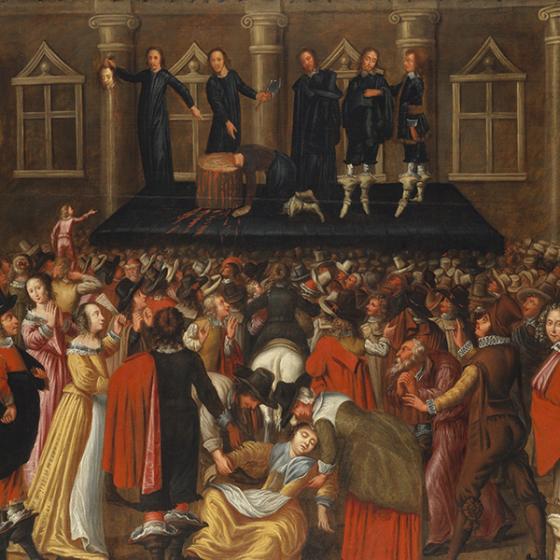
In 1645 at the Battle of Naseby, the New Model Army crushed the Royalist army, and Charles soon afterwards fled for safety to Scotland, but the Scots handed the king over to the English Parliament in 1647. After his capture a new civil war erupted between the "Presbyterians" and the "Independents". The "Presbyterians" wanted to restore Charles I to the throne, but with strong limitations on his power. Supporters of this faction included many Scots who were loyal to the Scottish Stuart Dynasty. The "independents" wanted to end the monarchy and make England a republic or commonwealth. In this struggle Oliver Cromwell and the New Model Army supported the "Independents". Among the ranks of the New Model Army were the "Levellers" who envisioned England as a republic that extended the right to vote to all adult males, instead of just to the wealthy elite. Cromwell was no Leveller,and he had their leaders arrested, but he was an "independent" and opposed to the monarchy. In 1649 the New Model Army crushed the opposition. With the support of this army, Cromwell ordered the arrest of his political opponents in Parliament in an event known as Pride's Purge, which was named after the military officer (Pride) who carried out these arrests. The remaining members of the former Long Parliament formed the Rump Parliament, which only included "independents" and supporters of Cromwell. In 1649 this Rump Parliament tried Charles I and found him guilty of treason. Charles I was then executed, thus ending the English Civil War.
Oliver Cromwell
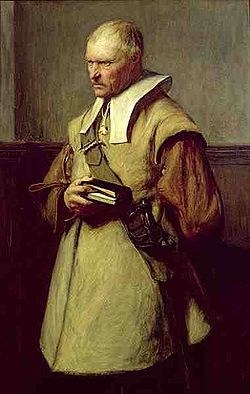
A Round Head soldier
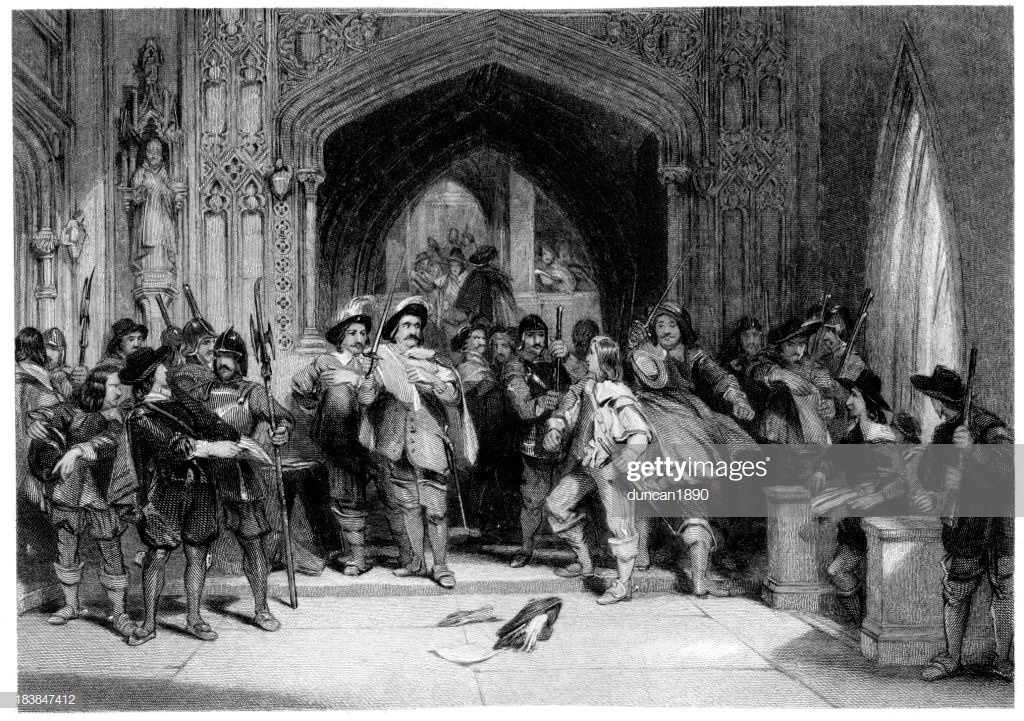
Pride's Purge
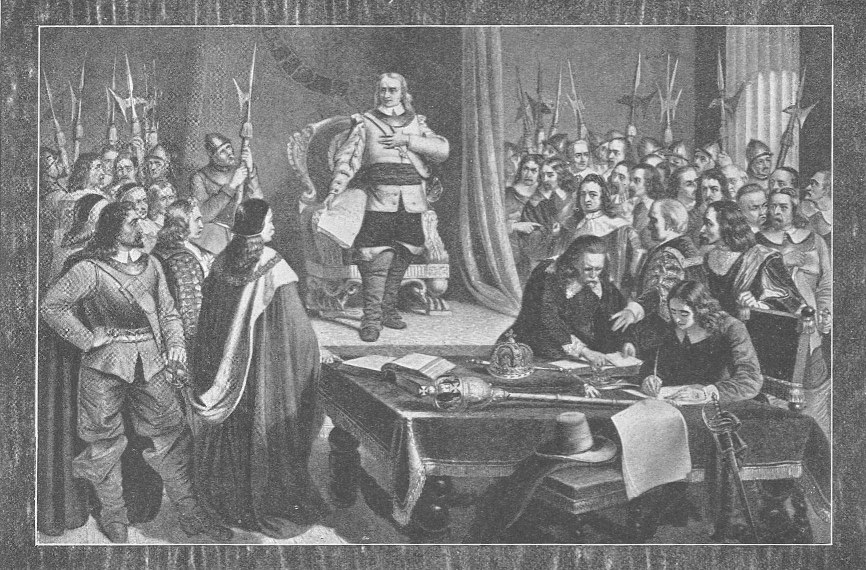
After the execution of Charles I, England was a commonwealth or republic in theory, but in reality, Oliver Cromwell was a military dictator who had stacked the Rump Parliament with his political allies. From 1649 to 1653, the New Model Army under Cromwell's command brutally stamped out Irish Catholic rebels in Ireland and supporters of the Stuart Dynasty in Scotland. In 1653 after dismissing the Rump Parliament, Cromwell issued England's first and only written constitution for its new republic. Under this constitution, Cromwell as Lord-Protector served as chief executive and commander and chief of the armed forces. The government also included a single elected assembly that represented England, Ireland, and Scotland. This constitution extended the right to vote in elections to this body to all adult males, who were wealthy property owners, but expressly forbid Roman Catholics from voting or holding office. Cromwell as Lord Protector could could summon and dismiss this assembly, but there were to be elections to this parliament at least every three years.
The government of Oliver Cromwell never enjoyed broad popular support. The Puritans, who strongly supported this regime, remained a small minority in England. In 1658 Oliver Cromwell died, and his son Richard inherited the title of Lord-Protector. Richard, unlike his father, didn't even maintain the loyalty of the army. In 1659 an army officer, George Monck, stationed in Scotland, led a mutiny against Richard Cromwell. Monck's fellow soldiers under his command marched on London with little opposition, and Cromwell's government collapsed. Monck called on former members of the Long Parliament to convene. This Parliament then in 1660 requested that Charles Stuart, the eldest son of Charles I, accept the throne as Charles II.
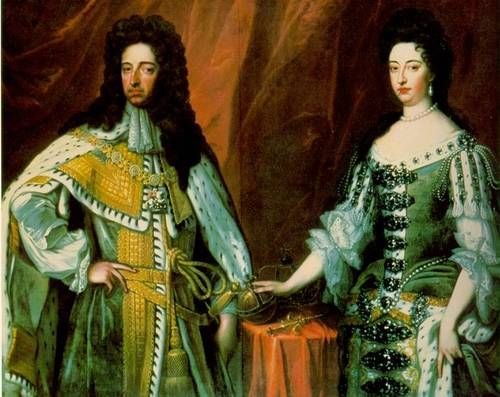
The return of the Stuart Dynasty under Charles II (r. 1660 -1685) marked the beginning of the Restoration period. The reforms of the Westminster Assembly were undone, and the Act of Uniformity in 1662 restored the king as the head of the Church of England. Charles II became known as the "Merry Monarch" not only for his generosity to friends (He gave the colony of Pennsylvania to his friend William Penn) and his love of festive parties and lovely actresses, but also due to his efforts to work cooperatively with Parliament. He received generous subsidies from his cousin, Louis XIV of France, and he used these funds to bribe members of Parliament to support his government. He also dispensed other gifts to prominent members of Parliament. For example, in 1663 he granted Anthony Ashley Cooper, the territory of Carolina, just south of the colony of Virginia.
Charles II, however, had no legitimate children, so his younger brother, James, the Duke of York (and proprietor of the colony of New York) assumed the throne as James II in 1685. James II, however, was Roman Catholic, which was very troubling to members of Parliament. Members of parliament took solace in knowing that James II was an old man , and his two adult daughters and heirs, Mary and Anne, were both Protestant and married to Protestants. James II was more like his father and grandfather, than his older brother, as he was openly dismissive of Parliament, and he believed in the divine right of kings. In the American colonies, in 1686 he eliminated the elected assembly in the Massachusetts Bay Colony and appointed a viceroy to govern as his personal representative in his Dominion of New England. In England James ignored Parliament and in 1687 granted Roman Catholics religious toleration by decree in his Declaration of Indulgence. James had re- married a much younger Roman Catholic woman. Mary of Modena, and in 1688 she gave birth to a son, James. According to English legal tradition, male heirs took precedence over female heirs, regardless of the age of the heirs. Members of Parliament were horrified that James II would be someday succeeded as king by a young, Roman Catholic prince, James III. Parliament decided to take action to prevent this outcome, and Parliament offered the throne to James II's eldest daughter, Mary, who was married to William of Orange, the Stadtholder of the Dutch republic. William was eager to accept this offer since England under James II was allied to his enemy, Louis XIV of France, who had waged a brutal war against the Dutch. William and Mary in 1688 crossed over to England with an army. Support for James II in England vanished, and without any warfare, William and Mary were crowned as William III and Mary II, King and Queen of England, Scotland, and Ireland. This event became known as the Glorious Revolution. This historical development was a revolution in that Parliament has asserted itself as the sovereign authority in the state by deciding who was to be the monarch. The notion of divine right was thereby rejected. This event was glorious in that William and Mary were installed as constitutional monarchs without bloodshed, in England anyway. In Ireland however, James II enjoyed the support of the largely Roman Catholic population. In 1690 the Irish Catholics rose up in rebellion against the new king, William. At the Battle of the Boyne the army of William defeated the rebels. In this conflict the Protestant Scots-Irish in northern Ireland, the "Orangemen", supported William of Orange. The collapse of James II' government also resulted in the dissolution of his Dominion of New England in the English colonies. William and Mary granted charters to the colonies of Massachusetts and New York that allowed these colonies to elect their own legislative assemblies. The legacy of the Glorious Revolution in these colonies was the firmly held belief among the colonists that the colonies enjoyed self- government through their own elected assemblies.
During the reigns of William and Mary, and their successors, the government of England (Great Britain after the Acts of Union in 1707 united England, Scotland, and Ireland) stabilized as a functioning constitutional monarchy. William as king of England was primarily concerned with securing funding from Parliament for his war against Louis XIV, so he appointed ministers to govern who had the support of Parliament. William and Mary also signed in 1689 the English Bill of Rights, which guaranteed all English subjects certain rights as Englishmen such as the right to a jury trial. The Bill of Rights also forbid the billeting of soldiers in private homes as well as cruel and unusual punishment. These English rights were enshrined in the later American Bill of Rights, a century later in 1789. In this English Bill of Rights, the monarch also could not raise taxes without the approval of Parliament. The power of Parliament was further enhanced by the Triennial Act of 1794, which allowed Parliament to hold elections and to convene every three years, if the monarch didn't summon Parliament over that period. Parliament also increased personal freedom when it passed the Toleration Act (1690), which granted religious toleration to dissenters, who didn't belong to the established Church of England. It is important to remember that England's path toward becoming a stable constitutional monarchy was often due to random circumstance rather than by design. Both Mary and her younger sister, Anne (r. 1702-1714) both had no surviving children. Parliament therefore offered the throne to George, the Elector of Hanover, a great-grandson of James I rather than allow James II' son James (III) to become king. George was a middle-aged German prince, who spoke very little English. Once he became king in 1714, he devoted his time mostly to his duties as a prince of the Holy Roman Empire. Both George I and his son, George II (r.1727-1760) both spoke German as their native tongue and focused their energy on their German lands. Over their reigns, these kings appointed ministers to govern Great Britain, who had the most support in Parliament, so that the chief executives of the state represented the party in Parliament that possessed the most seats in that body. Members of Parliament by the early 18th century became divided into opposing political parties, the Whigs and Tories. Originally these parties were divided over the question of the Hanoverian succession, as Whigs supported George I of Hanover as king , while Tories championed James Stuart, the son of James II. Over time however, Whigs and Tories, disagreed over the distribution of political power. Tories advocated for the concentration of this power in the hands of the monarch's ministers or the "court", whereas Whigs maintained that political power should be more decentralized and wielded by Parliament as a whole, as Parliament represented the "country". While even Tories eventually accepted the German House of Hanover as the legitimate constitutional monarchs of Great Britain, among the Roman Catholics in Ireland and the Scottish highlands, the Jacobites remained loyal to the Stuart dynasty and staged rebellions in 1715 and 1745 in support of James Stuart and his son Charles, the "Bonnie Prince".
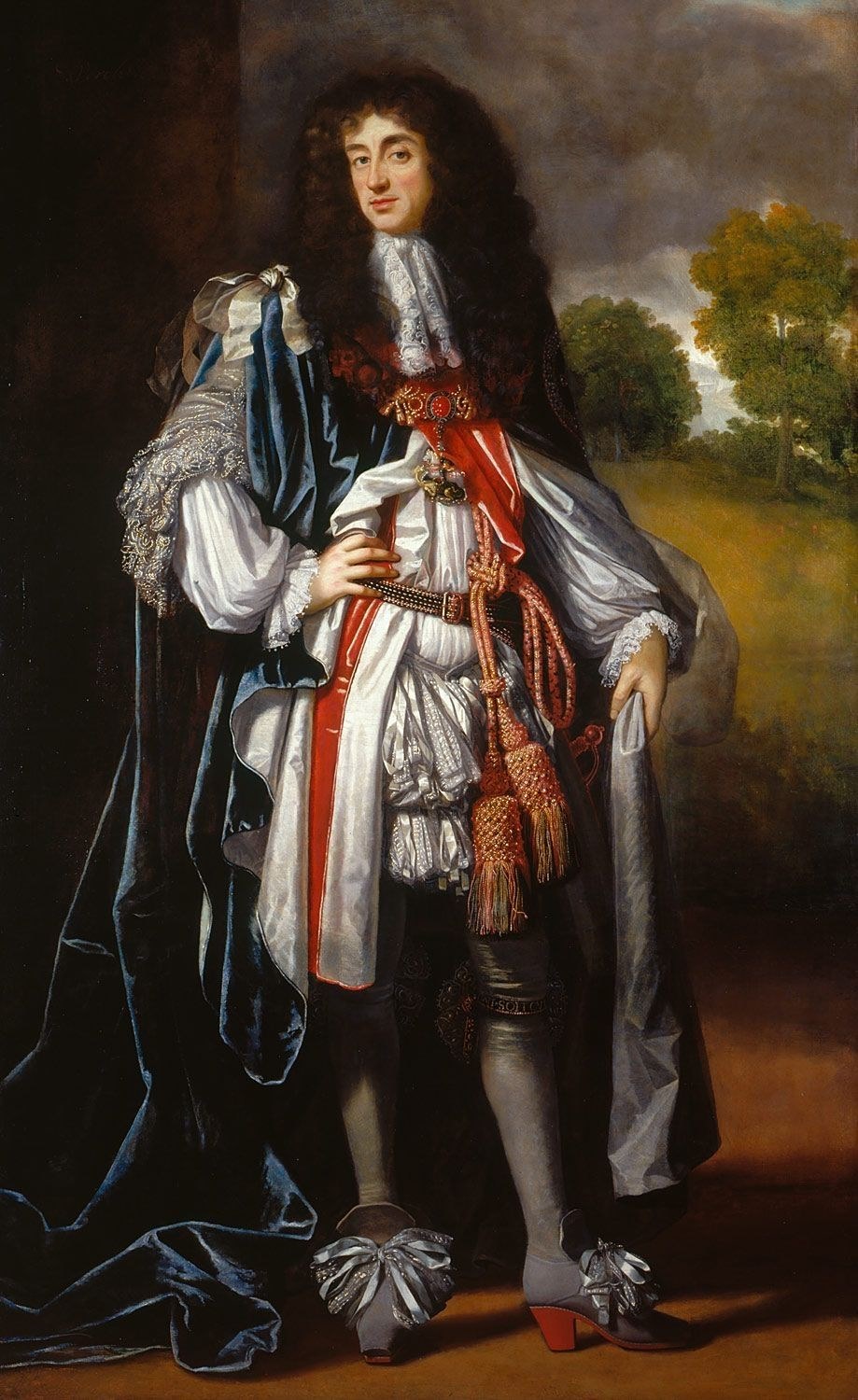
Charles II
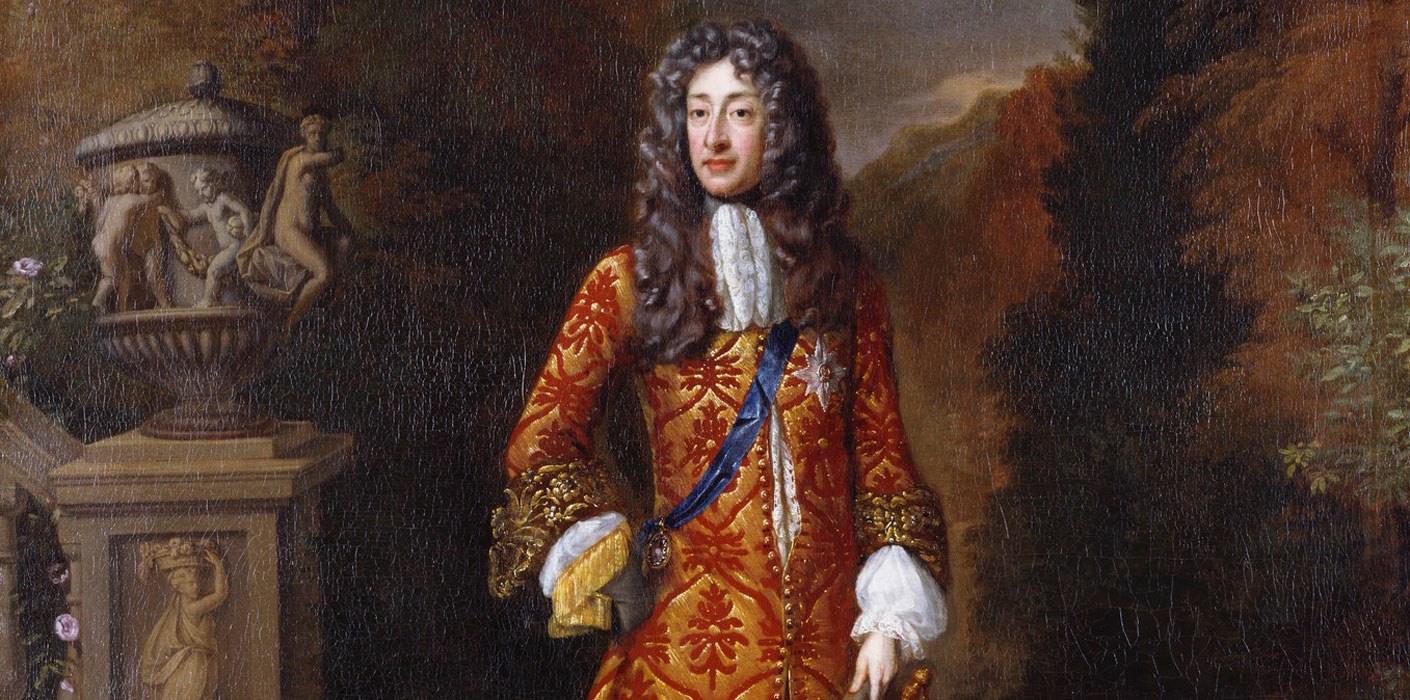
James II
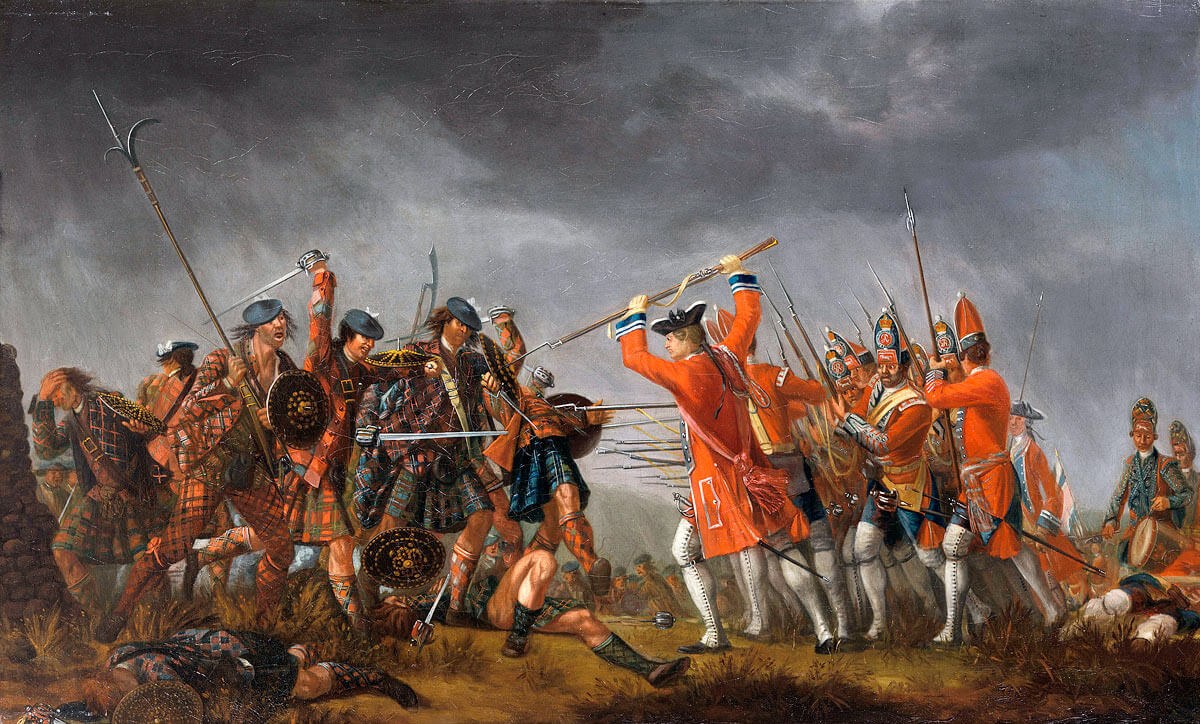
Jacobite Rebels