17th Century France and Absolutism
Modern World6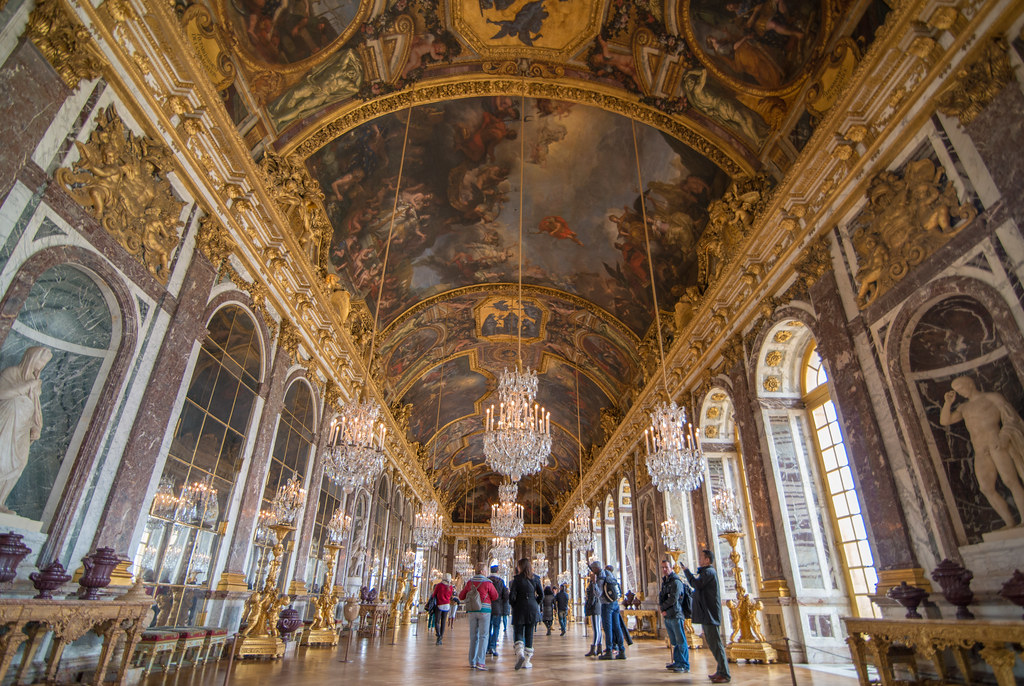
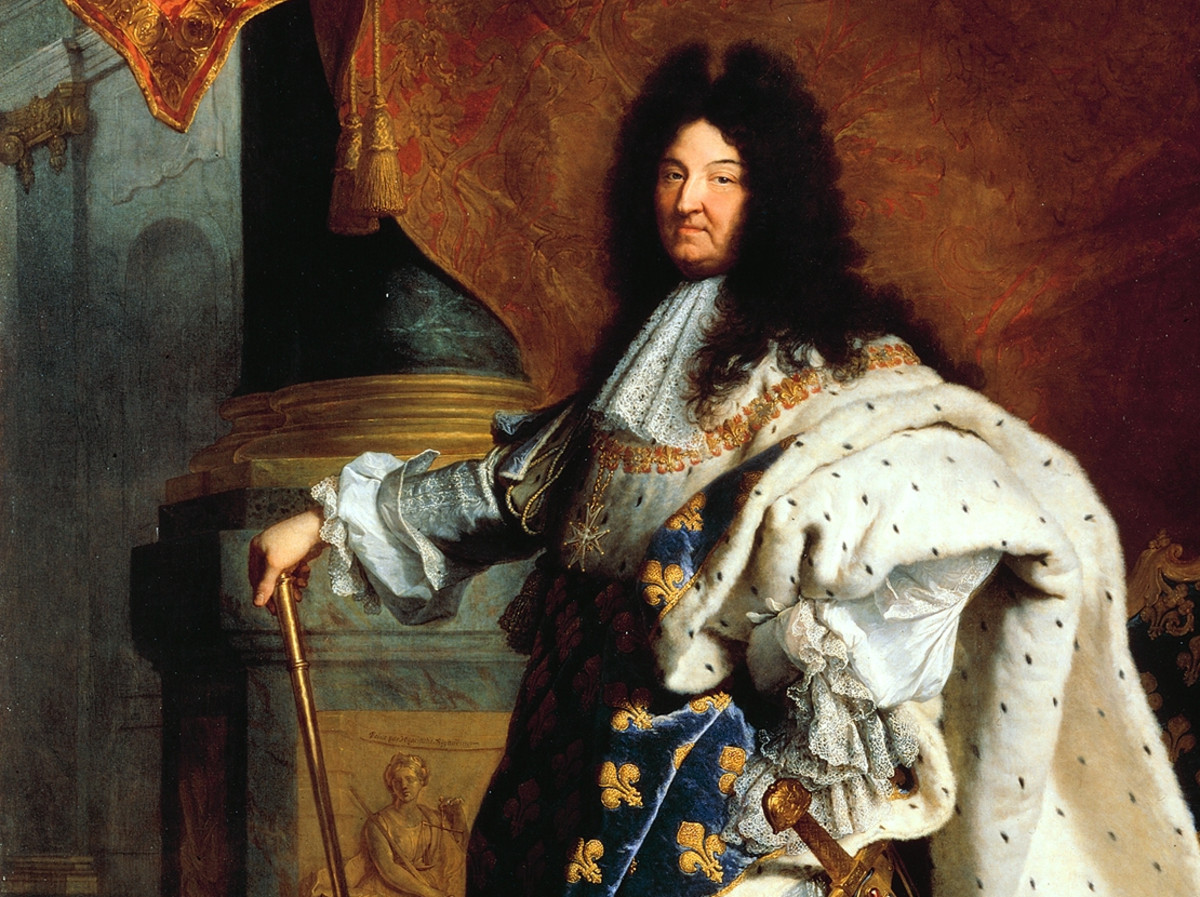
Henry IV (r. 1589 - 1610) was the first king of the Bourbon Dynasty of French kings. During the reigns of his son, Louis XIII (r. 1610 -1643) and grandson, Louis XIV (r. 1643 - 1715), France would emerge as the most powerful state in Europe. Over this same period, France would also evolve into the model of Absolutism, as other European monarchs both admired and envied the concentration of political power wielded by the French monarchy. These French kings also believed strongly in the divine right of kings, as they recognized no earthly authority over them and only answered to God alone. Reportedly Louis XIV once uttered, "L'etat c'est moi'" or "I am the state", a statement that reflects his outlook on his extensive power and authority as king. As in England, the 17th century was a chaotic and violent era, and the pathway to Absolutism in France was not smooth and consisted of many twists and turns.
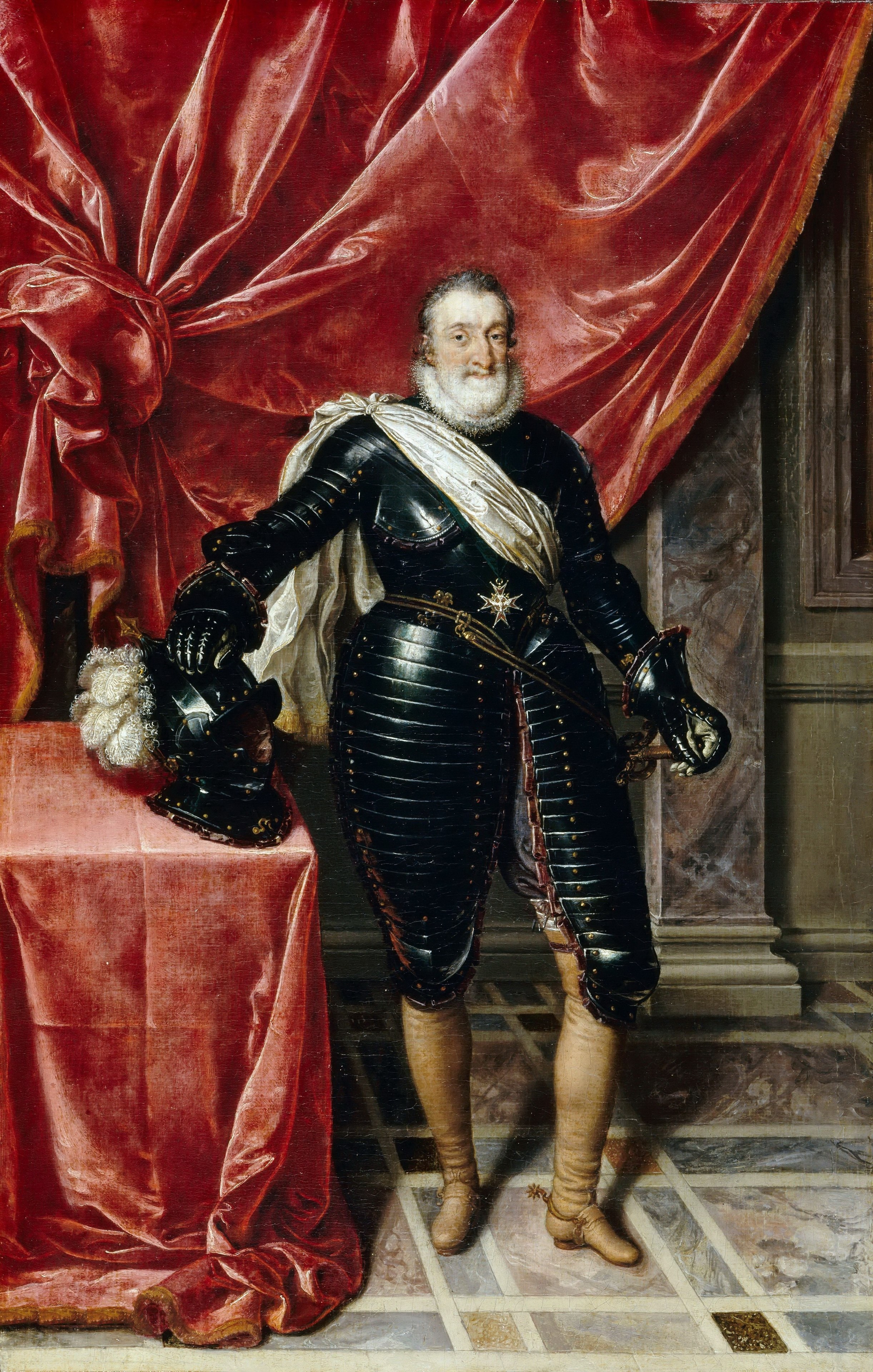
When Henry IV converted to Roman Catholicism in 1594 and entered Paris as king, the French Wars of Religion came to an end. The country had experienced decades of civil war, and the royal government was in shambles with an empty treasury. Henry devoted his reign to rebuilding the government and replenishing the royal treasury. In France new taxes had to be approved by the regional estates, which were elected assemblies that represented the three order or estates of French society, the landed aristocracy, the clergy, and the commoners, who were usually represented by wealthy townspeople such as merchants. Henry was able to convince these regional elected bodies through both charm as well as threats to grant him the authority to raise new taxes. Henry managed these new tax revenues well. Maximilien de Béthune, the Duke of Sully, a Huguenot, served as the king's right hand man in this rebuilding process and was an excellent administrator. Due to his efforts, the French royal government was in a stronger position financially by the end of Henry's reign.
Like his contemporary, James I of England, Henry IV supported efforts to colonize the New World. With the authorization of Henry IV, the French explorer Samuel de Champlain established settlements at Port Royal in Acadia ( in modern Canada) in 1605 and at Quebec in 1608. This region of modern Canada became known as New France
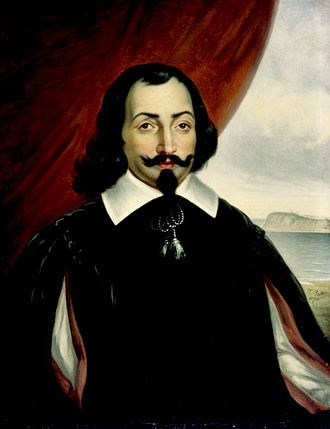
Samuel de Champlain
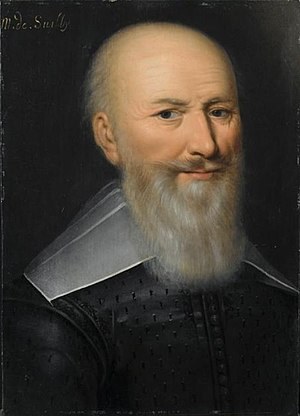
Duke of Sully
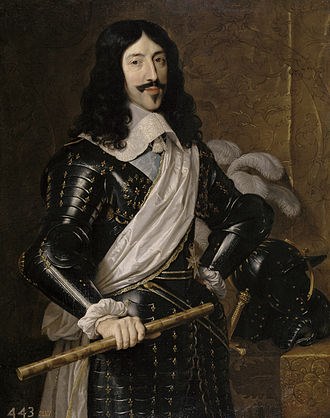
In 1610 a Roman catholic zealot, François Ravaillac, assassinated Henry IV. Since his son and heir, Louis XIII was just nine years old, the boy's mother,Queen Maria de Medici served as regent. Since France was once again under the rule of a woman and a foreigner, as in the days of Catherine de Medici in the previous century, the French landed nobility saw an opportunity to assert their independence from the royal government. The great princes of France began raising their own private armies and fortifying their castles. In 1613 with France in crisis, Maria de Medici summoned a meeting of the Estates -General, in which representatives from all three "estates", the Church, the landed nobility, and the commoners, convened, representing the entire nation of France. At this meeting Maria de Medici was able to win the support of powerful nobles by appointing them to high offices in her government. Once these leading aristocrats had secured offices and honors for themselves from the queen, the Estates -General adjourned and would not convene again until 1789.
After 1614, a French aristocrat and Roman Catholic priest, Armand Jean du Plessis, Duke of Richelieu would emerge as the power behind the throne. In 1622 he became a Cardinal in the Roman Catholic Church, and he has become known to history as Cardinal Richelieu, whom historians have hailed as the "architect of French Absolutism". Cardinal Richelieu's began his career in the royal court as the personal priest of the young Queen of France, Anne of Austria. By 1624 he was Louis XIII 's principle minister and adviser, a position that he would hold until his death in 1642. Richelieu believed in the divine right of kings and his goals were to establish the king as the supreme power in France and the Bourbon dynasty as the dominant power in Europe. To accomplish these goals, Richelieu first constructed a well organized and efficient royal bureaucracy, which could collect and manage tax revenues. Richelieu often appointed men from middle class backgrounds to serve in his bureaucracy based on their abilities and loyalty to to the crown. Gradually, Richelieu transferred power and authority from inept, aristocratic, hereditary office holders to these new, more competent and loyal officials. Richelieu, however, didn't want to alienate noble office holders too much,so he allowed them to keep their salaries, honors, and exemptions from taxes even though he had stripped them of their powers. With a full royal treasury as a result of these reforms of the bureaucracy, Richelieu could finance a large standing army, which could keep internal order and the powerful nobles in line. Consequently the royal government required the nobles to disband their private armies and dismantle their fortresses. Richelieu even forced the Huguenot towns in southern France to dismantle their fortifications, which they had been allowed to construct under the terms of the Edict of Nantes. Richelieu, however, did not revoke their ability to practice their Protestant faith. Richelieu did face armed opposition to these efforts from the Huguenots and some French aristocrats, such as Henri de Montmorency in 1632. But royal armies crushed this opposition.
The financial resources and large, standing army of France, which Richelieu had established, put the Bourbon Dynasty in a position to challenge the Hapsburg Dynasty as the dominant power in Europe. In 1635, the Austrian and Spanish Hapsburg Dynasties were winning the war against the Protestant German princes of the Holy Roman Empire and the Dutch Netherlands in the Thirty Years War. At this critical point in this war, France made an alliance with the Protestant powers since they were waging war against Hapsburg Spain and Austria. This alliance with France enabled the Protestant powers to win this war in 1648 with the Peace of Westphalia, which ended efforts of the Austrian Hapsburg dynasty to dominate the Holy Roman Empire. France continued the war against Spain until 1660 and the Peace of the Pyrenees, which resulted in a French victory and the Spain giving up territory in the Spanish Netherlands to France.
Cardinal Richelieu died in 1642, but his policies continued even after his death since Richelieu had trained a successor to carry out his plans for the French monarchy. Giulio Mazzarino was an Italian Roman Catholic priest, who in 1638 became a Cardinal in the Roman Catholic Church, and is known to history as Cardinal Mazarin. He first came to the French court originally as the ambassador from the Pope. Cardinal Richelieu was impressed with this young man and became his mentor. When Richelieu died in 1642, Cardinal Mazarin succeeded him as chief minister to the king.
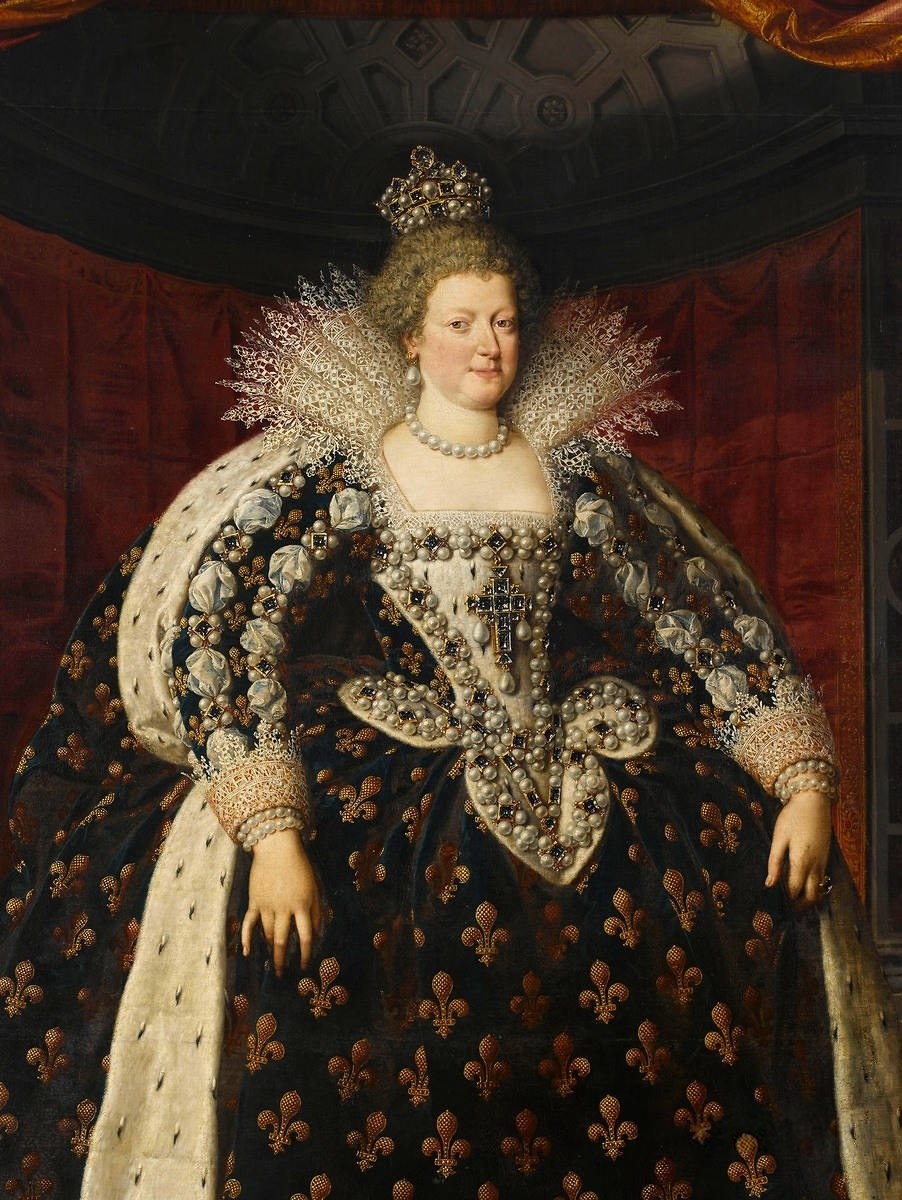
Maria de Medici
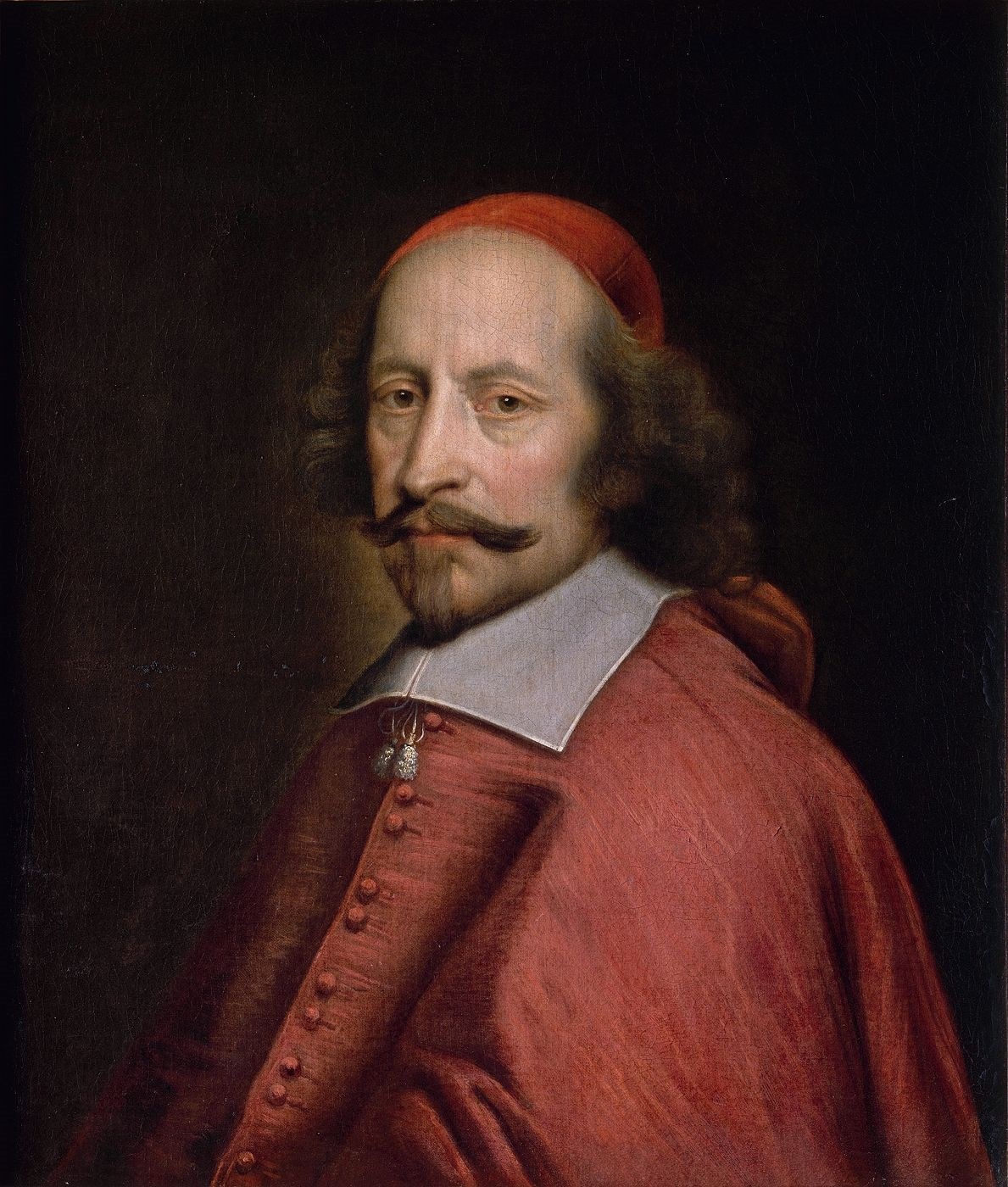
Cardinal Mazarin
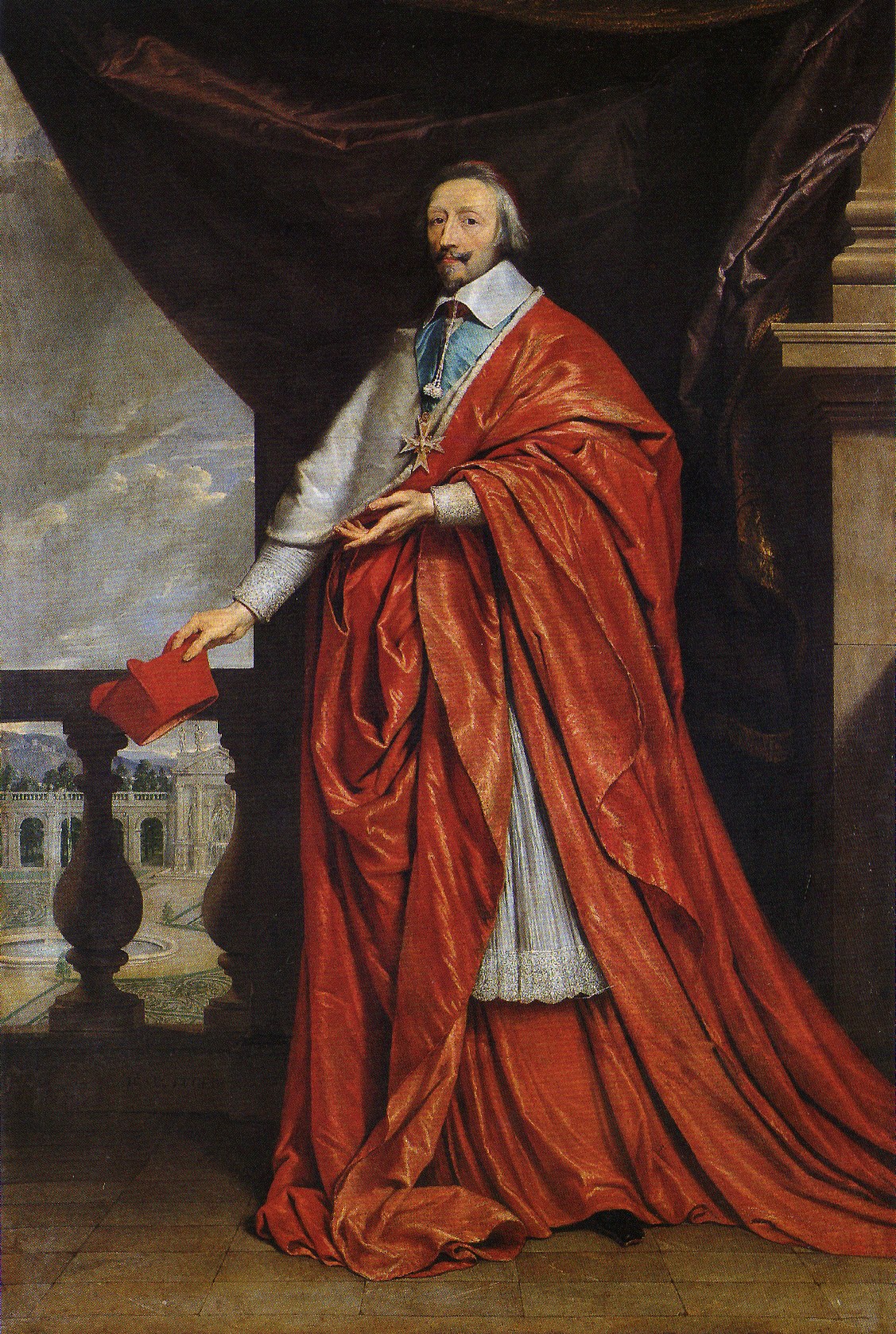
Cardinal Richelieu
Louis XIII died in 1643 and his oldest son, Louis XIV was a just a boy, so the Queen mother, Anne of Austria, served as regent with the support of Cardinal Mazarin, who also became her lover. With a foreign woman once again ruling France, the French nobility rebelled, which began a period of unrest and civil war known as the "Fronde"(1648 - 1652). In 1648 the Parlement of Paris demanded that the Queen ask for their approval for new appointments to the French Bureaucracy. The Parlement of Paris was a court of law in the kingdom's capital that was staffed by aristocratic judges, who had inherited their offices. These hereditary office holders had long resented that their traditional authority and powers had been stripped away from them by the French crown. They viewed the weakness of the crown under the regency of a foreign queen as an opportunity to assert their independence. However, the French landed nobility in the countryside was not about to take a subservient position to these office holding Parisian bureaucrats, so these nobles quickly recruited private armies and marched on Paris. Concurrently, the poor people of Paris rioted to protest new sales taxes on fruit, which had been recently imposed to pay for the cost of the Thirty Years War. In this time of unrest and disorder, Anne of Austria, Cardinal Mazarin, and little Louis XIV left Paris and went into hiding. As bloodshed and disorder gripped France, the French nobility and commoners over time came to agree that only a strong monarchy could restore order to the nation. In 1652, Louis XIV emerged out of hiding and returned to Paris in triumph to the sound of cheering crowds.
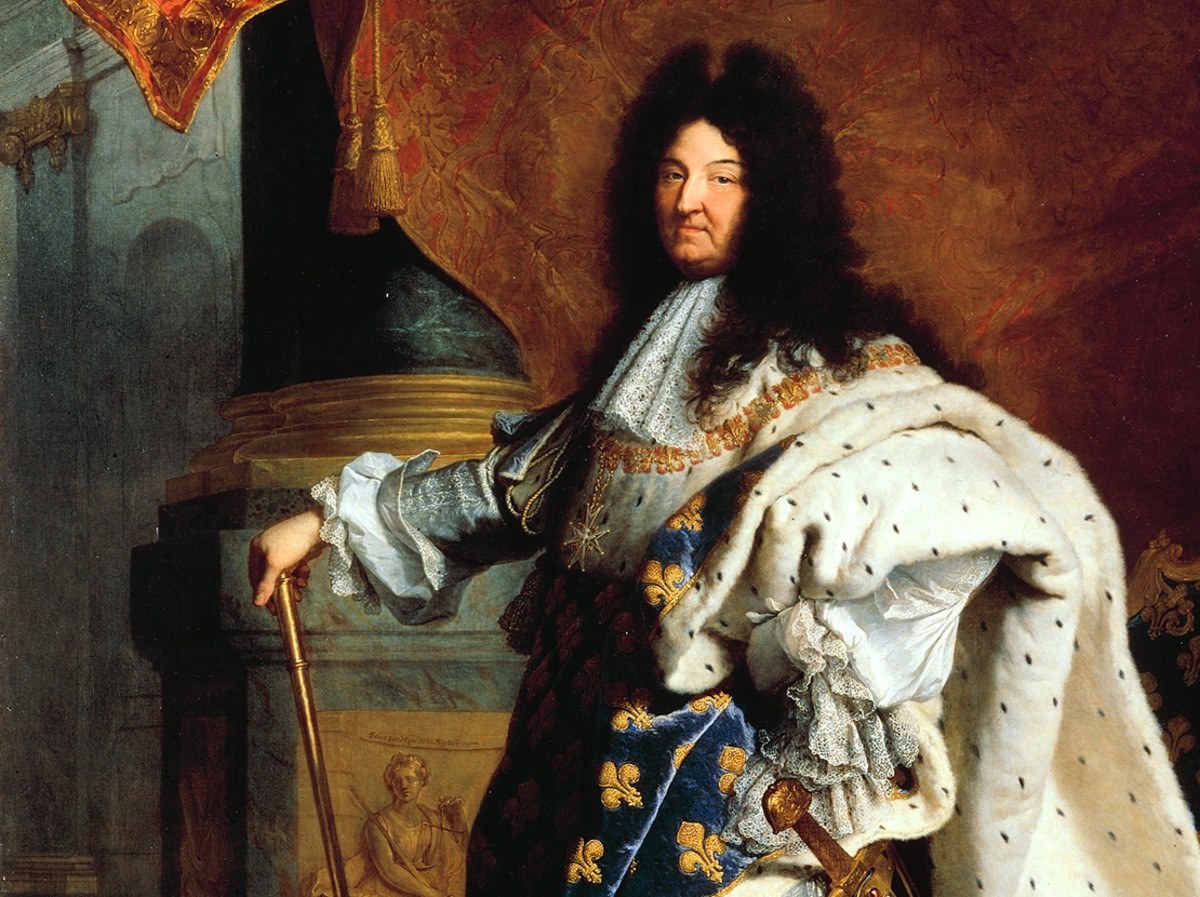
These events of his youth left a strong impression on Louis XIV. This king maintained that a strong, absolute monarchy alone could bring good government as well as glory and honor to France. Cardinal Mazarin served as the king's teacher, adviser, and mentor in the art of governing until Mazarin's death in 1660. Like Mazarin and Richelieu, Louis XIV put his faith in the divine right of kings. To impress and intimidate the French nobility, Louis XIV moved his main residence and seat of government out of Paris to Versailles, where he constructed a magnificent palace and gardens. He invited and encouraged the nobility to visit this palace and to participate there in spectacular royal galas and festivals. Louis XIV also requested that the nobility construct their own homes near the palace at Versailles. Louis XIV was successful in impressing the nobles at Versailles with his vast wealth and power. The nobles praised Louis XIV as the "Sun King" and compared the king to the god Apollo of Greek mythology. Since the French nobility over time accepted the king's absolute authority, there was no effective check to the king's power. In 1685 the king revoked the Edict of Nantes and ended by royal decree religious toleration for French Huguenots. Consequently thousands of Huguenots left France, and many of them found their way to the American colonies, where their descendants included the American patriot Paul Revere and the first governor of Tennessee, John Sevier.
Louis XIV had a medieval mindset in regard to his views regarding religious toleration, but he had a modern, innovative approach to governing his kingdom that established precedents for governments across Europe. Louis XIV sought to create an effective bureaucracy to administer his kingdom. Like Richelieu and Mazarin, he often appointed men of middle class origins to positions in his government based on the abilities and loyalty to the crown. Louis XIV also created a new position, the Intendant, within the French bureaucracy, whose purpose was to hold other bureaucrats accountable for their actions to maximize efficiency. Across France in Paris and the larger towns, Louis XIV established police forces for the first time. The police not only enforced the king's law, but they also investigated and prosecuted French bureaucrats suspected of accepting bribes and embezzling government funds. In his administration Louis XIV also enjoyed the assistance of a talented minister of finance, Jean-Baptiste Colbert. This man was born to a merchant family and was therefore from a middle class background. As finance minister, Colbert first developed a national budget, which based government spending on estimates of incoming tax revenues. Such a policy was unprecedented in Europe. Colbert also took the lead in overseeing Louis XIV economic policies. Colbert enacted economic policies based on the principles of Mercantilism. This economic theory maintained that a strong state must follow policies that seek to increase the state's holdings of precious metals. Colbert therefore placed tariffs or taxes on certain imports, so that these goods became expensive to French consumers, who would then purchase instead less expensive goods that were manufactured locally in France. Consequently money in the form of precious metals remained in the country and didn't leave the country through the purchase of foreign imports. Louis XIV also encouraged the growth of new industries in France, so that France could export goods produced by these industries and therefore bring precious metals into the country. Louis XIV sent his Intendants to workshops manufacturing tapestries and porcelain vessels to insure that these products were of high quality, so that the government could report on these products and advertise them across Europe. Louis XIV also supported the establishment of new colonies since colonies provided France with luxury goods, so that consumers wouldn't need to purchase these luxury goods from foreign merchants and thereby have precious metals leave the country. During the reign of Louis XIV, the French explorer René-Robert Cavelier, Sieur de La Salle, in 1682 sailed down the Mississippi River and claimed the entire Mississippi River Valley for France, naming the region Louisiana in honor of the king. French settlers also established colonies along the Gulf of Mexico at Mobile (Alabama) and Biloxi (Mississippi). France's North American possessions of New France and Louisiana mainly provided France with furs, which were luxury goods in high demand in Europe. In this period France also established colonies in the Caribbean, most notably on the island of Hispaniola (modern Haiti). These colonies featured large sugar plantations since sugar was also a luxury good in high demand in Europe. French sugar planters imported large numbers of African slaves to work on these plantations.
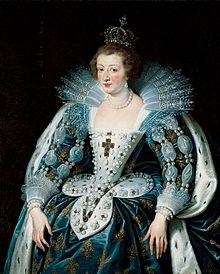
Anne of Austria
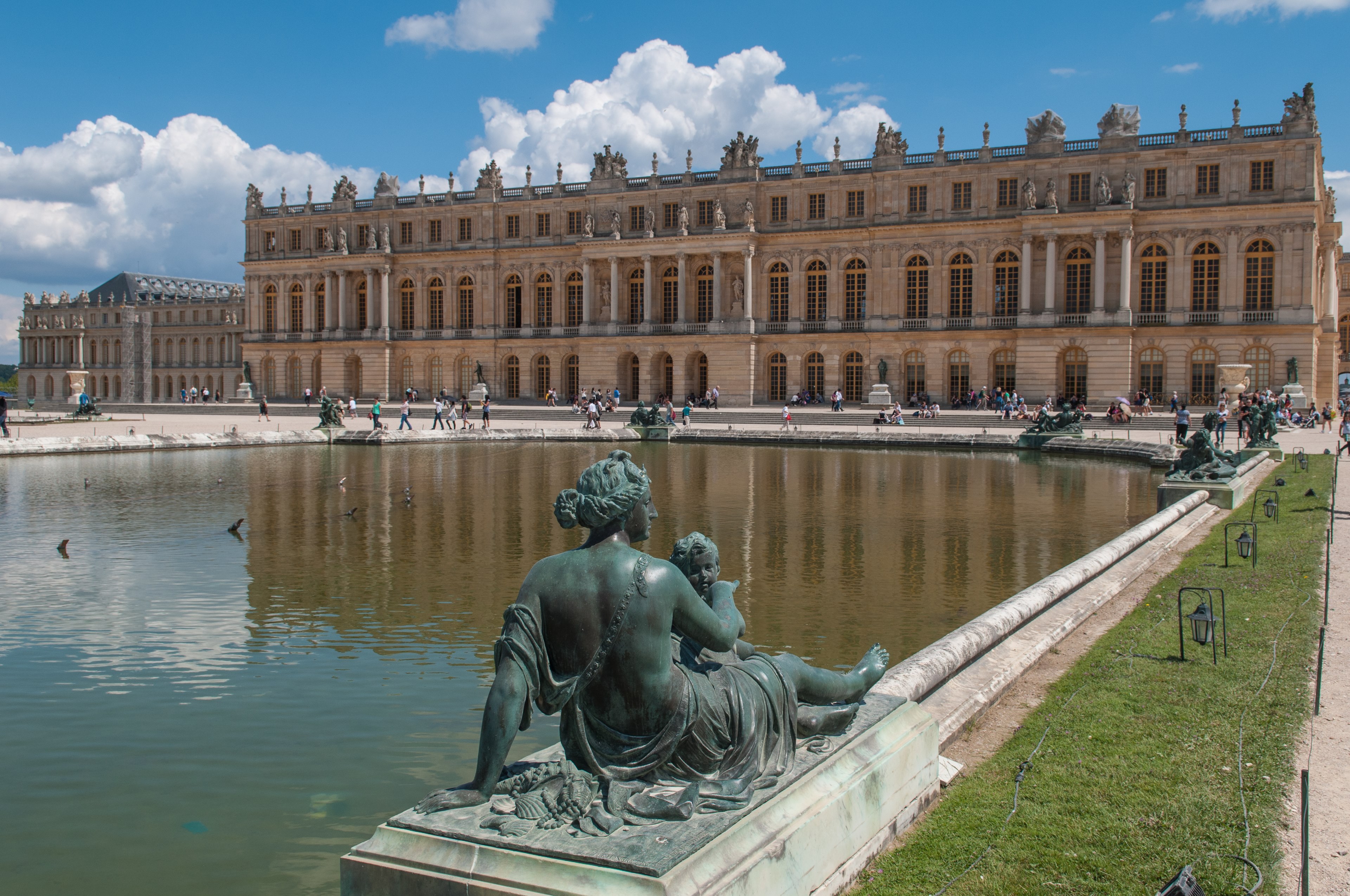
Palace of Versailles
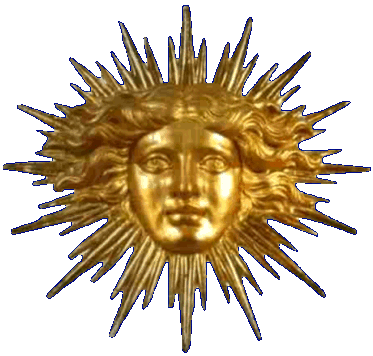
Louis XIV as the "Sun King"
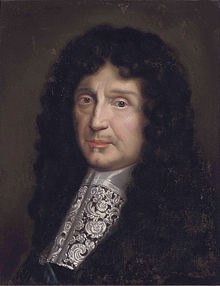
Colbert
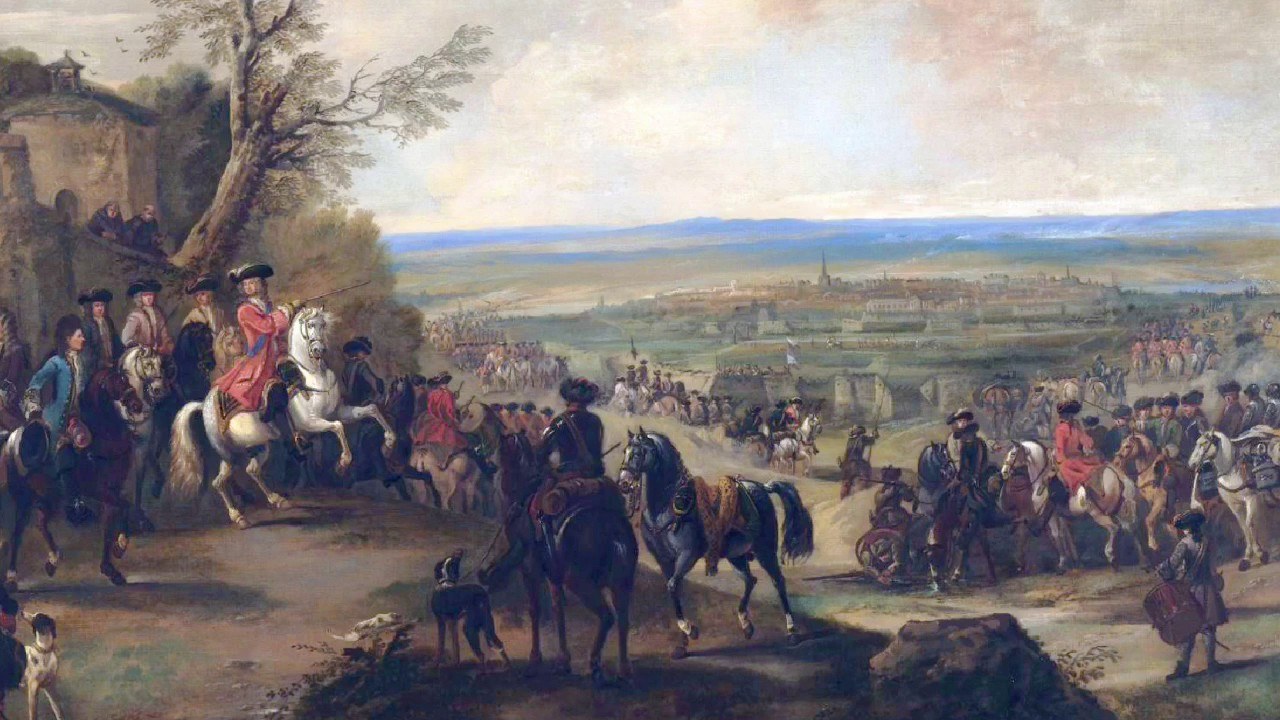
Louis XIV used his expanding tax revenues toward building the largest standing army in Europe, consisting of 250,000 troops. The French government drafted peasants into the army and often "rewarded" veterans for their service by sending them off to be settlers in French colonies in New France and Louisiana. Louis XIV envisioned using his armies to expand France to its "natural" boundaries, the Pyrenees to the south, the Atlantic to the north and west, and the Rhine River to the east. Spain's control of the Spanish Netherlands and the Dutch Netherlands presented an obstacle to his plans for expansion to the Rhine River. Louis XIV also wanted to win glory for the Bourbon Dynasty and weaken the rival Hapsburg Dynasty in Spain and Austria. Louis XIV's military aggression to achieve these goals resulted in a series of wars across Europe in which Louis' enemies organized grand coalitions to oppose Louis XIV and maintain a "balance of power" across Europe.
In 1667 Louis XIV declared war against Spain, just seven years after the Peace of the Pyrenees had ended a decades long war between the two kingdoms. Louis XIV claimed that the Spanish Netherlands "devolved" to him though his marriage to the Spanish princess, Maria Theresa, the daughter of Philip IV of Spain, since Maria Theresa, was this king's daughter from his first marriage, and her half-brother, Charles II of Spain, was too young to administer the Spanish Netherlands. Spain, however, rejected this claim. In the ensuing War of Devolution France forced Spain to cede a number of cities in the Spanish Netherlands by 1668.
In 1672 Louis XIV declared war against the Dutch Republic since he viewed the Dutch as commercial rivals. The Dutch also opposed Louis' plans to annex the Spanish Netherlands. The Dutch Netherlands were very prosperous by the mid-17th century. Flemish and Walloon Protestant merchants and artisans had migrated from the Spanish Netherlands to escape religious persecution and settled largely in the Dutch province of Holland with its trading cities of Amsterdam and Rotterdam. The merchants of Holland by mid-century largely oversaw the governance of the Dutch republic under the leadership of the statesman, Johan de Witt. Dutch merchants had replaced the Portuguese as the dominant traders in the Indian Ocean and the Far East. On the island of Java in modern Indonesia, the Dutch set up a trading post at Batavia (modern Jakarta) in 1619. From this base, Dutch came to dominate the various Muslim sultanates of this region. In 1652 Dutch traders founded Cape Town in South Africa as a place for Dutch ships to stop and re-supply on their way from the Netherlands to the Far East. Dutch merchants also established colonies in the Caribbean and along the Atlantic seaboard of North America in the New Netherlands (modern New York) in 1625. The Dutch financed these trading ventures and colonies through joint stock companies, such as the Dutch East India Company (est. 1602). The city of Amsterdam was the first city to host a stock market where traders could buy and sell shares in companies such as the Dutch East India Company. Louis XIV became increasingly hostile to the Dutch since they had opposed his earlier war to annex the Spanish Netherlands. He also resented that the Dutch imposed high tariffs on French imports. In an effort to humiliate and weaken the Dutch, the French invaded the Dutch Netherlands during the Dutch War (1672-1678). In this conflict the Dutch military forces were greatly outnumbered, but the Dutch destroyed dykes that held back the sea in their land, so that French forces often found themselves surrounded by flood waters. Eventually the French pulled their troops out after suffering terrible losses. The Dutch were able to maintain their independence, but their economy was devastated by the loss of rich farm land due to the destruction of the dykes.
Louis XIV, however still went on with plans to expand France to the Rhine River. In 1688 French forces occupied the Rhine Palatinate, which was a principality of the Holy Roman Empire. The Dutch viewed this occupation as a direct threat to their territory since the Rhine Palatinate shared a border with the Dutch Netherlands. The Stadtholder of the Dutch Republic, William of Orange, built a grand coalition of allies to challenge the French. This coalition included Spain and Austria and became known as the League of Augsburg. In 1689, William of Orange became king of England due to the Glorious Revolution and thereby added England to this league. War broke out in 1689 and lasted until 1697 when the two sides signed the Treaty of Ryswick, and France agreed to withdraw from the Rhine Palatinate.
Peace in Europe, however, didn't last long. In 1700, Charles II of Spain died without any children. The throne therefore fell to his closest male relative, Philip of Anjou, who was the grandson of Louis XIV. Across Europe there was fear that the Bourbon Dynasty would control Europe since this dynasty would rule both France and Spain with its extensive overseas empire. The Austrian Hapsburg family nominated Charles, the younger son of the Holy Roman emperor, Leopold I, as an alternative candidate for the Spanish throne in an effort to maintain the status quo with a Hapsburg ruling in Spain and Austria. In the ensuing War of Spanish Succession (1702 - 1714), Louis XIV supported his grandson's claim to the throne while a coalition that included Austria, the Dutch Netherlands, and England backed Charles' bid. Early in this conflict, French armies crossed southern Germany in an effort to capture Vienna in Austria, but at the Battle of Blenheim in 1704, the French army suffered a devastating defeat at the hands of an allied Austrian and English army under the joint command of Eugene of Savoy and John Churchill, the Duke of Marlborough (the ancestor of Winston Churchill). The war finally ended in 1714 with the Peace of Utrecht. Under the terms of this treaty, Philip of Anjou was recognized as the king of Spain, Philip V, but Spain ceded control over the Spanish Netherlands to the Austrian Hapsburg family along with its territories in Italy (the Duchy of Milan and the kingdoms of Sicily and Naples). Louis XIV did win a crown for his grandson and glory for the Bourbon Dynasty, but at a great cost. Historians estimate that the War of Spanish Succession resulted in the deaths of over 1,000,000 soldiers. Moreover, the French government had to raise taxes to high levels to pay for these wars, and the tax burden fell on the middle class and poor since the landed nobility and Roman Catholic Church were exempt from these taxes; and even with these new tax revenues, Louis XIV died in 1715 leaving a country in heavy debt as well.
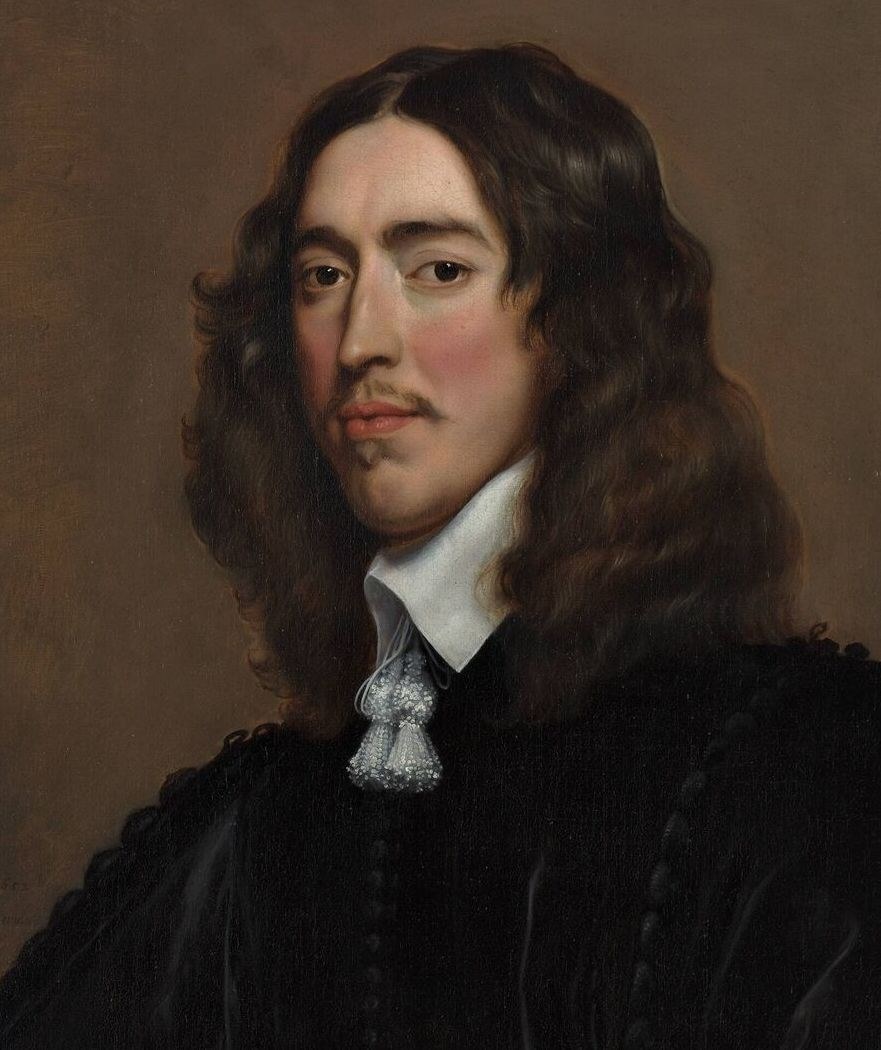
Johan de Witt
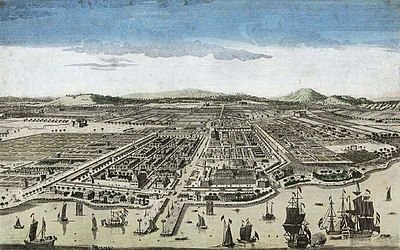
Batavia
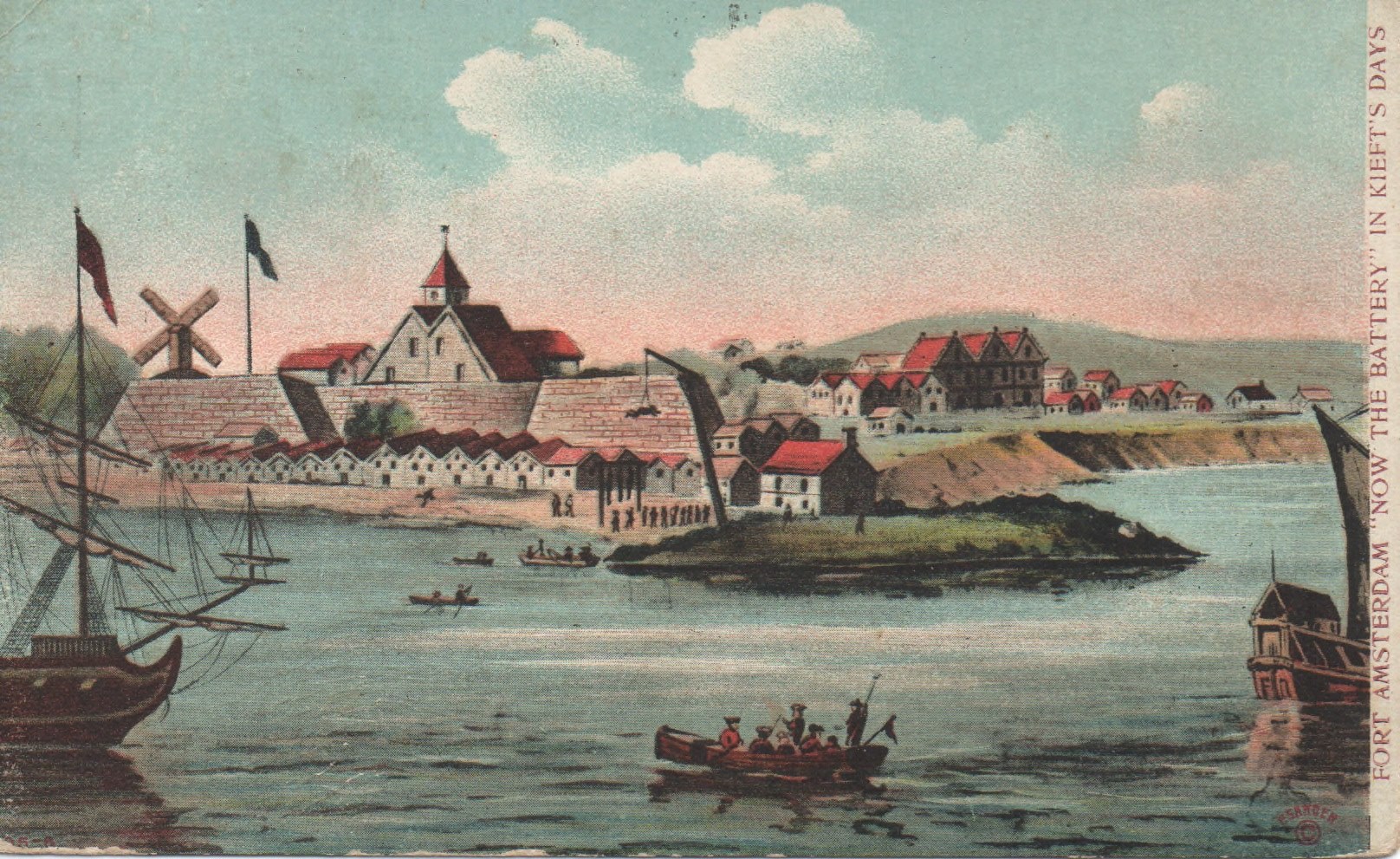
New Amsterdam (NYC) in the New Netherlands
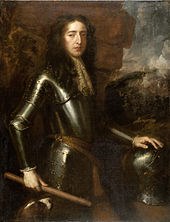
William of Orange
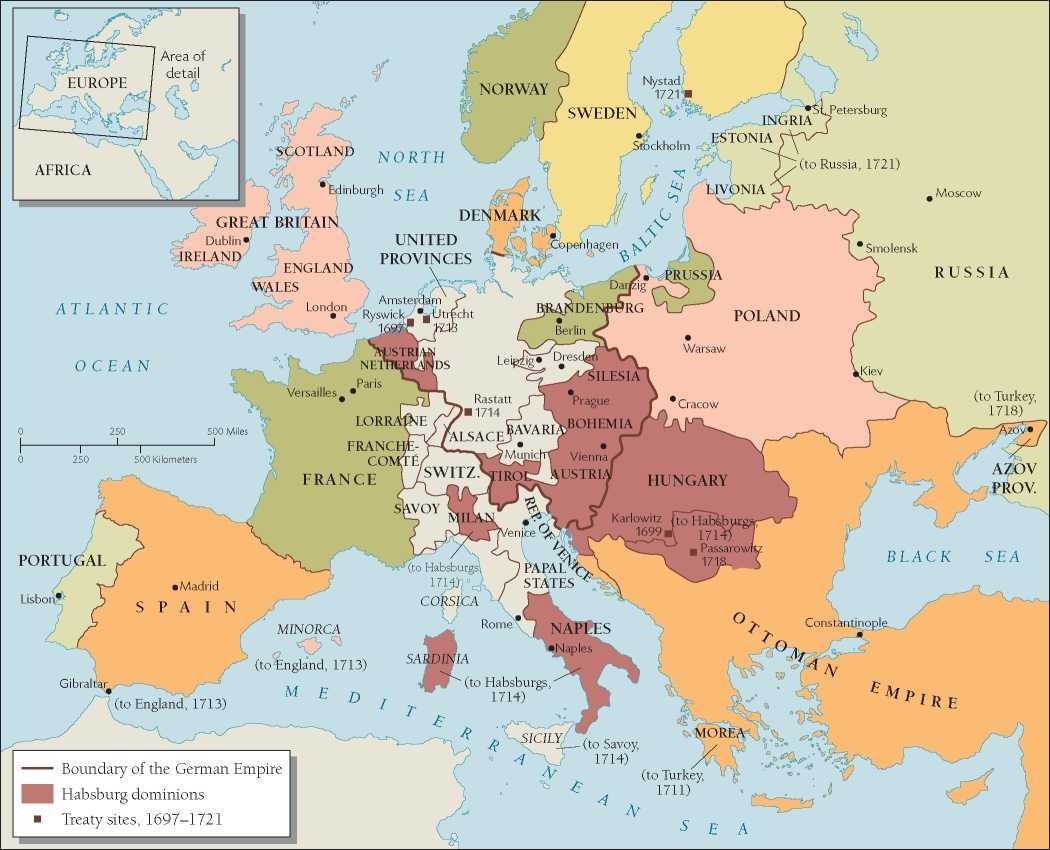
Europe in 1714