The French Revolution
Modern World14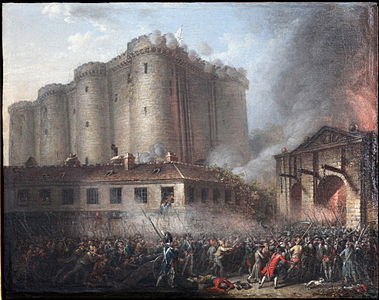
In the late 18th century and early 19th century Europe and its colonies in the Western Hemisphere were swept up in waves of political revolutions that overturned the old political and social order. These revolutions witnessed the development of a new ideology (a system of political and economic ideas), which became known as Liberalism. This new ideology contrasted sharply with the previous ideology in this region, which historians refer to as the Old Regime. How did these two ideologies differ? The Old Regime was based on the political traditions of the monarchy. According to this political tradition, God endowed monarchs with power to maintain peace and order in a sinful and troubled world. All laws, therefore, originated from monarchs and were imposed on their subjects from above. Even in Great Britain with its Constitutional Monarchy, King John had originally issued the Magna Carta, which was believed to be the basis of English liberties. According to Liberalism, however, governments receive their authority to make laws from the people, who elect their representatives to serve in office. In a Republican form of government, there is no monarch at all, and the people alone elect the government officials. In the Old Regime, people possessed certain privileges based on their social class. For example, the highest positions in government and the military were reserved for the aristocratic landowning class. Also, custom dictated that only aristocrats could ride horses or wear a sword in public. People addressed aristocrats as Master (Mr.) and Mistress (Miss) whereas commoners were simply addressed by their last name or simply as "boy" or "Jack"(in England). This particular custom persisted in the American South to distinguish between the white and black populations until well into the 20th century. According to Liberalism however, all citizens enjoy equal rights under the law. People elect office holders based on their qualifications and abilities as opposed to their social class. In a Liberal state all citizens are a Mr. or Miss. In France after the French Revolution people eliminated all titles and referred to each other simply as "citizen". In the Old Regime political institutions and practices were based on custom and tradition. Such a system worked to the advantage of the privileged class since they had the time because of their wealth and social status to learn and pass down these customs, whereas commoners did not. According to Liberalism, political institutions and practices are clearly outlined in a written constitution, so that all citizens can be aware of how the political processes in the government operate. Finally, under the Old Regime, all subjects of the monarch were expected to belong to the established church or pay a penalty. In Europe that church could be Roman Catholic (France), Protestant (Great Britain), or Orthodox (Russia). According to Liberalism, there is no established church, and all citizens possess freedom of conscience. Citizens can worship God (or not worship) as they see fit. Moreover citizens are free to express their personal beliefs without fear of persecution (freedom of speech).
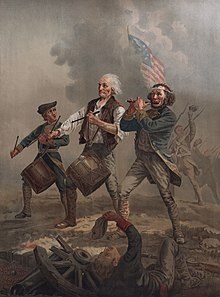
The first government to emerge based on these principles of Liberalism was the North American republic of the United States of America, which won its independence from Great Britain in the American Revolutionary War (1775 - 1783). However, historians do not see the rebellion of these British colonies as a sweeping revolution to the same degree as the later French Revolution since the American political system and society was not as thoroughly transformed by revolution as was France. The American colonies never possessed a distinct aristocratic elite. Most colonists who settled in the American colonies in the 17th and 18th century were commoners who came to the colonies to practice their faith without fear of religious persecution such as the English Puritans of New England and Quakers of Pennsylvania. Other settlers were landless peasants from the British Isles and Germany who came to the colonies seeking the opportunity to own their own land. In the American colonies a far greater percentage of the population owned and operated small family farms than in Great Britain. For example, in New England two-thirds of the population were farmers and landowners, whereas less than ten percent of the population owned land in Great Britain. In the American colonies as in Great Britain, custom and tradition dictated that landowners could vote and hold office. In each of these American colonies, these numerous landowners elected their representatives to the local colonial assembly, just as English landowners elected the members of Parliament's House of Commons. In the American colonies, these farmers tended to elect men of wealth and education to sit in these colonial assemblies. In the northern colonies these men were usually successful merchants, whereas in the southern colonies, they were owners of large plantations worked by African slaves. In the 18th century, the British government took little interest in the internal affairs of their colonies. Historians have referred to this situation as "benign" or "salutary" neglect since the apathy of the British government in regard to the colonies was a positive development for the colonists since the colonial assemblies by default became accustomed to running the affairs of their respective colonies. Colonists also interpreted the outcome of the Glorious Revolution in 1688 as an affirmation of the colonial assemblies' right to self-government.
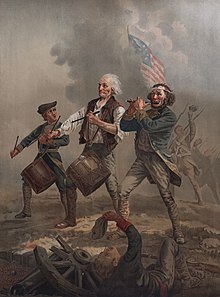
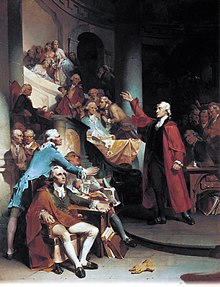
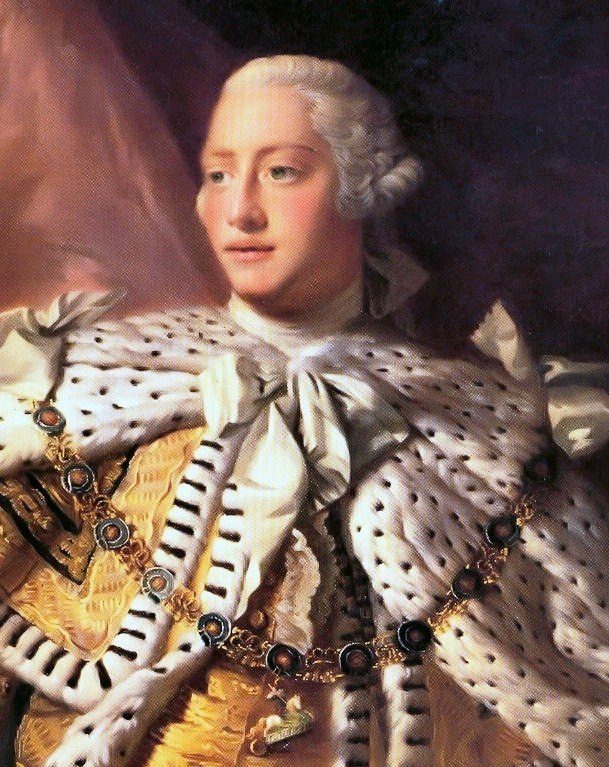
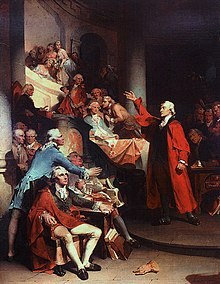
This era of "Benign Neglect" ended in the aftermath of the Seven Years War (1756-1763), which in North America was known as the French and Indian War. The new king of Great Britain, George III (r. 1760-1820), was the first king of the Hanoverian Dynasty to be born and raised in England, and he was anxious to play a much more active role in forming public policy with Parliament than his predecessors. George III and his ministers such as Frederick North maintained that the colonists ought to contribute to paying off Great Britain's enormous public debt from the Seven Years War since British military forces defended the colonists from attacks from Native American tribes, that had been allied with the French during this war. George's ministers convinced Parliament to impose new tariffs and sales taxes on the colonies.The infamous Stamp Act in 1765, for example required the colonists to purchase a stamp for all printed material. Colonial leaders, such as Patrick Henry of Virginia maintained that these new taxes violated the liberties of the colonists as Englishmen on the grounds that only locally elected colonial assemblies, and not the British Parliament, had the authority to impose taxes and create laws for the colonists. George III and his ministers rejected this argument since they maintained that the British Parliament had the authority to create laws and impose taxes on all the king's subjects. When colonial protests against British policies led by the organization, the Sons of Liberty, became increasingly violent such as the so-called Boston Tea Party in Massachusetts in 1773, George III and Parliament suspended the Massachusetts colonial assembly and sent troops to occupy the city of Boston in 1774. In response, representatives from the colonies convened the Continental Congress to protest the passage by Parliament of these Coercive Acts since the colonists viewed these actions as a threat to their right to self- government though their elected assemblies. In 1775 a colonial militia, the Minutemen, clashed with British forces at Lexington, just outside Boston. Shortly thereafter the Continental Congress created the Continental Army to defend the colonists from British "tyranny", thus beginning the Revolutionary War. Just over a year later in 1776, the Continental Congress formally declared the colonies' independence from Great Britain.
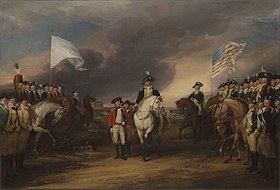
George III maintained that this rebellion could be crushed by a strong show of force. The king sent 32000 British troops to the colonies to suppress the rebellion as well as 30,000 German mercenaries from the German state of Hesse -Cassel. British forces easily occupied major cities along the coast such as Boston, Philadelphia, New York City, and Charleston, but British forces could not extend their control to the countryside, where the the so called Patriots enjoyed broad support. After British forces suffered a humiliating defeat at the Battle of Saratoga in upstate New York in 1777, France formed a military alliance with the United States and declared war on Great Britain, primarily to avenge France's defeat in the Seven Years War. By 1780 the Netherlands and Spain had joined France in the war against Great Britain, although they were not allies with the United States. Both Spain and the Netherlands joined the war due to their concern with the recent expansion of the British overseas empire. Not only was the government of George III facing a colonial rebellion and a war against European powers, it was also confronting internal opposition from prominent members of Parliament, who disapproved of the king's harsh approach to the colonies. In 1781 at the Battle of Yorktown in Virginia a combined American and French army defeated British forces. News of this defeat in 1782 resulted in the collapse of support in Parliament for the ministers of George III, who hereafter no longer played a major role in the British government. In 1782 a new set of ministers with the support of Parliament began negotiating with the Americans and the European powers for an end to the war. Under the terms of the Treaty of Paris in 1783, Great Britain formally recognized the independence of the United States.
The Revolutionary War secured independence for the United States, but it wasn't a mass movement seeking to overthrow the existing political or social structure of the colonies. The colonists were initially fighting to defend their colonial governments from interference from British authorities, not to overthrow them. Moreover, the cause of independence enjoyed support from the American upper classes. George Washington, who commanded the Continental Army, was a wealthy slave owner. John Hancock, who presided over the Continental Congress in 1776, was the richest merchant in Boston. In the South wealthy plantation owners often supported the cause of independence. In fact the British government freed thousands of slaves of these plantation owners in return for serving in the British armies. After the war the British government settled these freedmen in Canada and later in West Africa in Sierra Leone. Moreover the Patriots who supported independence didn't even represent a majority of the colonial population. Historians estimate that only about one-third of the colonial population actively supported independence, while an equal number of colonists, known as Tories or Loyalists, opposed independence and some even served in the Tory Militia in support of British forces. After the war, about 100,000 of these Tories left the American colonies. Most of them settled in British Canada, which received its first large influx of English speaking settlers.
The American Revolution may not have been a radical social revolution, but certain revolutionary ideas were established and circulated as a result of this event. In the months prior to the Declaration of Independence in 1776, Thomas Paine composed the pamphlet Common Sense to convince Americans to reject the king's rule and embrace a republican form of government. Citing the Bible in support, Paine argued that God gave authority to govern to the people, not to kings. This pamphlet was a bestseller in the colonies and won public support for independence. The Declaration of Independence in 1776 as drafted by Thomas Jefferson reflects the influence of the contract theory of government of the Enlightenment thinker John Locke. In this declaration, Jefferson noted that governments are created by men to protect their God-given rights. George III, according to Jefferson, had violated those rights, so that the American people were now free to declare independence and to form of new government. After declaring independence in 1776, each new state drafted a written constitution, that protected the rights of citizens including freedom of religion. After the Revolutionary War had ended, delegates from the states convened in Philadelphia at the Constitutional Convention in 1787 and drafted a new constitution for the national or Federal government, which was ratified by the states in 1788. Even though the idea of a written constitution was quite revolutionary at this time, these written constitutions were largely modeled on earlier colonial governments and the political system of England. In these state and Federal constitutions, an elected president and state governor replaced the British monarch, while a bicameral legislature stood in the place of the British House of Commons and House of Lords. Moreover, freedom of religion was not new to the American colonies. Religious dissenters had settled in many of these colonies and two colonies, Pennsylvania and Rhode Island, in the 17th century were founded without any established church. In Europe, however, the ideas stemming from the American Revolution would lead to radical social revolution.
George III
Patrick Henry
British forces surrendering at Yorktown
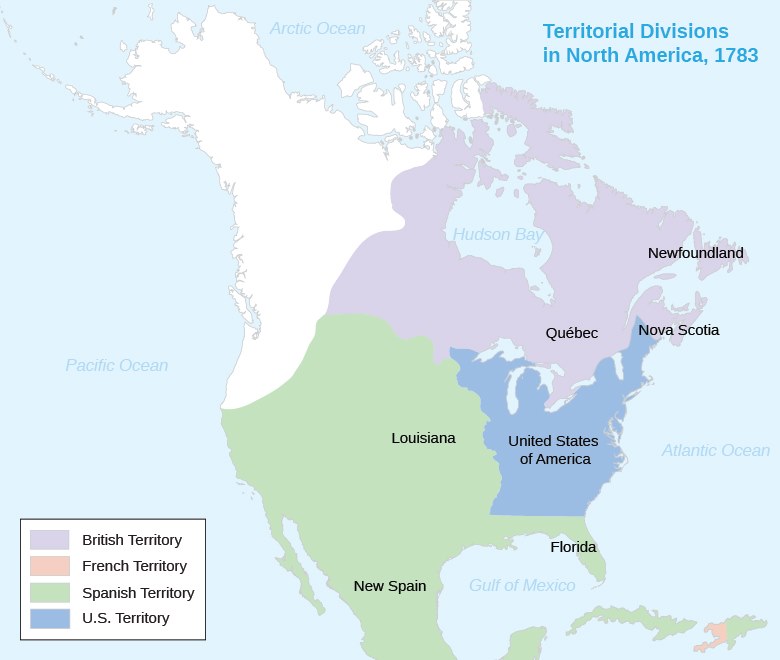
North America in 1783
The ideas of the American Revolution circulated widely in France in the famed salons where intellectuals of the Enlightenment gathered periodically to discuss ways to promote the advance of reason and human progress. After France's alliance with the United States in 1777, the American writer and scientist, Benjamin Franklin came to Paris as the United States' ambassador to France. Franklin was an international celebrity in intellectual circles, and he became a star among the salons. French intellectuals would have observed that Franklin, son of a poor candle maker, had become a leading statesman in America through his abilities and talents, whereas in France the highest positions in government were reserved for the aristocracy. Many of the leading figures in the French Enlightenment, such a Voltaire and Diderot, were from middle class backgrounds. The middle class in France due to the Market Revolution had grown in size and wealth, yet in the French government, they could only aspire to hold minor positions in the bureaucracy. A system of government that awarded political power based on hereditary privilege appeared irrational and unproductive from the perspective of France's middle class intellectuals.
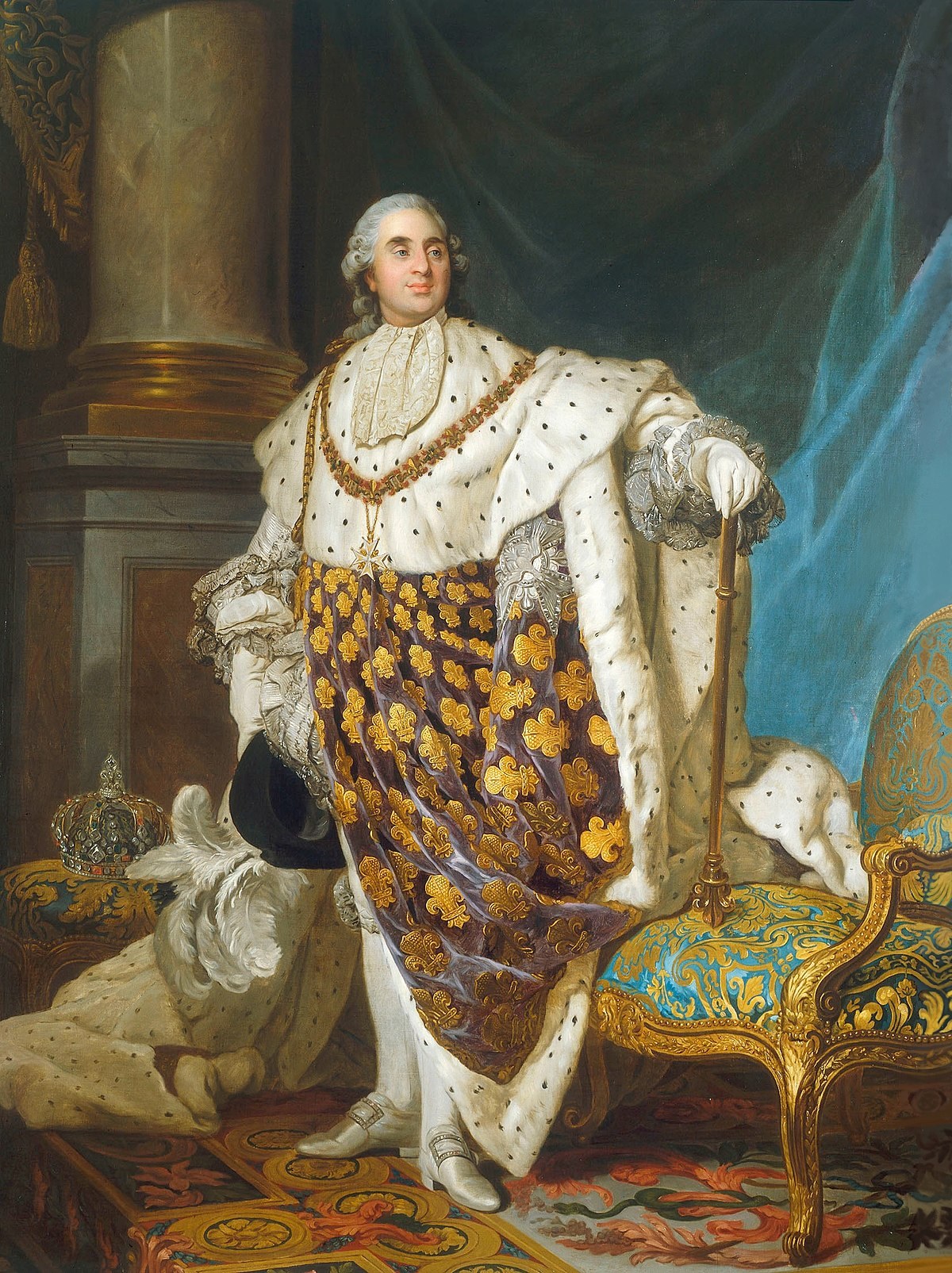
The rise of the French middle class and the Enlightenment paved the way for revolution in France, but the tipping point for revolution was the dire situation of the French government's finances. By the late 18th century, the French government was in a massive amount of debt. In France the landowning aristocracy and the Roman Catholic Church owned vast amounts of land, yet paid no taxes. A the same time, the French government maintained a very expensive royal court at Versailles and engaged in very expensive foreign wars. Since these expenses greatly exceeded tax revenues, the French government in the 18th century borrowed huge sums from foreign and domestic bankers. During his long reign, Louis XV (r. 1715 - 1770) did not take any action to address this issue, but Louis XVI (r. 1770 - 1792), his grandson and successor as king, was eager to reform the government. In 1774 Louis XVI enlisted the aid of Anne-Robert-Jaques Turgot as his minister of finance. Turgot was a noted economist and intellectual , whose own research influenced Adam Smith. He recommended that the king eliminate tax exemptions and raise taxes to address the budget crisis. Louis XVI feared that such actions would anger the landowning aristocracy and merchants who had been granted monopolies by the state, and in 1776, Louis fired Turgot. France's financial woes, however, continued, In 1787 Louis XVI convened the Assembly of Notables, which consisted of prominent aristocrats,whom Louis XVI had hand picked. Louis XVI hoped that this assembly would approve his ideas to raise taxes on the landowning aristocracy to resolve the budget crisis. This assembly, however, rejected these proposed new taxes. Desperate for fiscal reform, Louis XVI in 1789 summoned the Estates General, which had not met since 1613. The meeting of the Estates- General would begin a sequence of events that would end in revolution and the overthrow of the Old Regime.
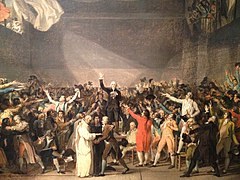
When the Estates-General convened in the spring of 1789. it included delegates from the Roman Catholic Church (First Estate), the aristocracy (Second Estate), and the common people (Third Estate). The Third Estate represented more than 90% of the population of France and included the largest number of delegates. Even though these delegates were supposed to represent all the lower classes of France, they were all from the ranks of the French middle class. 278 out of the 648 delegates representing the Third Estate were minor government officials, 197 of them were professionals including doctors, lawyers, journalists, and academics, and there were 152 merchants and landowners. Initially these delegates were primarily focused on transforming France into a constitutional monarchy with a written constitution.
When the Estates-General first convened, its members could not even agree on how to vote. The First and Second Estates wanted each Estate to cast a single collective vote, whereas the Third Estate wanted each delegate to cast his vote individually. The Third Estate preferred this system of voting since they had the greatest number of delegates at the Estates-General. Since the Estates-General could not even agree on this issue, Louis XVI dismissed the Estates-General. The delegates from the Third Estate, however, refused to go home. In June, they went to Versailles to demand a meeting with the king. When he refused to meet with them, they convened at a tennis court on the grounds of the palace. These delegates declared themselves to be the National Assembly of France and swore that they would not adjourn until France had a written constitution, an event which became known as the "Oath of the Tennis Court".
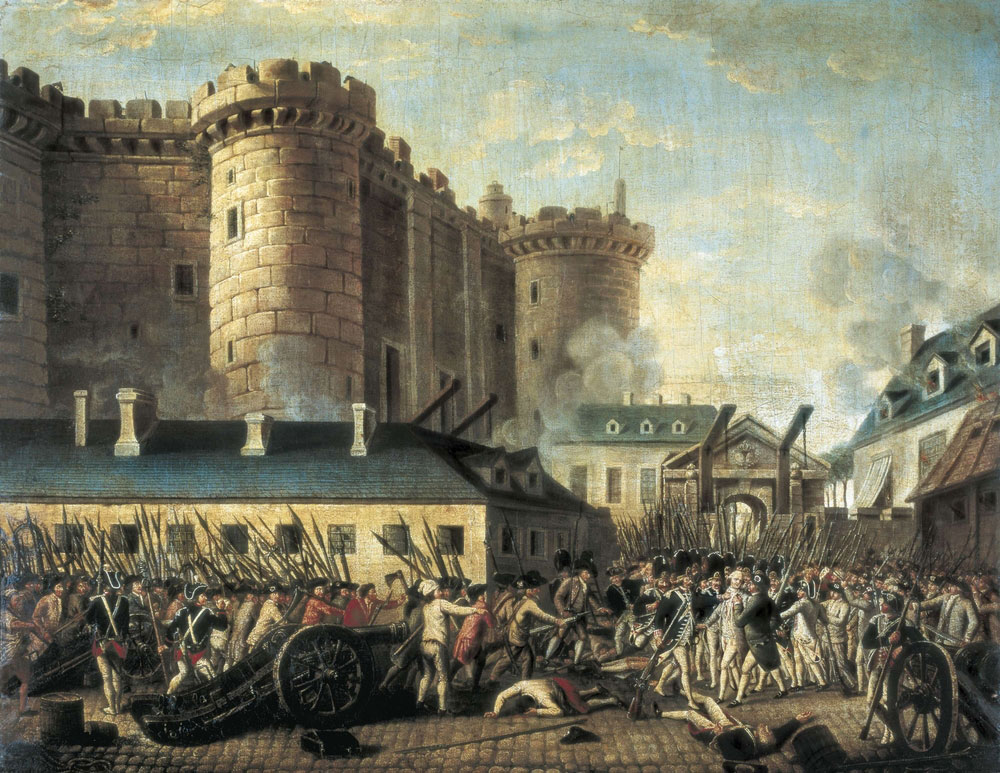
Louis XVI could not ignore this action by the National Assembly due to circumstances beyond his control. The harvest across France in spring and summer of 1789 was terrible. In the French countryside, hungry peasants rose up in rebellion and refused to pay their taxes. In the city of Paris, the working class was up in arms over high food prices and high sales taxes. Many of these poor Parisians disliked the French queen, Marie Antoinette, and accused her of being indifferent to the plight of the poor and hungry. On July 14, 1789, an angry mob stormed the Bastille, the royal prison in Paris, and freed its prisoners. To this day in France, Bastille Day on July 14 celebrates the end of the Old Regime and the birth of the French Republic After this uprising in Paris, a desperate Louis XVI was hoping to calm this situation, so he summoned the National Assembly and agreed to accept a written constitution.
The National Assembly now became a Constituent Assembly, charged with the task of drafting a new constitution. Over the next two years through 1791, this assembly worked on this constitution, while issuing a host of sweeping new laws. In 1789, the assembly issued the Declaration of the Rights of Man and Citizen, which laid out the rights of all citizens of France and established equal rights under the law, which were largely the same as those rights afforded to American citizens under their various state constitutions. This assembly also abolished Manorialism and appropriated the lands of the Roman Catholic Church. These measures had the effect of restoring peace to the French countryside and improving the the budget situation. French peasants stopped rioting now that they were no longer liable to pay exorbitant fees to their landlords, and the French state now could sell land appropriated from the church to fund itself. The Assembly also abolished the regional Estates, since these local assemblies had been dominated historically by the landowning aristocracy. In 1791 the Constituent Assembly completed its work. The new Constitution recognized the king as the chief executive and commander and chief of the military, and a Legislative Assembly, which had the power to make laws and impose taxes. The king had the authority to veto the acts of the Legislative Assembly, but this assembly could override the king's veto on a law by voting for that law three times. This constitution required that citizens possess property to vote in elections to the Legislative Assembly, thereby disqualifying most Frenchmen from voting. Moreover, voters only elected Electors, who in turn actually chose the members of the assembly.
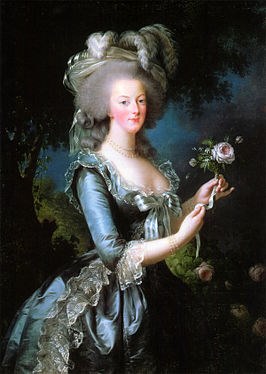
Marie Antoinette
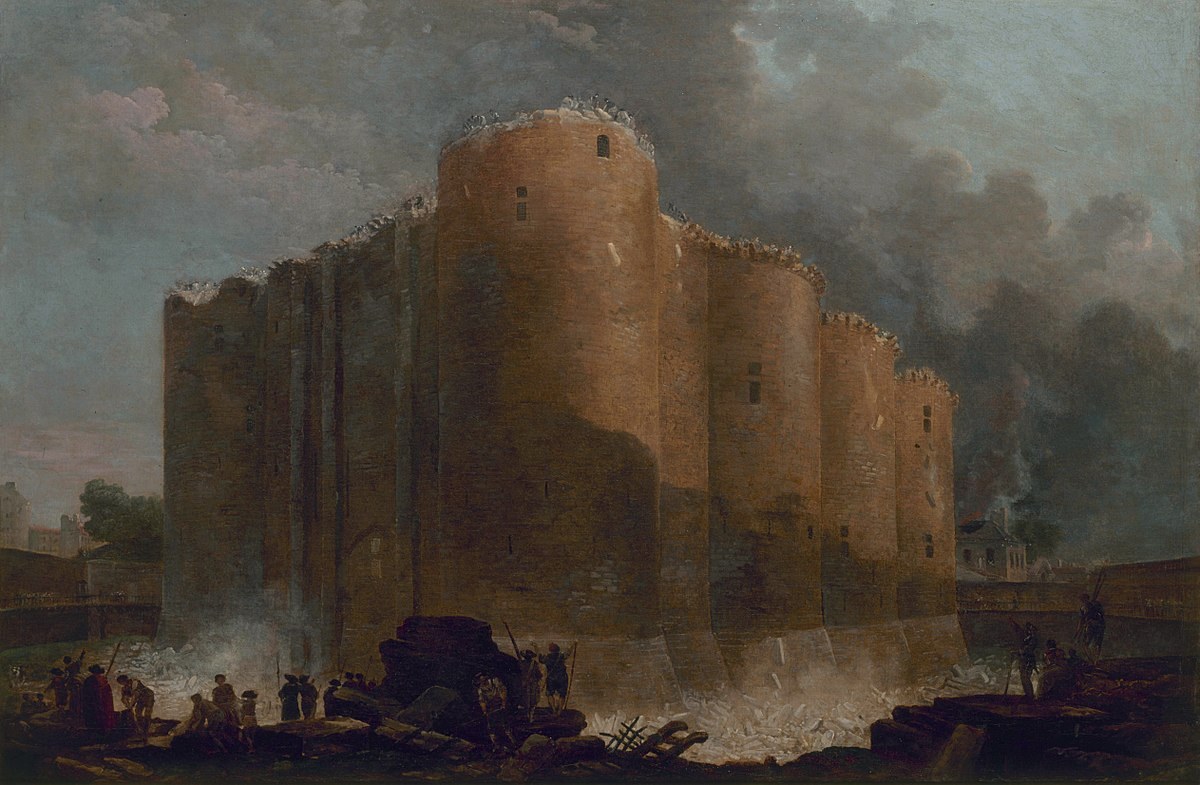
The storming of the Bastille
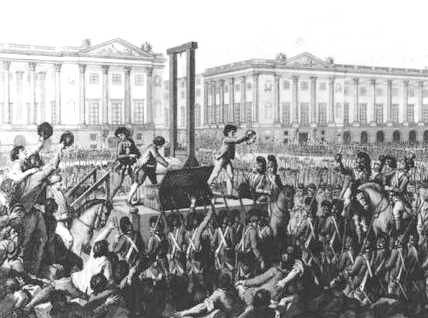
Public executions during the Reign of Terror
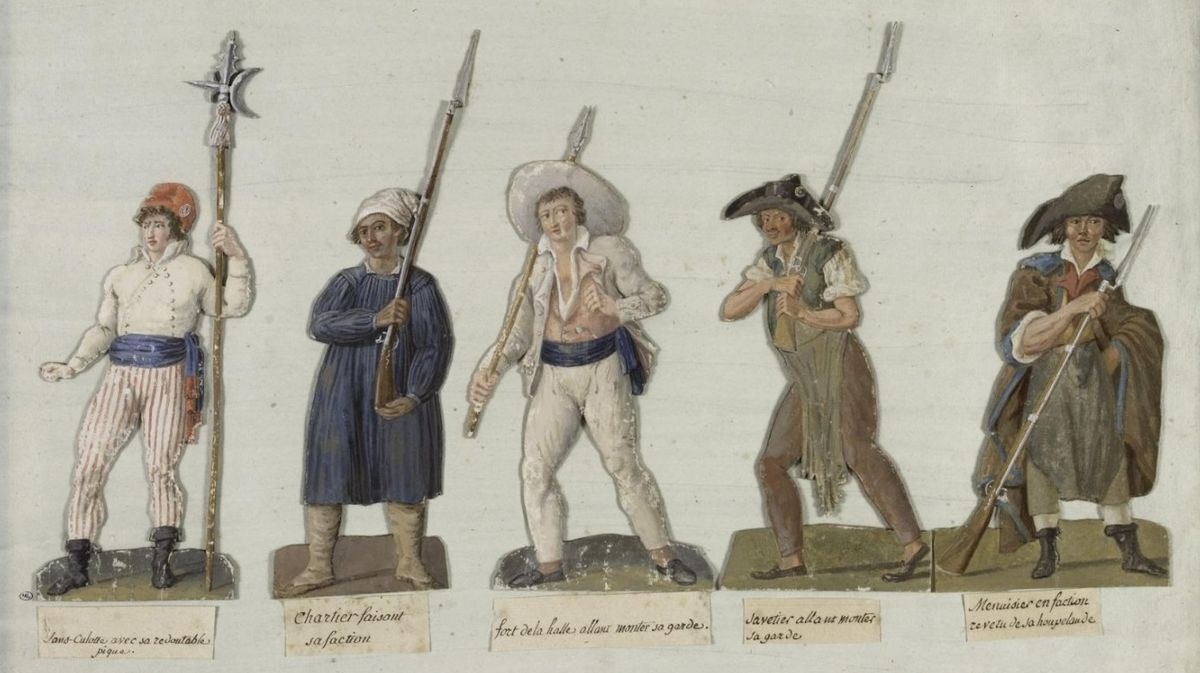
The Sans Culotte
When the Constituent Assembly was busy at work, certain members of the assembly known as Jacobins, from the name of the club where they met, were opposed to the idea of a constitutional monarchy and desired to see France become a republic, like the United States. The actions of Louis XVI provided an opportunity for the Jacobins to see their dream become reality. Louis XVI opposed the new constitution. He believed in the Divine Right of Kings and that his authority to rule came from God, not from an elected assembly. While the Constitution was being drafted, Louis XVI and Marie Antoinette even unsuccessfully attempted to flee the country and seek foreign assistance to overthrow the Constituent Assembly. In 1791 Marie Antoinette's brother, the Hapsburg, Holy Roman Emperor Leopold II and Frederick William II of Prussia met at Pillnitz in Germany and issued a statement of support for Louis XVI and the monarchy. In the following year, Francis II succeeded his father, Leopold as Holy Roman Emperor, and together with Frederick William II, declared war on France. In this war Louis XVI, as commander of French forces, did nothing to stop the armies of Austria and Prussia from invading France, as he was hoping that these armies would restore him to his former power. At this point the Jacobins working with the poor, working people of Paris (the so-called Sans-Culotte) rose up in Paris, arrested the king on the charge of treason, and declared France to be a republic.
In 1792, the victorious Jacobins called for new elections to a National Convention to draft a constitution for the new republic. In these elections, all adult males, even those without property could vote. In reality, only men largely in French cities voted in these elections. Along with the call for elections in September, armed vigilantes among the Sans- culotte murdered thousands of French aristocrats and anyone else suspected of supporting the king, including priests, in an event known as the September Massacres. When the National Convention convened in the fall of 1792, the delegates quickly divided into factions. The radical Mountain faction was drawn largely from the city of Paris and desired to execute Louis XVI as a traitor, while the more moderate Girondists faction came from the city of Bordeaux in southern France and preferred to exile the king. In this violent partisan struggle, the Mountain was victorious, resulting in the trial and execution of Louis XVI in January 1793. Marie Antoinette was falsely accused of sexually abusing her children and executed in the fall of 1793.
The execution of Louis XVI resulted in a bloody civil war for France and a "Reign of Terror". The great European powers viewed the execution of the king as a threat to monarchy as an institution, and Great Britain and Spain joined Austria and Prussia in the war against France. In France the French peasantry rose up in revolt against the National Convention, as many peasants believed that the king was chosen by God. In response to this crisis, the National Convention elected a Committee of Public Safety in May and invested this body with the authority to rule by decree. The National Convention also set up a Revolutionary Tribunal with the authority to arrest, try, and execute all enemies of the republic. This Revolutionary Tribunal not only ordered the execution of thousands of the royalist supporters of the monarchy, but of Girondists as well. In addition, the armies of the republic massacred thousands of rebelling peasants in the French countryside. This "Reign of Terror" in 1793-1794 may have resulted in the deaths of some 50,000 people. To prosecute the war against foreign powers and defend France from invasion, the Committee of Public Safety issued the Levee en Masse which drafted all able bodied men into the army of the republic. This measure also empowered the French government to seize private property (i.e. horses, grain, tools) deemed necessary for the war effort. Many young Frenchman enthusiastically joined the French army out of patriotism. The Marseilles, the national anthem of France was composed at this time and celebrates victory over foreign invaders. French armies successfully defeated these enemies. Beginning in the fall of 1792 at the Battle of Valmy French forces first turned back the Prussian army. By the summer of 1794, French forces had driven foreign armies completely from France's borders, and Spain and Prussia withdrew from the war the following year.
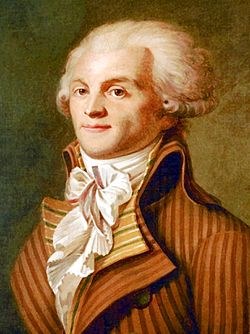
As the crisis appeared to be abating in the summer of 1794, more moderate members of the National Convention were concerned with the radicalism of the Committee of Public Safety and its young leader. Maximilien Robespierre (1758 - 1794). Under his leadership the committee ordered the arrest and execution of many of Robespierre's personal enemies. Historians maintain that Robespierre hoped to redistribute land across France to the landless, so that France, like the ancient Roman Republic, would become a nation of independent land owning farmers. Robespierre believed that his vision for France was in harmony with the General Will of the French people. Robespierre was inspired by the French philosopher, Jean-Jacques Rousseau (1712 - 1778) who had maintained that a nation that shares a common language and culture, also shares a common spirit, which he called the General Will. Members of the National Convention, however, were frightened by Robespierre's radicalism. In July 1794, the National Convention abolished the Committee of Public Safety, and arrested Robespierre and his political allies. Robespierre was tried before the Revolutionary Tribunal and sentenced to death. This coup became known as the Thermidor Reaction (The National Convention had renamed all the months and Thermidor was the new name for July).
After the Themidor Reaction, moderates now controlled the National Convention. The Revolutionary Tribunal and the Levee en Masse were discontinued. In 1795 the National Convention completed its draft of a new constitution. This new constitution became known as the Directory, Instead of a king as chief executive, there were five Directors, who were annually elected by the legislature. This legislature was bicameral, like the United States Congress, with two houses, a Council of 500 (House of Representatives) and a Council of Ancients (Senate). This constitution reinstated a property requirement for voters, who elected Electors. These Electors chose the members of the legislature. When the National Convention was planning to dismiss itself and hold new elections under the new constitution, royalists saw this moment of transition from one government to the next as an opportunity to stage a rebellion in October, 1795. During this month the Vendemiaire (October) uprising took place. The French Republic turned to a young military officer, Napoleon Bonaparte, to crush this uprising. Within five years this officer would become military dictator of France.