The Late Bronze Age World
Early World4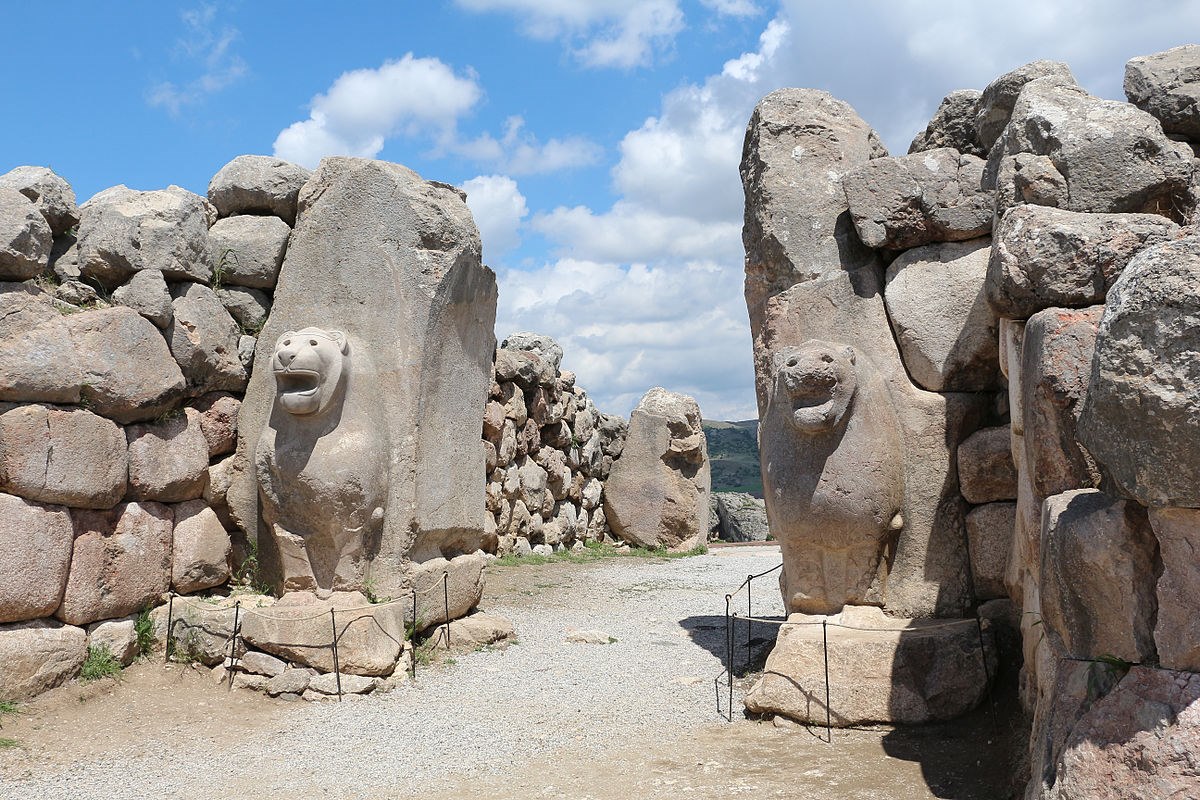
In the Late Bronze Age (1600 - 1100 BCE) Egypt was the dominant economic and military power in this period, which was marked for the most part by economic prosperity and political stability. Egypt was just one of a number of powerful kingdoms in an area which stretched from Greece and the Aegean islands in the west to western Iran in the east and included Minoan Crete, Mycenaean Greece, the Hittites of Asia Minor (modern Turkey), the Mittanni and Assyrians in northern Mesopotamia, and the Kassites and Elamites in southern Mesopotamia and western Iran. All these different states interacted with one another and exchanged ideas and goods to create a shared, common Late Bronze Age culture, while at the same time each maintained their own unique culture. The last century of this period after 1200 BCE, however, was marked by war and migrations, resulting in the collapse of these states.
Prior to this collapse, these states all shared a number of common characteristics. First, these states all possessed the temple/palace redistributive economic system, in which goods were collected as taxes from local farmers, stored in the palace/temple, and redistributed to artisans, merchants, and officials of the palace/temple. These states also all possessed military forces comprised primarily of elite warriors trained to fight from horse drawn chariots. These states also interacted with one another using a common set of diplomatic practices: official correspondence was written in Akkadian cuneiform; military alliances were sealed by arranged marriages between the royal families of allied states; smaller, vassal states paid tribute to dominant states or faced a military assault. These states also engaged with one another in the exchange of prized goods: wine and oil from Greece, cedar logs for construction projects from the Lebanon mountains in the Levant, and copper from the Mediterranean island of Cyprus. Due to the frequent interaction of these different cultures, this period witnessed great cultural achievements. For example, in the small kingdom of Ugarit in what is today Syria, trade thrived, as merchants there traded goods from Egypt and Greece. It was here also that scribes modified Egyptian hieroglyphics to their local Semitic, Canaanite language and created the immediate ancestor of our alphabet. Scribes employed this script to record traditional epic poetry featuring myths concerning their main god, the storm god Baal
In the Late Bronze Age world, Egypt was the dominant superpower. This period is known as the New Kingdom (1550 -1100 BC) and comprised the 18th through the 20th dynasties of pharaohs. During this time, Egypt possessed an extensive empire that stretched from Kush in what is today North Sudan to Syria in the Levant. Archaeological evidence indicates that Egyptian governors may have administered much of what is today Israel. The pharaoh's famed chariots struck fear in the hearts of Egypt's enemies. The Egyptians had once been conquered by the Hyksos with their chariots, but now the Egyptians had mastered this style of warfare.
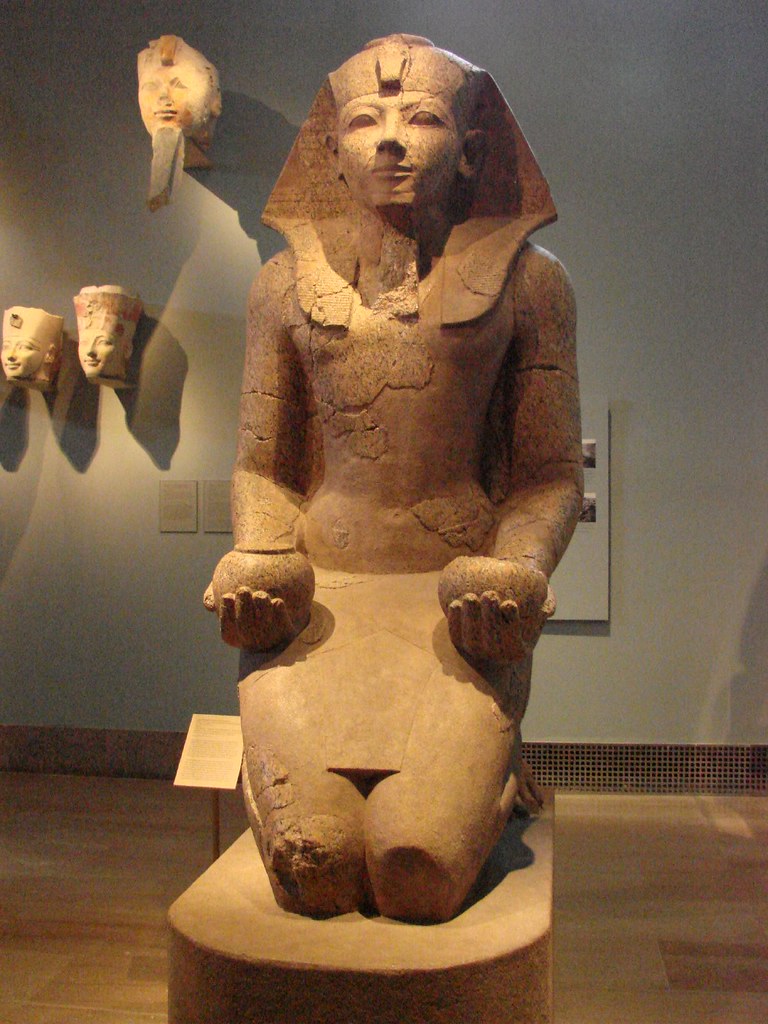
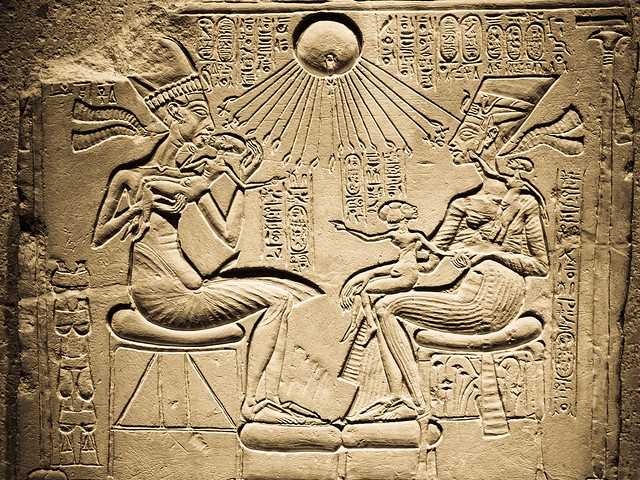
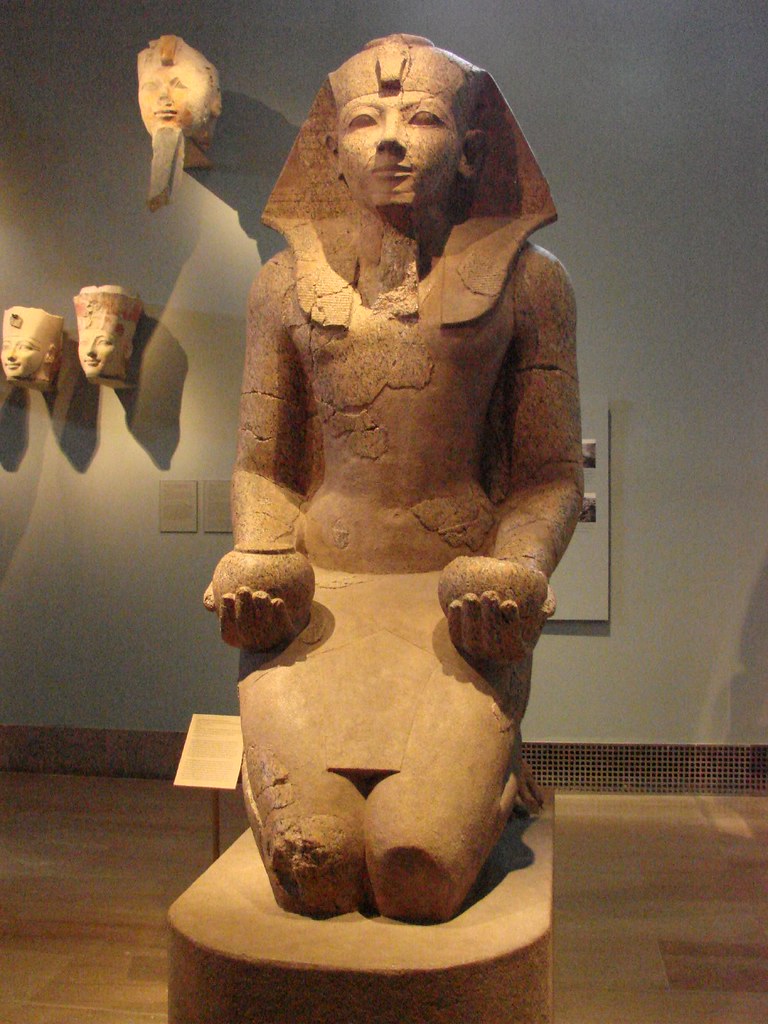
The 18th dynasty was the most powerful of Egyptian dynasties in this era and featured some very unique pharaohs. One such pharaoh was Hatshepsut (1480 BCE). As a women, Hatshepsut technically couldn't serve as pharaoh since she was not a son of Amon-Ra. However, Hatshepsut found a way of overcoming this problem by portraying herself in her public monuments as a man in the traditional garb of the pharaohs. Upon her death though, her nephew, Thutmose III condemned her memory and defaced her monuments. Another unique pharaoh was Akhenaton (1350 BC). He was a monotheist, who declared that there was just a single God, Aton, whose symbol was the sun. Akhenaton rededicated all the temples in Egypt to this single deity. He also moved the capital from Thebes in Upper Egypt up north to what is today the modern site of Amarna. Modern historians today debate Akhenaton's motives. Some hold that this pharaoh was a religious reformer who want to use his position and power to found a new religion, while others maintain that he made this move because he feared the growing power of the priests of Amon-Ra at Thebes and pushed for the worship of Aton to destroy this priesthood. Soon after Akhenaton's death, the temples were restored to the traditional Egyptian gods, and the site of Amarna was abandoned when Thebes once again became Egypt's capital.
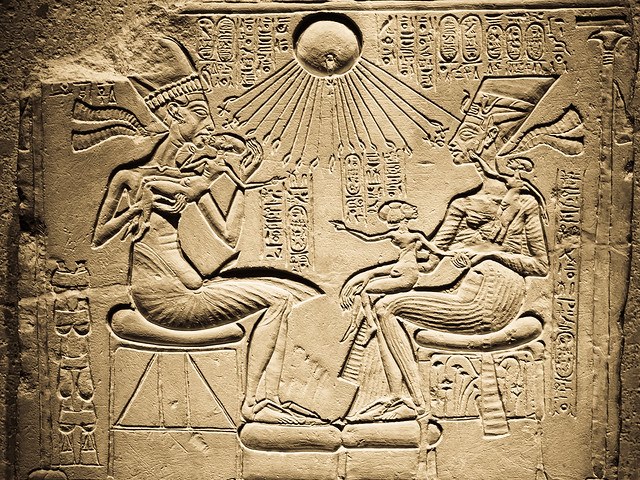
Akhenaton and his family communing with Aton (the sun disk)
The Mittani Empire (1600 - 1400 BCE) was a major rival to Egypt in the Late Bronze Age. This empire was based in what is today northern Iraq and eastern Turkey. The Mittani noble elite were fierce warriors who fought from their horse drawn chariots. This elite originated from the Iranian plateau to the east and spoke the same Indo-European language as the Aryans who had migrated into India and Inhabited the Iranian plateau. The Mittani elite even worshiped the same gods as the Aryans such as the sky-god Varuna. Over time the Mitanni adopted the language of the Hurrians who had originally inhabited eastern Turkey, but had settled in northern Iraq (Mesopotamia) and Syria. The "Great King" of the Mitanni used his military force of chariots to subdue neighboring states and require them to pay tribute. In the cities of the Mitanni such as Nuzi in northern Mesopotamia, the local scribes had adapted cuneiform to write the Hurrian language. The Mitanni were in other ways shaped by the different cultures of this region. For example, they worshiped the Hurrian storm god Teshub, but they identified this deity with the Semitic storm god Adad.
After 1400 BCE the Mittani Empire declined, and the Hittites Empire became the chief rival of Egypt. The Hittites spoke an Indo-European language and inhabited what is today central Turkey. A Hittite army had sacked Babylon around 1600 BCE, but civil wars due to rival claims to the throne among members of the Hittite royal family had severely weakened the Hittite state. After 1400 the Hittites resolved this problem by having disputes over the throne settled by the Pankus, which was the assembly of Hittite noble warriors.The Pankus alone had the right to serve as the jury in cases where a member of the royal family was accused of crimes. Some historians see the Pankus the world's first representative form of government, as the nobles of the Pankus represented the Hittite people in making their decisions. Once the civil wars ended, Hittite kings expanded into Syria to the south. Hittite kings often set up members of their families as vassal kings in Syria in cities such as Aleppo and Carcemish.
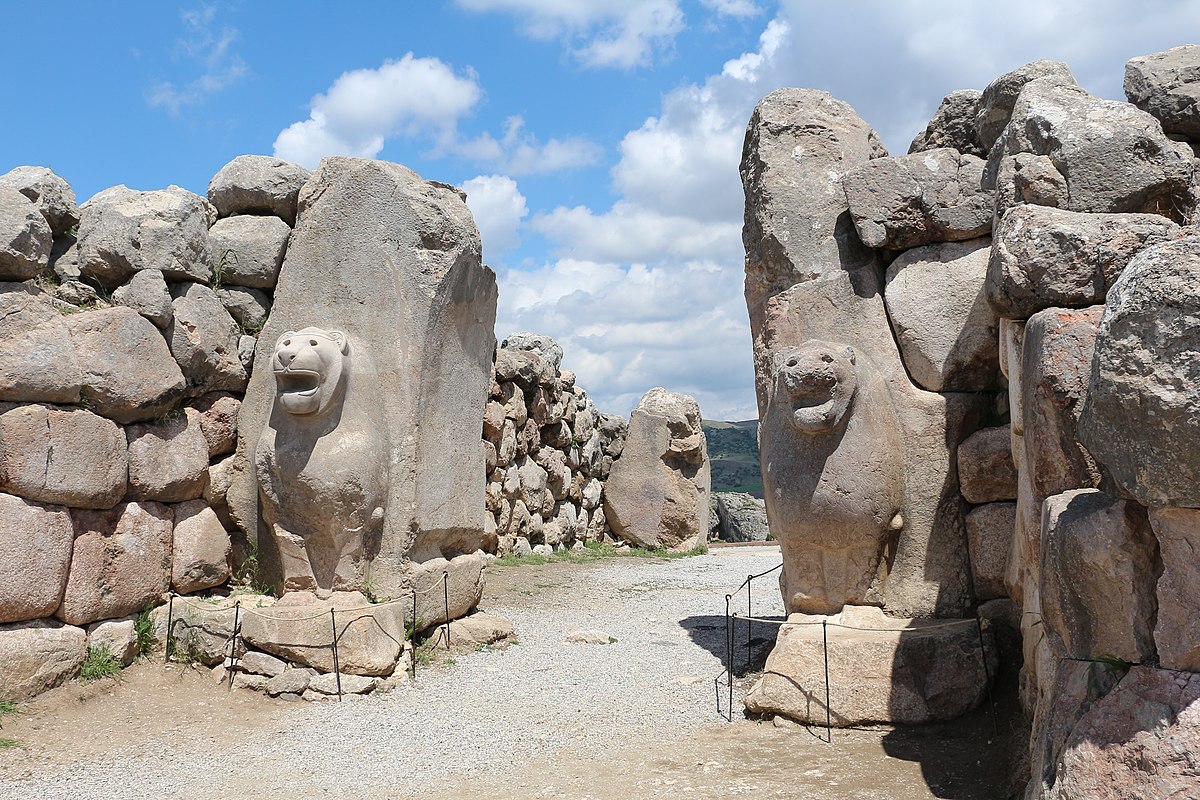
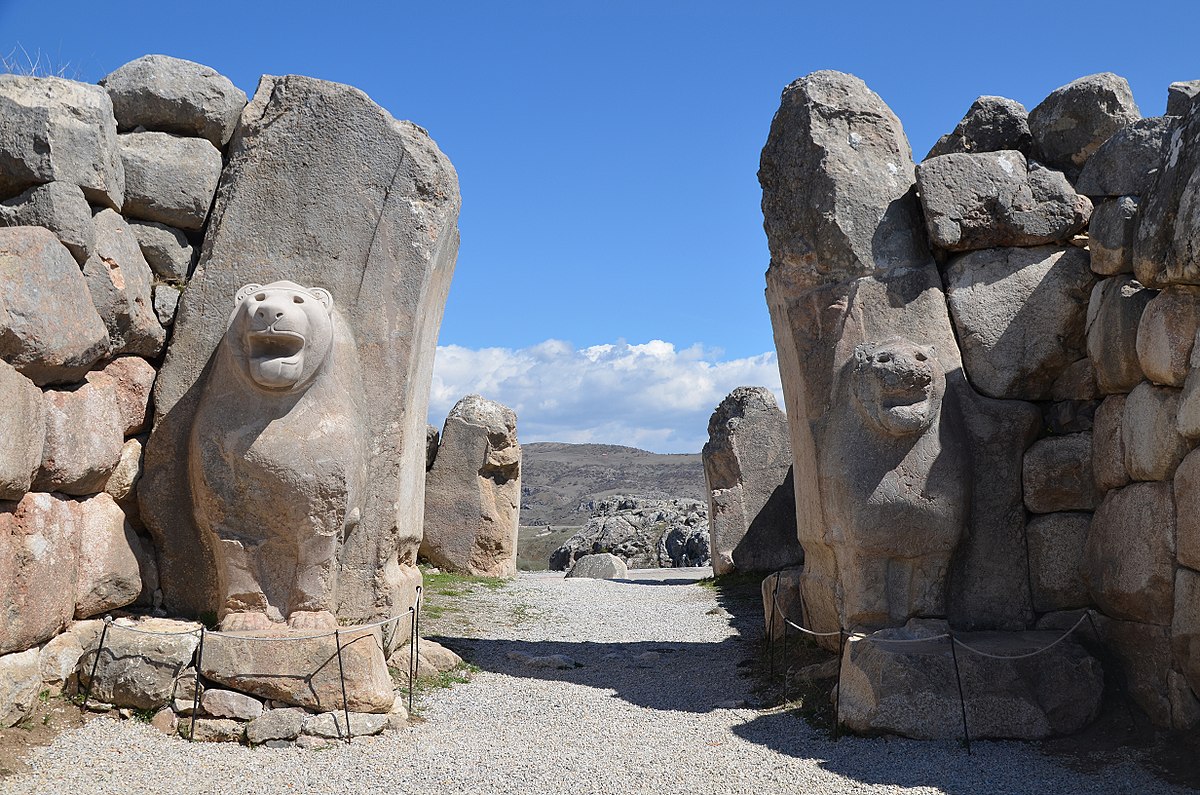
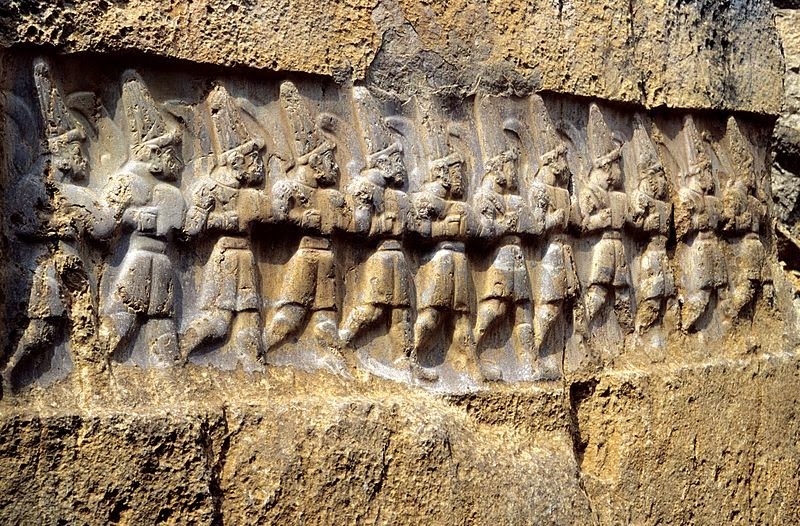
The capital of the Hittite Empire was Hattusas in central Turkey. This city possessed monumental palaces and fortifications. The Hittites developed their on script to write their language, but they also adapted cuneiform to their own language and used it to keep records. Like the Mitanni, the Hittites worshiped the storm god Teshub, and composed epic poetry which told myths how this storm god had defeated powerful monsters and assumed the kingship of heaven. Historians have noted the extent to which Hittite myths drew on Mesopotamian myths such as the myth of Marduk in the Enuma Elish.
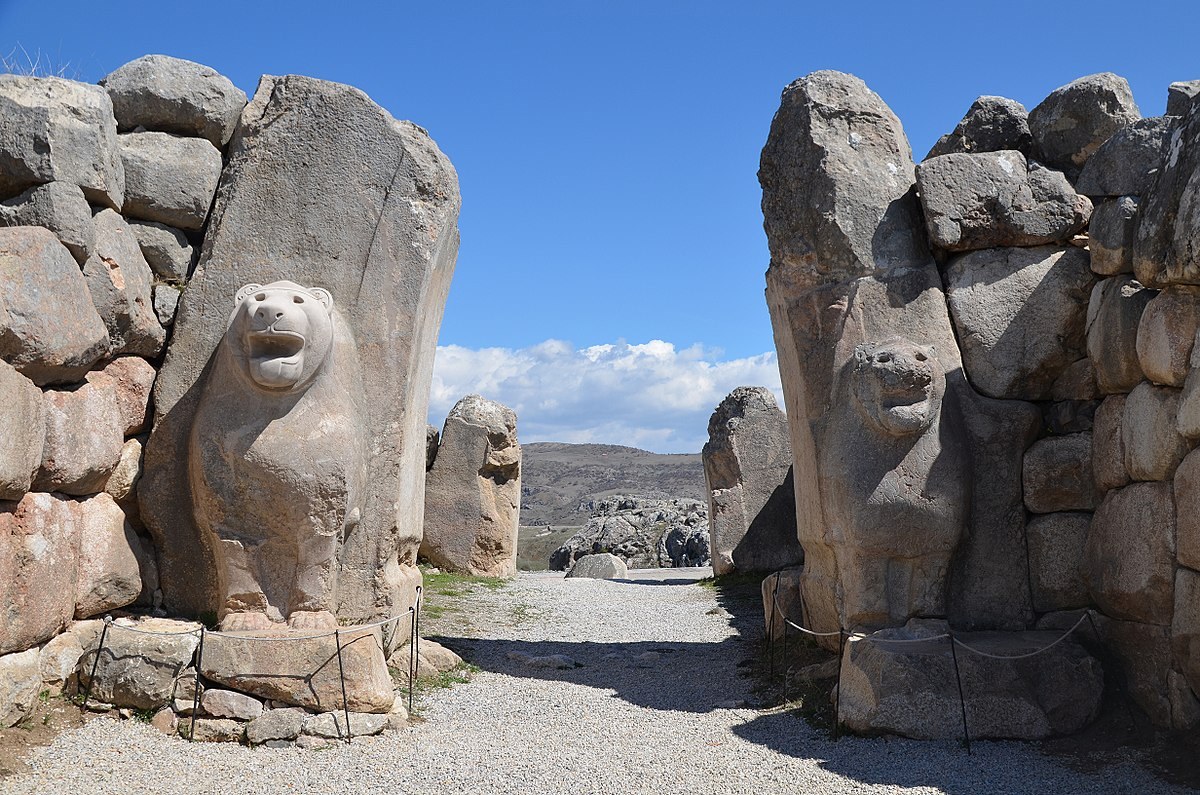
Monumental gate at Hattusas
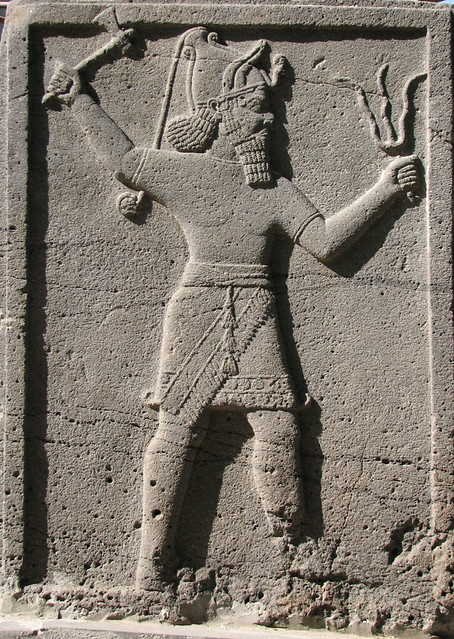
Teshub
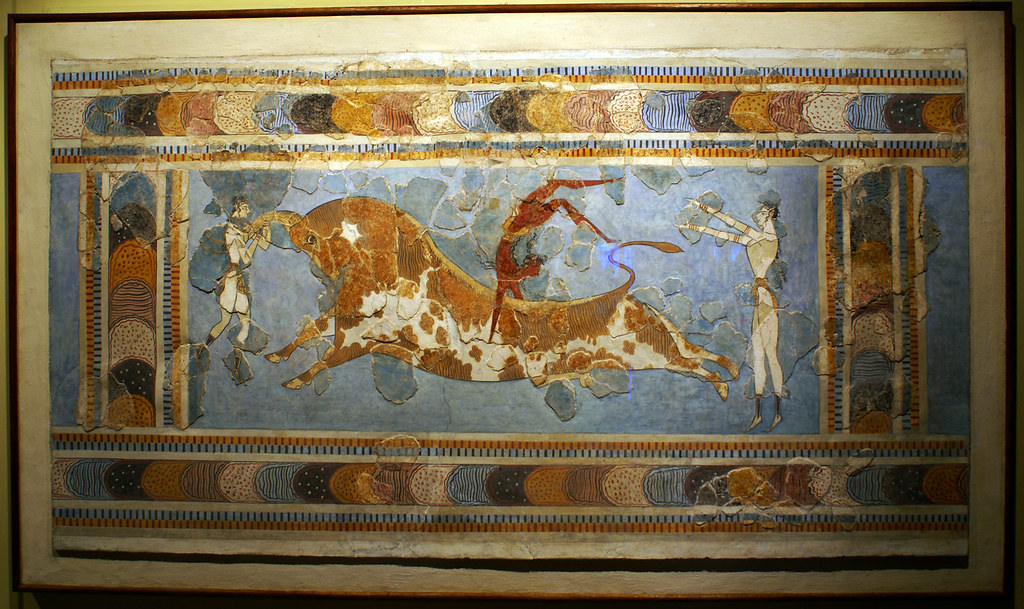
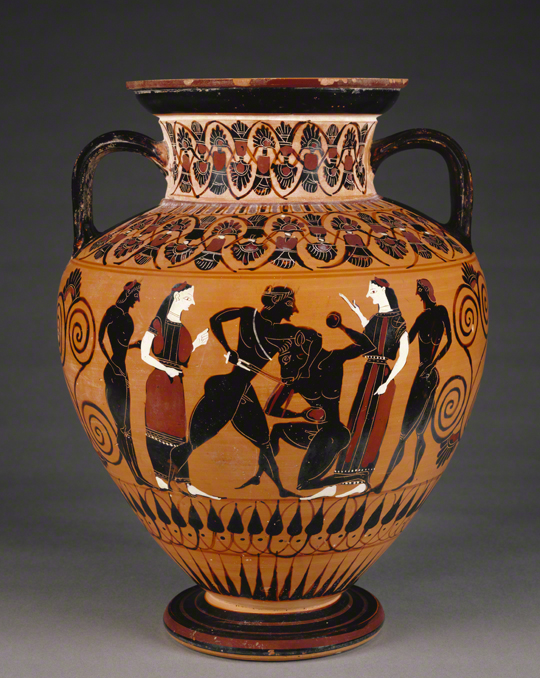
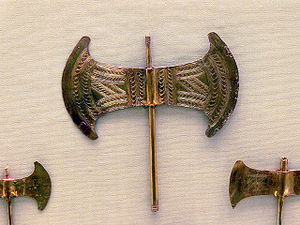
In the eastern Mediterranean on the Aegean Island of Crete, there developed a unique culture after 2000 BCE, which reached the height of power at the beginning of the Late Bronze Age around 1600 BCE. The later Classical Greeks told the myth of King Minos of Crete, who built a giant maze known as the Labyrinth and imprisoned there a monstrous half man, half bull creature called the Minotaur (Bull of Minos). King Minos forced unfortunate young men and women from Athens in Greece to enter the Labyrinth and be eaten by this monster. Historians see in this myth a distant memory of this earlier civilization on Crete and have used the term Minoan, derived from Minos, to describe it. Minoan civilization built large palaces on Crete, the largest of which was a Knossos. Since these palaces were unfortified, historians maintain that Crete was united under a single government with Knossos as the capital. The Minoans also established settlements and trading posts on other Aegean islands such as Thera. The Minoan palaces were huge complexes which served as economic and administrative centers, just like other palaces/ temples in the Bronze Age world. To keep records for these centers, the Minoans developed their own script known to scholars as Linear A, which was written on clay tablets, but has not been deciphered by modern scholars. A common weapon and symbol in these palaces was the labrys or double ax, from which the term Labyrinth arose. In the courtyards of these palaces, young men and women participated in bull fights, which are depicted on frescoes that decorated the walls of these palaces. The bullfights were perhaps the basis for the myth of Minotaur in the Labyrinth. The Minoans in their religion especially revered bulls and revered a snake-goddess, who was associated with nature and fertility. In the frescoes on their palace walls Minoan artists depicted nature and sea creatures. The Minoans didn't build giant temples for their deities as in Mesopotamia and in Egypt, but they practiced religious rituals in small shrines as well as on mountain tops and in caves and sacred forests.
Sometime around 1500 BCE (the date is disputed among modern scholars), the palaces on Crete were destroyed. The palace at Knossos was rebuilt and the scribes in this palace were employing a new script on clay tablets, known to scholars as Linear B, which apparently was derived from Linear A. Modern scholars have deciphered this script and have determined that it was Greek. Archaeologists have also discovered Linear B clay tablets on the Greek mainland as well. Therefore historians maintain that Greeks from the Greek mainland conquered Crete and rebuilt Knossos.
Historians refer to the the Bronze Age culture that produced Linear B as Mycenaean since the largest Bronze Age city in Greece was at Mycenae. Historians hold that the Bronze Age Greeks adopted Minoan civilization around the beginning of the Late Bronze Age around 1600 BCE. Unlike the Minoans, the Mycenaean Greeks were divided into a number of separate kingdoms. Archaeologists have found immense palace complexes like those at Knossos, as well as Linear B tablets, at Mycenae, Pylos, and most recently at Sparta. These palaces correspond to the most powerful kingdoms as described in the later Greek epic poem, the Iliad that was attributed to the poet Homer. The Iliad tells the story of the Trojan War and how the Greek kingdoms led by King Agamemnon of Mycenae waged war against the city of Troy. Archaeologist have also uncovered the Bronze Age city of Troy in western Turkey. Because of these archaeological discoveries, historians maintain that the Iliad was loosely based on oral traditions that preserved the memory of these ancient Bronze Age kingdoms. The Linear B tablets indicate that the ruler of these palaces was known as the Wanax or "Lord". In the Iliad this same word is used to describe the heroic kings of the epic.
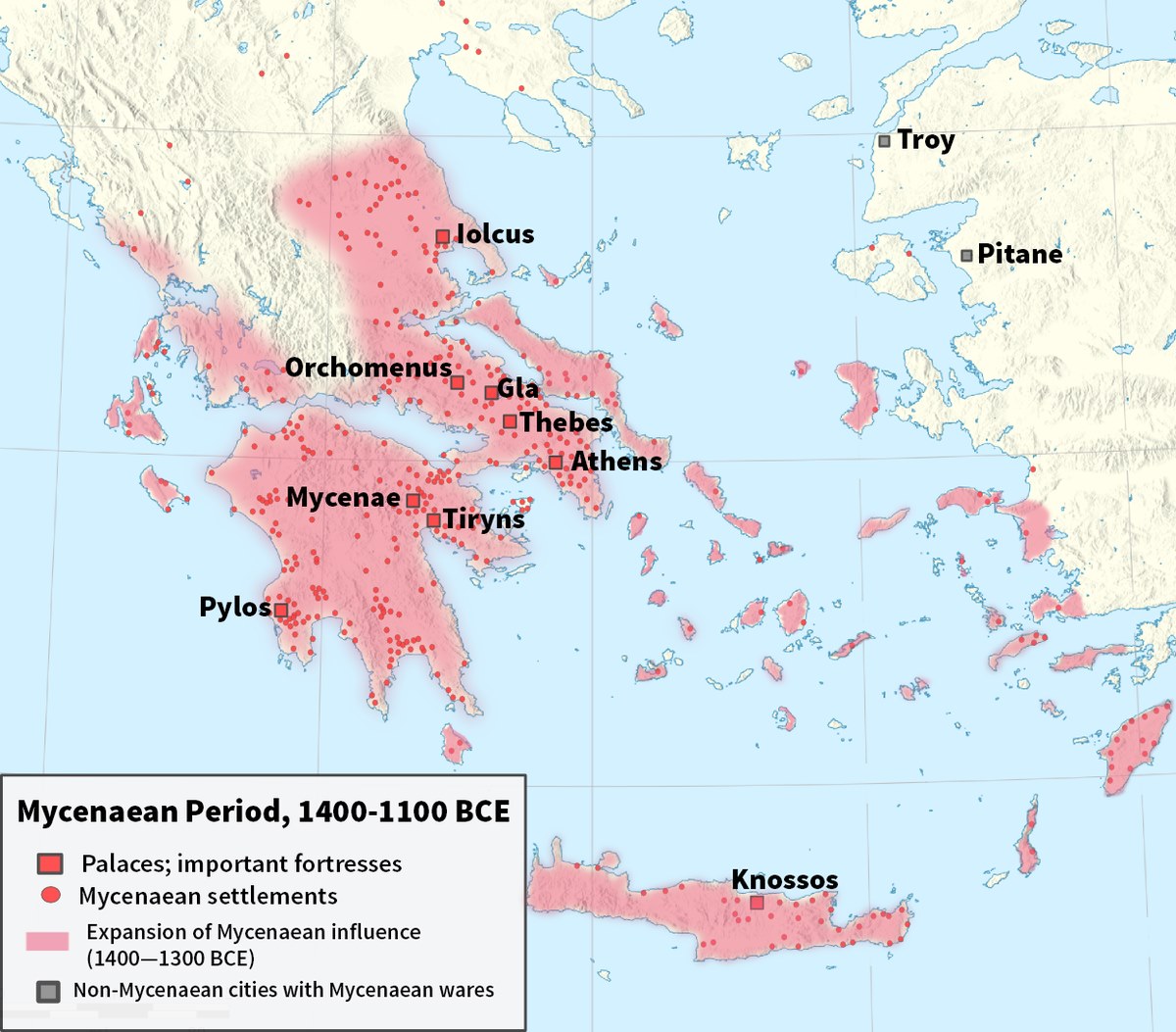
Map of Bronze Age Greece
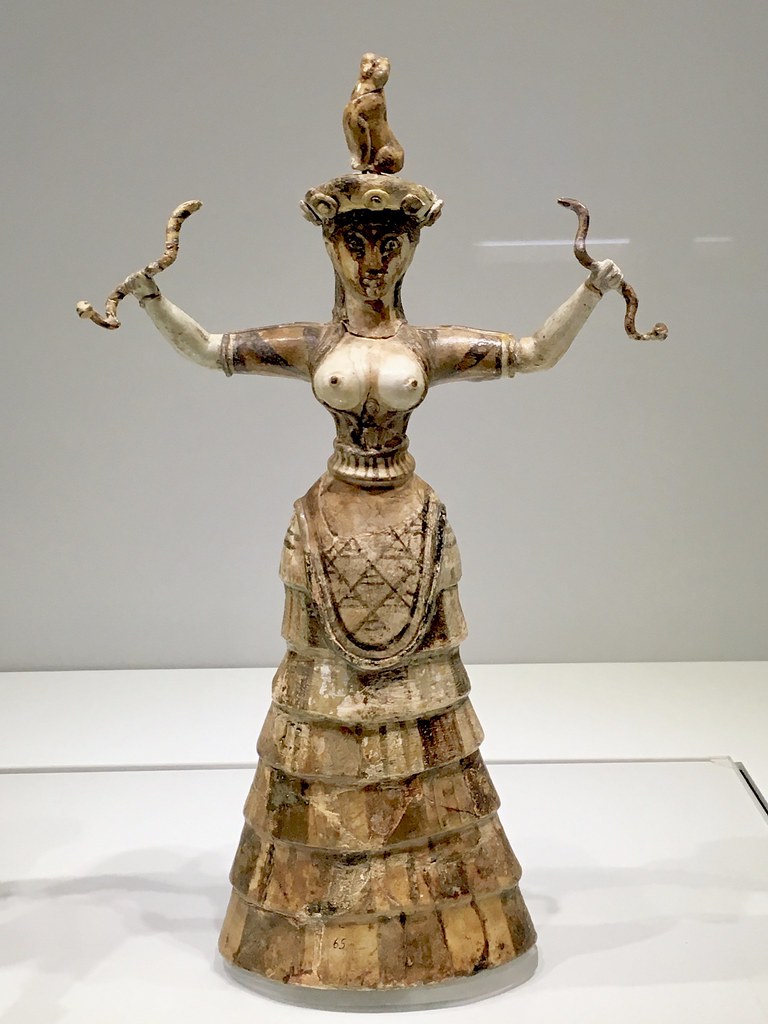
Minoan Snake Goddess
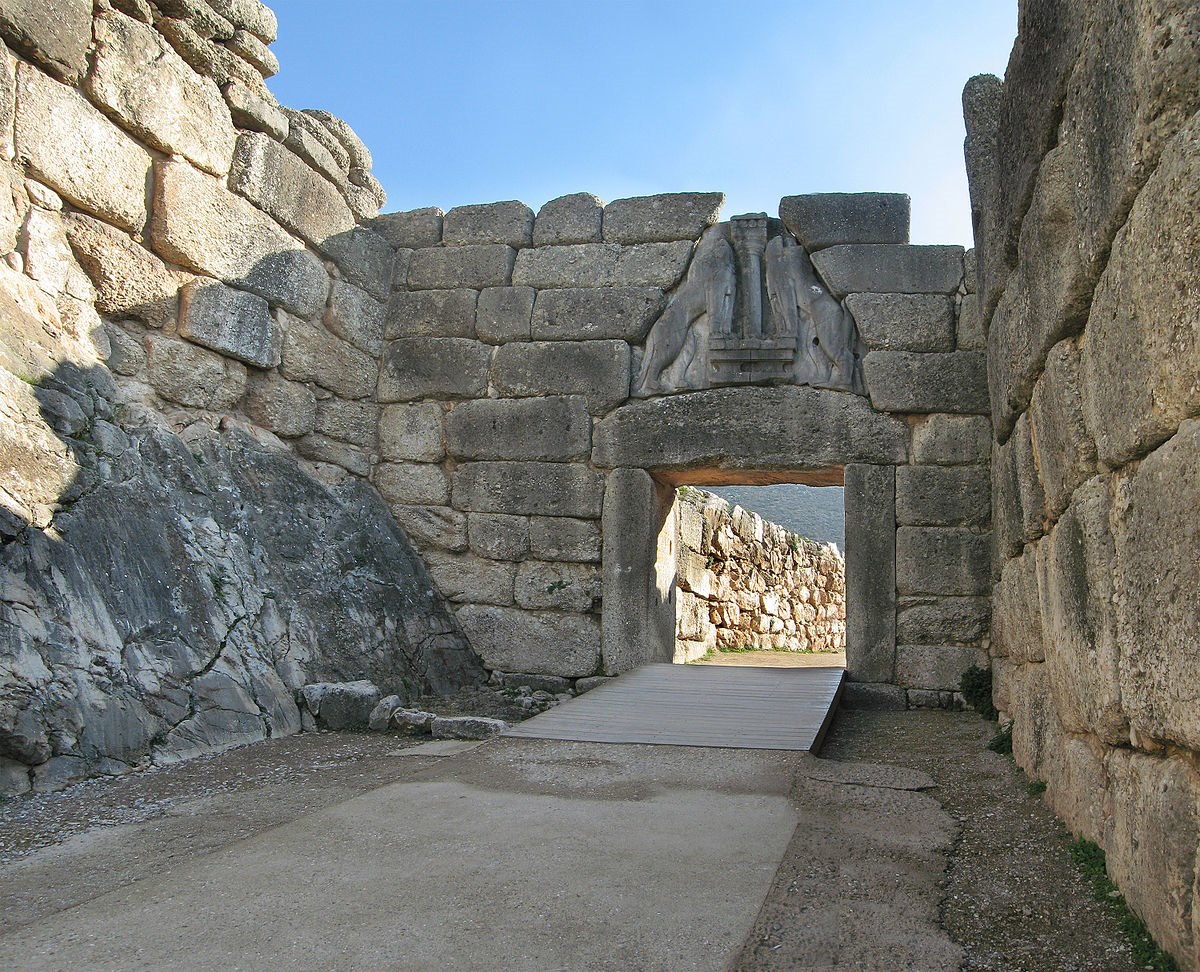
Monumental stone gate at Mycenae
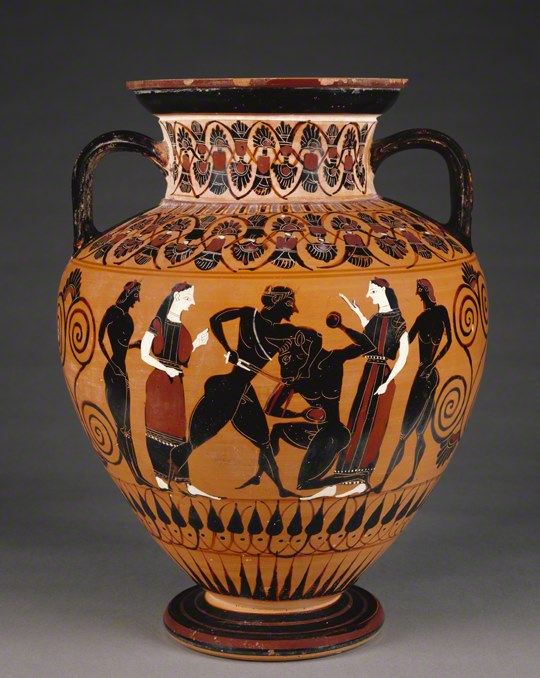
Myth of the Minotaur
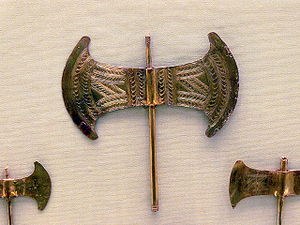
Minoan double ax
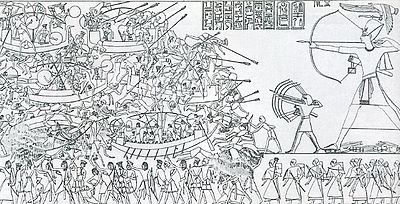
The last century of the Late Bronze Age after 1200 BCE was a period of wars and invasions, which witnessed the collapse of many powerful Bronze Age states. After 1200 BCE, the palaces of Mycenaean Greece were destroyed. In the centuries that followed the population of Greece declined drastically, and complex culture was abandoned, as Greece entered into a "Dark Age" and writing and literacy disappeared. Later ancient Greek historians reported that Greek speaking tribes known as the Dorians migrated from northwest Greece to the south after the Trojan War. Modern historians still debate as to why Mycenaean Greece experienced this collapse and attribute it various factors including war and invasion, revolt by the lower class farmers, and natural disasters such as climate change.
The instability in Greece and the Aegean resulted in the migration of people from this region to other areas in the Mediterranean in search of new homes. Ancient Egyptian inscriptions tell us that these "Sea Peoples" destroyed the Hittite Empire and numerous kingdoms in the Levant to the north of Egypt. One particular group of "Sea Peoples" known as the Philistines, who attacked Egypt, eventually settled just north of Egypt along the coast of the southern Levant.
In this same period other groups of people were on the move. Libyans, who inhabited the North African coastal region to the west of Egypt, invaded the northern Nile River Valley and settled in that area. The attacks of the Sea Peoples and Libyans resulted in the collapse of Egypt's central governments after 1100 BCE, resulting in the end of the New Kingdom and the beginning of the Third Intermediate Period, when Egypt was without a united government (21st through 25th dynasties). Phrygians, who inhabited the Balkans in southeast Europe migrated into Asia Minor (Turkey). Another population who were migrating in this period were the Aramaeans, who were nomadic tribes that spoke a Semitic language and inhabited the Arabian desert. Aramaeans in this period migrated into Syria and Mesopotamia.
The wars and invasions of this period coincided with an important technological innovation. Artisans had developed a method to extract iron from raw iron ore and use this material to manufacture iron weapons and tools. Iron ore generally exists in much greater quantities than copper or tin, so consequently a larger percentage of the population had access to iron tools and weapons than the percentage of people who could own bronze weapons and tools in the past. The Bronze Age thus ended, and the Iron Age had begun.