Classical Greece
Early World8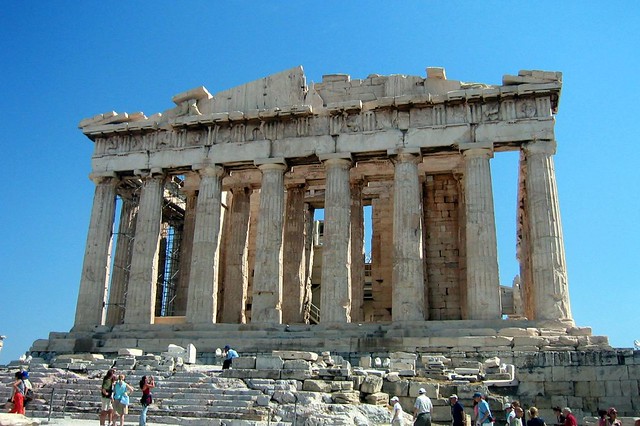
The Classical period (500 - 323 BCE) was a time of war and conflict among the Greek city- states that often pitted Athens against Sparta, but it was also an era of great cultural achievements when great "classic" works of art, literature, and philosophy were created. These works inspired generations of poets, historians, artists, and philosophers for centuries in multiple cultures up to the present. This period began with the Greek city-states uniting temporarily to face an invasion by the mighty Persian Empire, but it ended with these same city-states locked in recurring conflicts and ultimately losing their independence to first Persia, and later Macedon.
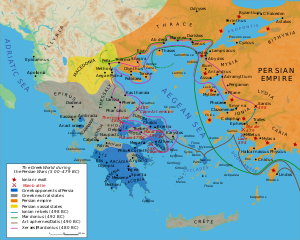
The Persian Wars (490 BCE, 480 -479 BCE) was a struggle between the Greek city-states and the expanding Persian Empire. In the mid-sixth century BCE, during the reign of Cyrus the Great, Persian armies subdued the Greek city-states of Ionia located in western Asia Minor (Turkey). These cities had been founded back at the end of the Bronze Age during the period of migrations. The Persians installed tyrants to govern these cities, whom the Persians recruited from the local Greek population. The Greeks in these cities were unhappy with the rule of these tyrants, and in 499 BCE, these cities rose of revolt against Persia in the Ionian Rebellion. Greek cities on the island of Cyprus also joined the Ionian Greeks as allies in this rebellion. During this uprising, the Greek cities of Ionia convinced Athens to ally itself with them against Persia. By 494 BCE, Persian forces had crushed the rebellions in both Ionia and Cyprus. The Persian king Darius decided that Athens must be punished for aiding the Ionian Greeks in their rebellion.
In 490 BCE Darius assembled a large fleet and army to cross the Aegean from Asia Minor and subdue Athens. Darius' plan was to install one of the sons of Pisistratus as tyrant of Athens. The Persian force landed their fleet and army at Marathon on the west coast of Attica. The Persian force vastly outnumbered the hoplite army that that Athenians sent to fight the Persians, but the majority of this "Persian" force was comprised of subject peoples of the Persian Empire who had been drafted into the Persian army. These soldiers had little motivation to fight and die for their Persian overlords. The Athenian soldiers, however, were highly motivated to defend their democracy from the threat of tyranny. At the Battle of Marathon, the Persian army could not sustain the spirited charge of the Athenian hoplites, and the Persian army quickly retreated back to their ships and sailed back to Asia Minor.
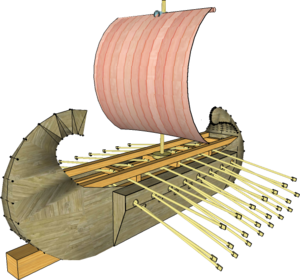
In 480 BCE, the son and successor of Darius, Xerxes assembled an even larger fleet and army to avenge this defeat, but with the larger ambition of subduing all the Greek city- states. Xerxes' plan was to march his army from Asia Minor, along the north coast of the Aegean Sea, and directly into Greece from the north, with the fleet sailing along the coast to provide food and supplies for the army. At this time of crisis, most of the Greek city-states decided to come together as allies to defend Greece. Sparta commanded the allied armies, whereas Athens commanded the allied fleet. After Marathon, the Athenians decided to use the profits from their silver mines to construct the largest fleet of ships in Greece. Athens with its large population had the manpower to power this fleet. Even the poorest Athenian citizen could serve as a rower on these ships, the triremes, with their three rows of oars. In naval battles, the rowers on these ships would work together to build up a ship's speed to ram and board opposing ships. The Athenian rowers did not need expensive iron armor and weapons as did hoplite warriors, to serve their country in war.
The Spartans decided to defend Greece at Thermopylae, which was a narrow pass between the mountains and the sea in northeastern Greece. For days, the small Spartan force led by their king Leonidas, successfully drove back a vastly superior Persian army, until a Greek traitor informed the Persians of another pass through the mountains, which enabled the Persians to circle around and surround the Spartans. The Spartan force fought to the death. The heroic deaths of the Spartans at Thermopylae inspired the Greeks to continue the fight.
After the battle of Thermopylae, the Persian forces advanced against Athens. The Athenians abandoned their city to the Persians and withdrew to the nearby island of Salamis, where they put their faith in their fleet to protect them from the Persians. At the naval Battle of Salamis, the allied Greek fleet led by Athens destroyed the "Persian" fleet, which was mostly comprised of ships from Phoenician and Greek cities under Persian control. After the destruction of this fleet, Xerxes decided to withdraw much of his forces from Greece since he no longer had a fleet to supply such a large army.
In 479 BCE, this reduced Persian force had retreated from Athens to the plains of Boeotia, just north of Attica. The Greek allied forces under the command of Sparta advanced into Boeotia and met the Persian army at the Battle of Plataea. In this battle, the "Persian" force of primarily unwilling draftees was no match for the advance of the invincible Spartan phalanx, and the battle ended in a rout and the death or capture of most of the Persian army.
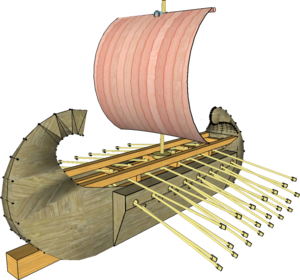
Reconstruction of trireme
After the Persian Wars, the Spartans were preoccupied in quelling Helot rebellions and maintaining their hegemony in the Peloponnese, but the Athenians took the lead in continuing the war against Persia and liberating all Greek city-states from Persian rule. In 477 BCE, the Athenians organized an alliance of Greek city-states to wage this war on the Persian Empire. This alliance was known as the Delian League since the headquarters of this league was on the Aegean isle of Delos, which was sacred to the god Apollo. Members of this league could provide ships and troops for the league or simply pay Athens money so that the Athenians could equip and man their fleet for the war effort. Most member states chose to pay money to Athens. Over the next several decades allied forces liberated the Greek city-states of Ionia from Persian rule and supported rebellions against Persia in Cyprus and Egypt. Around 449 BCE, Athens and Persia reached a peace settlement in which the Persians recognized the independence of Ionia, and the Athenians agreed to stop aiding rebels in the Persian Empire.
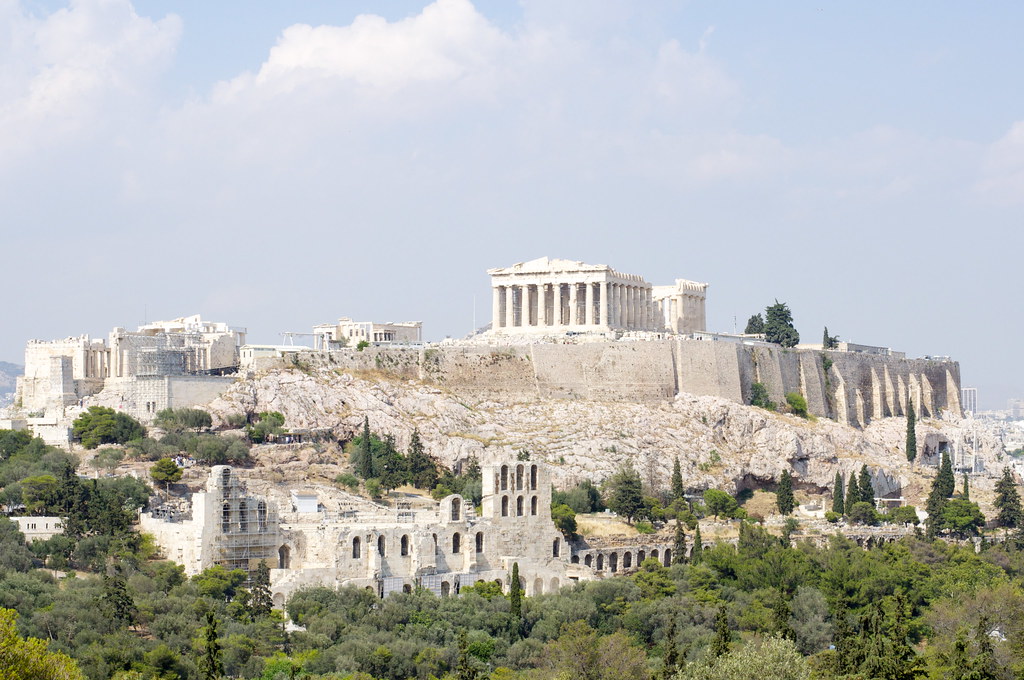
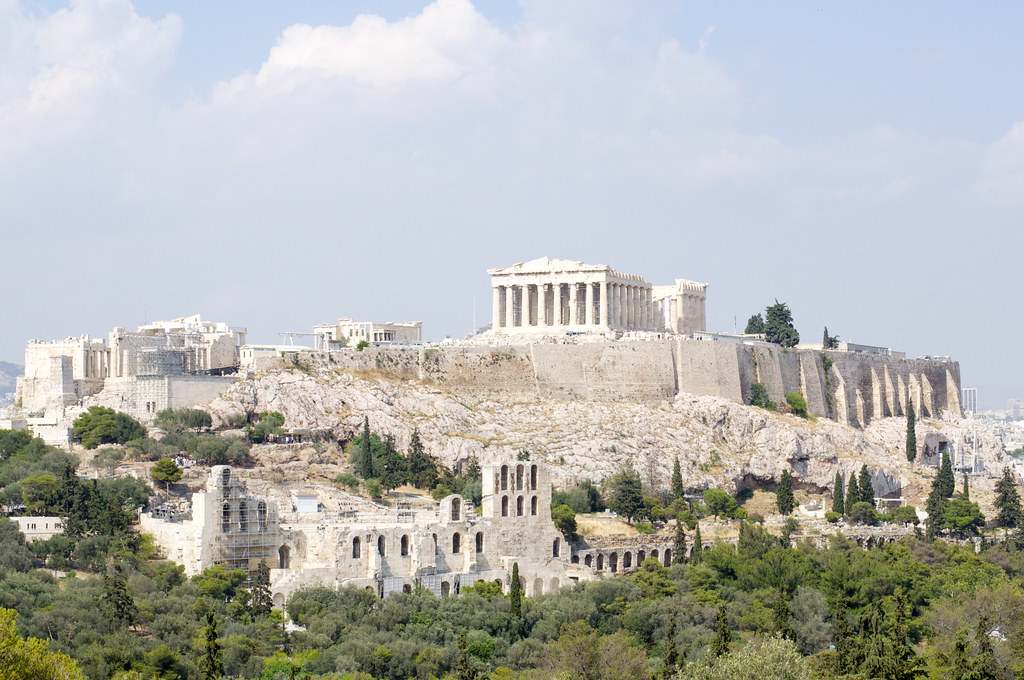
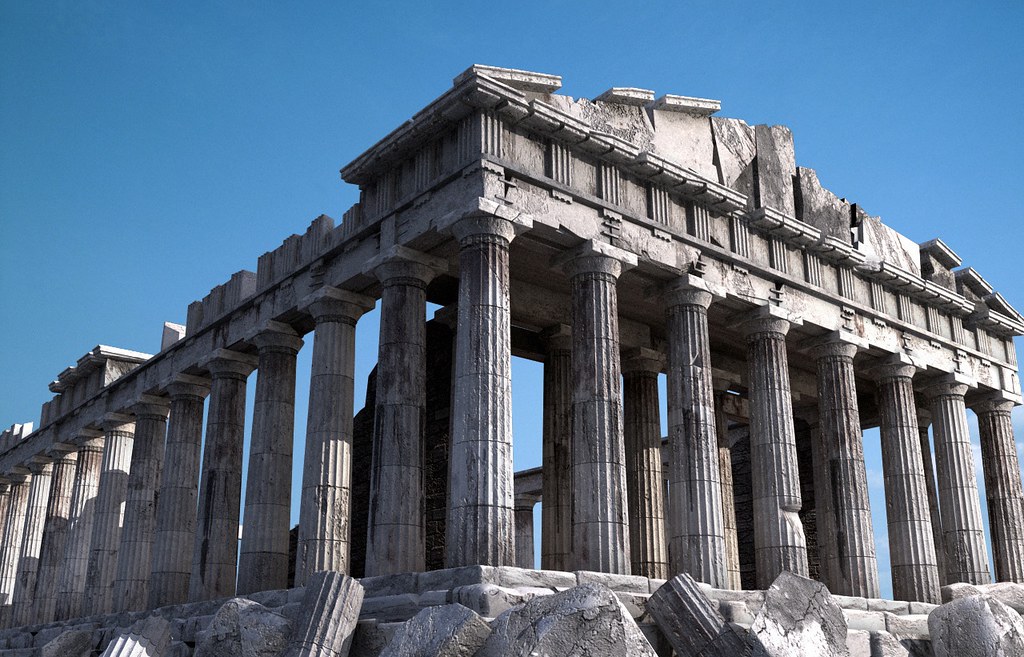
Over the course of this war, the money from from the Delian League enriched many Athenians, who found employment as rowers in the fleet. The Athenians even began paying jurors in Heliaea courts for their services and people who attended meetings of the Ekklesia. Consequently, Athens was not willing to allow member states in the league from leaving and losing this steady income from the money from these member states. In 465 BCE, the city-state of Thasos withdrew from the league and was compelled by Athenian forces to rejoin. Over time it became clear to the other Greeks that the Delian League was no longer an alliance, but an Athenian empire in which the subject city-states paid tribute to Athens. Around 437 BCE the Athenians began a construction project using this tribute from their empire to rebuild the temples on the Acropolis in Athens which had been destroyed by the Persians. The Parthenon and the other temples that Athens constructed on the Acropolis were some of the most beautiful temples ever built and the pride of Athens, but from the perspective of the subject city states of the Athenian empire, these same buildings came to symbolize the despotism and arrogance of the Athenians.
The great wealth and power of Athens greatly concerned the Spartans, who were accustomed to thinking themselves to be the greatest and most noble of the Greeks. This rivalry between the two city-states would eventually lead to a war between the two, known as the Peloponnesian War (431- 404 BCE). In 433 BCE, the Athenians assisted the city- state of Corcyra in its war against Corinth. Corinth was a member of the Peloponnesian League, and Corinth requested that Sparta, as the leader of this league, take action against Athenian aggression. In 431 BC the Peloponnesian War began with the invasion of Attica by Sparta and its allies. The Athenian statesman Pericles persuaded the Athenians to withdraw from the countryside and move within the walls of Athens which extended from Athens to the sea and the port of Piraeus. Pericles asserted that these walls would keep the Athenians safe while the superior Athenian navy provided them with food and supplies. Pericles argued that the Spartans would grow tired of war and seek peace. Pericles' assessment of the situation proved to be accurate. After ten years of war, in 421 BCE the Spartans and the Athenians agreed to a peace agreement, the Peace of Nicias, that maintained the Athenian empire intact. The cost of the war for the Athenians was high. Due to the crowding of the Athenians within the walls of Athens during this war, a plague erupted in 426 BCE and killed many Athenians, including Pericles.
In the years after this peace treaty, a young, ambitious politician in Athens, Alcibiades, convinced the Athenians that their empire would only continue to thrive as long as it expanded. He convinced the Athenians to launch a massive invasion of Sicily in 415 BCE, which targeted Syracuse, the largest Greek city-state on Sicily. Just as this military campaign began, Alcibiades' political enemies in Athens accused him of impiety and treason, and Alcibiades fled to Sparta to avoid a trial. Without Alcibiades' leadership, the expedition against Syracuse floundered and the entire Athenian force was destroyed in 413 BCE. In Sparta in exile, Alcibiades convinced the Spartans to invade Attica again in 412 BCE now that Athens was weakened by the disaster in Syracuse. In the years that followed, the Spartans realized that they needed a large fleet to defeat Athens. The Spartans were able to secure funds for this fleet from Persia on the condition that they restore the Greek cities in Ionia to Persian rule. In 405 BC this new Spartan fleet destroyed the Athenian navy at the Battle of Aegospotami. Without a fleet, the Athenians under siege in Athens could not secure food or supplies, and in 404 BCE the city surrendered to Sparta, and the Peloponnesian War ended with the fall of the city and the collapse of the Athenian empire.
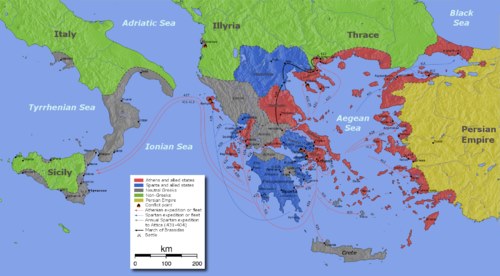
Athens, Sparta, and their allies
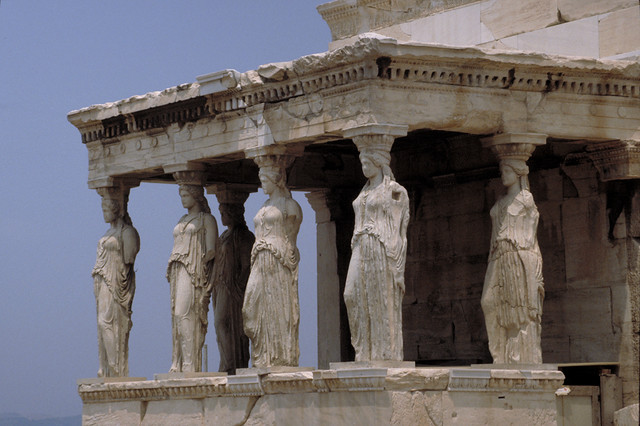
One of the famous temples on the Acropolis
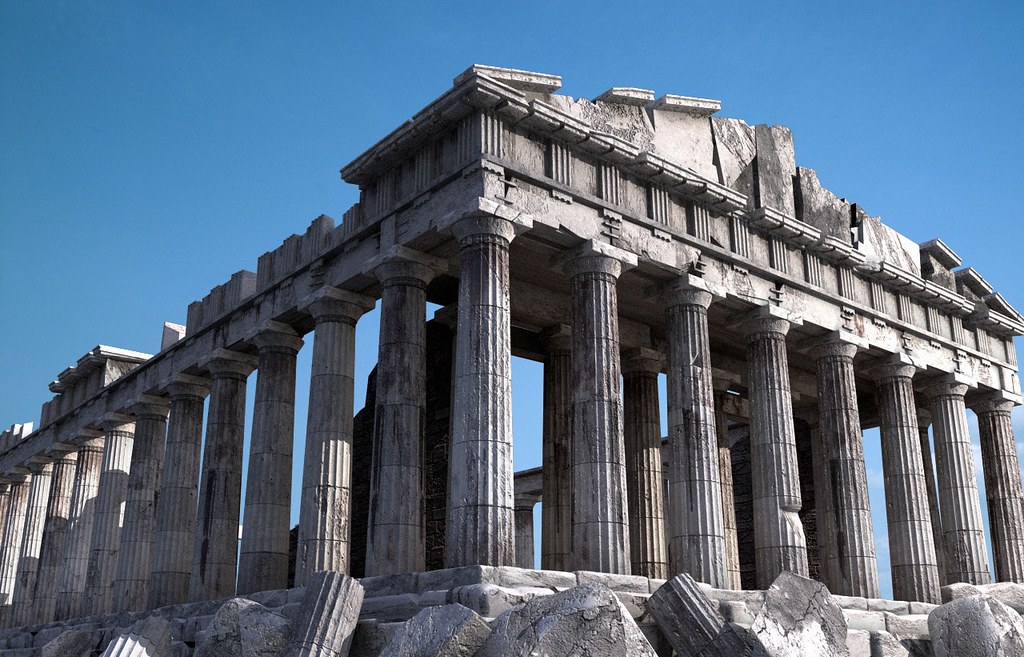
The Parthenon
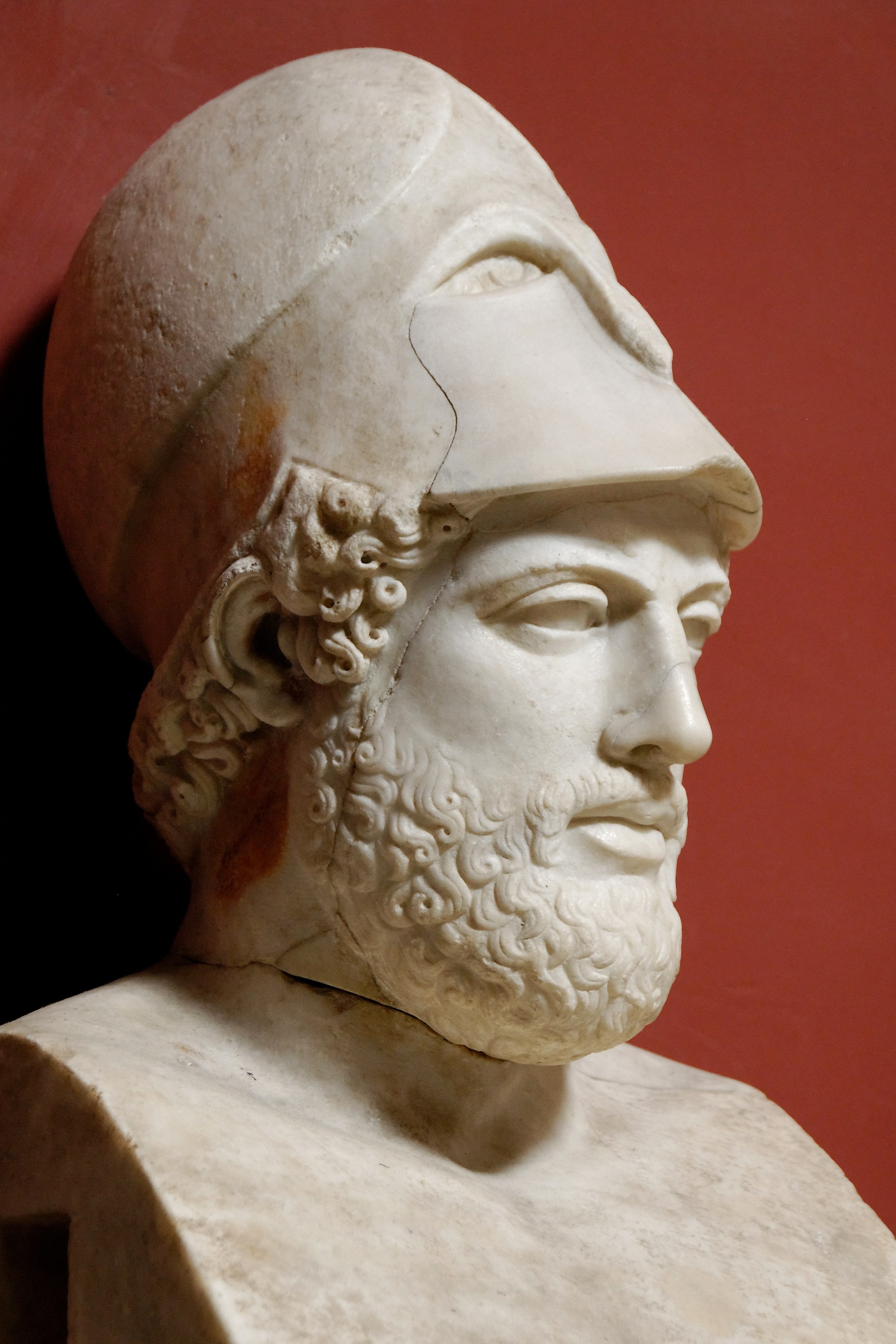
Pericles
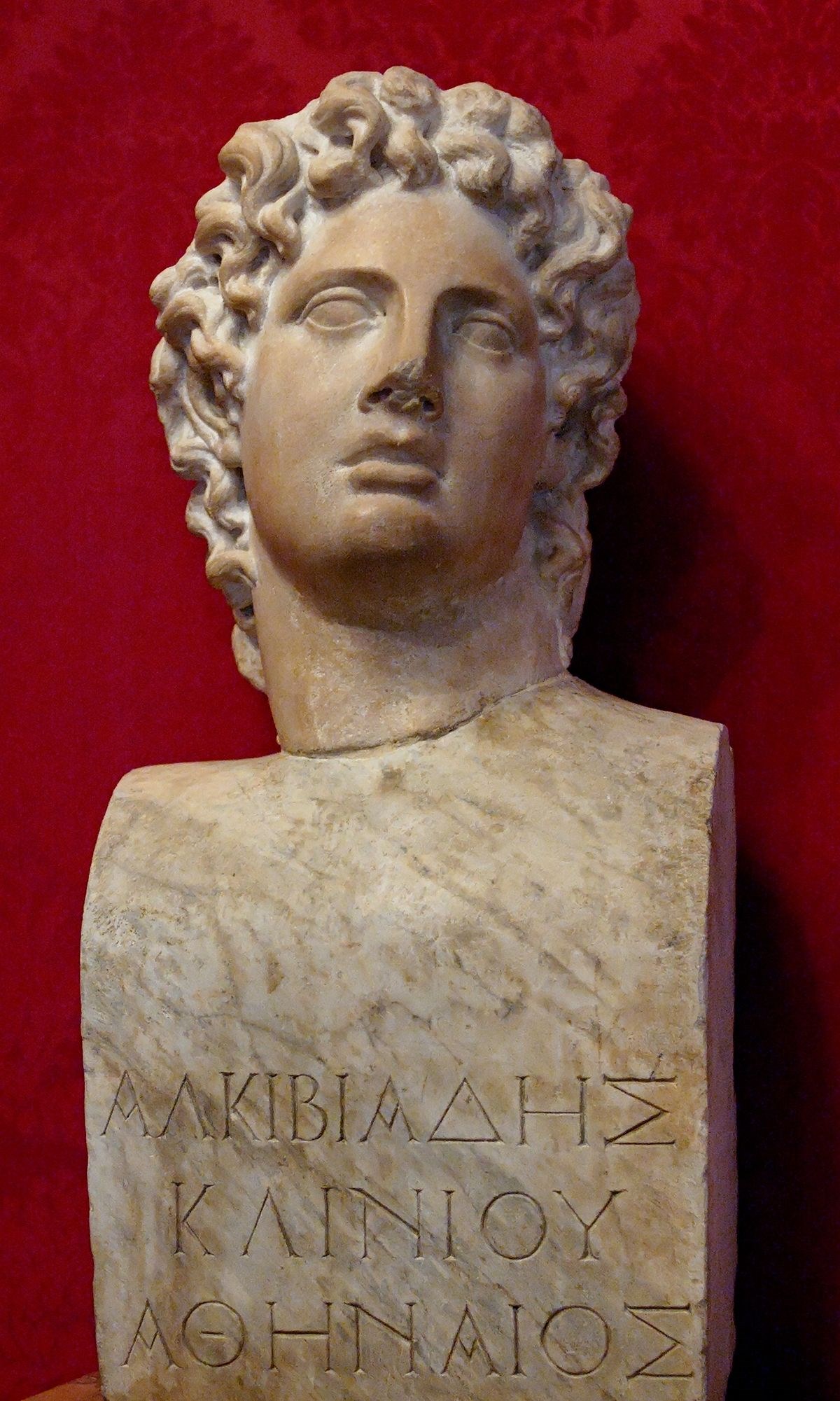
Alcibiades
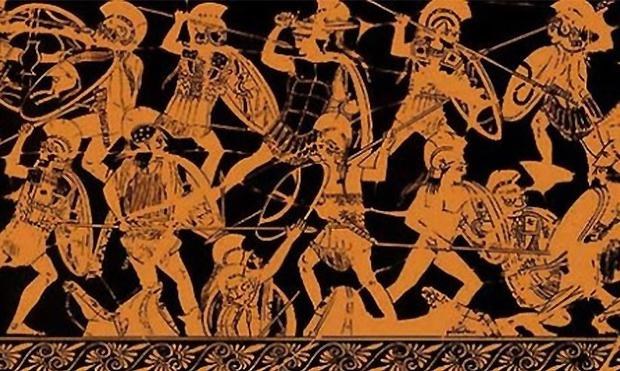
After Peloponnesian War, warfare continued among the Greek city-states, as they each struggled to maintain their independence and sovereignty, while the more powerful states sought to establish their dominance and hegemony over them. Sparta established oligarchies (government of the few) comprised of local aristocrats in the city-states that had been formally been democracies under Athenian control. These cities thus exchanged one master for another. The Spartans even set up such an oligarchy in Athens known as the Thirty Tyrants, until the Athenian people in 403 BCE rose up against these oligarchs and restored their democracy. Moreover, the Spartans did not follow through on their promise to Persia to restore the Greek city-states in Ionia to Persian control. In fact, Spartan armies mounted military offenses against the Persian Empire in Asia Minor. In response in 394 BCE the Persians provided funds to a new alliance of Greek city-states including Athens, Thebes, Corinth, and Argos, to wage war on Sparta. The war that followed became known as the Corinthian War (394 -387 BCE) since much of the fighting in this conflict occurred in and around the city of Corinth. In 387 BCE, the Spartans reconciled with Persia, and the Persians now provided funds for Sparta alone. Without funding from Persia, Sparta's enemies now made peace with Sparta. Under the terms of the King's Peace in 387 BCE, the Greek city-states were forbidden by the Great King of Persia from waging war against one another or interfering in the internal affairs of each other. The Persian King designated Sparta as the King's agent to make sure that this peace agreement was maintained. Sparta thus achieved hegemony in Greece, while Persia profited from this arrangement since in the absence of war in Greece, Persia could recruit unemployed, experienced Greek warriors to fight as mercenaries in its empire.
The Spartans , however, continued to interfere in the affairs of other Greek city-states that they saw as a threat to their hegemony. In 382 BCE, for example, the Spartans set up a pro- Spartan oligarchy in Thebes. In 379 BCE, the Thebans with Athenian assistance overthrew this oligarchy. The next year, in 378 BCE Athens and Thebes made a new alliance with one another against Sparta. Thebes adopted a democratic system of government and took the lead in organizing the city-states of Boeotia into a federal system in which each of these states shared sovereignty with the federal Boeotian government. Thebes also found a great leader in the statesman and philosopher, Epaminondas. Under his leadership, Thebes created a permanent, standing army of professional soldiers known as the Sacred Band. In 371 BCE the Thebans with their Sacred Band defeated the Spartans at the Battle of Leuctra in Boeotia. In 370 BCE, Theban forces under the command of Epaminondas invaded the Peloponnese and liberated Messene from Spartan rule, thus depriving the Spartans of most of their Helot labor in Messene. Without these Helots, the Spartans could not support its military system to the same extent, and their Peloponessian League collapsed.
Athens was alarmed by the sudden growth of Thebes as a hegemonic power, and in 370 BCE, Sparta and Athens became allies to meet this threat. In response, Thebes in 367 BCE struck a deal with Persia to receive Persian funds. Under the terms of the Second Kings Peace, Thebes replaced Sparta as the Persian king's agent. However, in 362 BCE an allied army of Spartans and Athenians fought the Thebans at the Battle of Mantinea in the Peloponnese. The battle ended in a draw, but Epaminondas died in the struggle. Without his leadership, Thebes' hegemony faded, but no Greek city-state rose to take its place since all Greek city-states were exhausted economically and politically after decades of constant warfare.
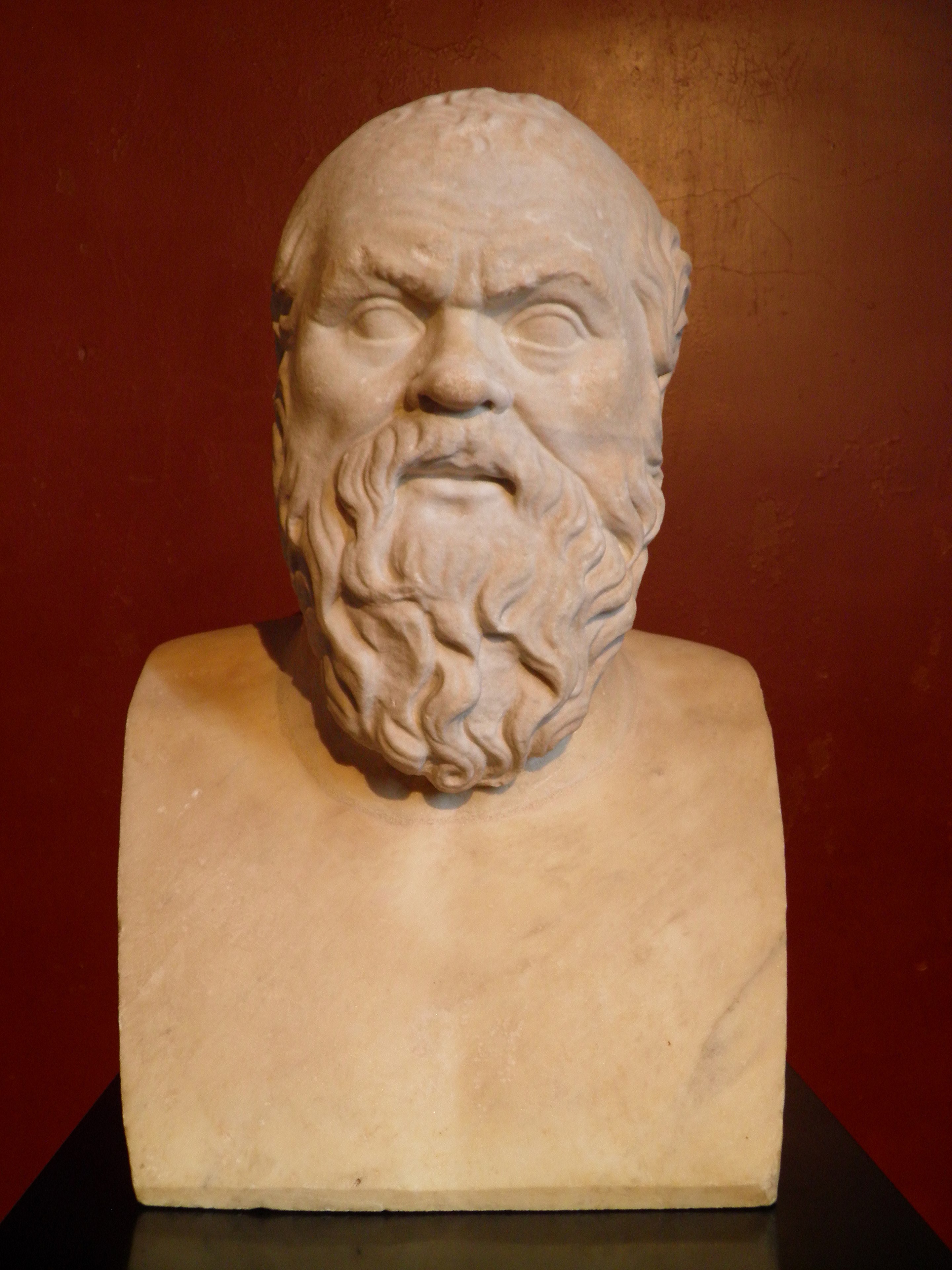
Some historians have viewed this Classical period and the cultural achievements in Athens in particular as a "Golden Age" due to the works of art, literature, and philosophy that were completed in this era. According to some modern scholars, this period saw the birth of science and philosophy, as Greeks for the first time in world history critically examined the natural world and questioned traditional religious beliefs based on human reason (Other modern historians have argued, however, that this position discounts the accomplishments in medicine and mathematics in ancient Egypt and Mesopotamia). For example, Empedocles around 480 BCE speculated that the universe was not created by gods, but instead was the result of the four material "elements" (air, water, fire, earth) being subjected to the forces of attraction and repulsion. Another philosopher and scientist, Democritus (450 BCE) maintained that the universe consisted of tiny particles, which he called "atoms", that came together randomly in a vortex to form the universe.
These philosophers not only questioned traditional views about the gods, but they also brought into question traditional values. In Athens for example, men with a reputation for learning and wisdom were known collectively as Sophists or "wise men". Since public speaking in Athens in the courts and the assembly was the ticket to wealth and power, these Sophists claimed that they could teach anyone Rhetoric or the art of persuasion, for a fee, so that person could achieve success as a lawyer or a politician. Some Sophists even claimed that they could teach people rhetorical methods that would empower a speaker to convince people to act even against their own interests. In Athens people worried that in their democracy, such speakers could lead the people astray to act against their own self interest. One such person was Socrates (469 - 399 BCE). He was a stone-cutter by trade, but in the public spaces in Athens such as the agora, Socrates would question people with reputations for wisdom such as the Sophists and politicians about good and evil and right and wrong. He wanted to base values on reason instead of traditional beliefs that people uncritically accepted as true. Modern historians view Socrates as the the first philosopher of ethics. Unfortunately, Socrates through his questioning often embarrassed powerful people in Athens and made himself enemies. Also, Socrates' disciples included the politician Alcibiades as well as some of the Thirty Tyrants. In 399 BCE an Athenian court found Socrates guilty of impiety and corrupting the youth, and he was put to death.
Socrates left behind no writings of his own, but some of his disciples wrote about him. One of these disciples was Plato (427 - 347 BCE) who wrote dialogues, which featured Socrates in conversations with others. Plato through these dialogues constructed a philosophical system that included the study of nature (physics), the examination of the human mind (psychology and epistemology) and ethics. Plato maintained that the material world that human being perceive through their senses (sight, hearing, smell) was an allusion. This material world was a mere shadow of the real world of ideas and forms. According to Plato, the true philosopher used his reason to comprehend these ideas and forms that underlie the material universe. Plato established a school at the Academy, which was a gymnasium or public park in Athens where Athenians came to relax and exercise. At the Academy, his students studied and analyzed Plato's philosophical system. One of Plato's most famous pupils was Aristotle (380 - 322 BCE). He came to disagree with his teacher regarding the forms and ideas. According to Aristotle, the ideas and forms could not exist independently of the material universe. Aristotle founded his own school at a different gymnasium in Athens, the Lyceum, where his students focused on the scientific study of the natural world.Modern historians view Plato and Aristotle as the founders of Western (European) philosophy because of the powerful influence of their ideas down through the centuries.
The Greek "Golden Age" not only saw advances in science and philosophy, but great achievements in literature. Athens was also the birthplace of theater. Greek playwrights such as Sophocles and Euripides in the fifth century BCE were poets who composed tragedies, which resembled modern operas and musicals in that they featured music and dance. The plots of these tragedies were based on traditional myths about gods and heroes, but in these plays, these poets through their characters pondered philosophical questions of the day. In Sophocles' Antigone, for example, the main character Antigone must decide whether to obey the laws of her state or follow her traditional religious beliefs. Such questions have confronted people down through the ages, which may explain why these plays remained influential over time. This same period also saw the development of the study of history. Historians recognize Herodotus and Thucydides as the first true historians as they examined the past to explain rationally the cause and effects of human actions. Herodotus wrote an account of the Persian Wars, whereas Thucydides composed a history of the Peloponnesian War.
Finally this period saw masterpieces of sculpture, vase painting, and architecture. Greek artists broke free from styles of Egypt and the Levant, and produced their own unique styles. Greek sculpture and vase painting attempted to capture in art the ideal human form as it appears in the natural world. Artists especially in the European Renaissance, centuries later, modeled their own artistic works on these classical models.
Socrates
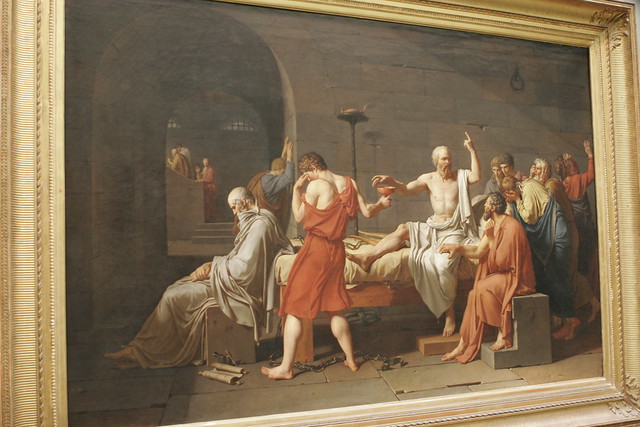
Later depiction of the death of Socrates
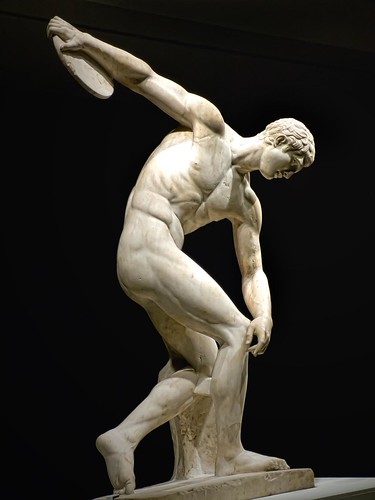
Classical Greek sculpture






%2C_Roman_copy_of_a_Greek_original%2C_Neues_Museum%2C_Berlin_(8169173914).jpg)


,_roman_copy_of_a_greek_original,_neues_museum,_berlin_(8169173914).jpg)