The Hellenistic World
Early World9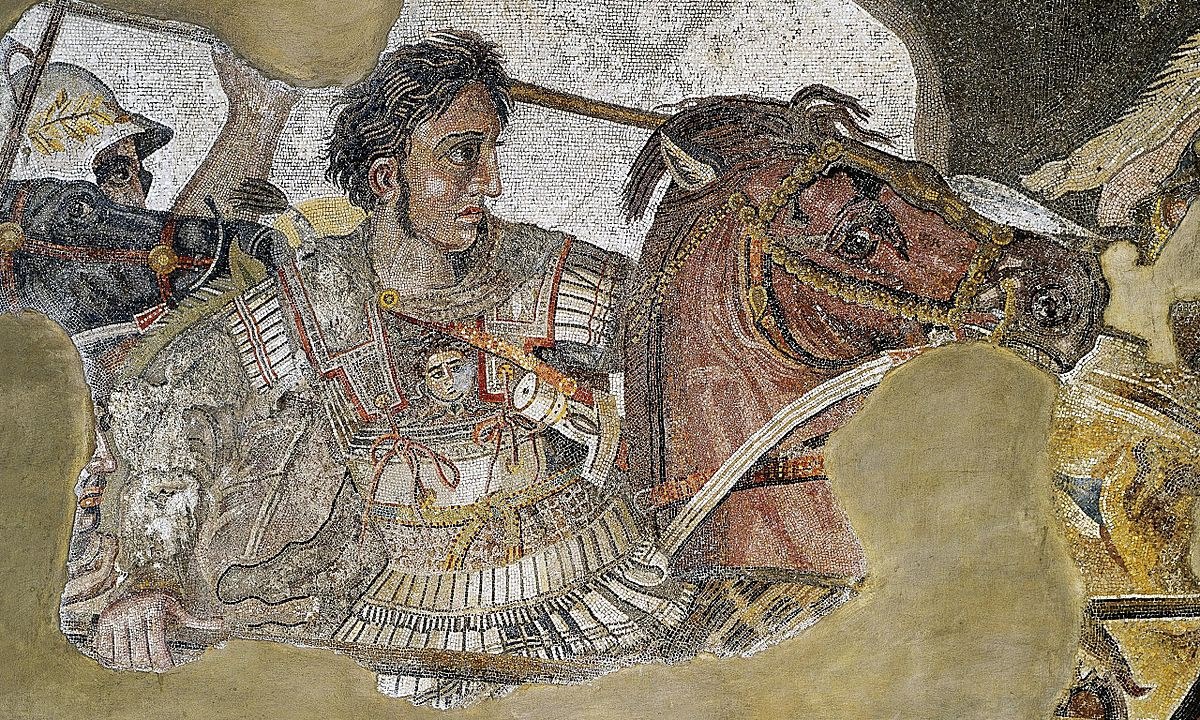
The Classical period in Greece ended with Greece losing its freedom to the Kingdom of Macedon and Macedon's king, Alexander the Great conquering the Persian Empire. The period that follows is known as the Hellenistic period (323 - 31 BCE). In this period Greeks (Hellenes) interacted and exchanged ideas and beliefs with the populations of the former Persian Empire. The resulting mixture of these cultures was neither Greek nor non Greek, but "Greekish" or Hellenistic.
The ancient Kingdom of Macedon was located in a region that straddles the modern nations of Greece and North Macedonia. The Macedonians spoke a different language than the Greek, but beginning in the Archaic Period, the Macedonian landowning aristocracy had adopted Greek culture. The royal family of Macedon claimed to be descended from the mythical Greek hero Heracles. King Philip II of Macedon ( reigned 360 -336 BCE) transformed Macedonia into a great power. He recruited and trained the common farmers of Macedon into an army that fought in a modified version of the Greek phalanx, in which the soldiers were armed with sixteen foot long pikes (a sarissa). This Macedonian phalanx formation was even more formidable. He also trained the Macedonian aristocrats to fight as cavalry that was deployed in coordination with the phalanx. Due to Philip's skills in military tactics and diplomacy, he was able to secure control of new territory for his kingdom, which provided him with access to precious metals. Philip thus had the economic resources to expand his military power. In 338 BCE, Athens and Thebes put aside their differences to form alliance against the rising power of Macedon. At the Battle of Charoneia (338 BCE), the Macedonian army crushed this allied army, and the famed, Theban Sacred Band was annihilated. Philip sought to unite the Greek city-states under his leadership after this victory, and he organized them into a Hellenic League to wage war against the Persian Empire. However, in 336 BCE an assassin killed Philip II.
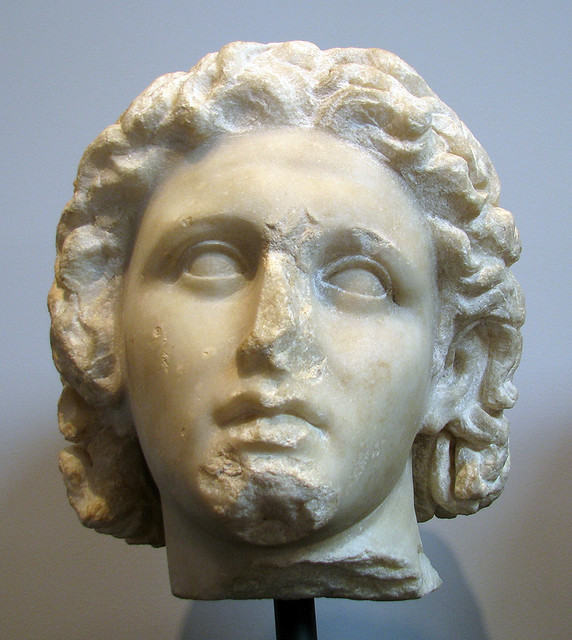
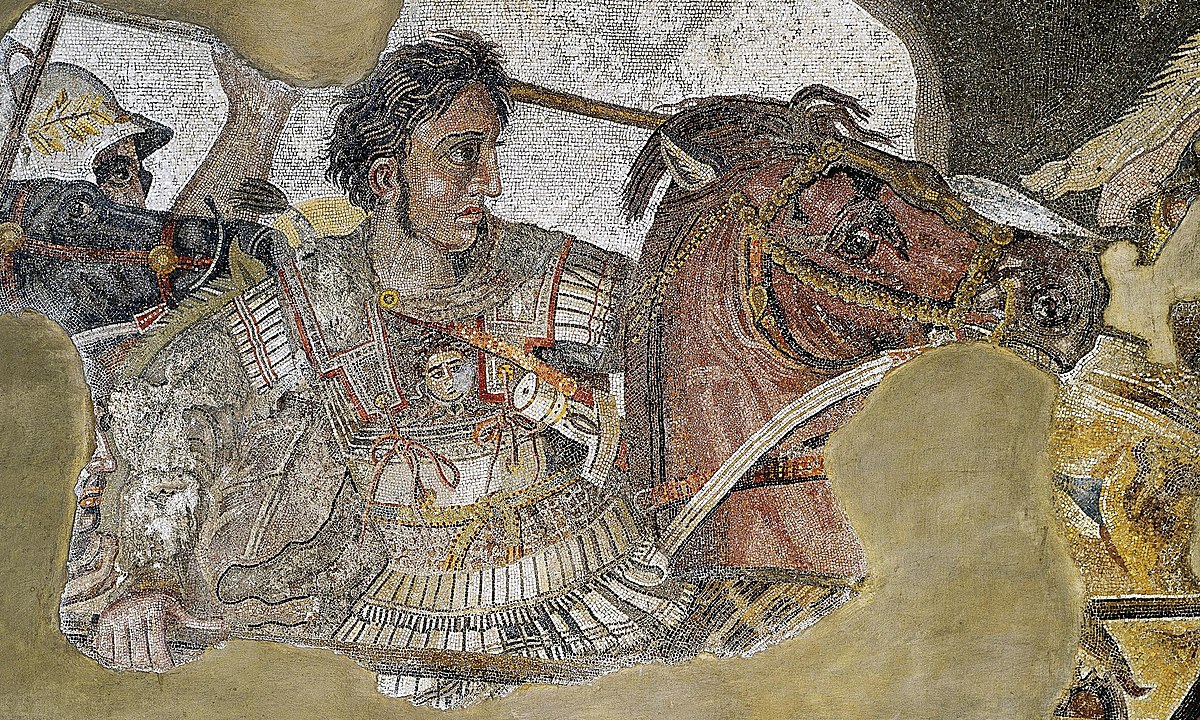
Philip II was succeeded by his 20 year old son, Alexander III, who upon his accession in 336 BCE faced an invasion by Thracian tribes from the north and a rebellion in Greece led by Thebes and Athens. Within a year, the young king crushed these opponents, and Alexander announced that he was carrying out his father's plan to wage war against Persia. Darius III, the Persian king amassed massive armies to face Alexander's invasion, but these armies were composed primarily of draftees from the subject peoples of the Persian Empire. At the battles of Issus (333 BCE) and Gaugamela (330 BCE), these forces collapsed in battle against the Macedonian phalanx.
At first, Alexander's saw his campaign as war of vengeance against Persia. Alexander, although Macedonian, saw himself as a Hellene and often compared himself to the hero Achilles of the Iliad, from whom he claimed to be descended through his mother, Olympias, a princess from Epirus, a small kingdom in the territory of modern Albania and northwest Greece. In 330 BCE, Alexander's forces sacked and burned Persepolis, the capital of the Persian Empire. However, after the assassination of Darius III in that same year, Alexander claimed the Persian throne for himself, and he even introduced Persian customs to his court, such as proskynesis, in which the king's subjects prostrated themselves on the ground before him. To consolidate his control of the Persian Empire, Alexander in the years 330 - 326 BCE advanced his army deep into Central Asia and to the Indus River Valley (modern Pakistan). In 326 BCE, Alexander's troops were exhausted and mutinied, refusing to advance to the Ganges River in central India, as Alexander desired. Alexander then led his army back to Babylon in Mesopotamia, where he died at the age of 33 in 323 BCE, probably due to cumulative impact of all the injuries that he experienced over his campaign.
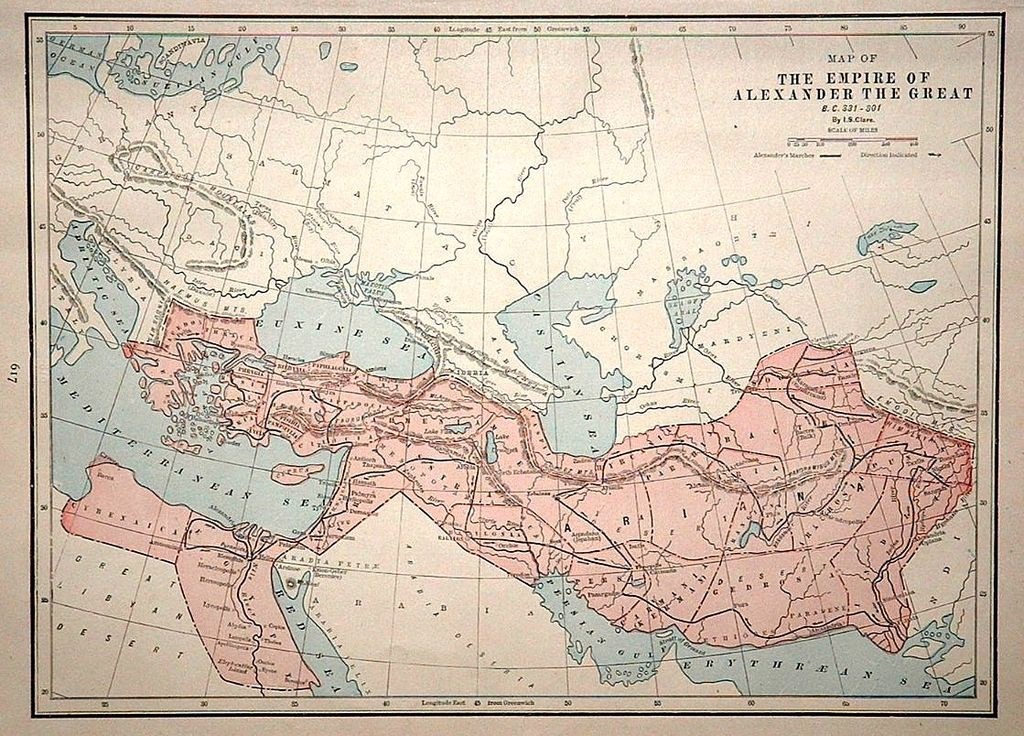
Alexander's Empire
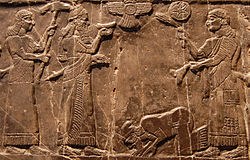
Act of proskynesis
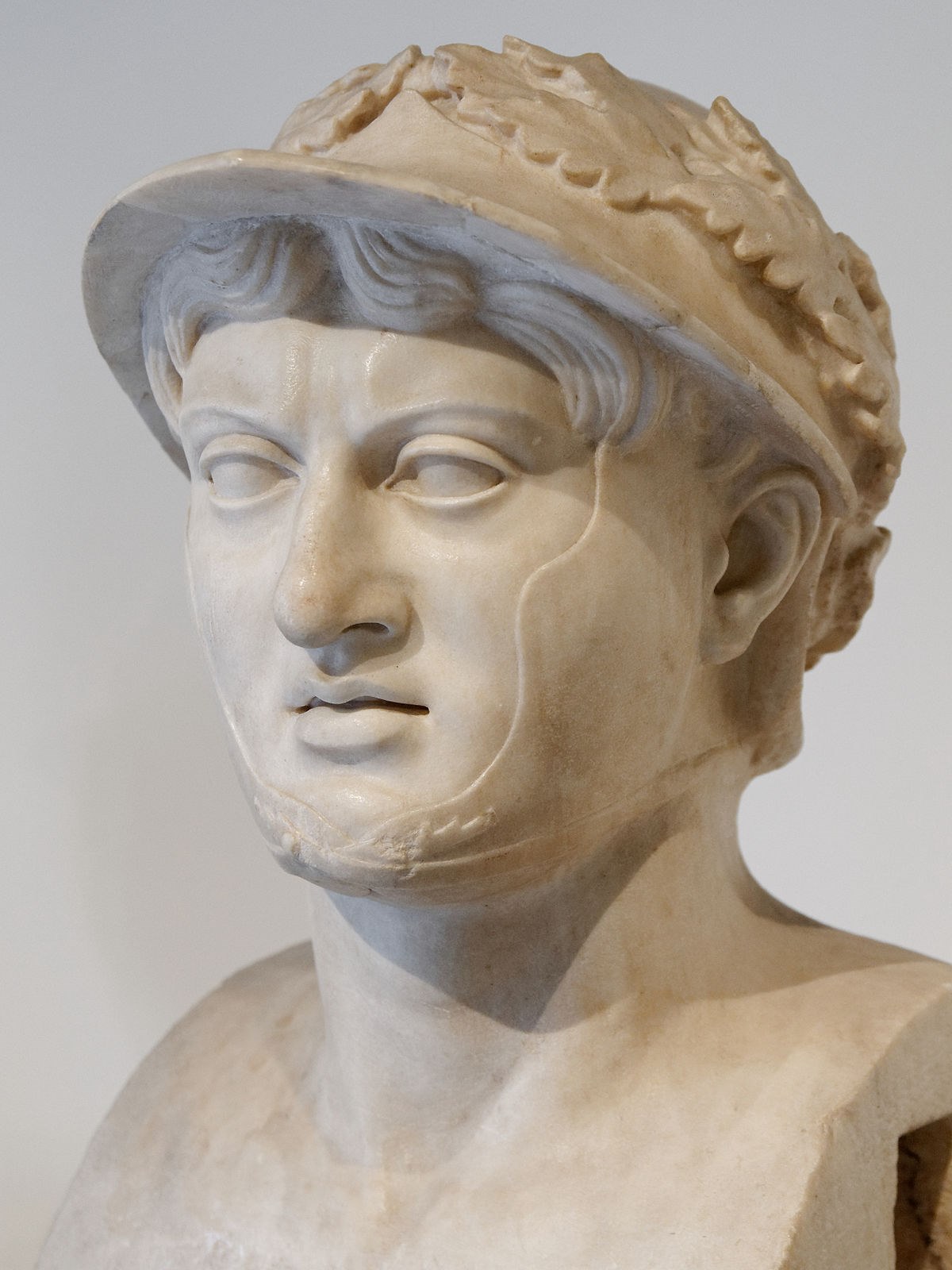
Alexander before his death had made no arrangements for his successor as king. His wife, Roxanne was pregnant when he died. Consequently, the Macedonian aristocrats, who had served him as his military commanders, fought among themselves for control of this empire. One of the more colorful of these ambitious military leaders was Pyrrhus. Unlike his rivals, Pyrrhus was not Macedonian, but the king of Epirus and Alexander's cousin. Over his reign, he seized the throne of Macedon temporarily and attempted to carve out an empire for himself in Sicily and southern Italy. He never lost a battle, but he suffered so many losses among his troops in these victories, that he was never able to capitalize on his success on the battlefield. In fact the term "pyrrhic victory" even today refers to a win which occurs after such a great loss of resources, that the win is in effect a loss. In 272 BCE Pyrrhus died after being struck by a roof tile thrown at him by an elderly women during a street battle in Argos in Greece. The death of this king marked the end of this period of wars.
By 272 BCE, certain generals and their families had secured positions as kings over different portions of Alexander's empire. The descendants of one of these generals, Antigonus ruled as kings over Macedon and much of Greece. In parts of Greece, the city-states organized federal leagues to maintain their independence from Macedon. The Achaean League was in the Peloponnese and the Aetolian League was in central Greece. Another general, Ptolemy, ruled as king over Egypt. To win the support of the Egyptian people, Ptolemy and his successors assumed the title of pharaoh and built temples to Egyptian gods. Yet another Macedonian general, Seleucus, and his descendants ruled as kings over much of the former Persian Empire. This Seleucid Dynasty ruled an area stretching from Asia Minor in the west to Central Asia in the east. To run this empire, the Seleucid Dynasty adopted many of the same practices as the Persian Empire, such as honoring local gods in different parts of the empire. In Mesopotamia, for example, priests in cuneiform recorded the gifts that these kings offered to the gods.
Pyrrhus
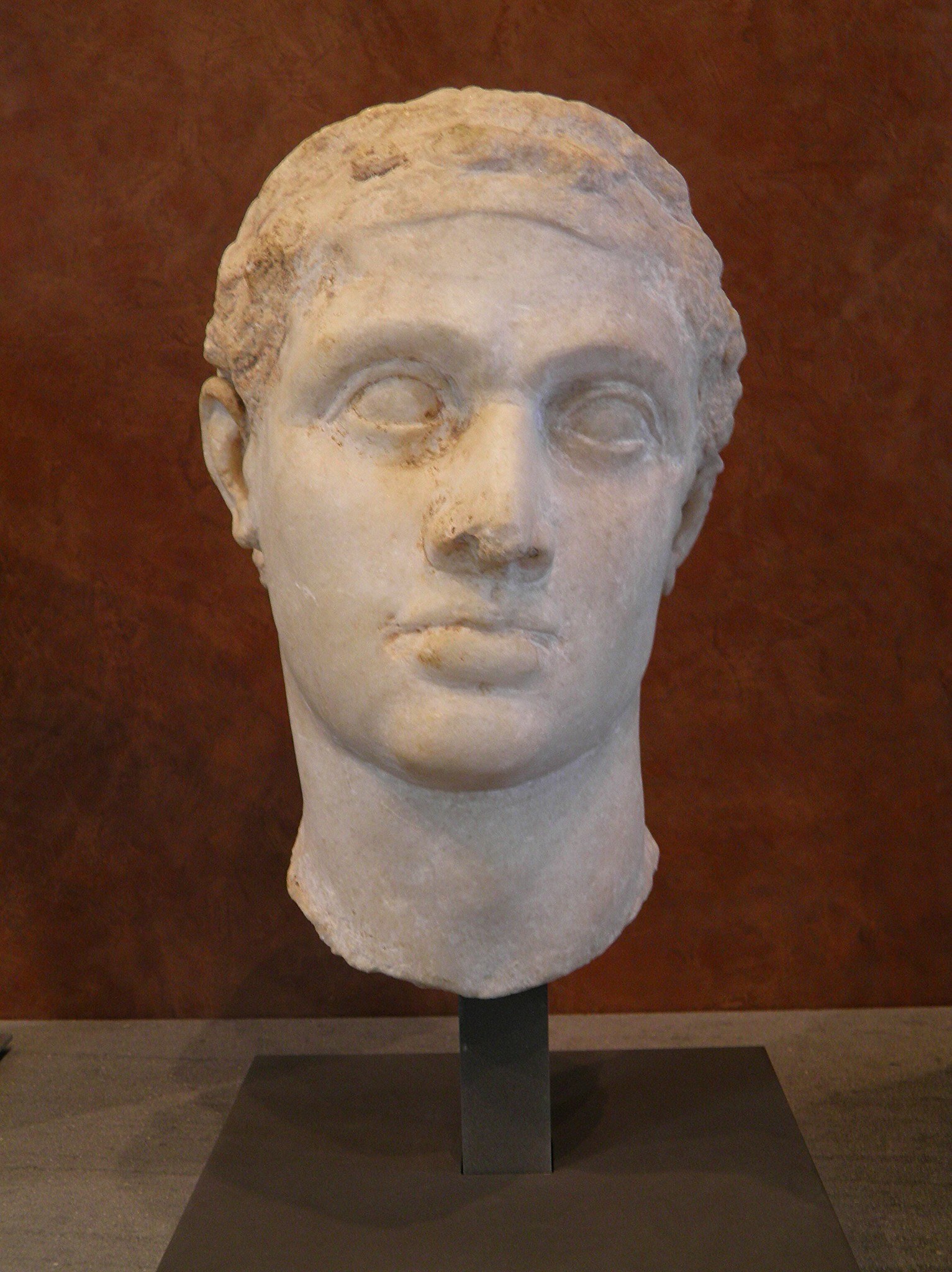
Ptolemy
During the Hellenistic period, a blending of cultures occurred. The Seleucid and Ptolemaic Dynasties both employed Greeks and Macedonians as soldiers and bureaucrats in their empires. Alexander the Great and subsequent Hellenistic kings founded new Greek cities in the former Persian Empire for these Greek and Macedonian colonists. These cities included the institutions of the Greek cities of their homeland - temples to Greek gods, theaters, agoras, and gymnasiums. Even in what is today Afghanistan, archaeologists have uncovered at the site of Ai Khanum the remains of such a Hellenistic city.
Alexandria in Egypt was the capital city of the Ptolemaic kingdom and the largest Hellenistic city with a population that reached one million. In Alexandria, the Ptolemies founded the Museum, which they modeled on Aristotle's Lyceum, as a center for scientific research and literary studies. These same kings also patronized the Alexandrian Library, where they assembled the largest collection of books in the ancient world. Antioch, in what is today southeastern Turkey, was the largest city of the Seleucid Empire with a population of one-half million. In cities such as Alexandria and Antioch, the Greek speaking population interacted with the indigenous population.
Most Geek cities in this period were no longer independent city-states as they were under the control of one of the kingdoms. Consequently, many Greeks in these cities could no longer focus on politics and diplomacy, as in the days of Classical Greece. In this era Greeks often instead turned their attention to seeking personal happiness. New religions that promised happiness and eternal life emerged in this period. These new religions among the Greeks combined Greek and non-Greek elements. For example the worship of the Egyptian goddess Isis became common in many Hellenistic cities. Mithras was an Iranian sun god worshiped by the Medes, but in the second century BCE, Greeks in Hellenistic cities came to believe that this deity would lead them to eternal life. The followers of Mithras built special chapels that were decorated with symbols whose meaning still is disputed by modern scholars. Followers of Mithras were sworn to secrecy regarding the rituals or mysteries of this cult. Because of the emphasis on secret rituals, modern scholars refer to the worship of Isis and Mithras in this period as mystery religions. Another religion practiced in Hellenistic cities was Judaism, whose followers included Jews who had migrated to these cities and new converts. By the second century BC the Hebrew Bible was translated into Greek, whose Greek translation is called the Septuagint. Some Greeks preferred philosophy to religion as a means to achieve happiness. Hellenistic philosophy emphasized the search for internal peace and happiness. Stoicism for example, maintained that the universe was governed by divine reason (Logos) which determined the fate of all people. Happiness therefore resulted from learning how to cope with life and accepting one's fate, while avoiding extreme, negative emotions such as fear or anger. Epicureans, however maintained that the key to happiness was to avoid physical and mental pain, and to seek physical pleasure.
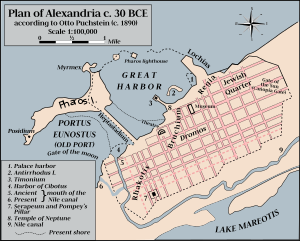
Ancient Alexandria
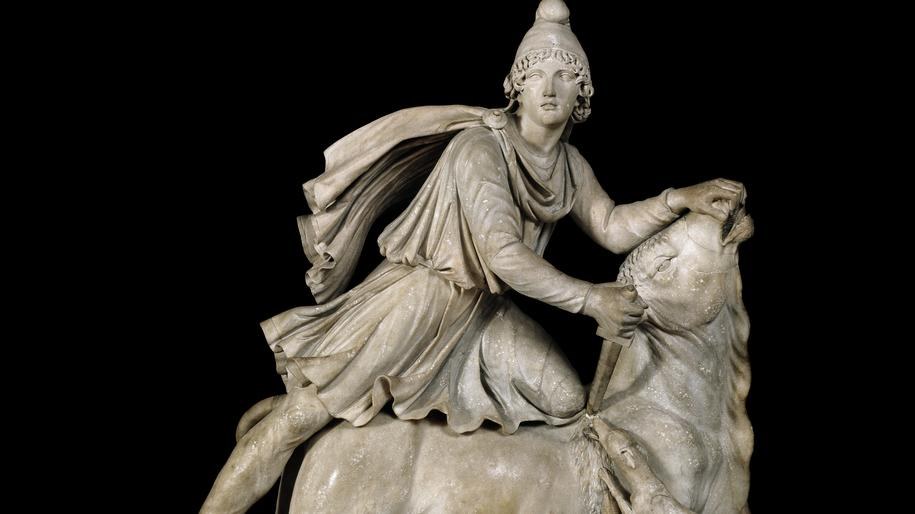
Mithras

.jpg/1024px-Map_of_the_Empire_of_Alexander_the_Great_(1893).jpg)


.jpg)