The High Middle Ages
Early World20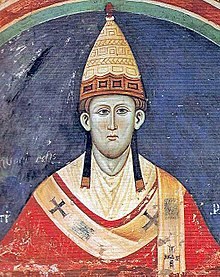
The wars and invasions of the ninth and tenth centuries marked the end of the Early Middle Ages (476 - 1050). which had begun with the Fall of the Western Roman Empire. After 1000 Western Europe entered the High Middle Ages (1050 -1300), which was a period of rapid economic growth. The population of Europe soared and new cities and towns arose. Within these towns and cities emerged a new class of people. These city folk were neither poor, rural peasants nor elite warrior aristocrats. They were the Middle Class or Bourgeois, who made their living from trade and industry. The High Middle Ages was also a period when the Church under the leadership of the Popes in Rome had its greatest influence in shaping culture and society. Historians have referred to the Middle Ages as the "Age of Faith" because of the power and influence of the Church in this period.
In this period the population grew very quickly. Ever since the eighth century, global temperatures had risen steadily, which allowed for longer growing seasons for crops and, consequently larger harvests, which could support an expanding population. As the population surged, European peasants cleared forests and drained swamps and wetlands to expand agricultural production. This same period also witnessed new technology that improved agricultural production to provide food for the expanding population and to lessen the outbreak of epidemic diseases that hindered population growth. Crop rotation became more widespread,which increased harvests. With the Three Field System, farmers devoted one-third of the land of a manor to wheat and barley, which was the staple food. Farmers left another third of the land fallow, where no crops were grown and animals left their droppings (manure), so that the soil could rest and would not be over farmed. Farmers devoted another third of their land to planting bean and lentils, which restored nitrogen to the soil. Ever year the farmers would then rotate the three fields, so that the third which previously had grown beans, now grew wheat, while the third that was fallow, now grew beans, and the third that had grown wheat, now lay fallow. In this same period farmers first used the wheelbarrow, the windmill, and the watermill, which had all been invented originally in China centuries earlier. These simple technologies saved people time and energy and therefore improved productivity in regard to transporting heavy burdens (the wheelbarrow) and grinding wheat into flour (watermill, windmill). For thousands of years the task of grinding grain into flour was the onerous task for women and girls where they would use a rock to grind the wheat by hand. With a windmill or watermill, a machine powered by wind or running water from a stream ground the wheat into flour. New technology at this time also enabled farmers to use horses instead of oxen as draft animals, and horses were more agile and smarter animals than oxen, which thereby improved productivity.The invention of horseshoes and the horse collar allowed horses to bear and pull heavy burdens such as a wagon and plow. The "Heavy Plow" was also used more and more in this period. This sturdy plow was especially useful in northern Europe since the soil there was often thick and damp. With this plow farmers could now plow and cultivate land which previously had not been utilized. Altogether this new technology increased land use and harvests, and people with a steady and nutritious diet were less likely to die from epidemic disease. One new invention in this period also reduced the spread of disease - soap. People in this period did not bathe regularly, but they did at least wash their hands, clothes, and cooking ware with soap, which did kill potentially deadly germs.
Feudalism also fostered internal peace and order in the absence of a strong central government, which enabled peasants to raise crops to support the rising population. Feudalism expanded in this period from France to new areas in Europe. The Norman invasion of England in 1066 introduced Feudalism to England, and civil wars and unrest in Germany in the 11th and 12th century resulted in the adoption of Feudalism there to fill the void with the collapse of the central government. Feudalism came to Hungary, Ireland, Scotland, Spain, and Portugal since local kings invited knights to fight in their armies, and these knights demanded Fiefs in return for their service. In lands where Feudalism existed, the earlier custom of a father dividing up his land equally among his sons ended. A Fief could not be divided up among children, so now the eldest son alone inherited the entire Fief. His younger brothers were left with nothing. Since these young men were raised as elite warriors and viewed manual labor as beneath them, they offered their services as knights to a Lord who could offer them a Fief. Their only alternative to being a knight was a career in the Church as a priest or monk.
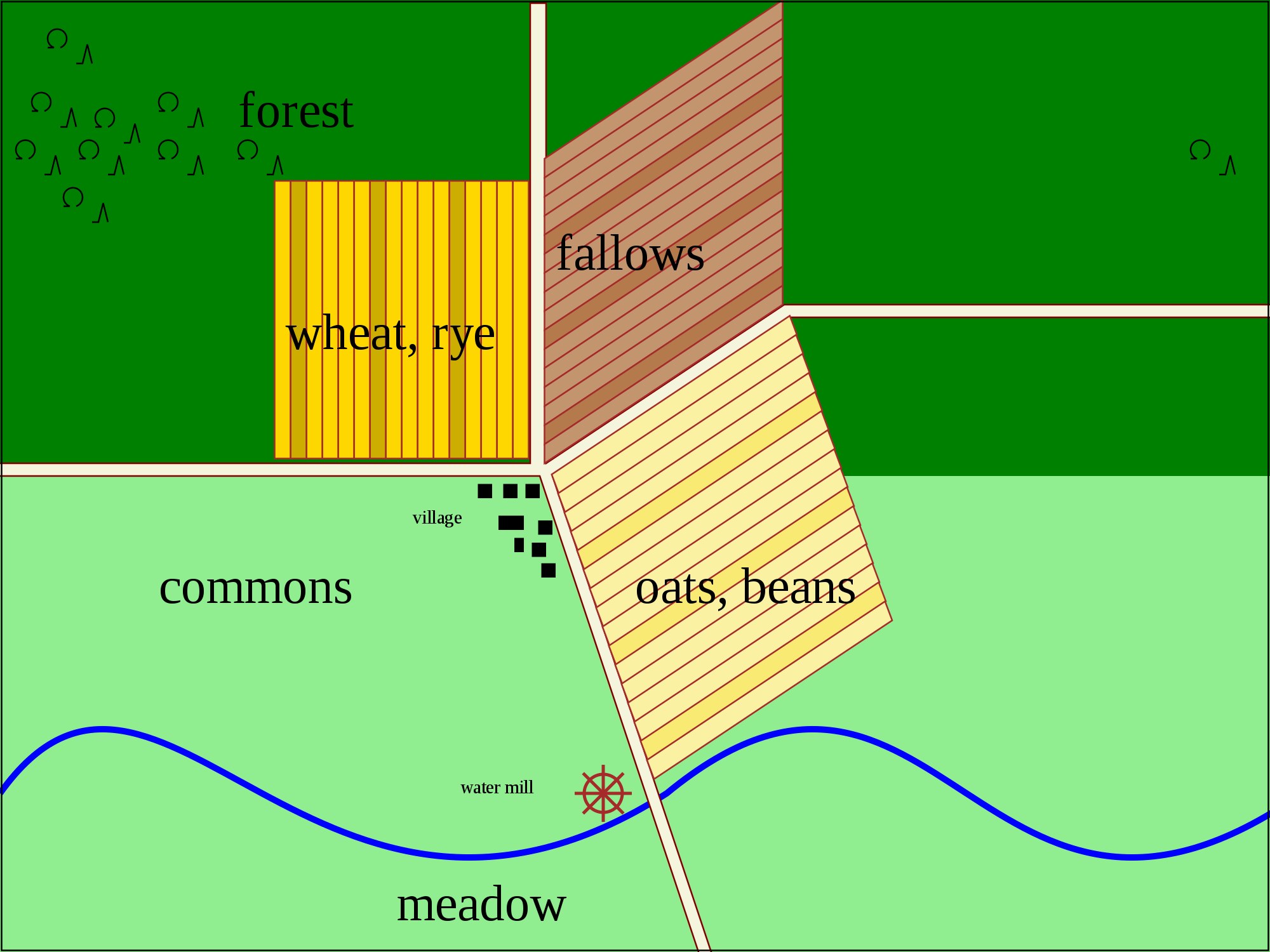
Three Field System
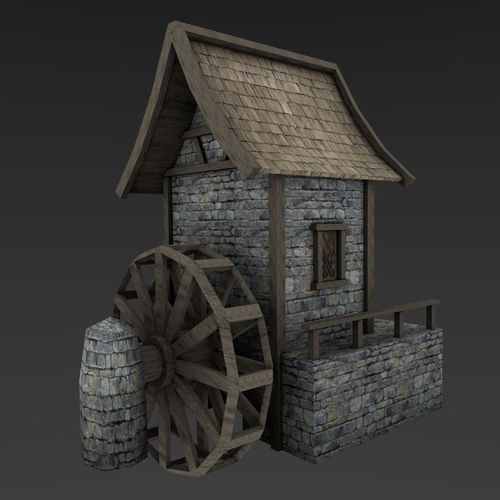
Water Mill
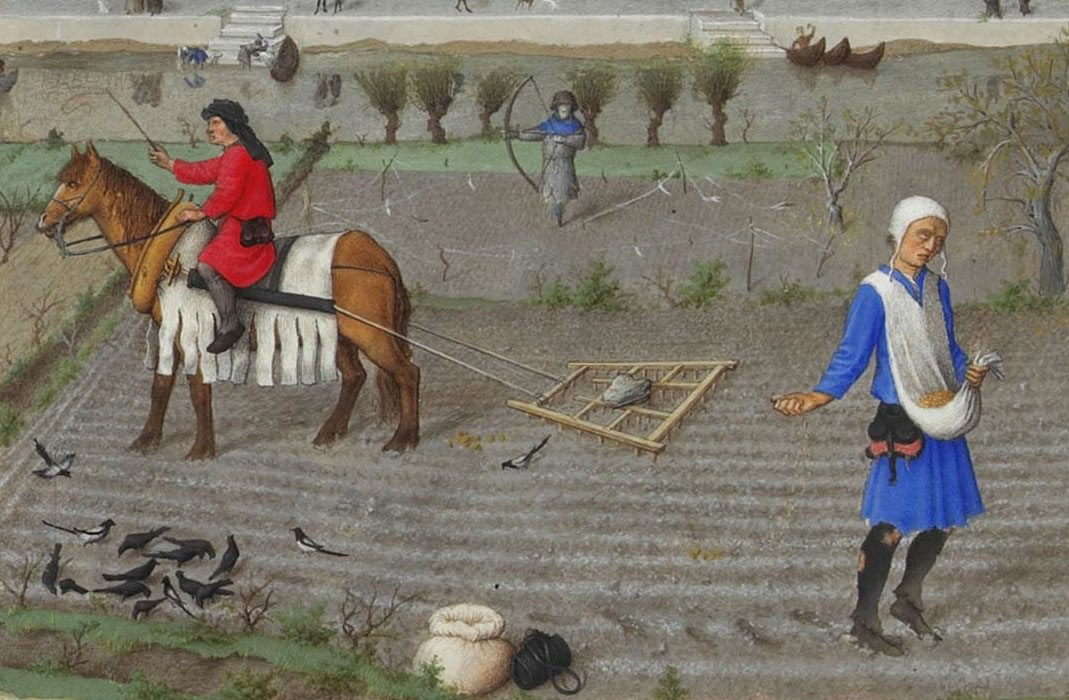
Horse Collar
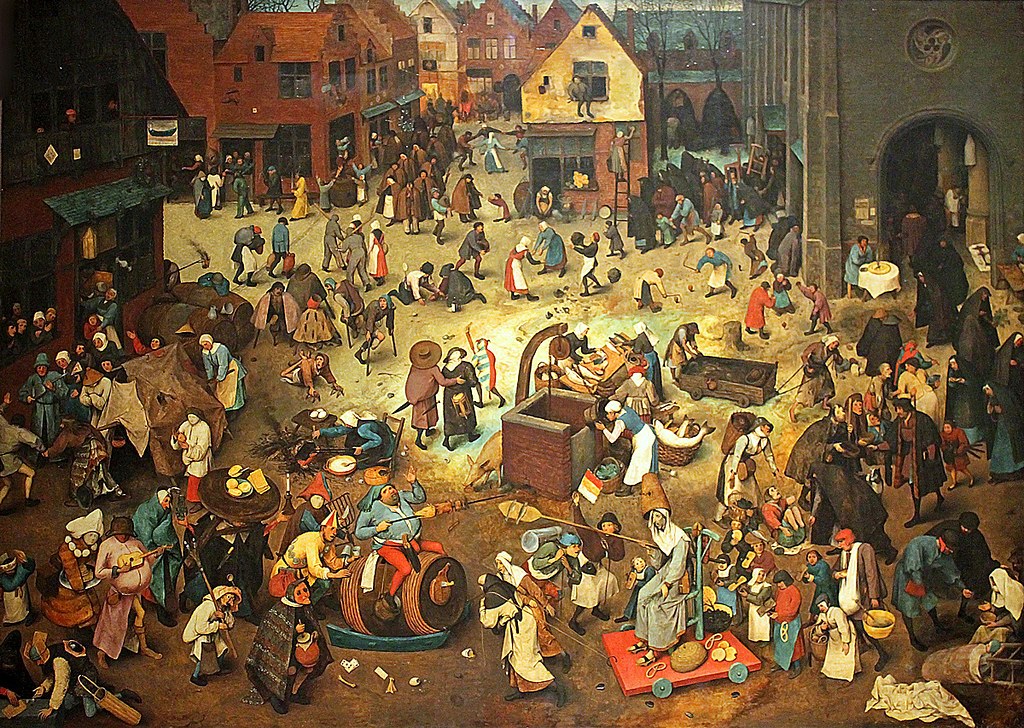
This rapid population growth fueled the expansion of towns and cities along with trade. In this period merchants from cities in Italy such as Venice, Genoa, and Pisa opened up new trade routes with eastern Mediterranean ports controlled by the Byzantine Empire and Muslim states in search of luxury goods such as silks and spices. Italian merchants then traded these goods for woolen fabrics from northern Europe which were in demand in the east. Italian merchants grew wealthy as middlemen in this trade. European merchants were able to travel and trade more easily in the Mediterranean, as Muslims states were in retreat. Roger Guiscard was a Norman knight whose armies invaded and conquered the Emirate of Sicily in 1071. Roger then became the king of Sicily. Meanwhile, the Christians who had fled into the Pyrenees Mountains after the Arab conquest of Spain, were now on the offensive. The kings of Portugal, Castile, and Aragon recruited knights from across Europe, but from France in particular, to wage war against the Arabs and Moors and expand their kingdoms.
As trade expanded across Europe, dukes and counts saw an opportunity to enrich themselves. In growing towns on a busy trade routes, local nobles granted these towns charters in exchange for a negotiated sum of gold or other form of payment. A town with such a charter became a free commune. The citizens of the town became free men and were no longer required to perform labor services as serfs. Moreover, it was custom across Europe that a serf who moved to a commune and lived there for a year, earned his freedom and became a citizen of the town. These towns also enjoyed self-government. The free residents of these towns constituted the emerging middle class in Europe.
In these towns the residents made a living as merchants and artisans. The political. social, and economic life of these towns revolved around the guilds. Merchants and artisans were organized into guilds based on the commodity that they traded or the finished product that they manufactured. For example, the cloth merchants would be one guild, and the weavers, who wove the cloth would be a different guild. Guilds provided a system of education for the townspeople and guaranteed quality work. Young boys would become apprentices and learn a trade. Teenagers and young men who had learned a trade became journeyman, who worked for wages for a master. Only masters were members of the guild and could operate a workshop or business. These members of the guild determined which journeymen could join the guild as new members. In the craft guilds, a journeyman had to submit a masterpiece as an example of his work to the members of the guild to prove that he had mastered the skills of his trade and was worthy to join the guild. Guilds also provided members with a form of life insurance since guilds looked after the widows and children of members who passed away. Merchants and artisans largely relied on family members, both men and women, to run and operate their business operations and workshops. In the political life of these towns, guilds also played a key role. In many communes, each guild in town elected a representative to sit on the town council that governed the community.
Over the course of the High Middle Ages towns in England, France, and Spain became subject to the royal laws of local monarchs. In Germany and Italy, however, many large cities became independent city -states. In northern Italy the cities organized the Lombard League of cities in the 12th and 13th century to wage war against Holy Roman Emperors, Frederick I and Frederick II, who threatened their autonomy. In northern Germany, the great trading cities that dominated the trade of the Baltic and North Seas organized the Hanseatic League of these cities in the 13th century to protect and promote trade in the region.
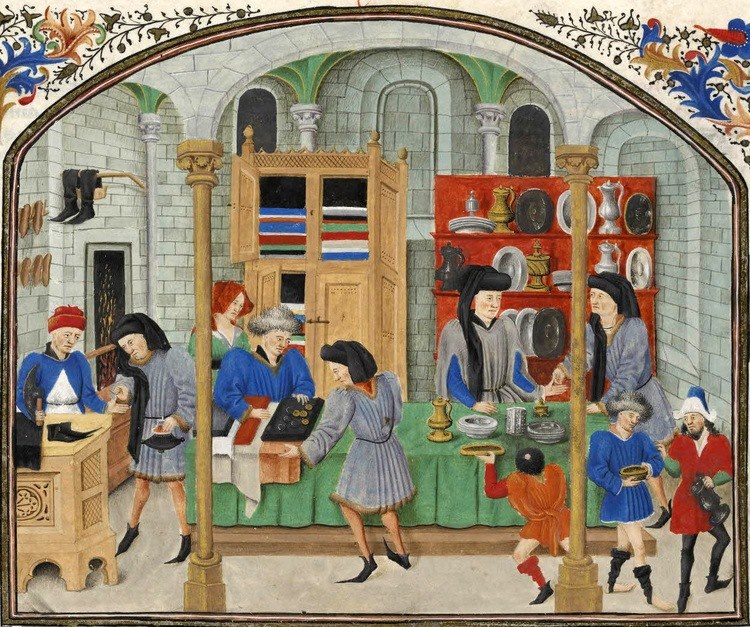
Medieval Merchants
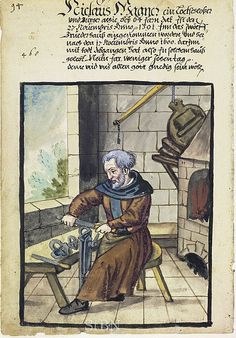
Medieval Artisan
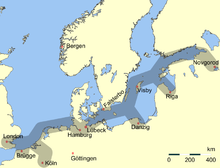
The Hanseatic League
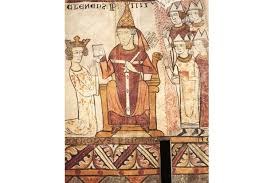
Beginning in the mid-11th century, the Catholic Church in Western Europe transformed from a loose association of churches into a highly centralized, bureaucratic, and hierarchical international organization under the leadership of the Popes in Rome, whose power was in theory absolute since the Pope was the Vicar of Christ or God's representative in earth. The decrees of the Pope were the words of God himself. Historians refer to this transformation as the Papal Reform Movement. This movement had it origins in the emergence of new religious ideas among the general population in Western Europe by the ninth and tenth centuries. The Church owned vast amount of land and other forms of wealth since pious men and women had dedicated their wealth to the Church. Laymen (people who were not ordained clergy) were expected to give a tithe (10%) of their income every year to support the Church. The Church's wealth attracted the attention of powerful men and their families who wanted to appropriate this wealth for themselves. Such men would pull strings and engage in bribery to become Bishops and Abbots. This common practice was known as Simony. The Christian men and women of Europe, however, feared that this practice was a threat to their immortal souls. By the ninth and tenth century, a common belief had arisen that the souls of Christians went to a place of purification after death known as Purgatory, so that all the sins committed during one's life were cleansed before entering into Heaven. Purgatory was a separate place from Hell. No soul could ever escape eternal punishment in Hell. Purgatory was also imagined as a place of terrible suffering and pain. However people also believed that the prayers to God by holy and pious priests and monks had the power to release suffering souls from the horrors of Purgatory, so that they could enter Heaven. What concerned the Christian people of Europe was the fear that corrupt priests and monks, who had acquired their positions through Simony, were incapable of offering effective prayers for these souls. In 910 William, the Duke of Aquitaine, founded the monastery at Cluny in France. In the founding charter of this monastery. William insisted that only the monks of the monastery could elect the Abbot, who would be responsible to the Pope alone. He wanted to make sure that no layperson could ever become the Abbot through Simony, so that the prayers of the holy monks for his soul in Purgatory would remain effective. William reportedly was a heavy drinker and womanizer, so he imagined that he would need a long stay in Purgatory to be cleansed of his sins.The foundation of Cluny inspired a Cluniac Reform Movement across Western Europe in the tenth century as many monasteries pledged that their Abbots would be duly elected by the monks alone, so that these monks could dedicate their time to prayers for the dead.
The Papal Reform Movement began when the Holy Roman Emperor Henry III (R. 1046 - 1056) appointed Leo IX (1049-1054) to be Pope. Henry III, like many Christians at that time, wanted a pure and holy church, and Leo, a former Abbot of a German monastery, had a reputation as a holy man. Leo's former monastery had been inspired by the Cluniac Reform Movement, and Leo as Pope vowed to fight the practice of Simony. To assist him in this task, Leo created a council or Curia composed of the priests of the different churches in Rome. The members of the Curia were known as Cardinals. Leo appointed Cardinals to this council who shared his passion for reform and ending the practice of Simony. Leo and his fellow reformers also maintained that the Popes as the Bishops of Rome were the successors to the Apostle Peter, the first Bishop of Rome, and therefore the Head of the entire Church. When the Patriarch of Constantinople rejected this position, Leo excommunicated the Patriarch in 1054, resulting in the schism between the Roman Catholic Church and the Orthodox Churches.
The Cardinals appointed by Leo, maintained that the Pope and other Bishops should be elected by priests alone. They objected to the practice of the Roman Emperor as a laymen appointing the Pope or any Bishop. They saw this practice, known as Lay Investiture as a form of Simony. In 1056 Henry III died unexpectedly. His son Henry IV was just a boy, and the great nobles in Germany took advantage of the young emperor's youth and inexperience to assert their independence from the emperor. The Papal Curia saw this situation as an opportunity as well , and the Cardinals in the Curia in 1059 issued the Papal Election Decree that stated that future Popes could only be elected by the Cardinals of the Curia.In that same year, the Pope recognized Robert Guiscard as the Pope's Vassal for the fief of the Duchy of Apulia in southern Italy. Robert was a Norman knight who originally had been a mercenary for the Byzantine Empire in southern Italy. But he had rebelled against this empire and carved out his own domain in the region as the Duke of Apulia. He had agreed to become a Vassal of the Pope to legitimize his conquests (His younger brother, Roger, later conquered Sicily). The Papacy also benefited from this agreement, since the Pope could call on Robert as his Feudal Lord if the Pope required military assistance. This assistance would be critical in the coming struggle between the Popes and the Holy Roman Empire.
The Holy Roman Emperor Henry IV when he became an adult, desired to restore power to the central, imperial government, and he began appointing Bishops to the churches of the empire, so that he could draw much needed revenue from the churches for his government. The Pope Gregory VII, whom Leo had appointed Cardinal years before, strongly opposed Lay Investiture and in 1076 he forbid Henry from appointing bishops. When Henry refused to back down, Gregory excommunicated Henry from the Church, which had the effect of releasing Henry's subjects from their loyalty to him. Facing widespread revolts, Henry in 1077 traveled to Canossa in northern Italy where Pope Gregory was visiting friends, and begged for forgiveness and the lifting of his excommunication from the Church. Gregory relented and forgave Henry. Henry's penitence was apparently insincere since he continued to appoint Bishops in Germany. When Gregory excommunicated Henry a second time, Henry in 1083 traveled to Italy again, but this time with his army with the intention of deposing Gregory. Gregory however called on his vassal, Robert Guiscard to defend Rome from Henry's army. When Henry learned that Robert's army was defending Rome, Henry withdrew from Italy. Ironically, Robert afterwards rewarded his Norman knights by allowing them to plunder the city of Rome. The struggle between the Pope and the emperor continued during the reign of Henry V, the son of Henry IV, until Henry V and the Pope reached a settlement known as the Concordat of Worms in 1122. Under this agreement, the emperor could not appoint Bishops, but he could be present at an election of a Bishop by the local priests, and he could decide the winner, if the priests were unable to reach a consensus on a candidate.
The Concordat of Worms was a victory for Papal Reform Movement's efforts to secure the independence of the Catholic Church from lay interference. In the 12th century the Church also insisted that all clergy (monks and priests) were not subject to the laws of secular courts. Only Ecclesiastical Courts of the bishops had jurisdiction over the clergy. The Church developed its own set of laws to govern itself and these courts. This body of law was known as Canon Law. All these laws were in Latin, which was the written language of the Church even though this language was no longer spoken. The Roman laws of the Justinian Code shaped and influenced Canon Law. For example, under the Dominate in Roman law, the emperor was all powerful and an autocrat. Under Canon Law, the Pope's power was similarly absolute
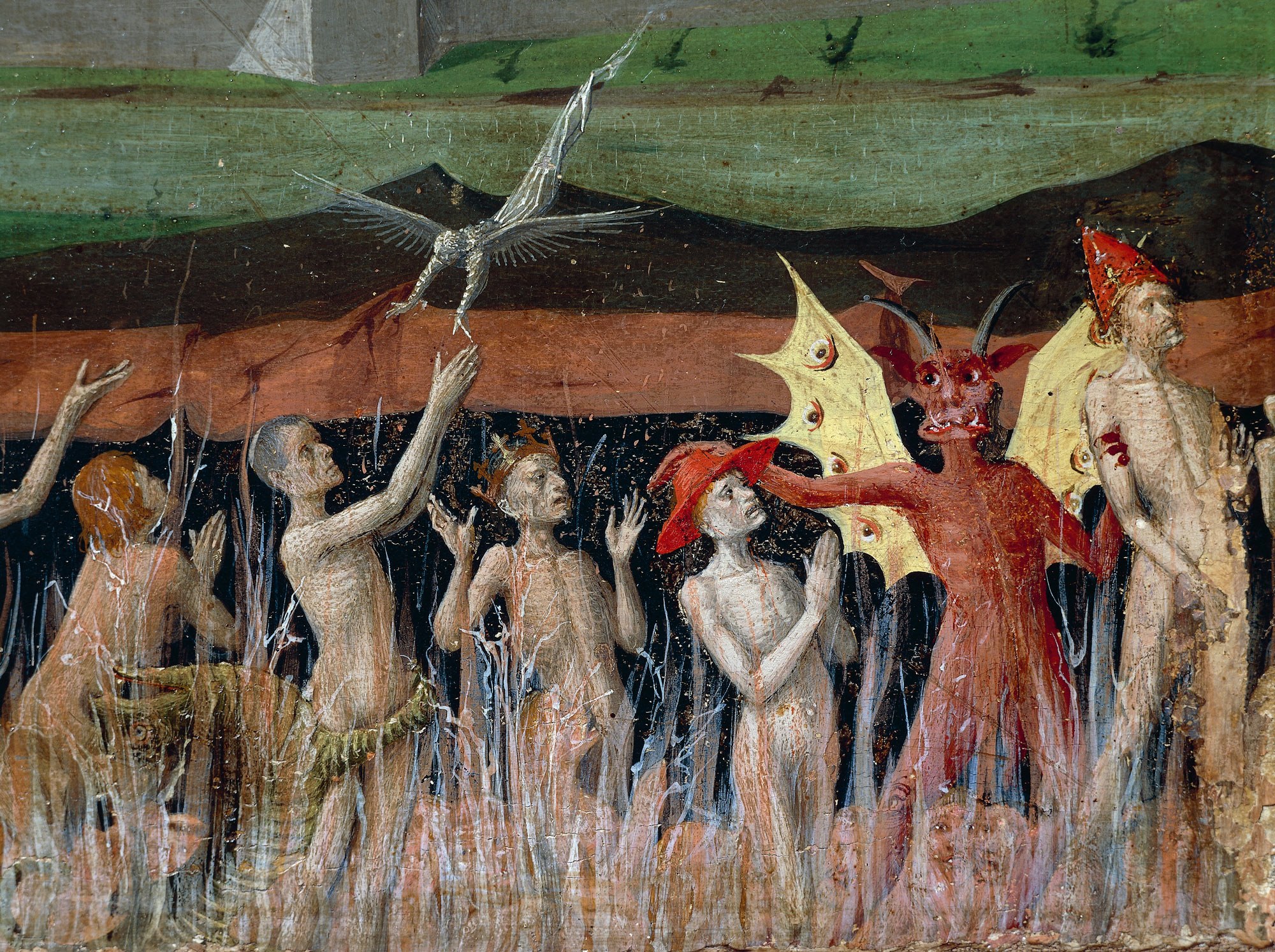
Medieval depiction of Purgatory
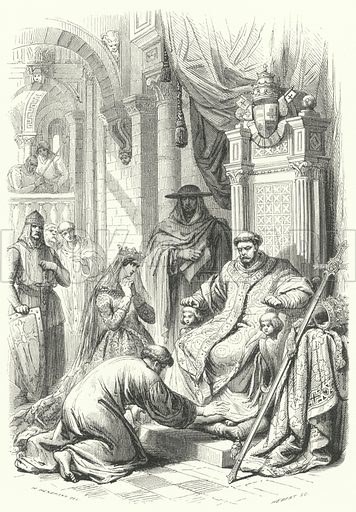
Henry IV begging the Pope for forgiveness
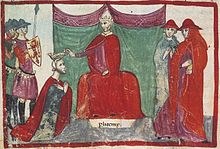
Robert Guiscard becoming the Vassal of the Pope.
The authority and prestige of the Papacy peaked during the Papacy of Innocent III (1198 - 1216). He was from a noble Italian family who rose of the church hierarchy ( Priest-Bishop- Archbishop-Cardinal - Pope) due to his expertise in Canon Law. As Pope he presided over the influential Fourth Lateran Council (1215), which was an assembly of bishops. This council officially identified the Seven Sacraments, which were the rituals in which the clergy bestowed God's grace to the laymen. This council recognized marriage for the first time as one of these sacraments. The council also outlawed the ancient custom of trial by combat as a way to settle legal disputes.
Innocent III at this council and as Pope maintained that the Pope as the leader of the Church must see to it that all Christians obey God's laws and commandments. He was not afraid to demand that kings obey these laws and recognize the moral authority of the Church. When the King of France, Philip II, set aside his wife to marry another woman, Innocent III forced the king to reconcile with his first wife under threat of excommunication. When King John of England attempted to place his own candidate as Archbishop of Canterbury, Innocent III excommunicated this king until John begged for forgiveness and agreed to become the Vassal of the Pope,making the kingdom of England a fiefdom of the Papacy.
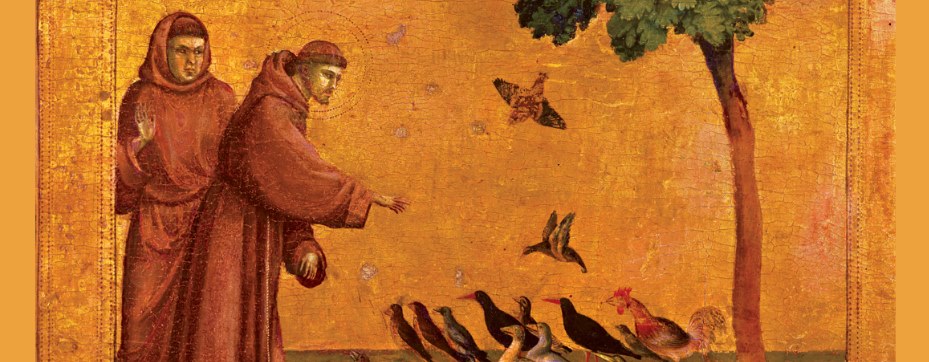
As Pope Innocent III also recognized the need for constant reform of the Church, so that the Church would remain true to its mission of preaching the Gospel. Previous Popes in this period had maintained this mission as well. In the early 12th century, a French aristocrat named Bernard of Clairvaux (1090 -1153) began preaching in France, and he condemned the Church and clergy for too much devotion to wealth and luxury. With the approval of the Pope, Bernard founded a new order of monasticism known as the Cistercian Order. Monks in this new order dedicated themselves to a life of hard labor and prayer. Cistercian Monasteries were often founded in very isolated areas, such as amid high mountains and swamps, so monks would not be tempted by worldly ways. In the days of Innocent III, two preachers, Francis of Assisi, an Italian, and Dominic a Spaniard, gave up their wealth and traveled from town to town, preaching the Gospel, depending on hand outs from sympathetic strangers. With the blessing of Innocent III, these two preachers founded the Franciscan and Dominican Orders. Members of these two orders are known as Friars and own no private property. These religious orders and known as "mendicant orders" since Friars rely on charitable donations rather than owning land like monasteries. Their mission was teaching and preaching church doctrines. Friars often served as professors at Medieval Universities. Dominican Friars became known as the "Hounds of the Lord" since they searched, like hunting dogs, and preached to heretics, who rejected church teachings.
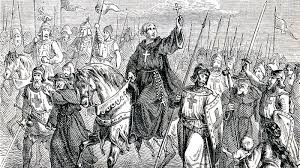
During the High Middle Ages a number of Popes called for Christian unity to free the Jerusalem and the Holy land from Muslim rule. Through the 13th century, armies of Christian Knights periodically trekked from Western Europe to the Levant on this quest. This passion for these Crusades was rooted in popular religious beliefs. To avoid spending time in Purgatory, a Christian could perform penance to be purified for past sins. One way to perform penance was to make a pilgrimage or journey to revere a relic. Relics could be the corpse or body parts of holy men and women. Relics could also be objects associated with the life of Christ, such a piece of the cross on which Jesus was crucified. A visit to such relics enabled the pilgrim to absorb the Holy Spirit emanating from these objects. The ultimate pilgrimage was to visit Jerusalem and the tomb of Christ, the site of Christ's resurrection. By the 11th century, Jerusalem was a dangerous place for Christian pilgrims with the recent conquest of the area by the Seljuk Turks. Pope Urban II in 1095 had just received a request from the Byzantine emperor for knights to fight the Turks. At a gathering at Clermont in France, the Pope put out a call for knights to fight the Turks and march on Jerusalem, so that Pilgrims would be free to visit the Holy city. The Pope declared in reference to the New Testament (Luke 14.27) that these knights must take up the cross and follow Christ. The Pope also issued an Indulgence for all knights that participated, which provided them with an immediate release from Purgatory upon their death. Pope Urban my have also made this announcement since he also a participant in a movement known as the Peace of God movement in the Church. This movement sought to transform knights from violent warriors into just protectors of weak widows and orphans. Since knights often engaged in pillaging and in private duels in their spare time, Urban and other Church leaders had been encouraging knights to dedicate holidays and Sundays instead to peace and prayer. Over time the concepts of Chivalry arose from this effort to promote the the ethics of Christianity among knights. The Crusades endowed the often brutal life of the knight with a holy cause. Ironically, the Crusades began with thousands of primarily commoners, not knights, converging on the cities of the Rhine River under the leadership of Walter the Penniless and Peter the Hermit. This "People's Crusade" in 1096 marched on Constantinople, but a Turkish army wiped it out just outside Constantinople.
The official First Crusade (1096 - 1099) was the only Crusade to achieve success largely due to the recent break-up of the Seljuk Turks' Empire. In 1099 the Crusaders captured Jerusalem. The Crusaders elected one of their own, Godfrey of Lorraine, as the king of Jerusalem. The rest of Palestine and Syria was divided up into fiefdoms and assigned to the vassals of this king. Although many Crusaders may have been motivated by their faith, they also saw the Crusades as a means to obtain lands if they did not have a fief of their own. To this day in this region, the ruins of these Crusaders' castles still dot the countryside. The conquest of this region opened up this area to European trade and stimulated the European economy. European nobles also granted charters to towns to raise revenue for the Crusades, which accelerated the growth of free communes in Europe. Also this conquest expanded European knowledge of Arabic advances in mathematics and science.
The remaining Crusades of the High Middle Ages were all spectacular failures. The Second Crusade (1144) was response to Muslim attacks on the Crusader Kingdom of Jerusalem. Louis VII, the king of France led the Crusaders on this expedition. Bernard of Clairvaux traveled widely across Western Europe to recruit knights for this crusade. Bernard also had helped organize a new monastic order of knights based in Jerusalem known as the Knights Templar, whose mission was to protect pilgrims in the Holy Land. This Second Crusade did little to prevent future Muslim attacks. In 1187 a Kurdish Sultan, Saladin, captured Jerusalem. Saladin was based in northern Iraq. With his Kurdish and Turkish troops Saladin carved out an empire that extended from northern Iraq, through Syria and Palestine to Egypt. The fall of Jerusalem to the Muslims prompted the Third Crusade (1188). Richard the Lion-Hearted, king of England, led the Crusaders. The armies of Saladin and Richard fought to a draw, and Richard's forces failed to re-capture Jerusalem. Innocent III , consequently called for the Fourth Crusade. The Italian city-state, Venice offered to transport the Crusaders by ship to the Holy Land, if the Crusaders destroyed the Christian city of Zara (in modern Croatia), as this city was a commercial rival of Venice. The Crusaders agreed to this deal and sacked Zara. During this campaign, the Crusaders became involved in a dispute over the Byzantine throne. In 1204 the Crusaders captured Constantinople, and decided to occupy the city and much of the Byzantine Empire. The Crusaders recognized their leader, Baldwin of Flanders as the "Latin Emperor of Constantinople " and divided up much of Greece into fiefdoms under the control of Baldwin's vassals. A Byzantine army re- captured Constantinople in 1261. The failure of this crusade even to reach the Holy Land resulted in the Fifth Crusade (1220). The Crusaders this time invaded Egypt since the successors of Saladin as Sultans, who ruled over Jerusalem, were based in Egypt. This Crusade also failed to re-capture Jerusalem. This Fifth Crusade was the last Crusade to draw knights from across Europe. In the mid-13th century King Louis IX of France led French armies against the Sultan of Egypt, but he too failed to re-capture Jerusalem. In 1291 the Sultan of Egypt captured Acre, the last city in Palestine still in Christian hands, all that remained of the Kingdom of Jerusalem. Even though the purpose of the Crusades had been to protect Christian pilgrims in Jerusalem, conditions for Christian pilgrims and Christians living in Syria and Palestine was much more dangerous after the Crusades than before them. Christians faced persecution as Muslims in the area viewed them with suspicion because of their association with the Crusaders. The Christian population in these areas declined dramatically in the centuries following the Crusades.
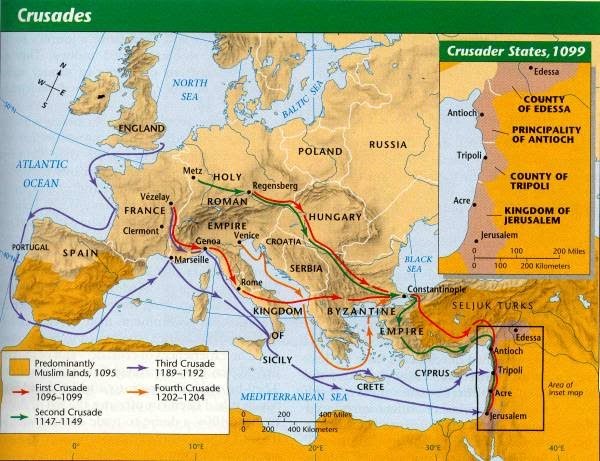
Map of the Crusades
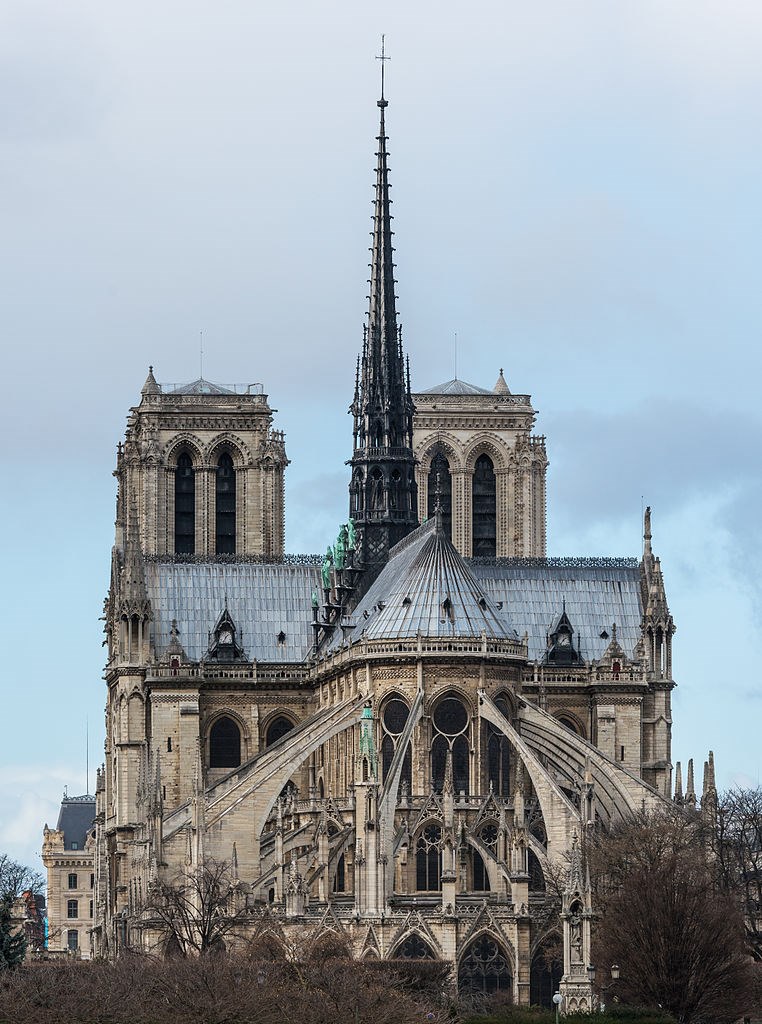
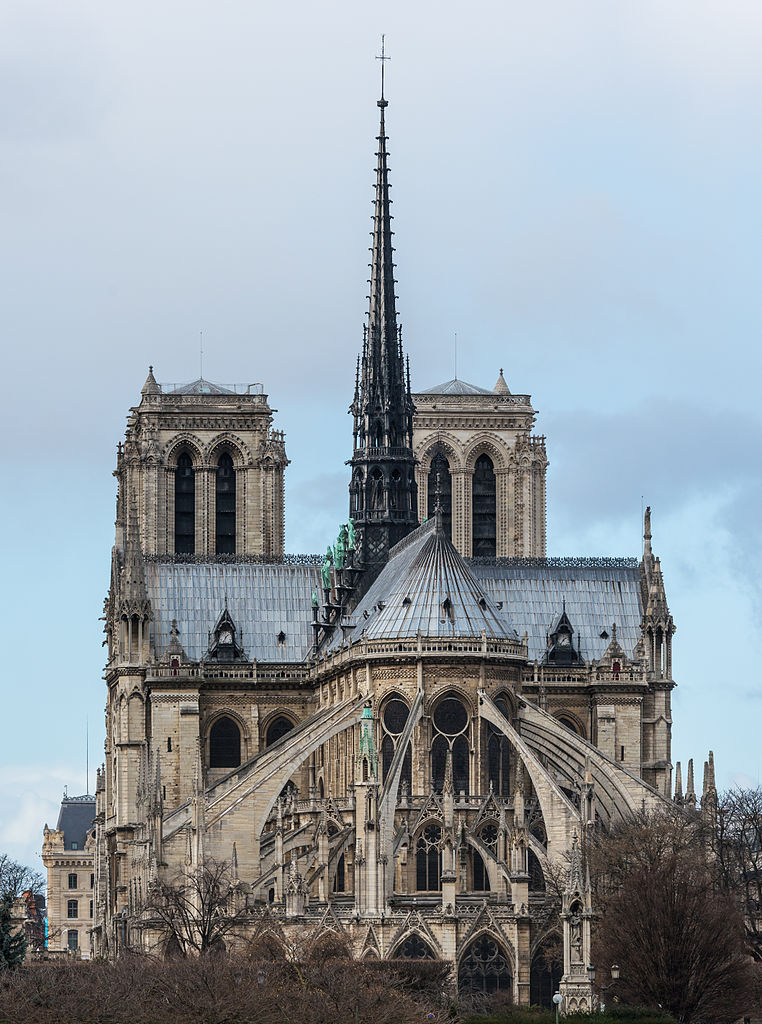
The High Middle Ages marked the zenith of Medieval art and literature. In this period the Church was the primary patron of the arts and education. Medieval cities, for example, invested time and treasure in constructing ornate cathedrals. The cathedral was usually located in the heart of the town, near the town market and public square where community events occurred. Members of the various guilds - carpenters, stone masons, glass workers all labored anonymously to construct these massive churches. The amount of stone that was used to construct these cathedrals in the High Middle Ages actually exceeds the amount of stone used to build the Great Pyramids of Egypt.
The Church also promoted learning and scholarship. The Church needed priests who could read and write Latin. As early as 1000 Fulbert the Bishop of Chartres in France, founded the first school to train priests at his cathedral. By 1100 the first universities had emerged at Paris in France and Oxford England. These universities were very similar to the Arabic universities that had arisen. Students at these universities studied Medicine, Canon law (instead of Sharia law), and Theology. The course of study often involved the examination of Arabic works in mathematics, medicine, and astronomy that had been translated into Latin. Scientific works were then a branch of theology since the study of the natural world was an examination of God's creation. Graduates of these universities pursued careers in the Church, but European rulers also recruited church scholars to serve as their administrators.
Medieval philosophers at these universities constructed a philosophical system known as Scholasticism, which sought to prove that the teachings of the Church based on Holy Scripture were in harmony with philosophy of the Greek philosopher, Aristotle. The most renowned of these scholastic philosophers was Thomas Aquinas (1250). He was an Italian Dominican friar, who taught at the University of Paris. In his work, Summa Theologica, Thomas Aquinas tried to demonstrate that the Christian faith and the reason of Greek philosophy were in harmony. For example, in his theory of Transubstantiation, he employed Aristotelian logic to explain how the bread and wine in the Christian sacrament of communion became the body and blood of Christ.