Eastern Europe in the Early Modern Period
Modern World8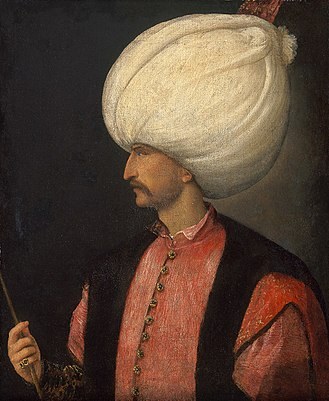
During the Early Modern period, powerful nation-states developed in Western Europe (i.e France, England, Spain), whereas in Eastern Europe multi-ethnic empires emerged which were united by their loyalty to their ruling dynasties. The Ottoman Empire, the Polish-Lithuanian kingdom, and the Russian Empire were states united by their loyalty to their monarch, the Ottoman Sultan, the Jagiellan king, and the Romanov Czar. Over the 16th and 17th centuries, the Polish-Lithuanian kingdom and the Ottoman Empire declined dramatically as European powers, while the Russian Empire arose as the largest European state. These Eastern European empires were also very different culturally than the states in Western and Central Europe. While Protestants and Roman Catholics waged wars of religion in the West, the population in the East with the notable exception of Poland were largely either Eastern Orthodox Christians or Muslims.
The Ottoman Empire expanded from its base in northwestern Anatolia (modern Turkey) during the 14th and 15th centuries. The armies of the Ottoman Sultans conquered the Balkans in southeastern Europe over an area that now consists of the modern European nations of Greece, North Macedonia, Albania, Bulgaria, Kosovo, Serbia, Montenegro, Croatia, and Romania. In the 16th century, this empire extended eastward into Syria and Egypt, and then advanced westward to include the North African Mediterranean coast as far west as Morocco.
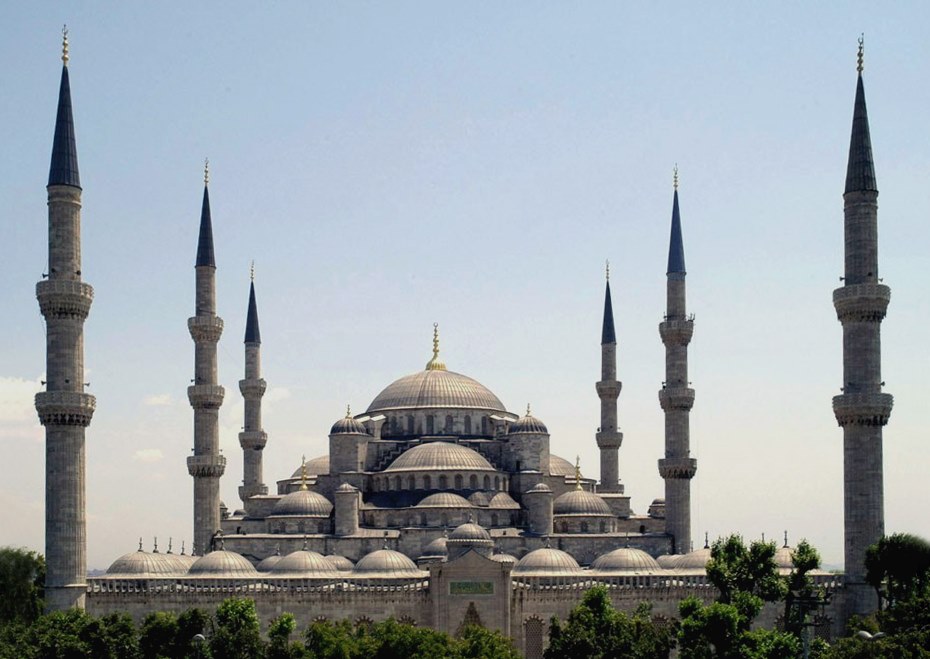
The success of Ottoman armies was due in part to the military leadership and reputation of the Ottoman Sultans. The Turks were originally a people from the steppes of Central Asia. Among the Turkish cultures of the steppe, the chieftain or Sultan was the member of the ruling family who possessed the most skills as a military leader and warrior. The early Ottoman Sultans were chosen in this fashion, and they often personally led their armies in battle. For example, the greatest of the these Ottoman Sultans, Suleiman the Lawgiver (r. 1521-1566) personally led the military campaign to conquer Hungary in 1566 near the end of his reign. In the early 16th century the Ottoman Empire acquired control of the three holy cities of Islam, Mecca, Medina, and Jerusalem. Moreover at this time, millions of Sunni Muslim Arabs of the Middle East became subject to Ottoman rule. Consequently, the Ottoman Sultans now claimed to be the Caliphs or "successors" to the Prophet Mohammed as the spiritual and political leaders of all Muslims. Many Muslims thus came to revere the Sultan. The Sultans also claimed to be the successors of the Roman Caesars after the conquest of Constantinople in 1453 by the Sultan Mehmed II, since Constantinople was the former capital of the Byzantine or Eastern Roman Empire. After their conquest of this city, Constantinople (Istanbul) became the new imperial capital of the Ottoman Empire.
Another factor in the early success of the Ottoman Empire was its military organization and efficient bureaucracy. As the Ottoman armies advanced into the Balkans in the 14th century, young Christian boys were seized and enslaved by the armies of the Sultan in a practice known as the Devshirme. These boys became the personal property of the Sultan and were trained and educated in the household of the Sultan. These boys as grown men formed the crack infantry units of the Ottoman army known as Janissaries. These soldiers were renowned for their loyalty to the Sultan, bravery in battle, and devotion to Islam. In the 15th century with the development of firearms and cannons, the Janissaries also became experts in this new technology. Sultans also recruited their key governments officials from the ranks of the Janissaries since the Sultans could count on such bureaucrats to remain loyal and be efficient administrators. For example, Pasha Hassan, the Ottoman governor of Bosnia in the late 16th century was a born to a Christian Serb family, but he was enslaved as a child and trained as a Janissary at the Sultan's court at Constantinople.
The Ottoman Empire also enjoyed military success due to the continual recruitment of Turkish warriors from the steppes of Central Asia to serve as cavalry. The Turkish tribes of the steppes took great pride in their skills as horsemen. Also young Turkish men from this region desired to serve Allah (the Muslim God) though Jihad or "holy war" to advance Allah's laws (Sharia) among non-Muslims. These Turkish "holy" warriors were known as Ghazis, and they joined the Ottoman army as the cavalry and were known in the Ottoman military as the Sipahis. As a reward for their military services to the Sultan, these Sipahis were rewarded with land grants in the Balkans. The Christians already living on these lands were enslaved and worked on these lands as the agricultural laborers or serfs for the Sipahis. The Sipahis, however, only owned this land and this labor and passed it on to their heirs on the condition that they and their heirs continue to serve the Sultan as warriors. In the Balkans, this Muslim elite ruled over the mass of Christian subjects who under Sharia law were known as the Dhimmi. As long as the Dhimmi paid a poll tax (jizyah), they were free to practice their Christian faith. Christians who converted to Islam, were equal to other Muslims and even enjoyed opportunities for advancement under the government of the Sultans. The great Ottoman admiral Heyreddin Barbarossa (1478 - 1546) was the son of an Albanian Christian, who converted to Islam and became a Sipahi, and a Greek Christian woman.
Th Ottoman Empire reached its zenith under the reign of the Sultan Suleiman the Lawgiver, who was known as Suleiman the Magnificent by his Christian contemporaries due to the vast wealth and power of his empire. During his reign. Ottoman armies conquered and occupied most of the Kingdom of Hungary and threatened to sack Vienna. Moreover, the Ottoman fleet under the command of Heyreddin Barbarossa dominated the Mediterranean Sea. After Suleiman's death, his empire began a slow decline.
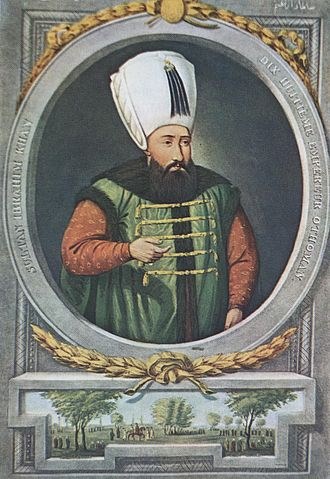
The quality of the Ottoman Sultans as leaders declined after Suleiman. The sons of Sultans grew up in the Seraglio or harem in Constantinople where the wives and concubines of the reigning Sultan conspired and schemed to advance their own sons as the heir to the throne. The mental health of children raised in such a poisoned environment was not high. When a new Sultan assumed the throne, he often ordered the execution of his half-brothers who might threaten his position. Such Sultans were often not fit to lead the government and spent more time entertaining themselves in the Seraglio than leading armies into battle. One of the last Sultans personally to lead armies into battle was Murad IV (r. 1623 - 1640) who commanded the Ottoman army in the capture of Baghdad in 1638 in modern Iraq. But Murad IV himself was a paranoid and brutal ruler, who murdered his half-brothers and ordered the execution of over 20,000 officials on charges of corruption. Upon his death, his ministers installed Murad's sole surviving half brother, Ibrahim I (r. 1640-1648) as Sultan. This Sultan was mentally unstable and spent most of his time with his concubines. When even the Janissaries revolted against this Sultan, his ministers imprisoned and murdered Ibrahim and replaced him with his six year old son Mehmed IV.
Since the Sultans of this period were often not able to govern effectively, the ministers of the Sultan instead oversaw the administration of the government. The Sultan's chief minister or Grand Vizier was usually the power behind the throne. In the 17th century the position of Grand Vizier was monopolized by the Köprülü family, who were ethnic Albanians, whose ancestors had converted to Islam. In this period, the Grand Vizier and other bureaucrats were often more focused on advancing their families' interests than serving the Sultan. The families of the Sipahis over time were more invested in managing their landed estates and securing positions in the Ottoman government than serving as warriors for the Sultan. Corruption in the Ottoman bureaucracy became endemic.
The Sipahis were not the only element of the Ottoman military to suffer a decline in quality. By the 17th century, the Janissaries were no longer recruited from Christian enslaved boys. Instead membership among the Janissaries became hereditary, with sons following their fathers as the infantry of the Sultan. Over time Janissaries often supplemented their incomes as soldiers by becoming artisans, merchants, and minor government officials in Constantinople. Consequently the Janissaries spent less time in military training and more time engaged in their personal business. Instead of professional crack infantry, the Janissaries degraded into a part time militia. Even though the quality of the Ottoman military declined, the empire could still mount a massive campaign such as the siege of Vienna in 1683. However, the loss of Hungary in the 1699 and the victory of the Austrian Hapsburg forces signaled the end of Ottoman military superiority.
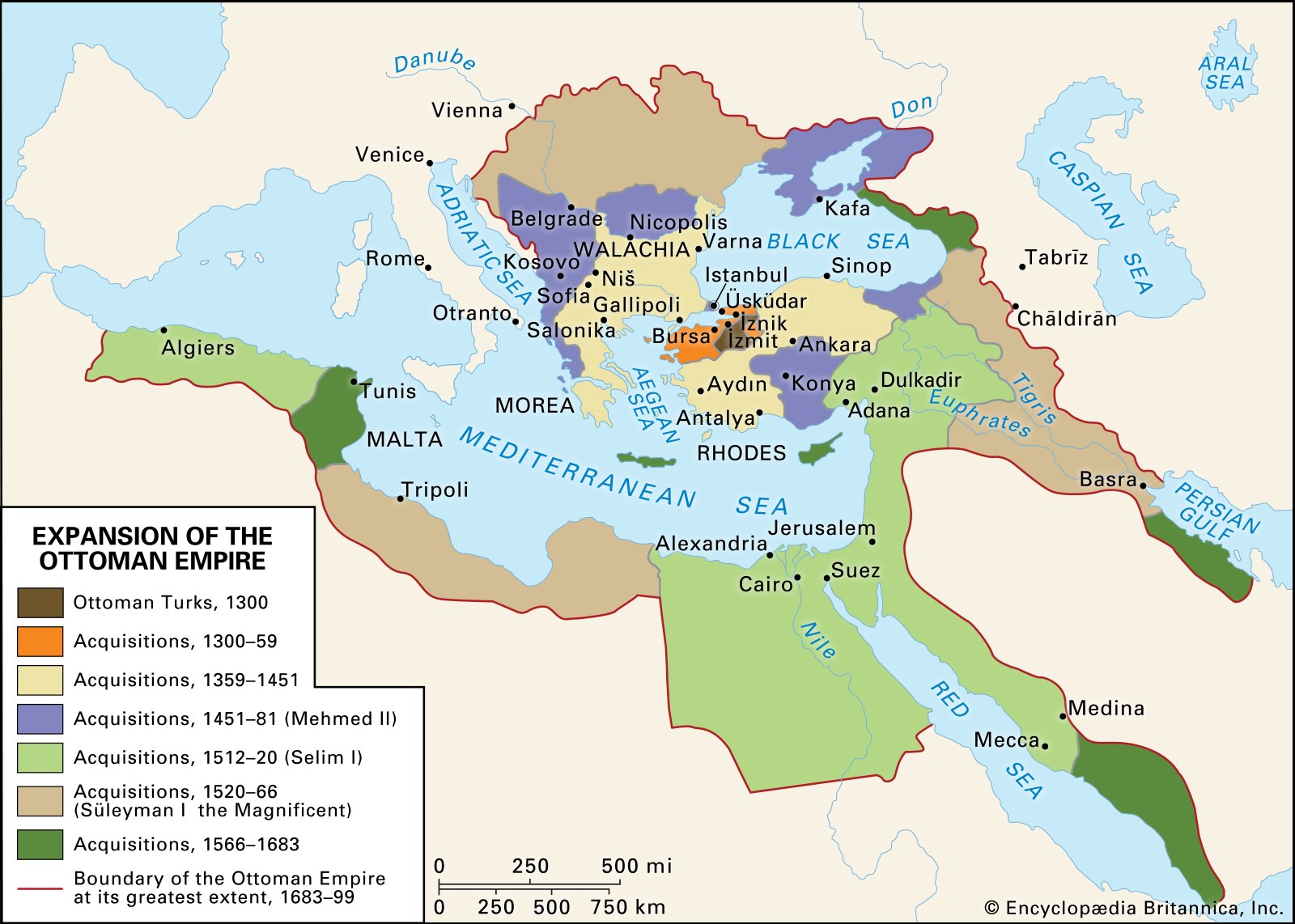
Expansion of the Ottoman Empire
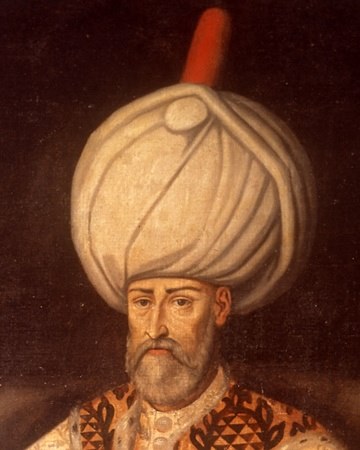
Suleiman the Magnificent
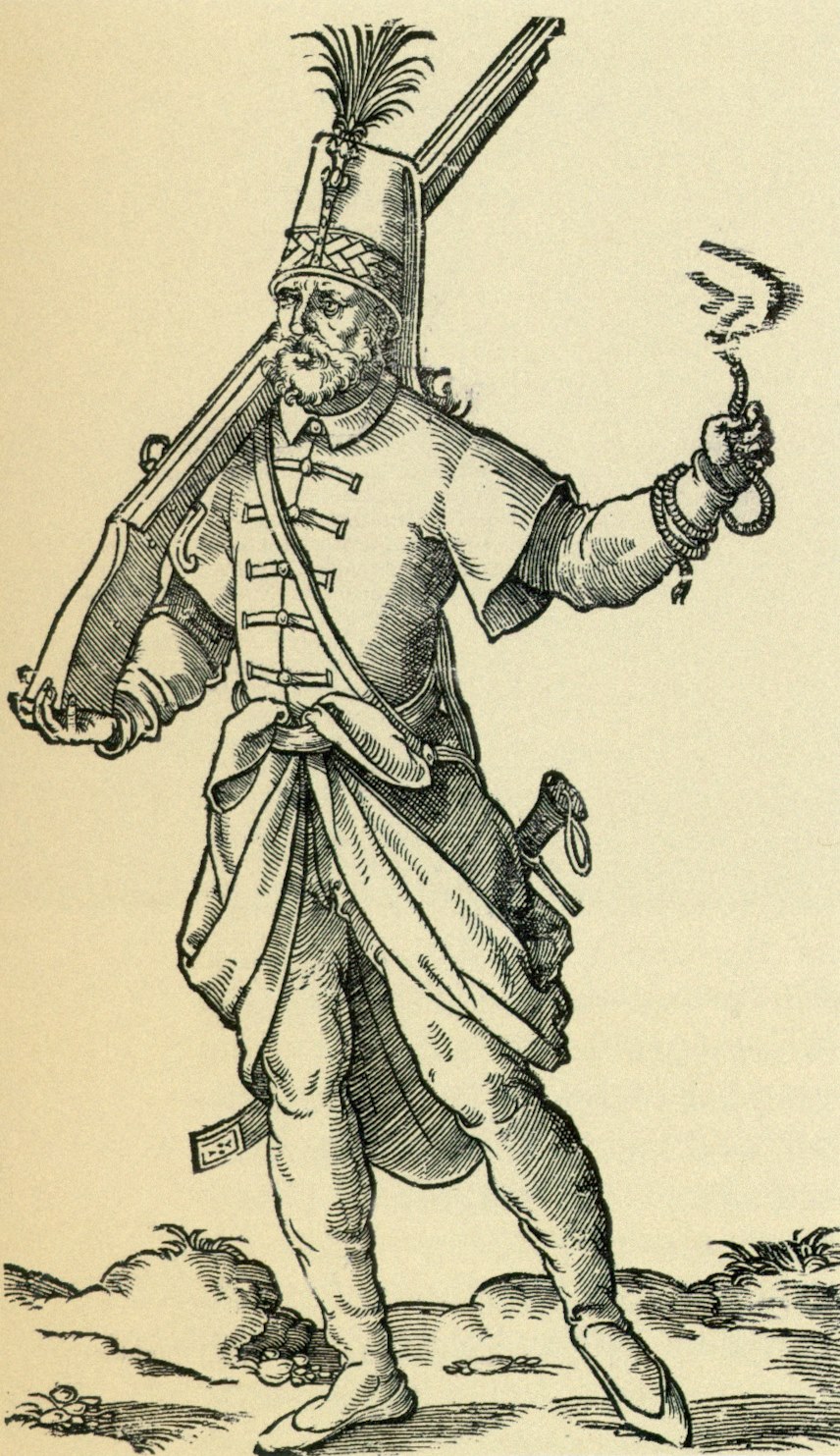
Janissary
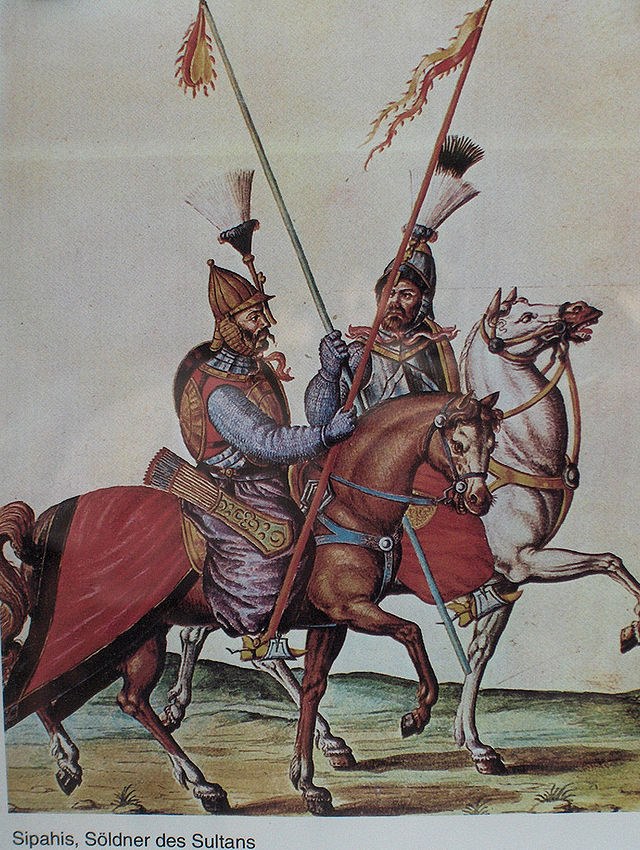
Sipahis
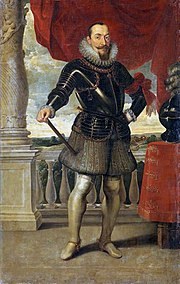
In the sixteenth century, the Polish-Lithuanian kingdom was the largest state in Europe and consisted of territory that today includes the modern nations of Poland, Estonia, Latvia, Lithuania, Belarus, and Ukraine. This extensive kingdom was created in 1382 when the Polish Sejm offered the throne of Poland to Jagiello, the Grand Duke of Lithuania, on the condition that he renounce his paganism and convert to the Roman Catholic faith. Jagiello accepted the offer and united Poland and Lithuania under his rule. For the next two centuries, the Polish Sejm elected members of his family, the Jagiellan Dynasty to be rulers of Poland.
The Poles regarded their state to be a republic or commonwealth and likened their state to the ancient Roman Republic since the Sejm elected their kings and had to approve all laws and taxes. The Sejm in Poland was an elected assembly that represented the landed nobility who were known collectively as the Szlachta and made up around 10% of the Polish population. Most of the Szlachta were small landowners, but the some of these nobles owned vast estates that encompassed entire towns and villages. These wealthy landowners employed serfs to work their lands as agricultural laborers. The majority of the Poles were serfs, who lived on these estates. In the 16th century these large landowners grew wealthy raising grain to export to the rising populations in the cities of Germany and the Netherlands. The Polish nobles' access to the cheap labor of their peasant serfs increased their profits. The Polish landed nobility preferred a weak royal government in the Polish- Lithuanian kingdom so that they could control the government at the local level and fully exploit the serf population.
The Polish-Lithuanian Kingdom in the sixteenth century possessed a very diverse population. The kingdom was one of the few places in Europe in the 16th century that tolerated multiple faiths, almost out of necessity. The Poles and Lithuanians were predominantly Roman Catholic, but Poland also possessed a large German population, who often inhabited Polish towns and cities such as Krakow and Warsaw. In the wake of the devastating Mongol invasion in the 13th century, Polish rulers had encouraged German artisans and merchants to settle in Poland. During the Reformation in the 16th century, many Germans in Poland converted to the Protestant faith and formed Lutheran and Reformed Churches. The Polish-Lithuanian Kingdom also included a large Jewish population. Jews from the Rhine River valley in Germany migrated to Poland in large numbers at the invitation of Polish rulers to replenish the Polish population after the Mongol invasion. These Jews spoke Yiddish, which was a language derived from Hebrew, Aramaic, and German. The Jews of Poland enjoyed full freedom of religion and had their very own courts of law to regulate their communities. The Polish-Lithuanian Kingdom also included Ruthenians (Ukrainians) who were Eastern Orthodox Christians. The Grand Duchy of Lithuania had conquered areas of what is today Belarus and Ukraine in the 14th century prior to the union of Poland and the Grand Duchy.
The Polish-Lithuanian reached its heights as a great European power during the reign of Sigismund II (1530 -1572). In 1568 Poland and Lithuanian formally united as a single kingdom with the Union of Lublin, which incorporated the landed nobility of Lithuania into the Polish Sejm. At the time, contemporaries believed that this union would strengthen the kingdom, but in the long run, this union made the government of the kingdom even weaker and more ineffective. According to the legal traditions of the Sejm, there had to be a full consensus of all members of the Sejm before any legislative action could take place. Consequently, a single dissenting member of the Sejm could effectively veto any action of the Sejm. When Lithuanian nobles entered the Sejm after 1568, it became even more difficult for any such consensus to take place as the members of the Sejm represented such diverse and distant regions with very different concerns. The ineffectiveness of the central government worked to the advantage of powerful nobles at the local level who became virtually independent rulers of their domains.
This weak, ineffective central government proved unable to protect the kingdom from attacks from neighboring states. Since Sigismund II had married a commoner, the Sejm refused to accept his children as candidates for the Polish throne, and the Jagiellan Dynasty ended. The Sejm then elected a series of kings, including even the future Henry III of France. In 1587 the Sejm elected Sigismund III Vasa (r. 1587 - 1632) to be king of Poland. He was already the king of Sweden, and he was a related to the Jagiellan Dynasty on his mother's side. Sigismund III was a devout Roman Catholic, which was a problem for him in Lutheran Sweden. In 1600 the Riksdag, the Swedish version of the Estates - General, deposed Sigismund III and replaced him with his uncle, Charles IX (the father of Gustav Adolph) as the new king of Sweden. Sigismund III spent much of the rest of his reign at war with Sweden in an unsuccessful effort to regain the throne in Sweden. He also attempted unsuccessfully to place one of sons on the Russian throne. Sigismund''s constant wars depleted the meager resources of the Polish crown. During the reign of Sigismund's son, John Casimir (r. 1648 - 1668), Poland was attacked by its neighbors, Sweden, Russia, and Prussia and forced to cede territory to these states. Moreover, Poland faced an uprising from the Ruthenian peasants that were led by the Cossacks. Due to the harsh living conditions of the serfs, many of these peasants had fled their landlords and migrated to the steppes, north of the Black Sea. These peasants became "Cossacks" ('free men") and made their living as herders and hunters. They were also expert horsemen. Cossacks were also devoted to their Eastern Orthodox faith. During the reign of John Casimir, the Cossacks encouraged the Ruthenian peasants to rise up against their Roman Catholic overlords.
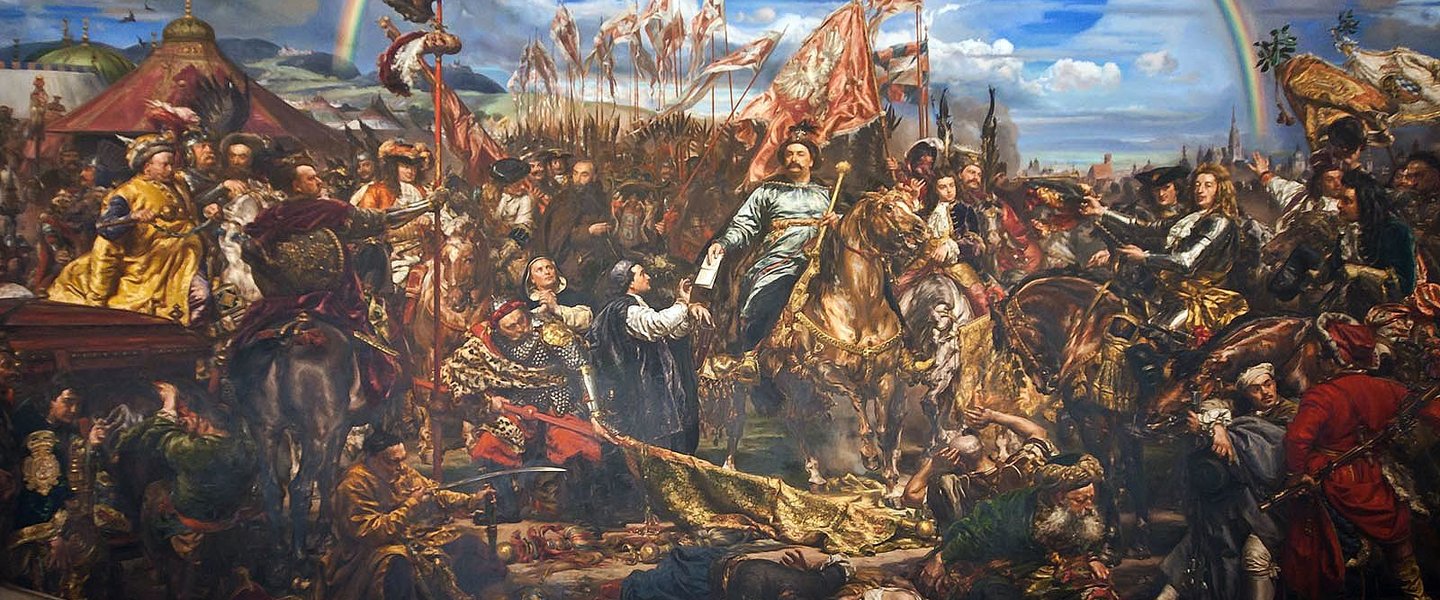
In 1674 the Sejm elected a powerful Polish noble, John Sobiesky as king. Poland faced a war against both the Cossacks and the Ottoman Empire, and Sobiesky had built a reputation as a military leader, who could lead Polish armies to victory over these foes. In 1683 Sobiesky and his Polish army lifted the siege of Vienna and drove back the Ottoman force. Upon his death in 1696, however, the Sejm rejected Sobiesky's son and heir, James, as the next king, and instead in 1697 elected Frederick Augustus, the Elector of Saxony, as the next king. The Polish nobles preferred this weak, ineffective foreign monarch since they valued their independence in their respective domains. In the 18th century Poland continued to shrink as its neighbors annexed its territory until finally in 1796 Poland disappeared as an independent country.
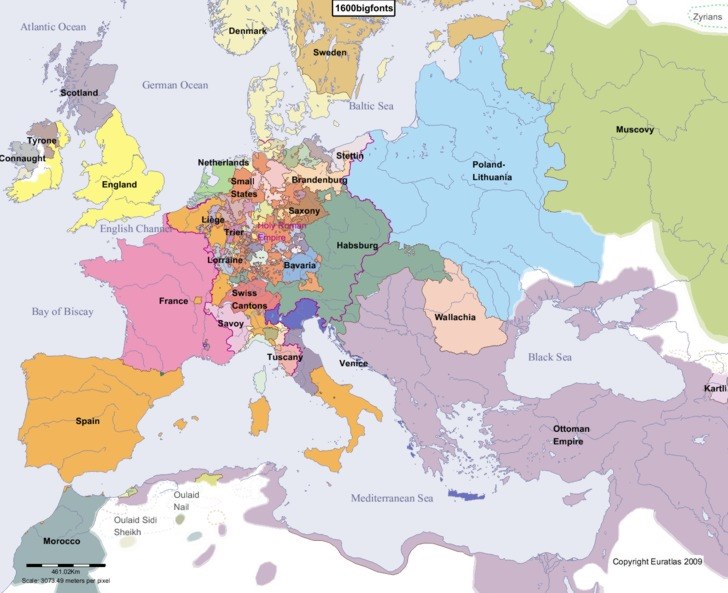
Map of Europe in 1600
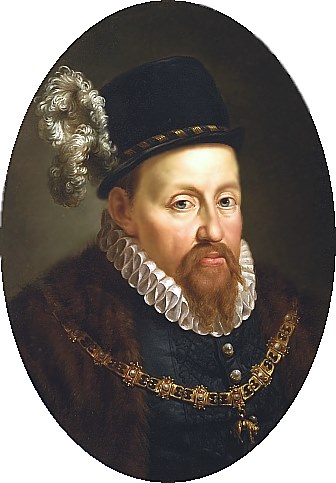
Sigismund II
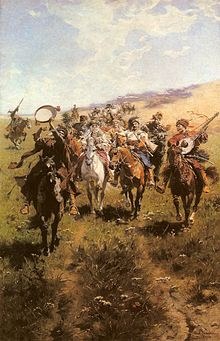
Cossacks
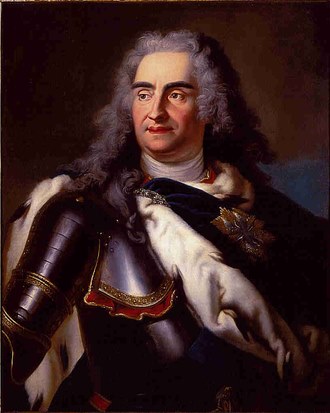
Frederick Augustus I
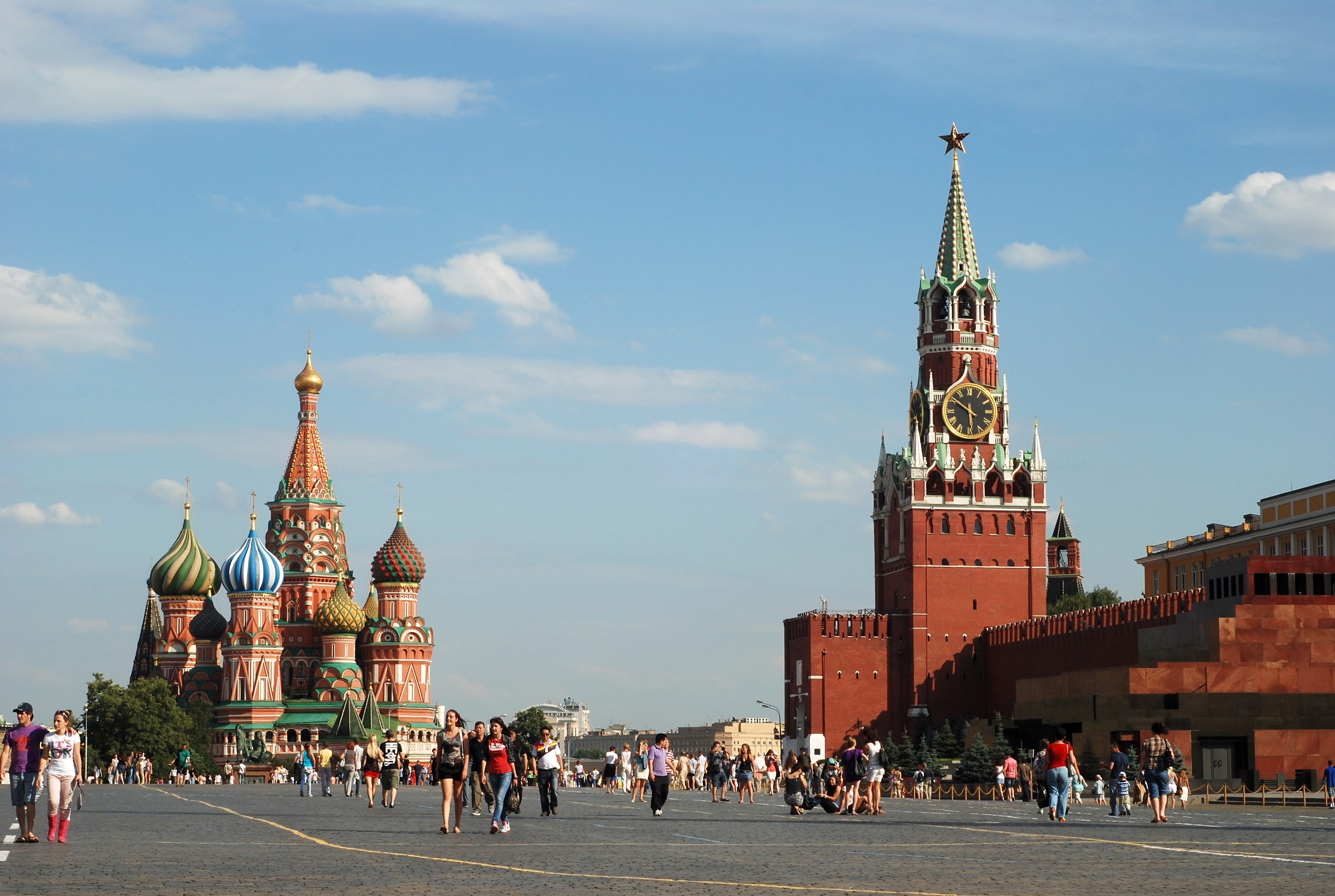
During the 16th and 17th centuries the principality of Muscovy (Moscow) on the margins of Europe emerged as a powerful, European empire. The eastern Slavic peoples, Russians, Belorussians, and Ukrainians were all Eastern Orthodox Christians. After the fall of Constantinople and the Byzantine Empire in 1453 to the Ottoman Empire, the prince of Moscow, Ivan III (r. 1462- 1505) claimed to be the legitimate successor to the "Roman" emperors of Byzantine Empire, as the ruler of largest Eastern Orthodox state, and he assumed the title of Czar (Caesar). As Czar in the Byzantine tradition, the emperor was both head of the state and spiritual leader of the Orthodox Church. Ivan III "the Great" also freed these eastern Slavs from the rule of the Mongol Khan of the Golden Horde and united the eastern Slavs under his rule. The Muslim Mongols and Tatars (a Turkish speaking people) of the Golden Horde had settled where the Volga River flows into the Caspian Sea. Under the leadership of their Khan (or "king"), the Mongols and Tatars had collected tribute from the these Christian Slavs since the 13th century. The Russians, Ukrainians , and Belorussians all were grateful to the princes of Muscovy for freeing them from the Mongol yoke, and they recognized these princes as their Czars.
Ivan IV "the Terrible"(r. 1533 - 1584) vastly expanded this empire, but at a terrible cost. Under his leadership his armies advanced eastward to the Volga River and conquered the small Tatar kingdoms (Khanates) along this river. Ivan III also established new settlements in Siberia and began the Russian empire's slow advance eastward to the Pacific Ocean. Seeking a port for his landlocked state, Ivan IV also waged war against Livonia (modern Estonia and Latvia) and the Kingdom of Poland-Lithuania in an unsuccessful effort to gain territory along the Baltic Sea. To finance these wars, Ivan paid his soldiers and officials by granting them lands along with the labor of the peasant serfs to perform the agricultural labor on these lands. These soldiers and officials were known as Boyars, and historians refers to the Boyars as a service nobility since the noble status and privileges of these Boyars derived from their service to the Czar. Ivan often recruited these Boyars from the ranks of commoners, such as merchants, artisans, and even peasants. During the reign of Ivan IV thousands of formally free peasants were enslaved as serfs and required to perform labor services without pay for these new Boyar landlords. Peasants often could not feed themselves or their families due to the demands of their Boyar masters. Many peasants fled their homes to live free as Cossacks in the steppes.
In addition to his expensive and costly wars, Ivan was also a paranoid and ruthless despot. Ivan was descended from the Princes of Moscow, but there were also Princes from other regions of his empire, who like Ivan IV, were all descended from Rurik, a Viking warlord of the ninth century. Ivan was very suspicious of these other Princes, whom he thought were scheming against him. Consequently Ivan IV established a special corps of highly trained and loyal soldiers known as the Strelsi, which he could use to intimidate and overpower his enemies. During Ivan's reign, thousands of Ivan's enemies, both real and imagined, were tortured and executed by the Strelsi.
The reign of Ivan IV set the stage for a period of civil war in the Russian Empire known as the "Time of Troubles" (1598 - 1613). Upon the death of Ivan IV, he was succeeded as Czar by his mentally ill son Fedor I (1584 - 1598). Ivan IV had killed his older, sane son, Ivan, in 1581 in a fit of anger. During the reign of Fedor, an ambitious Boyar, Boris Gudonov served as regent. When Fedor died in 1598 without any children, Boris Gudonov assumed the throne as the new Czar (r. 1598 - 1605). After Boris Gudonov became Czar, Russia suffered from a severe famine as Europe was experiencing the return of the Little Ice Age due to global climate change. Many peasants, who were already unhappy at becoming serfs, blamed this famine on God's wrath as Boris Gudonov was not the "true" Czar. Since the Czar was the spiritual leader of the Orthodox Church, these peasants believed that the Czar's authority to rule derived from God. These peasants therefore believed that the famine had resulted from God's disapproval of Boris Gudonov as Czar.
In 1604, a young man claimed to be Ivan IV's son, Dmitri, who had died while still a boy in 1591. This "False Dmitri" according to some reports was actually Polish and a former Roman Catholic monk. Thousands of peasants and Cossacks, however, recognized this man as Ivan's son and the "True" Czar. With the support of Cossack troops, this "False Dmitri, marched on Moscow to make good his claim to the throne. In 1605 the army of the "False Dmitri" captured Moscow and murdered Fedor II, who had succeeded his father, Boris Gudonov, as Czar after his sudden illness and death in 1605. The Boyars in Moscow, however, suspected that the new Czar, Dmitri was an impostor and an agent of the Polish- Lithuanian Kingdom. In 1606, these Boyars assassinated Dmitri and replaced him as Czar with a prominent Russian Prince, Vasili Shuisky (r. 1606 -1610).
The Cossacks and peasants, however, didn't recognize Vasili Shuisky as Czar, and instead supported a number of different pretenders to the throne, who also claimed to be Ivan's son Dmitri. In the face of these revolts, a group of Princes in 1610 forced the ineffective Vasili Shuisky to abdicate the throne and enter a monastery. Meanwhile both the Polish- Lithuanian Kingdom and Sweden sent armies to invade the empire to secure territory for their states while this empire was in chaos due to civil strife. In 1613, the leading Princes and Boyars, as well as representatives from the Cossacks and merchants, convened in an assembly known as the Zemsky Sobor to elect a new Czar. This assembly elected a young Boyar, Michael Romanov, as the new Czar. This election in 1613 effectively ended the civil war and the "Time of Troubles". The Romanov Dynasty would rule as Czars until 1917.
During the long reigns of Michael Romanov (r. 1613-1645) and his son Alexis (r. 1645 - 1676), the Russian Empire continued to expand eastward into Siberia and westward at the expense of the Polish - Lithuanian Kingdom. In 1667, Russia forced the Polish -Lithuanian Kingdom to cede much of Ukraine in the Treaty of Andrusovo. The Russian state established an effective bureaucracy to collect taxes and finance this military expansion. These Czars created this bureaucracy and military by granting lands to the Boyars in exchange for their services as soldiers and administrators. Consequently thousands of free peasants were enslaved and became serfs on the lands of these Boyars. Many of these unhappy serfs escaped a life of servitude and high taxes by fleeing their homeland and becoming Cossacks. In 1670 - 1671 a Cossack warlord, Stenka Razin, led a massive uprising of peasants and Cossacks, claiming that evil ministers of the Czar had deceived him and imposed heavy taxes and labor burdens on the people. Stenka Razin and his followers actually viewed themselves a loyal subjects of the Czar. In 1671 the armies of the Czar crushed this uprising and Stenka Razin was captured and executed. The heavy burden of labor services and taxes on the peasants also was a factor in a popular religious movement, whose followers were known as "Old Believers". In 1652 the Patriarch of Moscow, Nikon, with the support of the Czar reformed the Orthodox Church service or liturgy so that the practices of the Russian Orthodox Church during its church services were in accordance with the practices of other Orthodox Churches. However, many Orthodox Church members rejected these innovations and saw these changes as the work of Satan. These reforms along with the dramatic changes in Russian society with the growth of serfdom convinced many Russians that the current government was under Satan's control. The "Old Believers" broke away from the Russian Orthodox Church and formed separate churches that followed the old liturgy. These "Old Believers" faced persecution by the Russian state, but their churches survive to this day.
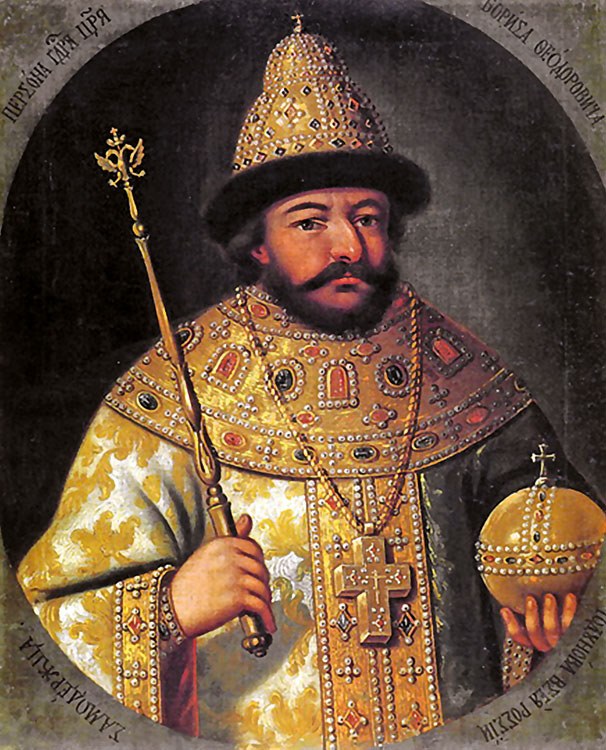
Boris Gudonov
The "False Dmitri"
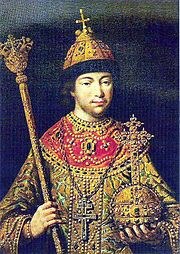
Michael Romanov
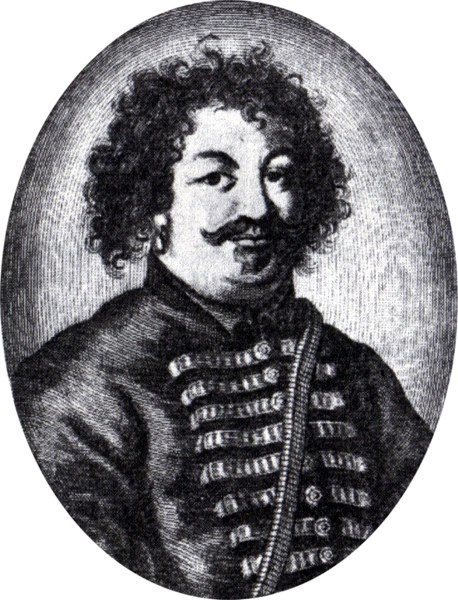
Stenka Razin