Rise of Prussia
Modern World9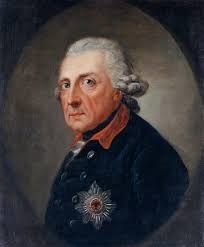
The 18th century not only witnessed the emergence of Russia as a major European power, but the kingdoms of Prussia and Great Britain also arose to prominence in this period. Prussia under the reign of Frederick II (1740 - 1786), also known as Frederick the Great, was at the center of wars that involved all the Great Powers of the day. Prussia emerged from these wars as equal in stature to the other Great Powers of continental Europe: France, Austria, and Russia. Prussia would play a instrumental role in the unification of Germany in the next century. Great Britain was also engaged in these wars and secured for itself a great overseas empire in North America and India by 1763. This century therefore marked the birth of the British Empire.
Prussia had its origins in the expansion of the Teutonic Knights in the Middle Ages. In the 13th century, the Teutonic Knights were a religious order of German knights and monks, who waged war against the pagan Prussians who lived in what is today northern Poland. The Prussians originally spoke a Baltic language that was related to the modern Lithuanian and Latvian languages. As the Teutonic Knights advanced eastwards, they converted the Prussians to Christianity. The Teutonic Knights also introduced German settlers to the region. Over time the German language replaced Prussian in this region. In 1525 the last Grand Master of the Teutonic Knights, Albert of Brandenburg , converted to the Lutheran faith. Albert promptly abolished the Teutonic Knights as a Roman Catholic religious order, seized its lands, and declared himself Duke of Prussia. As Duke of Prussia, he was the feudal vassal of the King of Poland/Lithuania.
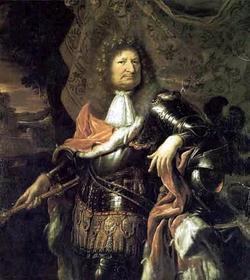
Albert of Brandenburg was a member of the Hohenzollern Dynasty, which had controlled the Margrave of Brandenburg in northeastern Germany since 1415. The prince of Brandenburg was one of the Electors, who elected the Holy Roman Emperor. In 1618, John Sigismund, the Elector of Brandenburg, inherited the Duchy of Prussia from his kinsman, and united the two principalities. In the 17th century, Frederick William, the "Great Elector" (1640 - 1688) set the stage for the future success of Prussia/ Brandenburg. Like his grandfather, John Sigismund, Frederick William was a devout Calvinist. The German Reformed Church had replaced the Lutheran Church as the established church in Brandenburg under the reign of John Sigismund. Frederick William embraced the idea of the Divine Right of Kings and Absolutism, but he believed that a true king, like Christ, ought to serve his subjects and promote their happiness and well-being. Frederick William worked tirelessly to improve the administration of his lands. First, he established a steady source of tax revenue for his government. Frederick William won from the local Estates (provincial assemblies of wealthy, aristocratic landowners), the right to collect sales taxes on the sale of luxury goods such as sugar and alcohol. All of his subjects, were required to pay these taxes, even aristocrats. Frederick William used this revenue to construct an efficient bureaucracy to administer his lands. He recruited minor aristocratic landowners known as Junkers to hold these positions, and he appointed them based on their talent, ability, and loyalty. In Prussia, over time, these Junkers developed into a service nobility, like the Boyars in Russia. Like the Boyars in Russia, the lands of the Junkers were worked by serfs. The Junkers secured their control over these serfs through their service and loyalty to the Hohenzollern Dynasty. Frederick William invested the tax revenue that his bureaucracy collected on the expansion of his army. Under Frederick William the size of his army grew from 5000 to 100,000 troops, which made it one of the largest standing armies in Europe. Frederick William recruited Junkers to serve as officers in the military. During his long reign, Frederick William employed this army rarely, but effectively. He waged brief wars against his neighbors, Sweden and Poland, and annexed the region of Pomerania from Sweden, and won complete independence from Poland for the Duchy of Prussia.
Prussia's power and status continued to rise under Frederick William's successors. His son, Frederick I, became the first king of Prussia in 1701 with the support of the Hapsburg Holy Roman Emperor, Leopold I, as a reward for Frederick's support for Austria in the war against the Ottoman Empire. Frederick's son, Frederick William I (r. 1713 - 1740) focused his efforts on improving the productivity of the state bureaucracy and the training of his military. In 1722, Frederick William I created the General Directory, which established the qualifications and experience required for positions in the state bureaucracy. Junkers still monopolized high positions in government, but appointments and promotions within the state bureaucracy for these Junkers were based on their talents and abilities. Even though Frederick William took great pride in his military, he generally avoided wars. The king as a devout Christian also practiced a very austere lifestyle and spent little on the royal court. As a result of these policies, Frederick William I died in 1740, leaving the Kingdom of Prussia with a full treasury and a large, well-trained military
Frederick William, "The Great Elector"
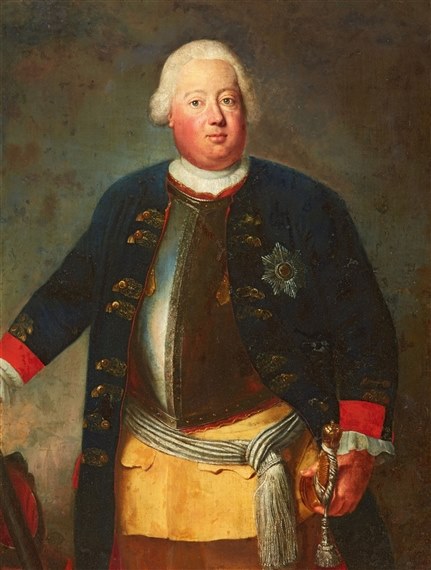
Frederick William I
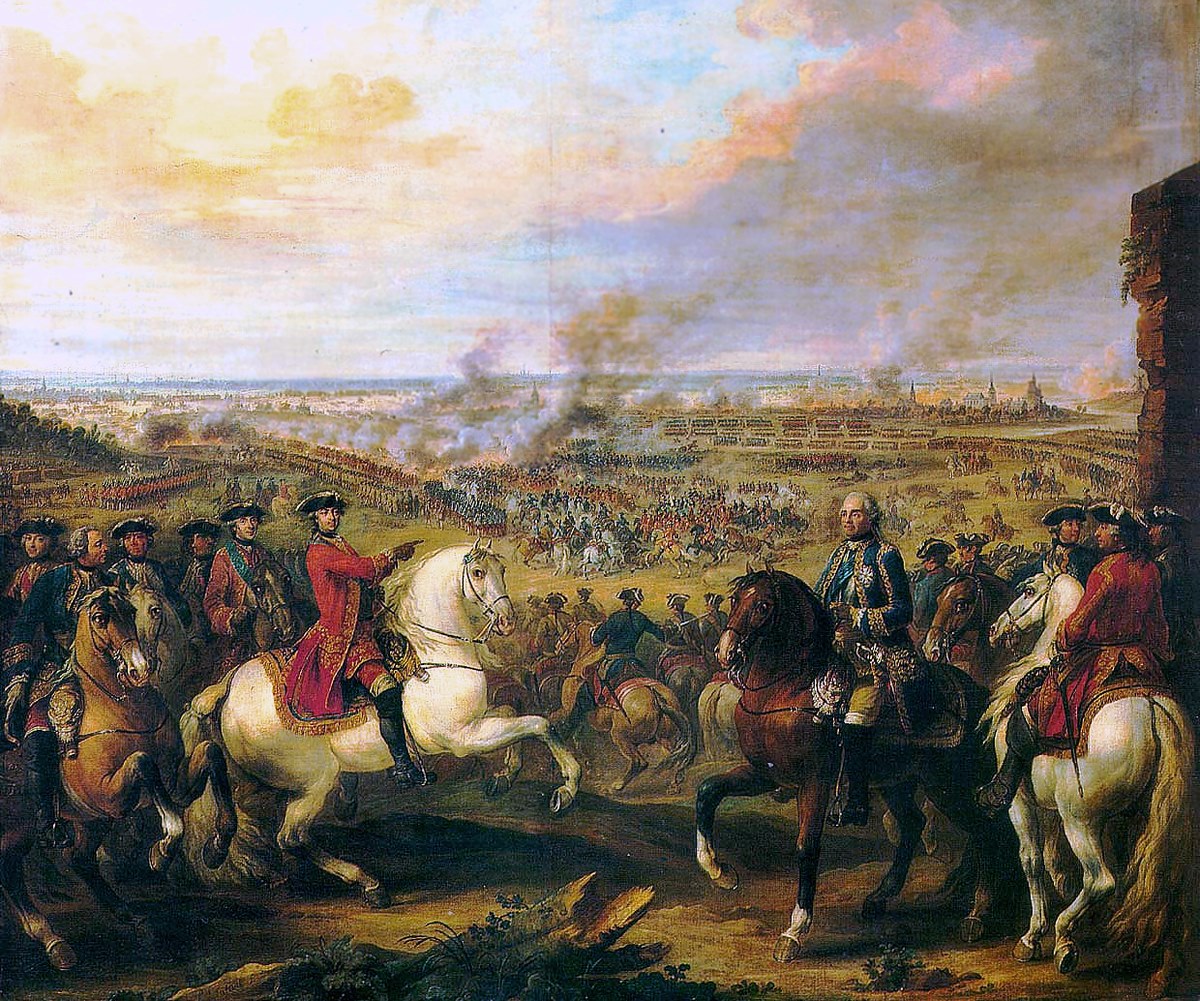
Frederick II, who came to the throne in 1740, was very different from his father, Frederick William. Whereas Frederick William had been a strict Calvinist Christian and devoted husband, Frederick II was a Deist and an Enlightened Monarch , who had a number of male lovers, while ignoring his wife. Whereas the royal court of Frederick William was small and economical, Frederick II's court at Potsdam near Berlin became the most brilliant in Europe. Frederick was a great patron of the arts and sciences and counted the French philosopher Voltaire as a personal friend. The king even entertained the court as a flutist, performing music that he himself had composed. Whereas Frederick William I had kept his kingdom at peace, Frederick II spent much of his reign at war.
In 1740 Frederick II allied with France against Hapsburg Austria and began the War of Austrian Succession. Frederick's objective for this war was to annex the Duchy of Silesia, which bordered the Kingdom of Prussia. This region was populated by both Germans and Poles. Since the 14th century this Duchy had belonged to the crown of Bohemia, which was in Frederick's day controlled by the Hapsburg Dynasty. Frederick struck the Hapsburg Dynasty in 1740 when this family was weak and vulnerable. During the reign of the Hapsburg emperor, Charles VI (1711-1740), the Hapsburg dominions diminished. During the War of Polish Succession (1733 - 1735), Austria with Russian assistance secured the Polish throne for their candidate, Frederick Augustus II, but under the terms of the peace agreement, the French candidate for the Polish throne, Stanislaw Lescynski, the father-in -law of the French king, Louis XV, was given the Duchy of Lorraine in the Holy Roman Empire. This was a blow to the Hapsburg Dynasty since the Dukes of Lorraine had been longtime allies of the Hapsburg Dynasty. Francis of Lorraine was in fact married to Maria Theresa, the daughter of Charles VI. Under this agreement, France annexed Lorraine following the death of Lesckynski in 1766. Francis in compensation for the loss of Lorraine acquired the Duchy of Tuscany in Italy, since the former ruling family of this duchy, the Medici had died out. During this War of Polish Succession, the Bourbon king of Spain, Philip V, was allied with Bourbon France and deprived the Hapsburg Dynasty of the Kingdom of Naples, where Philip's son, Charles was installed as king by his father in addition to the Kingdom of Sicily, after Philip had pressured longtime Hapsburg allies, the Duchy of Savoy, to exchange control of Sicily for the island of Sardinia. In addition to these setbacks, Charles VI had no close male relatives. His only heir was his daughter, Maria Theresa. But most European countries didn't allow woman to inherit property, so Charles VI feared that the Hapsburg Territories would be broken up and annexed by its enemies. To counter such a development, Charles VI issued the Pragmatic Sanction in 1713, in which he designated his daughter, Maria Theresa, as his heir for all of the Hapsburg territories.
Frederick II of Prussia and Louis XV of France did not honor Charles VI's wishes upon his death in 1740. While Frederick had his eyes on Silesia, France desired to annex the Austrian Netherlands. In 1740 both France and Prussia declared war on Austria. The two states also arranged for an ally, the Elector of Bavaria, Karl Albert, to be elected Holy Roman Emperor as Charles VII, the first non-Hapsburg to be emperor in over 300 years. Maria Theresa, however, was a formidable opponent. She convinced the Hungarian Diet to recognize her baby boy Joseph as the King of Hungary, which allowed her to employ the resources of this kingdom to defend her lands. Maria Theresa also secured Russia as an ally and Great Britain. The British and Maria Theresa shared a common enemy in France. In both India and North America, the French and the British were competing for control of territory. In colonial America during King Georgia's War, which coincides with the War of Austrian Succession, British and colonial forces fought against French armies in Nova Scotia.
In 1745, the tide began to turn in Maria Theresa's favor. Charles VII died, and Maria Theresa secured the election of her husband as the next, Holy Roman Emperor, Francis I (r. 1745-1765). In 1745, Frederick II sued for a separate peace with Austria in the Treaty of Dresden. Maria Theresa still had her hands full with France, so under this treaty, Austria recognized Prussia's annexation of Silesia. After 1745, the war dragged on, but the French government was running out of funds to continue the war alone against Austria, Russia, and Great Britain. This war ended in 1748 with the Peace of Aix la Chapel with the Hapsburg Dynasty retaining control of the Austrian Netherlands.
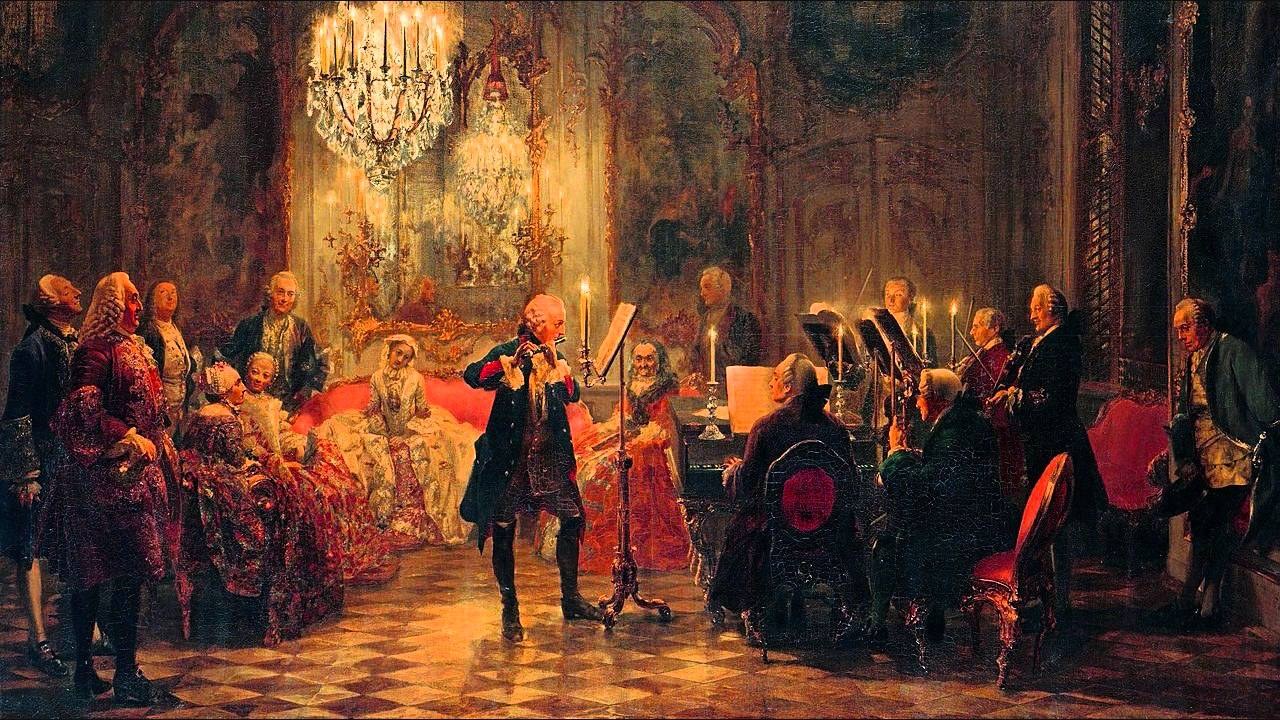
Frederick II playing the flute
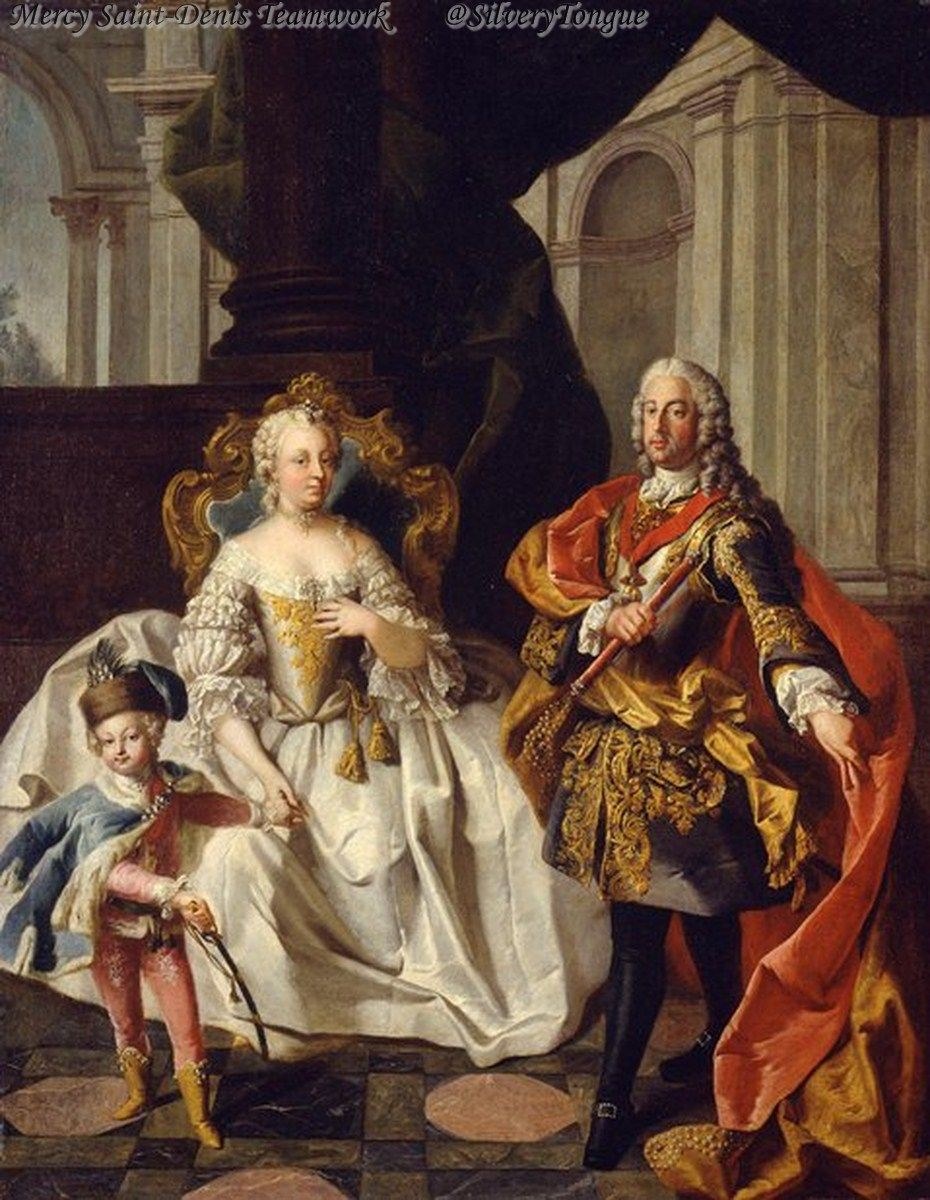
Maria Theresa and Francis of Lorraine
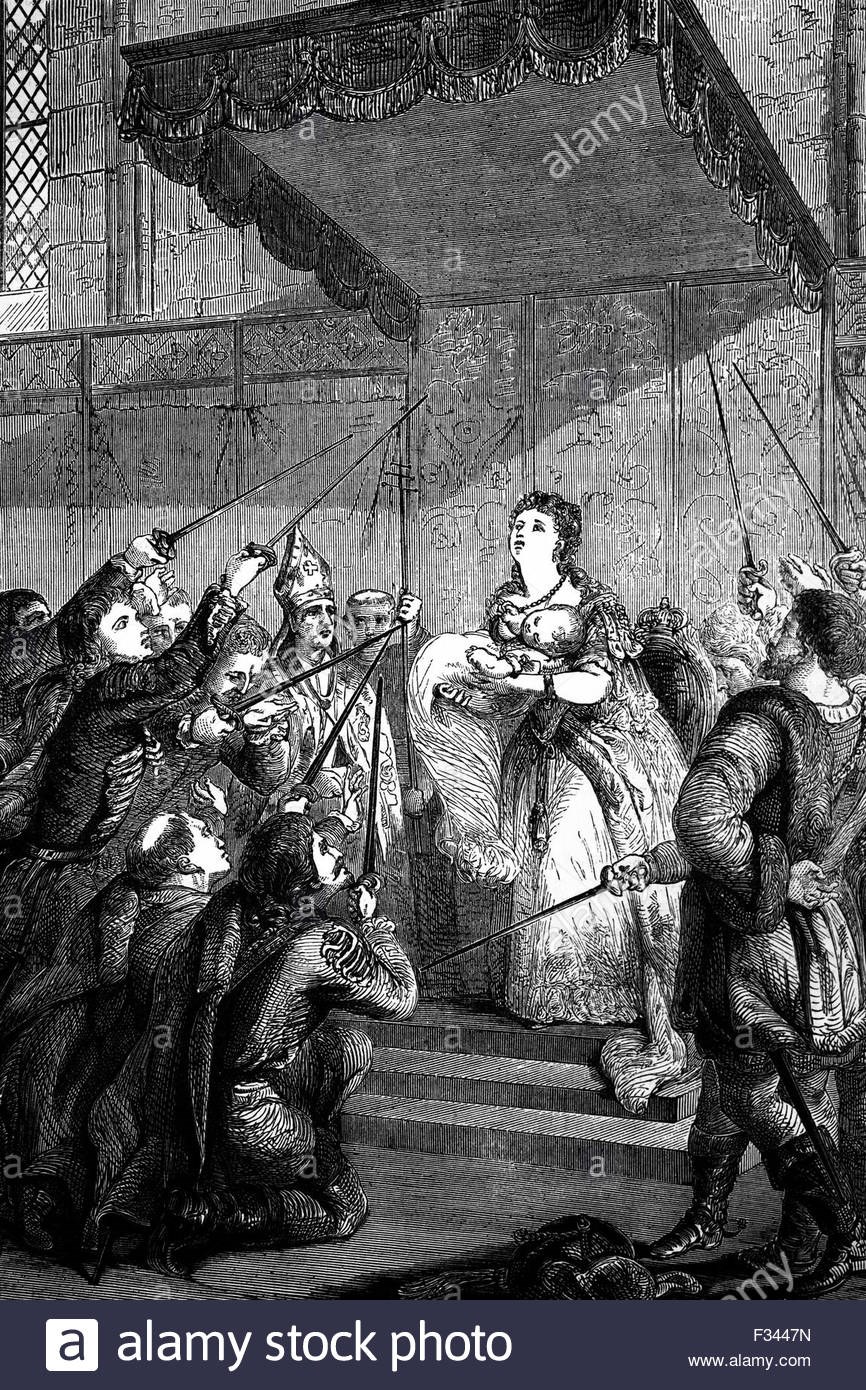
Maria Theresa before the Hungarian Diet
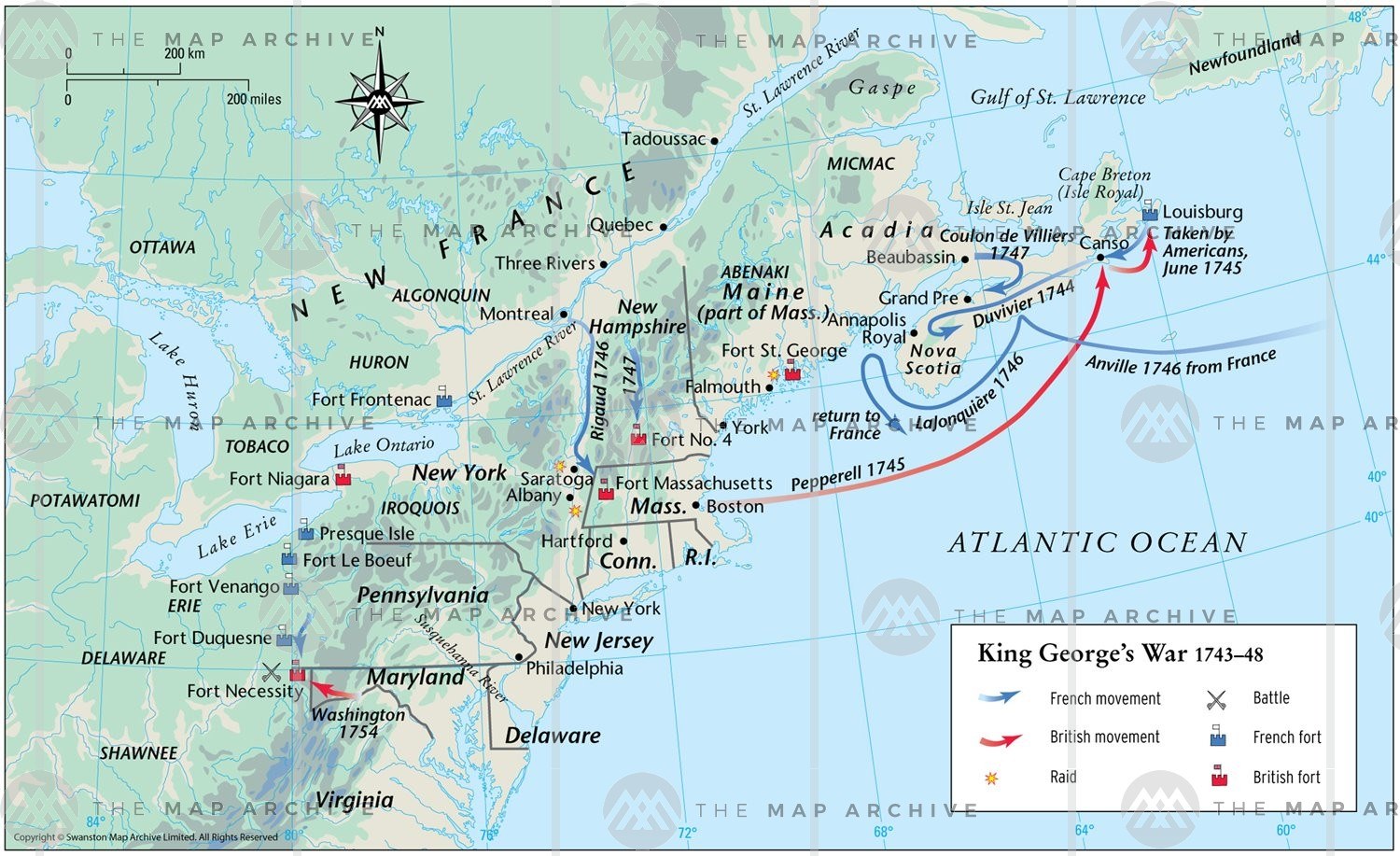
King George's War
Maria Theresa was determined to regain Silesia from Prussia and keep the Hapsburg dominion intact. Even though her husband Francis was the emperor, he largely busied himself with administering the Duchy of Tuscany in Italy, while Maria oversaw the vast Hapsburg multi-ethnic empire. As an administrator, she worked effectively with local governing elites whether they be Italians in Milan, Walloons in Brussels, or Hungarians in Budapest. She maintained the loyalty of these officials due to her reputation for religious piety and honesty. Through these efforts she acquired the financial resources to wage war against Prussia.
To defeat Prussia, Maria Theresa instigated a Diplomatic Revolution. Putting aside over a century of rivalry with the Bourbon Dynasty, Maria Theresa was able to convince Bourbon France and Spain that Frederick II of Prussia was their common enemy. Louis XV of France had been very angry with Prussia for negotiating a separate peace with Austria back in 1745, and he regarded the Prussian king to be unstable and untrustworthy. Maria Theresa at the same time did not see Bourbon France as the same threat that it had been in the past. Under Louis XV, France was hopelessly in debt to foreign bankers. Since the landed aristocracy and Roman Catholic Church paid no taxes, the French government had to borrow huge sums to pay for the expensive royal court at Versailles as well as its armies and bloated bureaucracy. Moreover, Louis XV was a lazy and ineffective king who had left the job of governing France to his mediocre ministers such as the Roman Catholic Cardinal André-Hercule de Fleury. Maria Theresa allied not only with France, but also with perennial ally, Russia as well.
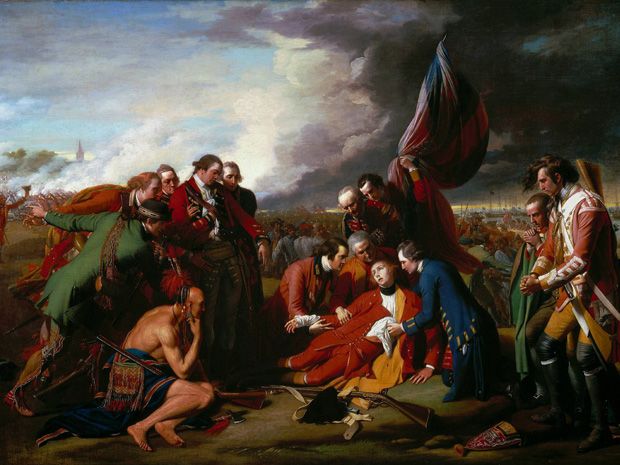
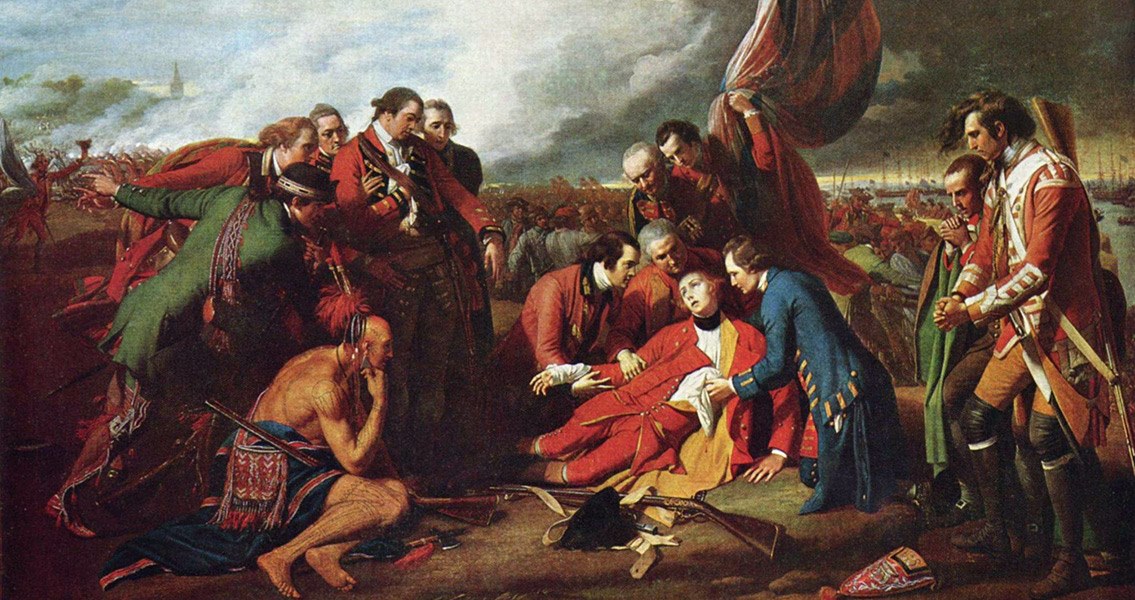
In 1756, Frederick II sensed that his enemies were closing in, so he went on the offensive and invaded the Duchy of Saxony, a close ally of Austria, thus beginning the Seven Years War. In this war, Frederick did secure Great Britain as an ally. The British allied with Prussia since France was now allied with Austria. In this war, however, the British provided very little assistance to their Prussian ally. Great Britain instead focused its efforts on defeating France in North America and India. The British government was at this time in the hands of the great statesman, William Pitt. In 1756 Pitt began to serve as the leader of the cabinet that king George II appointed to serve as his ministers. The Whig Party controlled the British Parliament, and these ministers were the leaders of this party. Pitt pushed for the British government to expand its army and navy and promote its military officers based on talent and ability rather than their bloodline. To finance this war, the British government borrowed vast sums. Unlike the French government, however, the British government didn't become indebted to foreign bankers. Instead British merchants and aristocratic, wealthy landowners (the Gentry) purchased bonds for sale by the British government. These investors purchased these government bonds, fully expecting to be paid back with interest, but also out of patriotism. Pitt's policies paid off, as the British military achieved success over French forces overseas. In 1757 at the Battle of Plassey, British forces defeated the French and their Indian allies in eastern India. In 1759 the British captured Quebec, the capital of new France in Canada. Meanwhile, Frederick II by 1762 faced the Russian army that had occupied much of east Prussia. In that year, however, Peter III of Russia, withdrew Russia from the war, which enabled Frederick II to focus on expelling the Austrian army from Silesia. In 1763 the war ended as both sides in this conflict were exhausted. Austria accepted the Prussian annexation of Silesia, whereas Prussia formally agreed to recognize Maria Theresa's son Joseph, as the next Holy Roman Emperor, following the death of his father, Francis. Great Britain, however, emerged from the war with the most gains. Under the terms of the Treaty of Paris between France and Great Britain, France agreed to cede all of its territory in North America to Great Britain, east of the Mississippi River, and to dismantle its fortified outposts in India, leaving Great Britain as the dominant power on the Indian subcontinent. Great Britain thus acquired an immense overseas empire.
The second half of Frederick II' reign after 1763 was less eventful, but still saw the expansion of Prussian power. In 1772, Frederick successfully negotiated with Catherine II of Russia, and Joseph II of Austria to partition the kingdom of Poland, over the objections of Joseph's mother Maria Theresa, who viewed this action as immoral. In 1778, again over the objections of his mother, Joseph II attempted to seize control of Bavaria in southern Germany following the death of his brother-in-law Maximilian Joseph, the Elector of Bavaria, without any children. Frederick II objected to this annexation since he feared that control of both Austria and Bavaria could lead to the domination of Germany by the Hapsburg Dynasty. In the War of Bavarian Succession (1778 -1779), Joseph withdrew his claim to Bavaria after Frederick's forces invaded the Hapsburg Kingdom of Bohemia, and a kinsman of Maximilian Joseph became the new Elector of Bavaria. This brief war did consolidate Prussia's position as the equal counterweight to Austria in Germany and central Europe.
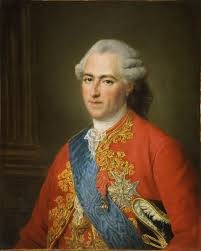
Louis XV of France
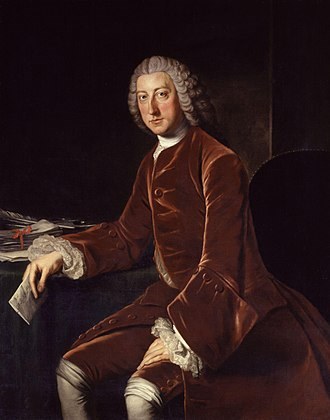
William Pitt
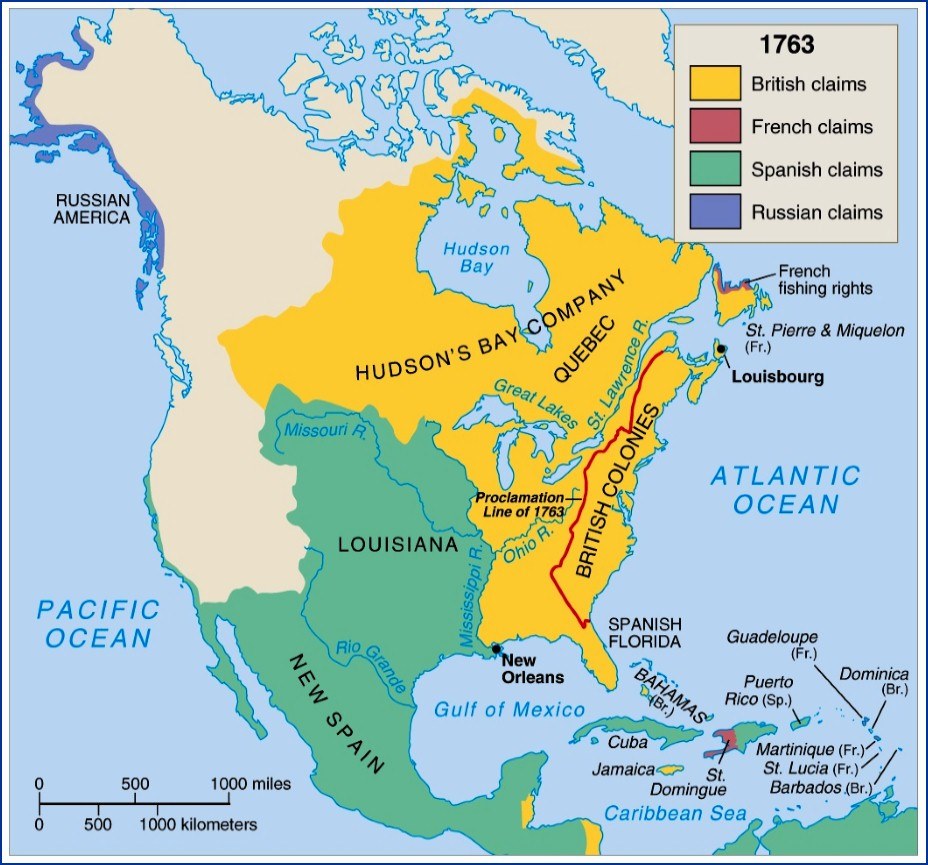
Peace of Paris - North America
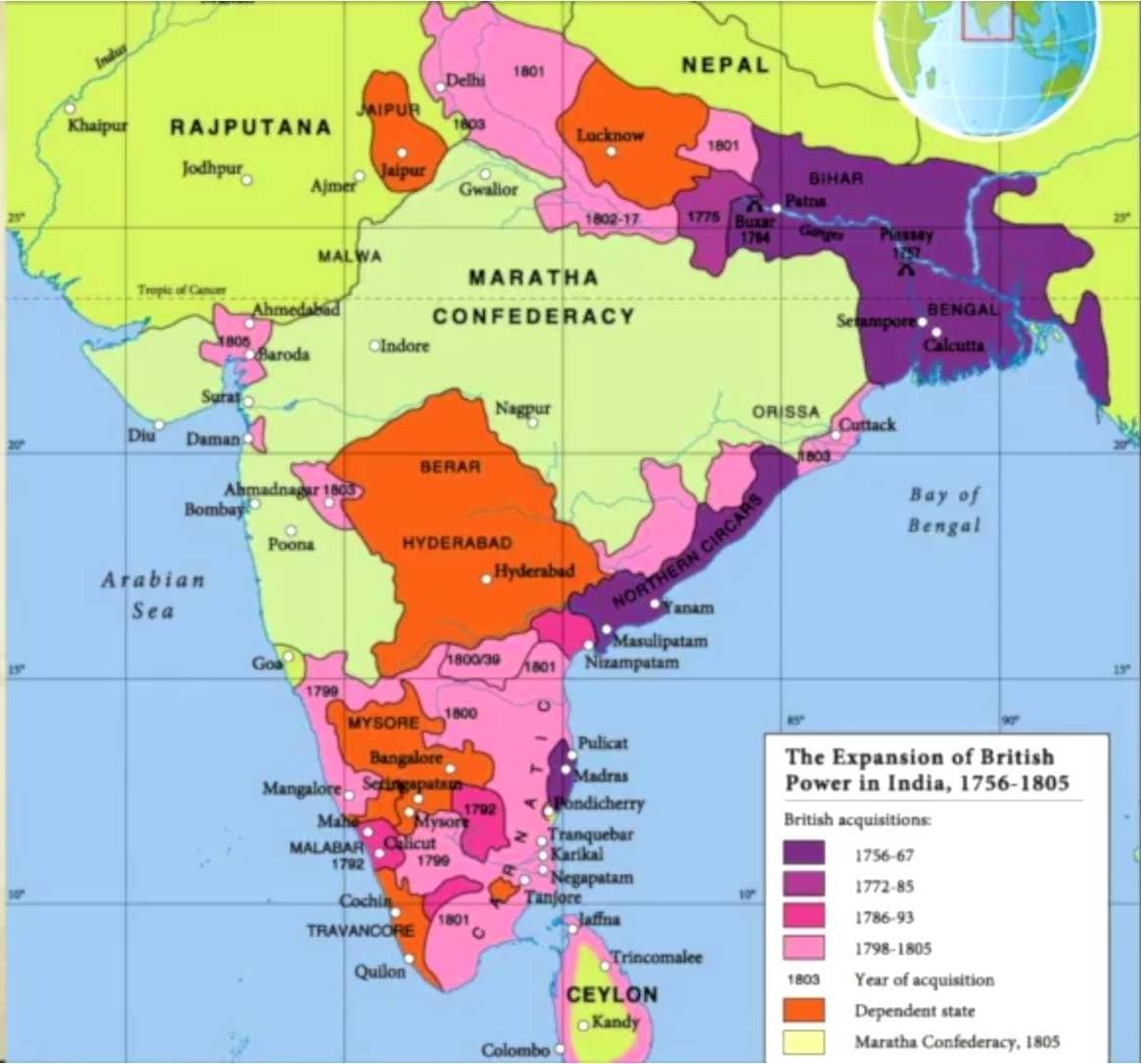
British Expansion in India
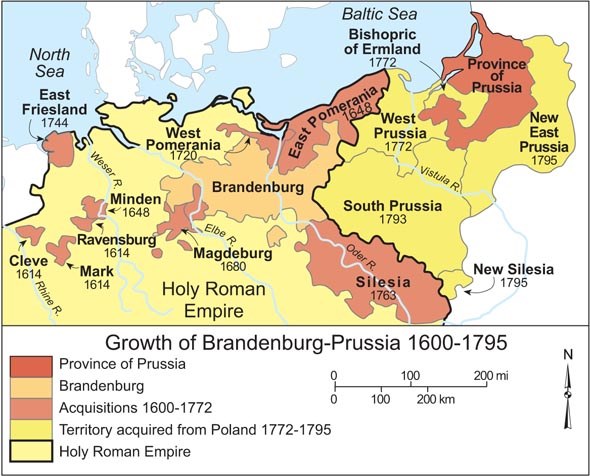
Growth of Prussia