Late Traditional Asia
Modern World10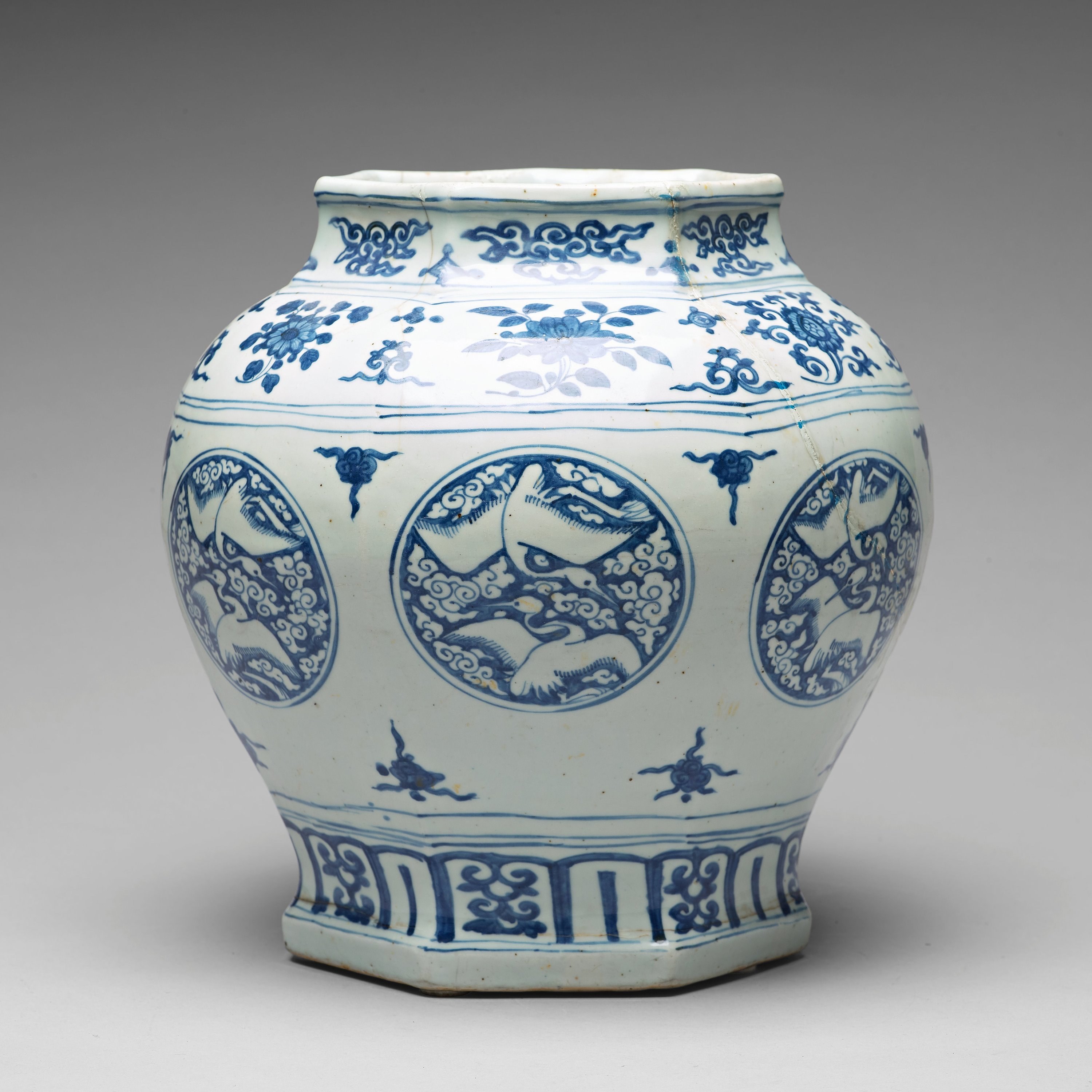
When Europe was experiencing dynamic and dramatic change during the Early Modern Period, East Asia including the modern nations of China, Japan, and South Korea was in the midst of the Late Traditional Period. In China under the Ming (1368 - 1644) and Manchu (1644 - 1911) dynasties, in Japan under the Tokugawa Shogunate (1600 - 1868), and in Korea under the Joseon Dynasty (1392 - 1910), continuity rather than change was the emphasis with the perpetuation of traditional religious, political, and social practices and values. In general the states in East Asia in this period were more stable, wealthy, and populous than their European counterparts. Why then would such states seek to change a social and political system that was working so well?
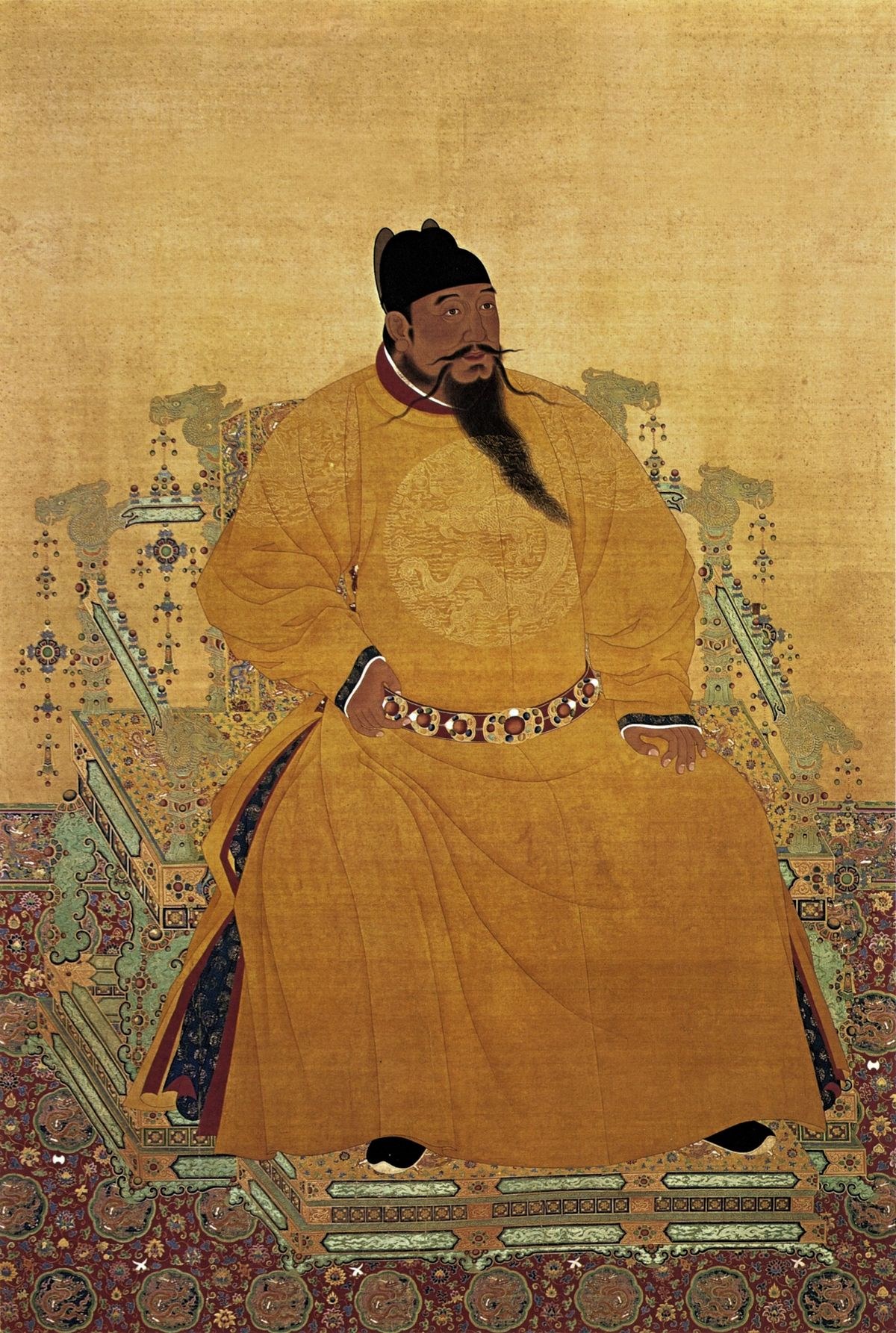
In the 14th century China was under foreign occupation. The Mongols had conquered China and established the Yuan Dynasty of emperors in 1279. Under the Mongols all senior military positions in the imperial government were monopolized by Mongol chieftains. By the mid-14th century, the Mongol empire was in disarray, as these Mongol warlords were struggling for power against one another, while the Chinese people endured poor harvests, catastrophic floods, and famine due to the onset of the Little Ice Age. In China, people traditionally viewed such natural disasters as signs that the reigning government had lost the Mandate of Heaven. and no longer received the blessings of peace and prosperity from the gods of heaven. Consequently, the Chinese peasants were in open rebellion against Mongol rule. One such peasant was Zhu, who was an orphan and a follower of Buddhist monks who were devotees of the White Lotus cult. This cult expected the coming of a bodhisattva, a divine being, known as the Maitreya Buddha, who would bring true enlightenment to the world. Zhu organized these followers of the White Lotus cult into a secret society, whose mission was to overthrow the Mongol oppressors. Zhu and his band of followers made common cause with another secret society, the Red Turbans, who were Manichaeans, who, like the Buddhists were another religious minority in China. BY 1368 Zhu with his army had expelled the Mongols from China and defeated other rebel leaders. Zhu declared himself the new emperor of China and adopted the name Hongwu ("great military man") as the founder of the Ming or "Brilliant" Dynasty.
As emperor (r. 1368 - 1398) Hongwu disavowed his support for his former allies, both Buddhists and Manichaeans, and he declared himself a traditional Confucianist. The moral and political teachings of the Chinese philosopher Confucius (5th century BCE) had served as the official ideology of the Chinese state for centuries under previous Chinese dynasties of emperors. By adopting Confucianism, Hongwu sought to win the support and loyalty of the Chinese aristocracy or "gentlemen" (Chun-Tzu). In China a "gentleman" was one who had received a traditional Confucian education based on the curriculum designed by Confucius himself. Such "gentleman" were eligible to hold positions in the Chinese government based on their performance on competitive examinations. At the local, village level, the Chun-Tzu served as leaders in their communities in addition to their duties as government officials. The Chun-Tzu were also largely a hereditary, aristocracy since these gentleman expected their sons to follow in their footsteps, and so provided their sons with the necessary education to succeed in the competitive testing for government positions. Only men of wealth and leisure had the resources and time to devote to receiving a traditional Confucian education. Hongwu therefore needed the support of this elite, aristocratic class to consolidate his position as the head of the Chinese state.
Under the Ming Dynasty, China maintained a system of government that had been in place since the Tang Dynasty in the 8th century CE. Under this governmental system, the military and civilian branches of government were separate. Officials could either follow a military or a civilian career path. A third branch of government was known as the "Censorate" whose function was to monitor and evaluate the effectiveness of the officials in the civilian and military branches of government. Under the Ming Dynasty, all positions in the government were open to all members of the Chun-Tzu, unlike the situation under the previous Yuan Dynasty, in which only Mongols held the highest positions in government. Hongwu claimed to be restoring the Chinese state of the Sung or Song Dynasty that had been conquered by the Mongols.
Even though Hongwu claimed to be restoring the Chinese state of old, the Ming Dynasty maintained certain aspects of the previous Yuan Dynasty and introduced some new concepts to the Chinese state as well. Beijing in northeastern China remained the imperial capital. Also like the Yuan Dynasty, Hongwu and his successors preferred to concentrate and centralize political power in the hands of trusted ministers, who answered directly to he emperor. Hongwu himself ruled with an iron fist. As emperor, Hongwu brutally suppressed any dissent, and he ordered the execution of thousands of suspected enemies. Under Hongwu and his successors, the power and prestige of the emperor became even more highly elevated in Chinese society. The emperor Yongle (r. 1402 - 1424), a son of Hongwu, began construction of a grand, new imperial palace in Beijing, which became known as the "Forbidden City". Access to this palace was restricted to a select elite in China. At this palace, elaborate rituals as well as pomp and pageantry impressed all visitors with the great power and prestige of the godlike emperor.
By embracing Confucian principles of society and government, the Chinese state under the Ming emperors viewed merchants and artisans as inferior since farming and government service were more honorable professions. Unlike the previous Yuan Dynasty, the Ming emperors didn't support or encourage foreign trade. When European merchants arrived in Chinese ports in the 16th century to purchase Chinese tea, silk, and porcelain (china), the Ming government looked upon them with suspicion and closely monitored their activities. All European merchants had to swear allegiance to the Chinese emperor before they could conduct any business in the empire. Even though the Chinese possessed advanced ships and nautical technology such as the compass, the Chinese state under the Ming was not interested in becoming a commercial power. In 1418 the emperor Yongle amassed a great fleet of ships under the command of admiral Zheng He. The purpose of Zhenge He's expedition, however, was not to promote Chinese trade, but to advertise to foreign powers the great power and majesty of the Ming emperor. During this expedition (1418 - 1425), this intimidating fleet crossed the Indian Ocean from Indonesia to East Africa, collecting tribute from various frightened states in its path. The Ming Dynasty not only scorned foreign trade, but viewed foreigners as inferior barbarians.
Over time the quality of the Ming emperors as administrators declined, in a process that Chinese historians referred to as the Dynastic Cycle. Emperors devoted more time to a life of ease and luxury than to attending to matters of state. Consequently, the emperors' uneducated, personal servants, who were eunuchs (emasculated males), ran the government in the emperors' absence, especially during the reign of the emperor Wanli (r. 1573-1620). During his reign, the Ming Dynasty lost much of its prestige in a war against Japan in 1592 when Japan invaded Korea, whose ruler was a vassal of the Chinese emperor. Japan eventually withdrew its forces from Korea, but only after Chinese and Korean armies had suffered tremendous losses. In the early 17th century with the resurgence of the Little Ice Age, China also experienced devastating flooding and poor harvests. The Chinese people viewed the poor showing in the war against Japan and this series of natural disasters as a sign that the Ming Dynasty had lost the Mandate of Heaven. Consequently, peasant rebellions arose across China.
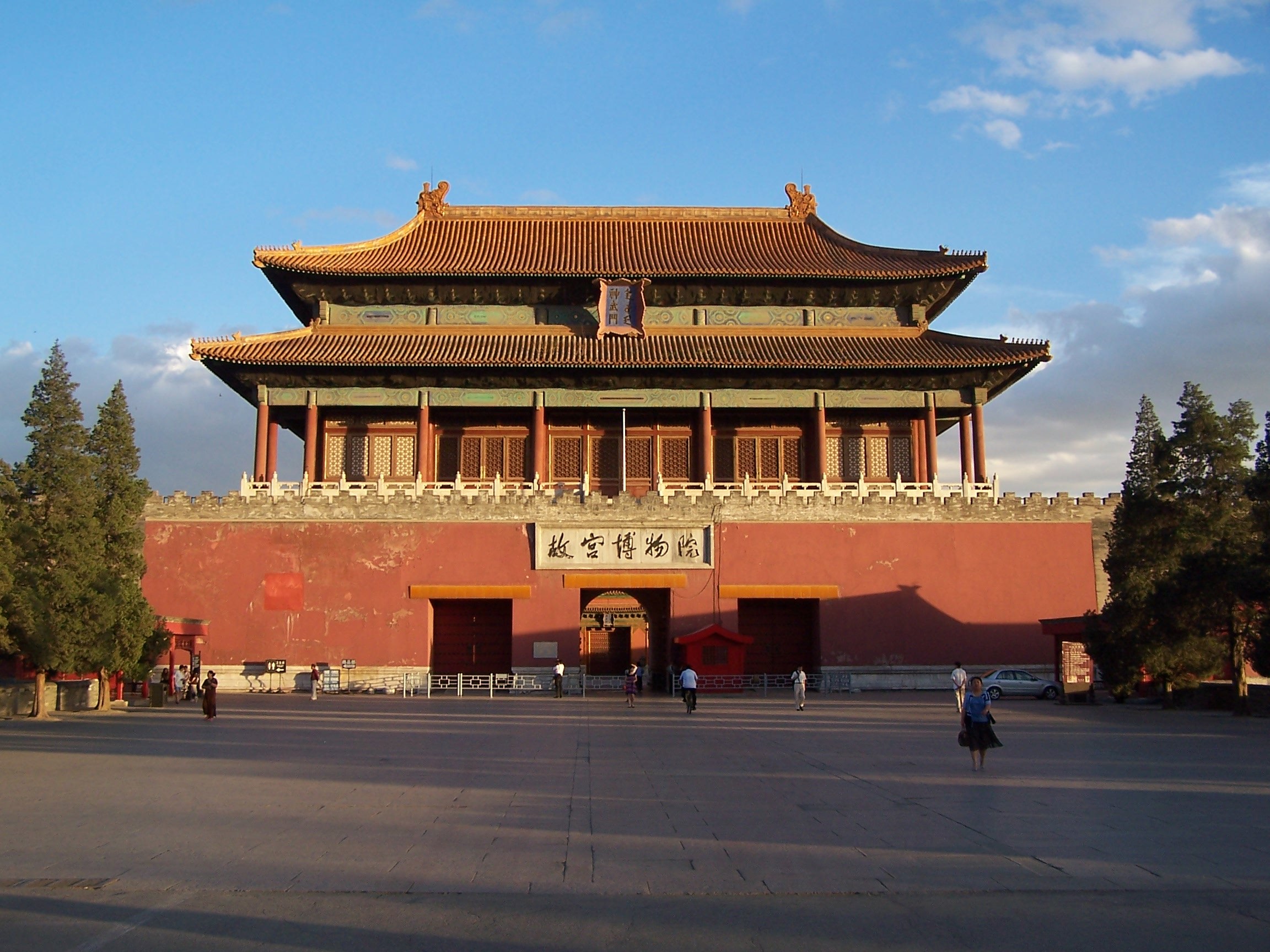
The Forbidden City today
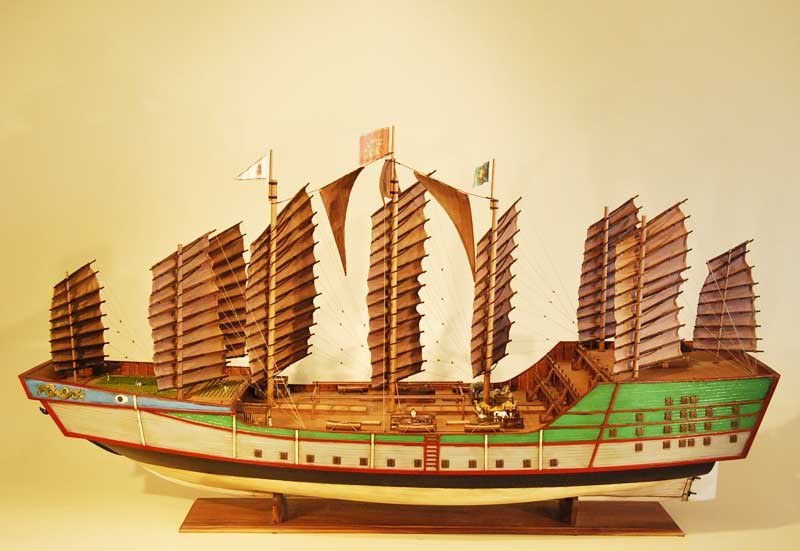
A model of one of Zheng He's ships
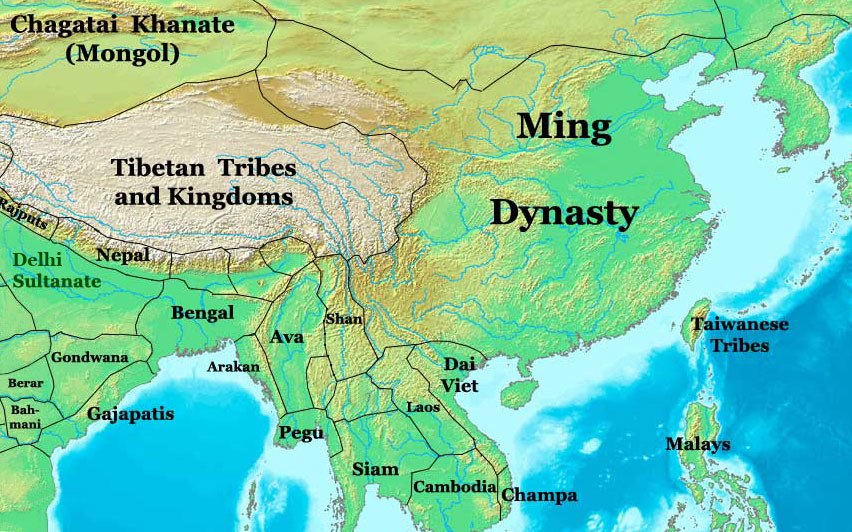
The Ming Empire (1400)
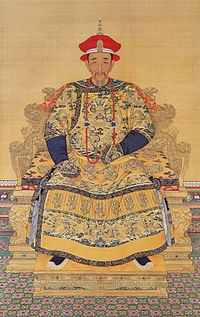
The Manchus were originally a nomadic steppe people known as the Jurchen, who inhabited northeastern Asia adjacent to Siberia. Their language belonged to the Altaic family of languages, which includes the Mongol, Turkish, Japanese, and Korean languages. Proximity to China to the south had resulted in the Manchus adopting Chinese culture. In 1644 the Manchus swept south into China and captured Beijing as the Ming Dynasty was in collapse due to peasant uprisings. The Manchu or Qinq Dynasty of emperors had already embraced Confucianism, and they maintained the existing Chinese governmental system, except that the highest positions in government were reserved for ethnic Manchus. China enjoyed stable and effective government during the long reigns of the emperors, Kangxi (r. 1661 - 1720) and his grandson, Qianlong (1735 - 1796).
In the 17th and 18th century the Manchu empire expanded and created a much more ethnically and religiously diverse empire. Manchu armies advanced westward and conquered the region of Uyghuristan or East Turkestan, whose population spoke Turkish and were Muslim. The Manchu empire also annexed Tibet, whose population was predominantly Buddhist. Manchu armies also occupied the island of Taiwan and expelled the Dutch merchants that had established trading posts on the island. Korea and Vietnam also became tributary states, whose rulers were vassals of the Chinese emperor.
China in the 17th and 18th centuries under the Manchu Dynasty enjoyed a long period of economic growth. European merchants in the 16th century introduced new crops to China such as potatoes, Indian corn (maize), and peanuts. The cultivation of these new crops in China increased food production and provided a more nutritious diet for the Chinese people. Consequently, the population of China rose dramatically, thereby increasing the demand for goods and services and promoting economic growth. This period also witnessed the expansion of a market economy due to an influx into China of silver and gold, which served as currency. European merchants brought these precious metals from the Western Hemisphere to China to exchange it for Chinese silk, tea, and porcelain pottery, which was in high demand in Europe. Much of China's trade with Europeans was in the hands of Chinese merchants who had settled in areas in East Asia that had been occupied by Europeans such as the Spanish in the Philippines and the Dutch on the island of Java in modern Indonesia. In the 18th century China was by far the most populous and wealthy state in the world.
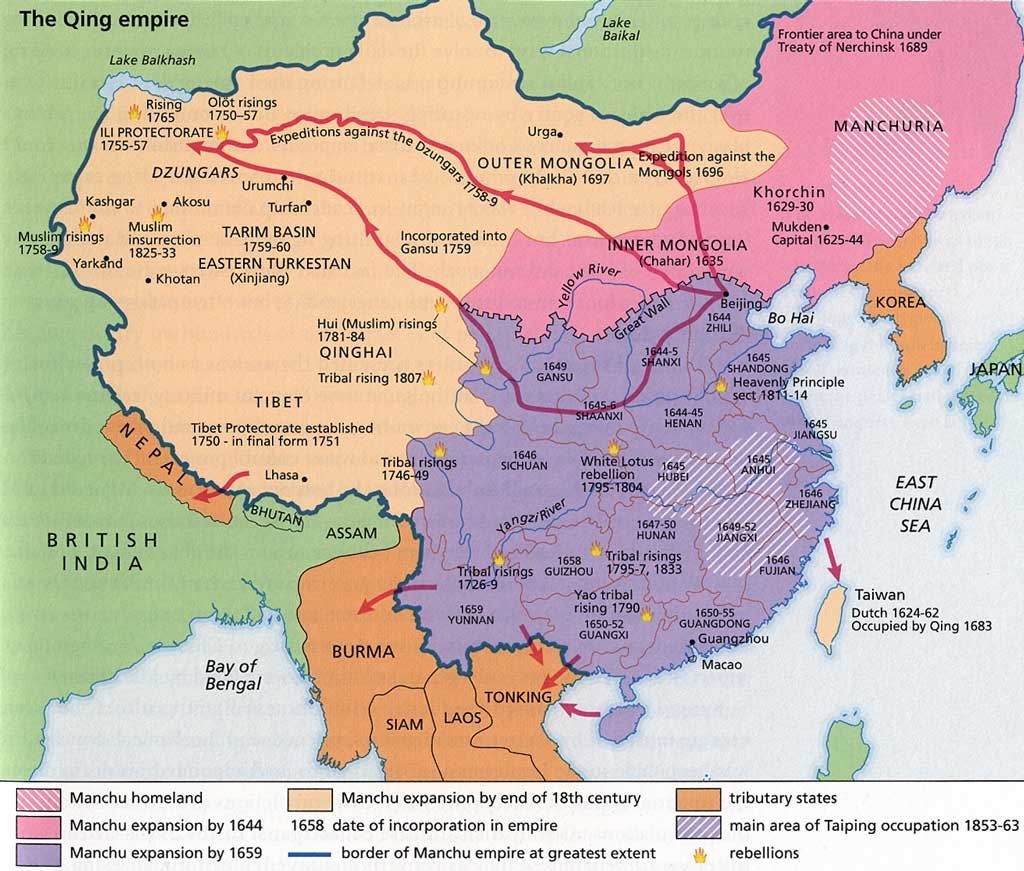
Expansion of the Manchu Empire
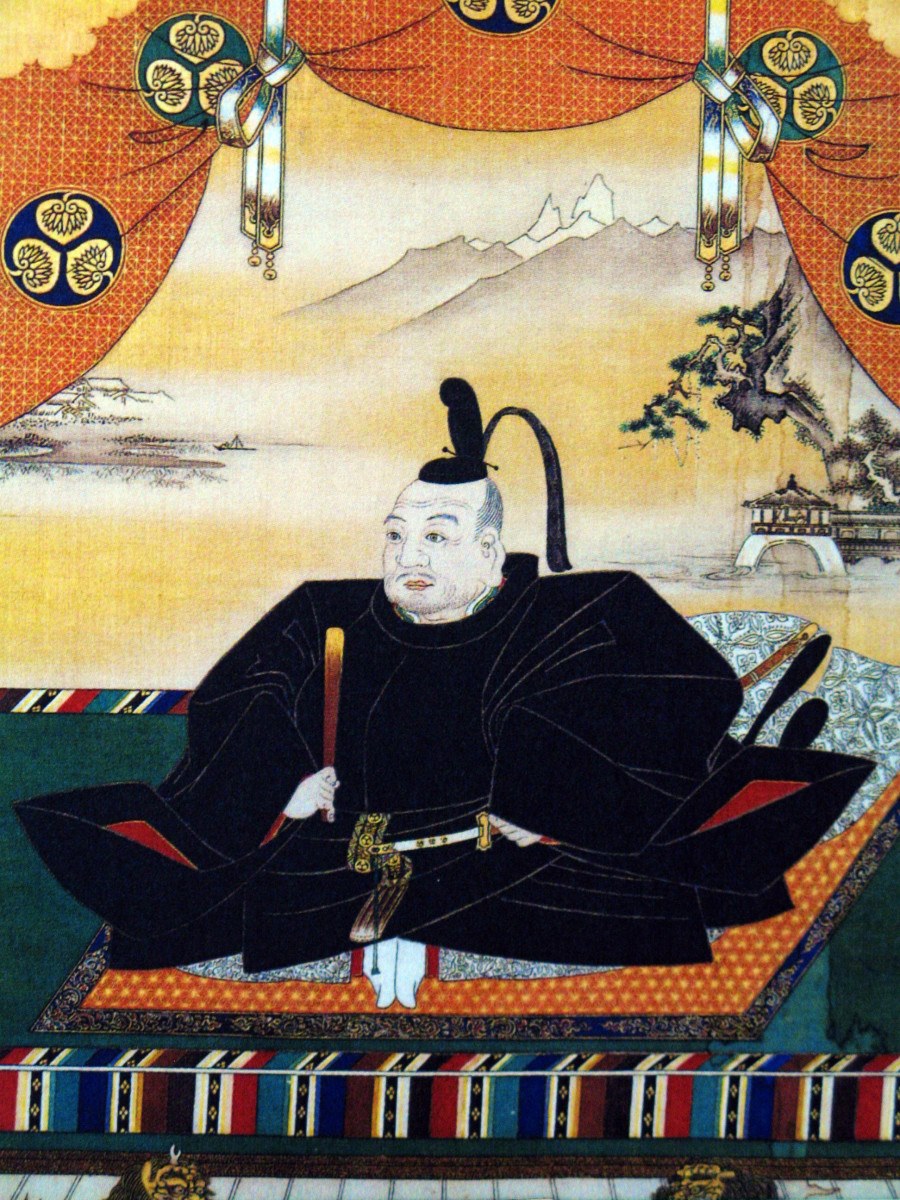
In 15th century the Japanese worshiped their god emperor, whose primary function was to perform the ancient rituals associated with Japan's traditional Shinto religion. The Japanese venerated the spirits of nature (rocks, trees, mountains) who were also believed to be the ancestors of the Japanese people. Political and military power in Japan, however, was concentrated in the person of the Shogun, who was the lord over the Daimyo, regional warlords who were the vassals of the Shogun. The Shogun and the Daimyo all had their own personal armies of Samurai, the hereditary, aristocratic class of warriors. In the 15th century the position of Shogun had been controlled by the Ashikaga family since 1338.
In 1467 Japan entered into a Period of Warring States when these various regional warlords (the Daimyo) challenged the Ashikaga family's claim to the position of Shogun. For the next century, civil war engulfed Japan as the rival warlords battled each other for the position of Shogun. This time period coincided with the arrival of European merchants in the 16th century, who introduced European firearms and gunpowder to Japan. The Daimyo quickly realized that they could create effective armies by recruiting peasants into their armies, arming them with guns, and training them in European tactics of warfare. These new methods of warfare made the hereditary aristocratic Samurai warriors obsolete, and even some Japanese peasants rose up the ranks of these armies as commanders. In 1590 one of these peasant commanders, Toyotomi Hideyoshi defeated all the other rival warlords and became Shogun, thereby ending the Period of Warring States. Hideyoshi hoped to unite Japan under his leadership by launching a war against Korea in 1592 to conquer the Korean Peninsula as well a China. Hideyoshi died in 1598 without achieving this objective.
Upon the death of Hideyoshi, warfare erupted again among the Daimyo, but Tokugawa Ieyasu, in 1600 defeated all the rival warlords and assumed the position of Shogun. The Tokugawa family would provide Shoguns for Japan for nearly three hundred years until 1868. The longevity of the Tokugawa Shogunate was due to the governmental reforms instituted by Tokugawa Ieyasu. First he appointed as regional governors, the Daimyo, men who were personally loyal to him. Tokugawa also required the sons of these Daimyo to live at the Shogun's court as hostages to keep their fathers in line. Tokugawa also fixed the number of Samurai attached to each Daimyo. The aristocratic Samurai class now became a closed caste. If any Samurai had multiple sons, only one son could inherit the position of Samurai from the father. Only this set number of Samurai could own guns and receive military training. Tokugawa wanted to make sure that the regional warlords could not recruit and train new soldiers that might challenge his position as Shogun. Tokugawa also closed Japan from all contact with foreigners and European traders. He recognized that foreign trade and contacts might provide a regional warlord with the resources to challenge his leadership. Tokugawa also viewed Christianity, which he associated with European merchants, as a threat to the Shinto religion and the sanctity of the Japanese emperor-god. In the 16th century the Jesuits in particular had been very successful in converting thousands of Japanese to Christianity. Tokugawa and his successors as Shoguns forbid the Jesuits from preaching in Japan and persecuted Japanese Christians. In the early 17th century the Tokugawa Shogunate executed an estimated 30,000 Japanese Christians and successfully stamped out Christianity in Japan.
Under the Tokugawa Shogunate in the 17th and 18th centuries Japan did enjoy stability and internal peace. Since the military skills of the Samurai were not required in this time of peace, the Samurai engaged in farming and trade and served as government officials. These Samurai embraced the moral and political teachings of the Chinese philosopher, Confucius. The Samurai class also often practiced Zen Buddhism with its emphasis on strict mental and physical discipline, which aligned well with the military training that the Samurai received. Like the Chuz-Tzu in China, the Samurai aristocratic class in Japan served as the governing elite.
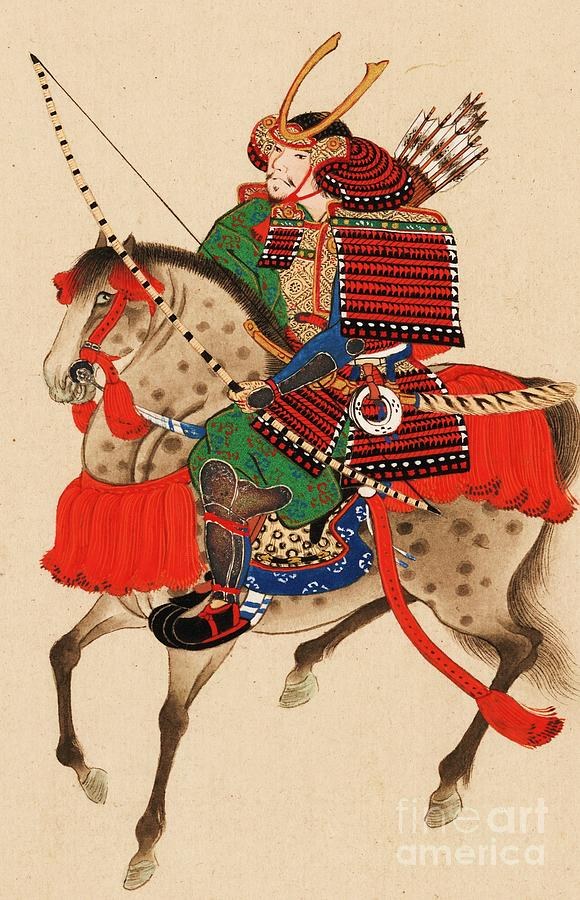
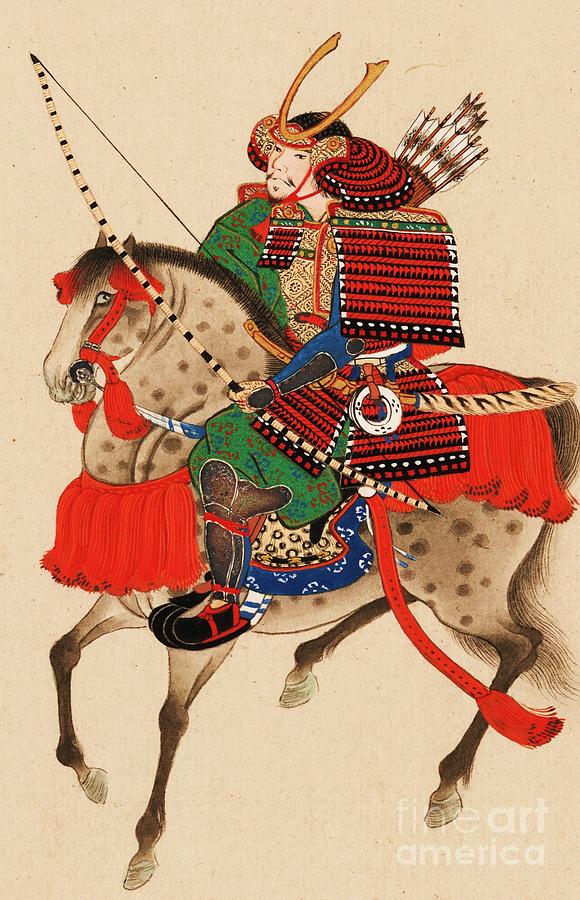
Traditional Samurai warrior
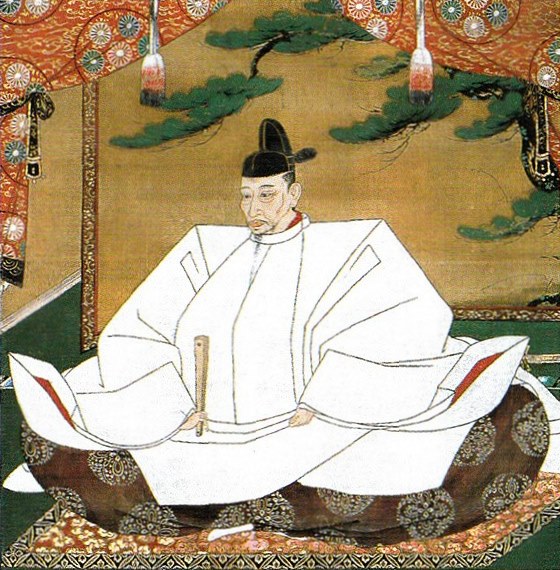
Toyotomi Hideyoshi
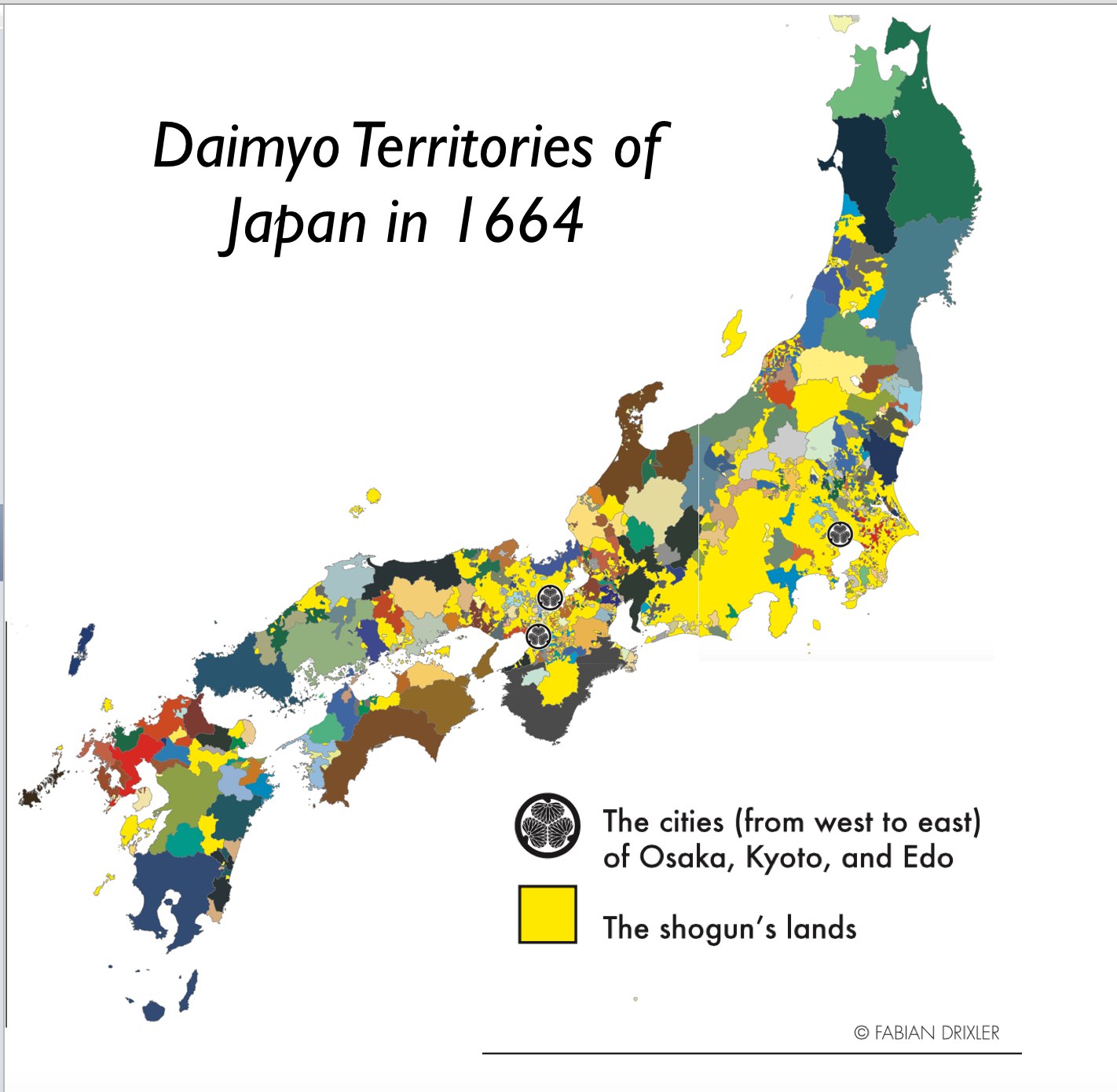
Japan under the Tokugawa Shogunate
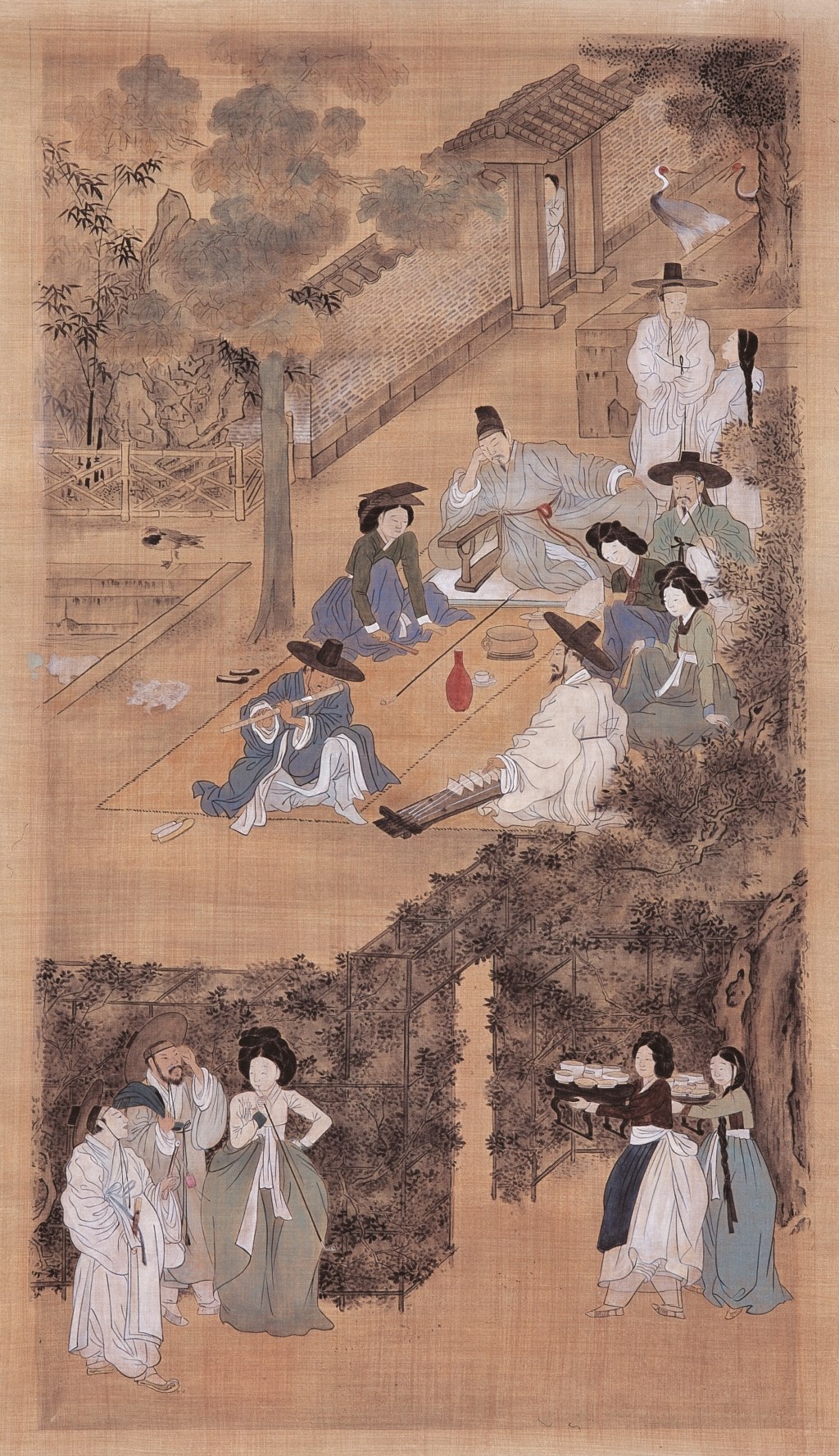
In 1258 the Mongols conquered and imposed tribute on the Goryeo (Koryo) Kingdom of Korea, which had ruled the the Korean Peninsula since 918. With the collapse of the Mongol, Yuan Dynasty in China in 1368, over in Korea a successful Korean general, Yi Song-gye overthrew the last, weak Goryeo king in 1392, and founded a new dynasty of Korean rulers, the Joseon (Choson). Yi declared himself a Confucianist, and he commanded the seizure of the lands of Buddhist monasteries. The previous Goryeo Dynasty had made Buddhism the state religion and had patronized these monasteries. Under Yi and his successors, only "gentleman" with a Confucian education were eligible to hold positions in the government. Appointments to positions in the royal government depended on applicants' performance on competitive examinations. In Korea, unlike Ming China, only members of the exclusive, elite class of landed aristocracy, known as the yangban could take part in these examinations and serve in the government. In Korea under the Joseon Dynasty, this aristocratic class took pride in its achievements as Confucian scholars rather than in military endeavors.
The Joseon Dynasty of kings became vassals of the Chinese emperors under both the Ming and Manchu Dynasties. In the 1590's Chinese and Korean armies together successfully defended Korea from a Japanese invasion, but only after much of Korea was devastated by this conflict. In the 17th century following this invasion, Korean rulers closed the borders of their kingdom to all foreign commerce, maintaining only minimal contacts with the governments of China and Japan alone. Europeans came to refer to Korea as the "Hermit Kingdom" because of the country's self-imposed isolation from the rest of the world.
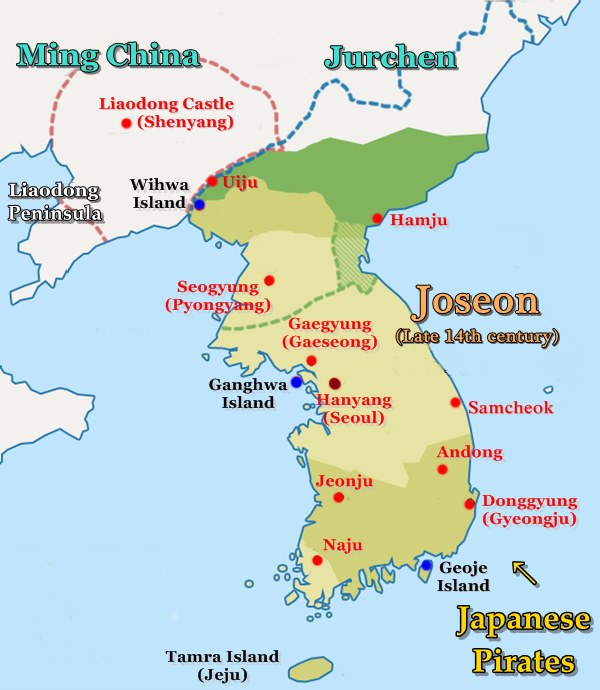
Joseon Kingdom