Islamic Empires
Modern World11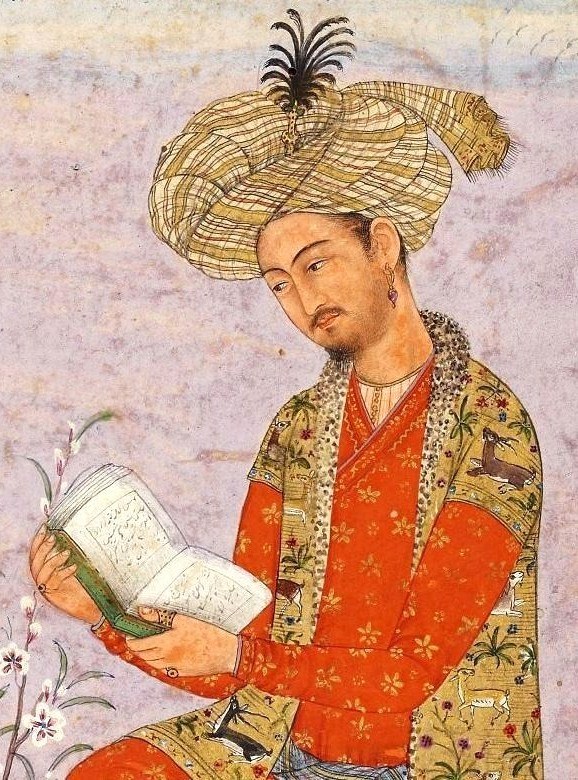
During the Early Modern Period in Europe and the Late Traditional Period in East Asia, large Islamic Empires came to dominate Central and South Asia such as the Mughal Empire (1530 - 1857) in India and the Safavid Empire (1500 - 1722) in Iran. Historians have referred to these states as "Gunpowder Empires" since these states built their empires with military forces armed with new technology, firearms and cannon, instead of relying on the skills of horsemen with their bows and arrows, as had been the case with the empires constructed by steppe peoples in previous centuries such as the Seljuk Turks and the Mongols.
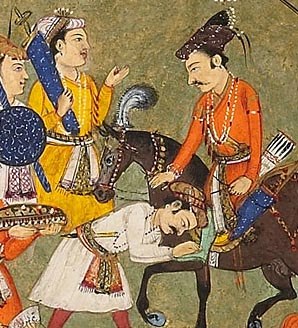
Mohammed Shaybani (r. 1471 -1506) was the Khan or king of the Uzbek confederation of Turkish tribes of Central Asia in modern day Uzbekistan, Turkmenistan, Kazakhstan, and Afghanistan, and he was a descendant of Ghengis Khan. Shaybani's rival for control over this territory was Babur, the Khan of another Turkish people, the Chaghatay Turkomen, and likewise a descendant of Ghengis Khan. When Babur was unable to defeat the Uzbek Khanate for control of his region, he decided to advance his forces south across the Hindu Kush Mountains into modern day Pakistan and northern India. In this region, the Delhi Sultanate had dominated since the 13th century. Babur's army advanced against Delhi and defeated the forces of the last Sultan, Ibrahim Lodi at the Battle of Panipat in 1526. Babur founded a new dynasty to rule this region which became known as the Mughal or "Mongol" Dynasty due to Babur's descent from Ghengis Khan. Over time the rulers of this dynasty came to speak the same language as their subjects, Hindustani, but as Muslims they didn't wish to use the existing written scripts of this language such as Sanscrit because of its association with Hindu sacred writings, so instead, the new dynasty employed Persian as the official written language of their empire, as this written script had been used by previous Islamic states in Central Asia. The Mughal rulers also adopted the traditional Persian title Shah to refer to their position as ruler.
The population of the empire founded by Babur in northern India and Pakistan was predominantly Hindu in religion, while Babur and his soldiers were Turkish Muslims. Babur maintained the same policies toward his Hindu subjects as the previous Muslim Sultanate of Delhi. All non-Muslims paid a special poll tax (jizyah) to the state as well as another tax whenever they traveled as pilgrims to Hindu temples. Moreover the Mughal Empire forbid Hindus to repair existing temples or to build new ones. The Mughal Dynasty also allowed some Hindu princes (Rajputs) to govern their own domains in return for tribute and taxes to the Mughal Shah. Hindus, who converted to Islam, no longer needed to pay any such taxes. Over time millions of Hindus did convert to Islam. As early as the 13th century Hindu converts to Islam created a new written script to write their Hindustani language, Urdu, which was largely influenced by Persian and Arabic written languages. India today has one of the largest Muslim populations in the world even though Muslims are still a religious minority in that country.
The Mughal Empire prospered most during the reign of Babur's grandson, the Shah Akbar (r. 1556 -1605). Early in his reign, Akbar mounted successful military campaigns that consolidated his empire's hold over western and central India. The Hindu Vijayanagara Kingdom in southern India remained independent, whose population was Hindu, but spoke Tamil, not Hindustani. Akbar also won the loyalty and support of his Hindu subjects when he abolished the poll tax paid by non-Muslims as well as the tax on Hindu pilgrims. Akbar was tolerant of all faiths and even invited Christian missionaries and Islamic scholars to debate with each other at his court at Agra in northern India.
The cultural interaction between Muslims and Hindus in the 16th century in this region created conditions that resulted in the growth of a new religion. Sikhism, which developed out of the teachings of the Guru (Teacher) Nanak Dev Ji (1468 - 1539). Sikhs, like Christians and Muslims, practice a monotheistic faith,believing in one God. Like Hindus and Buddhists, Sikhs also believe in reincarnation. Today, millions of Sikhs live in modern India and Pakistan as well as in the United States and Canada.
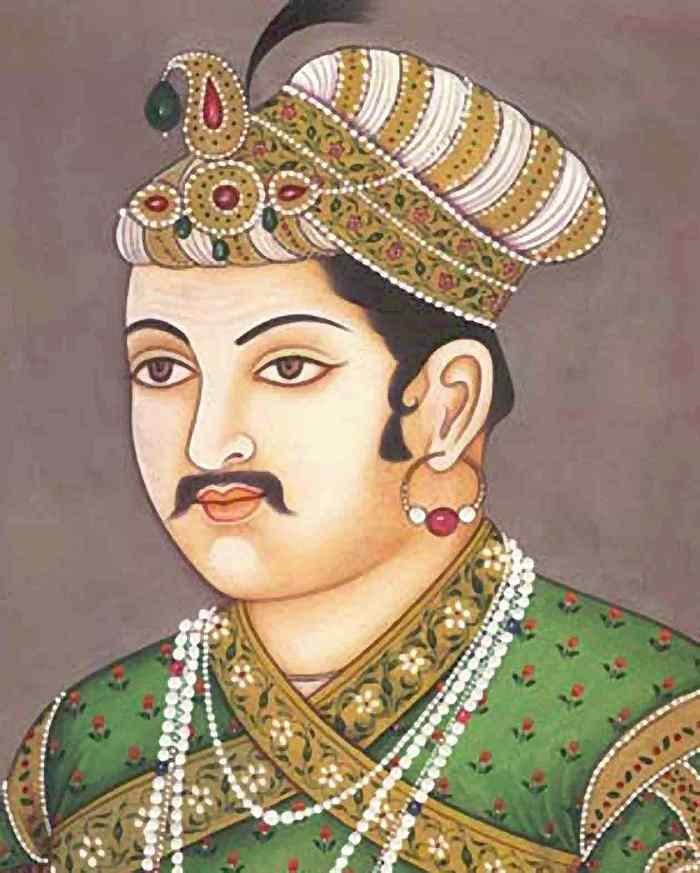
Akbar
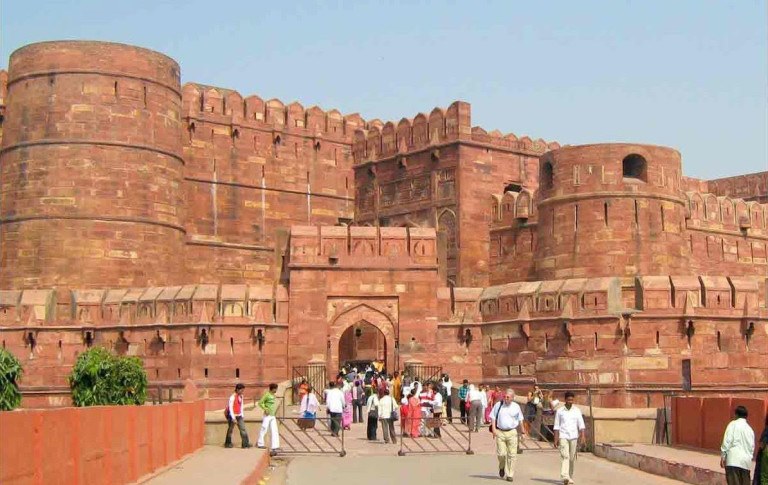
Palace of the Mughal Shahs at Agra
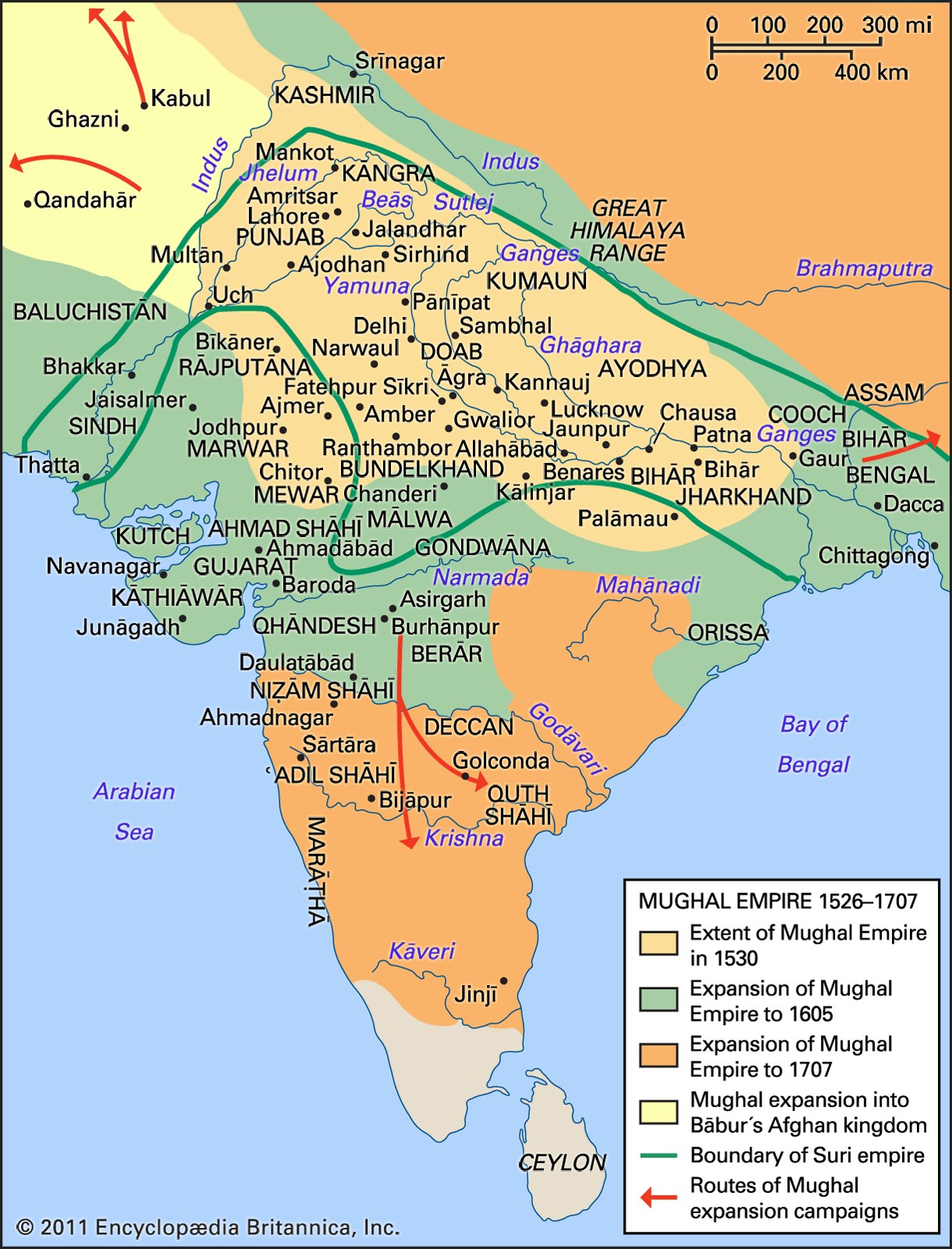
Map of the Mughal Empire
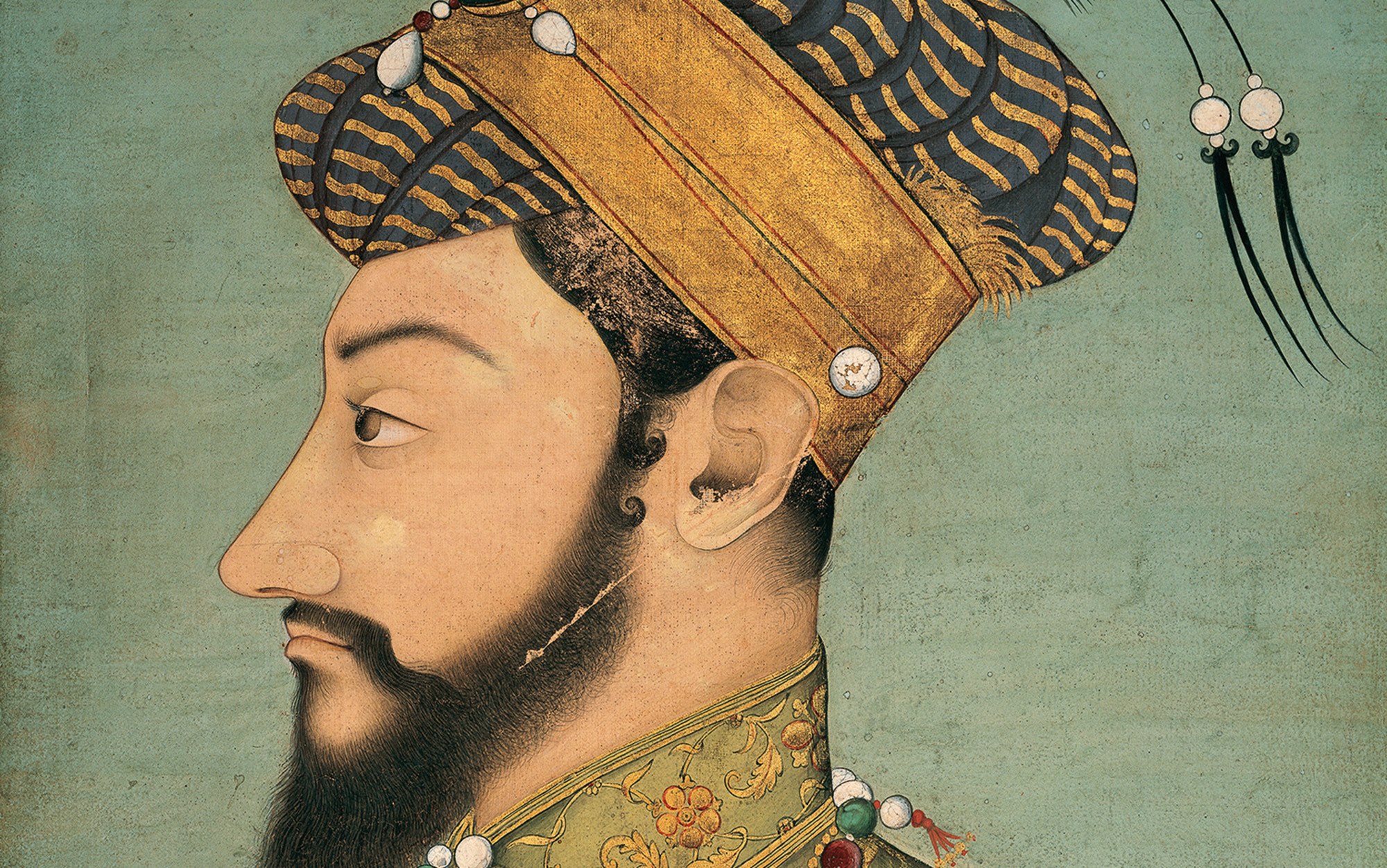
Akbar's successors as Shahs lacked his energy and abilities to govern the empire, often preferring instead to devote their time and resources to their private concerns as well as a life of ease and luxury. For example Shah Jahan (1628 - 1658) devoted much of his time and treasure to constructing a magnificent tomb for his beloved wife, Jagat Gosaini. This tomb, the Taj Mahal was one of the most expensive buildings ever built. Jahan's son and successor, Aurangzeb (1658 - 1705) became a devout Muslim and reinstated the poll tax on non-Muslims as well as the tax on Hindu pilgrims. Aurangzeb's Hindu subjects rose up in revolt all across his empire in reaction to the re-imposition of these taxes. In addition Aurangzeb waged a jihad against Hindu states in southern India that had never been subject to the Mughal Empire. As a result of Aurangzeb's policies, the Mughal state exhausted its financial and military resources through these constant wars. In 1739 the prestige and status of the Mughal Dynasty suffered permanent damage when Nadir Shah, the ruler of Persia, invaded India and brutally sacked the city of Delhi. The decline in the wealth, military power, and status of the Mughal rulers led regional governors, the Nawabs to break free from the central government and run their regions as independent states.
The weakness of the Mughal Dynasty in the 18th century enabled Great Britain to emerge as the dominant power in the Indian sub-continent. In 1601 Queen Elizabeth of England granted the English East India Company a monopoly on all English trade with India. This East India Company was a joint-stock company, which raised money (capital) for its trading ventures by selling investors shares in the company. Share owners shared the company's profits. In the 17th century this company established trading posts known as factories in India at Madras in 1639 and Bombay (modern Mumbai) in 1668. With the decline of the Mughal Dynasty in the 18th century, the East India Company began negotiating lucrative trade deals directly with regional governors, the Nawabs. To obtain leverage in these trade negotiations, the company recruited native soldiers, both Hindus and Muslims, into the company's own private army. The soldiers, known as Sepoys received military training from British military officers. With this army, the East India Company could intimidate Nawabs and secure trade deals that were favorable to the company. In the 18th century, however, the French East India Company competed with their English counterpart for trade and influence in India. Louis XIV had chartered this company in 1664 to challenge the Dutch East India Company, which controlled the island of Java, but in the 18th century France focused its efforts on challenging the British for influence on the Indian sub-continent.During the Seven Years War (1756-1763), British forces defeated the French and their Indian allies. By the close of the 18th century, the East India Company with the military support of the British government effectively controlled the lands of the decaying Mughal Empire. India would become popularly known as the "jewel in the crown of the British Empire".
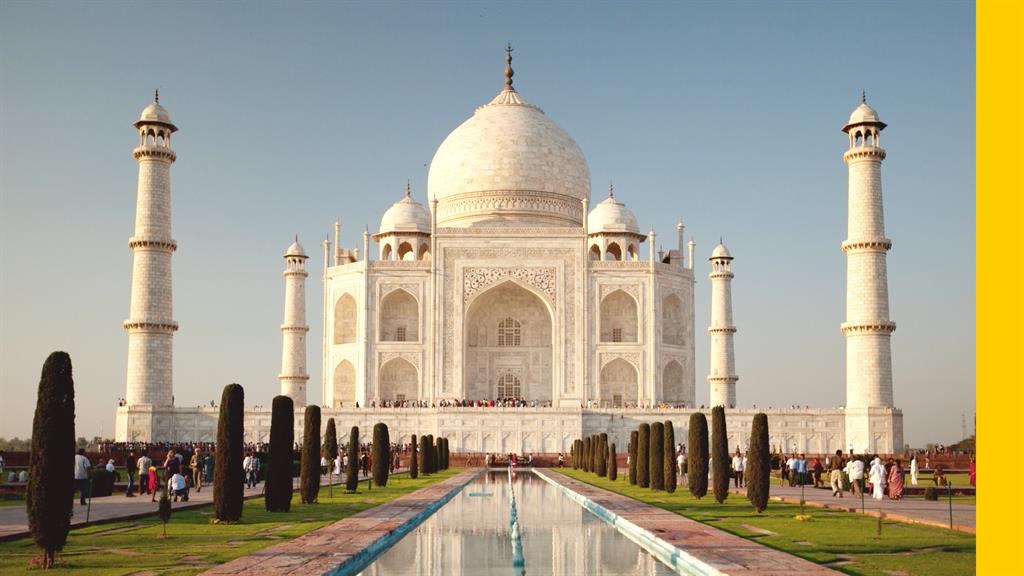
Taj Mahal
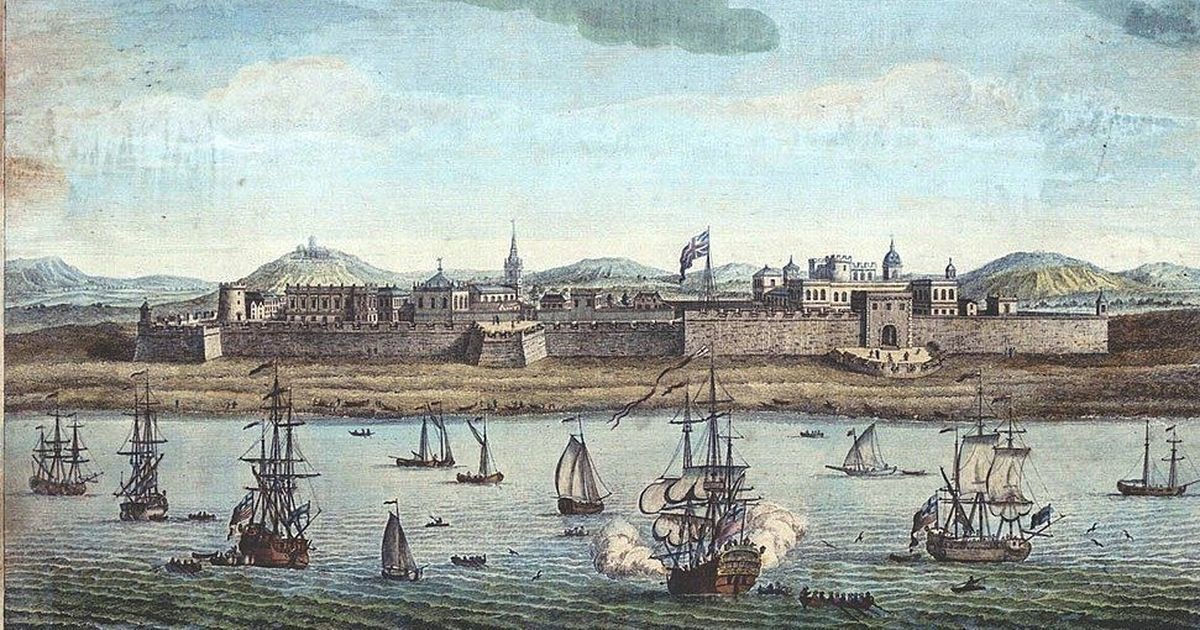
The "Factory" at Madras
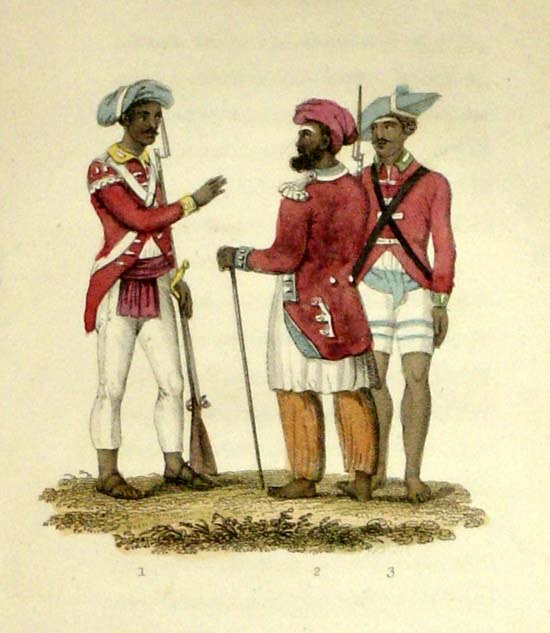
Sepoys
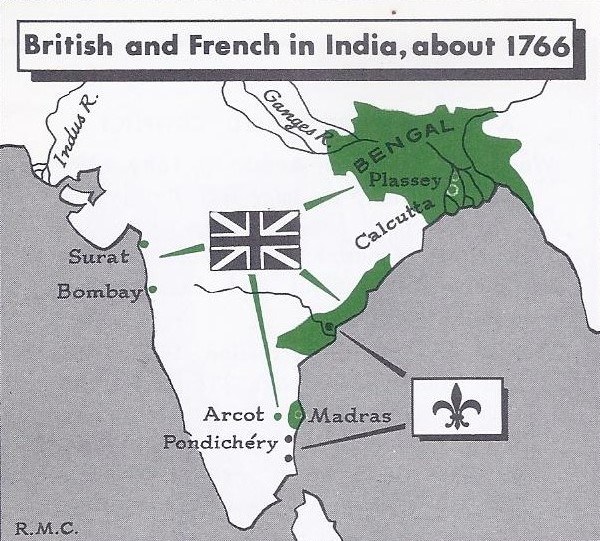
The British and French in India
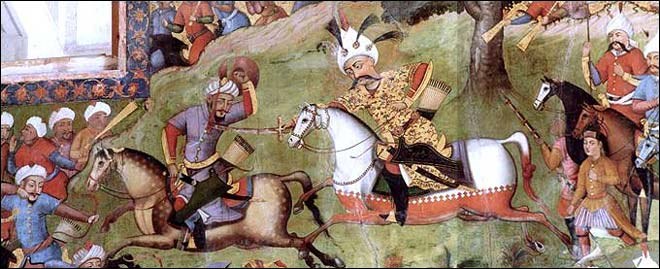
The Safavid Dynasty traced its origins back to a Sufi mystic, Safi-ad-din Ardabili (1252 - 1334), who lived in northwestern Iran near the Caspian Sea. As a Sufi, Safi claimed to have spiritual visions of God. Young religious Turkomen in this region known as Ghazis or holy warriors swore allegiance to Safi and his descendants and pledged themselves to follow these holy men. In 1500 a descendant of Safi, Ismail had become a Shi'ite Muslim. With his army of fanatically loyal Turkomen warriors, Ismail conquered an area that roughly corresponds to the nation of Iran today. Ismail imposed his Shi'ite faith on this territory and appointed his Turkomen generals to govern the different regions of this empire. Ismail declared himself to be the Shah (r. 1501 - 1524) and adopted Persian as the written language of his empire. The Shi'ite faith of Ismail was a distinct sect of the Shi'ite Muslim faith, whose followers are known as "Twelvers". This sect of Shi'ite Muslims believe that after the Prophet Mohammed, there were twelve holy Imams (leaders of the faith) to whom Allah (God) revealed his sacred truth. The last of the twelve Imams, Imam al-Mahdi was reportedly born in 879, but never died and lays hidden underground in the holy Shi'ite city of Qom in northwestern Iran, from where he will arise at the end of time along with the Son of Mary (Jesus Christ) and bring about an age of universal peace and harmony.
The Safavid Empire was a multi-ethnic state that consisted of diverse Iranian tribes as well as Turkomen, Kurds, and Arabs in its western regions. In addition The Safavid Empire was a rival to the Sunni (Orthodox) Ottoman Empire for control over Mesopotamia (Iraq) and the Caucasus region between the Black and Caspian Seas. To maintain control over this vast empire, the most successful Safavid Shah Abbas the Great (r. 1588 - 1629) relied on non- Muslims to serve as his top officials and military commanders including Persian Jews as well as Orthodox Christian Armenians and Georgians, whom he could trust to be loyal since they had no sympathies with local Muslim populations. However, his successors were less successful in holding the empire together. During the reign of the Shah Sultan Husayn (1694 - 1722), an Iranian people, the Sunni Pashtuns of modern Afghanistan revolted against this weak and effective Shah, forcing him of the throne and ending the Safavid Dynasty.
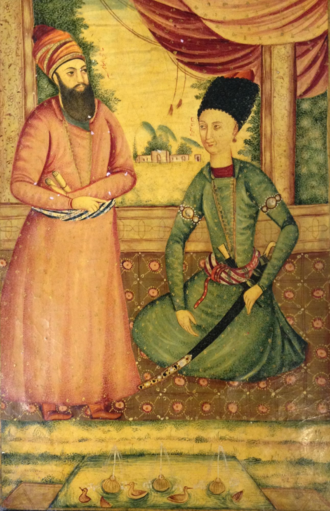
Nadir Shah, later briefly united the former Safavid Empire under his control and assumed the title of Shah (r. 1736 - 1749). In 1739 his armies captured and sacked the Mughal capital at Delhi. Upon his death, his empire collapsed. and the territory of the former Safavid Empire witnessed constant warfare among rival tribal warlords. One of these warlords, Agha Mohammed from eastern Iran was able to defeat his rivals, unite much of the territory of the former Safavid Empire, and assume the title of Shah in 1789. After his assassination in 1797, he was succeeded by his nephew, Fat’h Ali Shah (1797 - 1834). Agha Mohammed was able to found a dynasty, the Qajar Dynasty, which ruled Persia (Iran) as Shahs until 1925. Following Agha Mohammed's example, these Shahs held together their large and diverse empire together by entrusting the highest positions in the government to members of their own Qajar tribe. These Shahs also were Shi'ite Muslims, who secured the loyalty of the Shi'ite clerics (Ulama). These clerics were experts in Shi'ite Islamic law and theology and were largely an hereditary, aristocratic class, as fathers saw to it that their sons received the proper education to succeed them as members of this Ulama elite. The Qajar Dynasty actively recruited these clerics to serve as government officials. At the local level the Ulama enjoyed high status and prestige and led their communities in support of this regime.
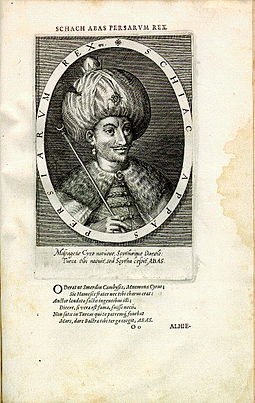
Shah Abbas the Great
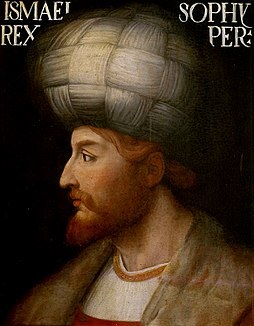
Shah Ismail
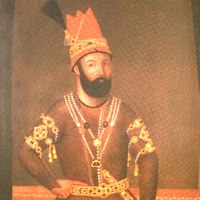
Nadir Shah
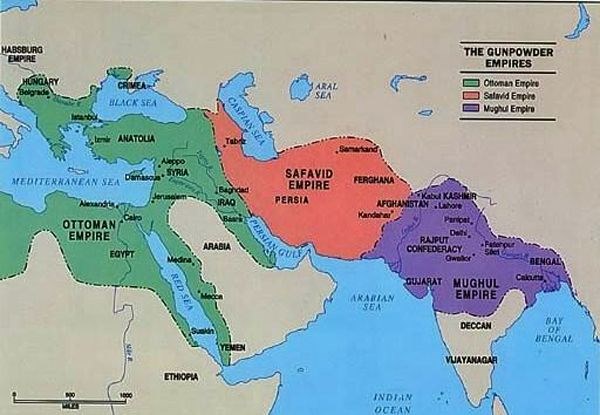
The Safavid and other "Gunpowder Empires"