Bismarck and Cavour
Modern World17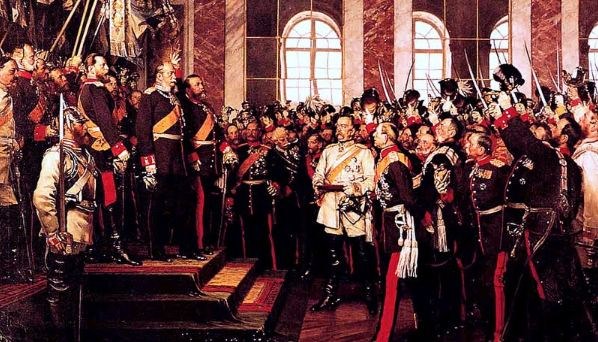
In the mid-19th century in the wake of the 1848 revolutions, the rising middle class still embraced the principles of Liberalism and Nationalism, but they preferred to see Liberal reforms enacted through the actions of a strong, centralized state, whether that action be new laws or warfare, rather than through chaotic and unpredictable social revolutions. The revolutions of 1848 had failed to unite Germany and Italy, but the states of Prussia and Sardinia did succeed in unifying these two countries through war and diplomacy under the leadership of the two leading statesmen of their day, Otto Von Bismarck (Prussia) and Camillo di Cavour (Sardinia). Across Europe and North America as well, Liberal ideas advanced through government policies and reform, whereas rebellions and revolutions failed.
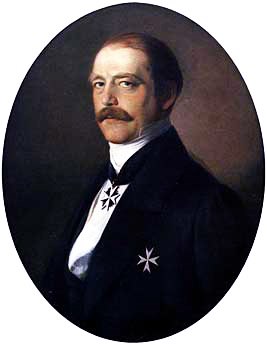
Otto Von Bismarck (1815 - 1898) was born to an aristocratic Prussian family, and throughout his life Bismarck remained deeply Conservative as belonging to the class of Junkers, who had served as loyal military officers and government officials of the ruling House of Hohenzollern in Prussia since the 17th century. But Bismarck was also a realist (Realpolitik) who realized that the old landowning aristocracy could no longer monopolize political power with the surging growth in the size and wealth of the middle class. Bismarck therefore harnessed the power of the ideas of Liberalism and Nationalism, which the middle class espoused, to preserve the power and privileges of the Junkers in a unified German state under the rule of the House of Hohenzollern. Through "Blood and Iron" (i.e. war), Bismarck successfully led efforts to unite Germany by 1871.
In 1862, the new Prussian king, William I (r. 1861 - 1888) appointed Bismarck to be his chief minister and to negotiate with the Prussian Parliament (Landtag), which was dominated by affluent middle class Liberals. In 1864, Bismarck proposed that the German states form a free trade zone (Zollverein) and eliminate tariffs and custom duties. This plan received strong support in the Landtag since middle class industrialists in Prussia saw this free trade zone as a way to sell more of their products within Germany. German Nationalists also welcomed this plan as it would foster cooperation and unity among the German states. Moreover, this Zollverein excluded Hapsburg Austria, and the Hapsburg Dynasty was the competitor of the Prussian House of Hohenzollern for leadership of the German states. Austria refused to join this Zollverein since this empire placed tariffs on agricultural imports, so as to inflate prices for these goods and promote the purchase of less expensive agricultural goods produced within Austria. Such tariffs enriched the aristocratic landowners in Austria. The Zollverein consequently promoted Prussia as the leading German state.
After 1864 Bismarck also exploited a diplomatic crisis to weaken further Hapsburg Austria's influence over the German states and to unite Germany under Prussian leadership. Historically the king of Denmark was also the duke of the northern German state of Schleswig-Holstein. However, in 1863, the new king of Denmark, Christian IX agreed to a new Liberal constitution and the territory of Schleswig-Holstein was incorporated into the state of Denmark. This move infuriated German nationalists, and the German Confederation in 1864 declared war against Denmark. Allied Prussian and Austrian armies quickly expelled the Danes from Schleswig-Holstein. After the conclusion of this brief war, Prussia and Austria disagreed on what should be done with this territory. Austria in 1865 preferred to award this duchy to Frederick von Augustenburg, whose family possessed a hereditary claim to the region. Bismark, however, proposed that the German Confederation be replaced with a new German federal union that included Schleswig- Holstein and excluded Austria. Austria rejected this proposal, and Austria and Prussia went to war in 1866. The Austro-Prussian War in the summer of 1866 ended in a swift Prussian victory in less than seven weeks. Prussian forces invaded the Austrian Empire and crushed the Austrian army at the Battle of Sadowa; Austria subsequently agreed to the Peace of Prague. After this victory, Prussia annexed Schleswig-Holstein, and Bismarck in 1867 organized the states of northern Germany, including Saxony and Hanover into the North German Confederation. To win over Liberals to the new government, Bismarck drafted a Liberal constitution for the new confederation. Under this constitution, all adult males elected representatives to the lower house of the legislature, the Reichstag. The number of representatives from each state was based on its population. The government in each state in the Confederation also selected representatives to the Bundesrat, the upper house of the legislature. This legislature could draft laws and raise taxes, but the military and foreign affairs of the Confederation were under the complete control of the hereditary president, William I of Prussia. This constitution also empowered this president to appoint the Chancellor, the chief executive of the state. William I appointed Bismarck as Chancellor, and Bismarck could appoint his fellow Junkers to the highest positions in the government. In 1867 the German states of southern Germany refused to join this Confederation. The population of southern Germany, unlike Protestant northern Germany, was primarily Roman Catholic, as were the German Austrians in the Hapsburg Austrian Empire.
The defeat at the hands of Prussia in 1866 led to a crisis in the Hapsburg Austrian Empire since the government feared another outbreak of rebellion in Hungary. To deter such as rebellion, the Emperor Francis Joseph in 1867 issued a new Liberal constitution that created what became known as the Dual Monarchy and the Ausgleich (Balancing). Under this constitution Francis Joseph was both emperor of Austria and king of Hungary. Germans and Hungarians with property could each elect representatives to a legislature of their own, which could each draft laws and impose taxes for the areas controlled respectively by Austria and Hungary. Francis Joseph, however, alone controlled the military and foreign affairs for this new Austro-Hungarian Empire. In this empire, millions of inhabitants who were neither German nor Hungarian couldn't vote or participate in the government.
Napoleon III of France viewed the sudden rise of Prussia in 1867 as a threat to France's claim to be the dominant state in Continental Europe. A political crisis in Spain in 1868 provided Napoleon III with an opportunity to press for war against Prussia. In that year, the Cortes in Spain deposed the unpopular and Conservative queen of Spain, Isabella II (r. 1830 -1868). The Cortes afterwards offered the Spanish throne to a German prince, Leopold of Hohenzollern-Sigmaringen, a distant relative of William I of Prussia. Napoleon III demanded that William I order this relative to reject this offer on the grounds that Hohenzollern control of the thrones of both Prussia and Spain posed a threat to France. Napoleon knew that this insolent demand would lead to war between France and Prussia. Across Germany, Germans were outraged by Napoleon's arrogance. Bismarck viewed a popular war against France as a way to unite all Germans in north and south Germany. In the resulting Franco-Prussian War (1870 - 1871), the Prussian army invaded France, and at the Battle of Sedan in 1870, these forces defeated the French army. Napoleon III was captured and held prisoner by the Prussians, thereby effectively ending the war. Early the next year in 1871, representatives from the southern German states as well as those from the North German Confederation convened at the Palace of Versailles just outside Paris and proclaimed William I as the emperor (Kaiser) of a united Germany. The Constitution of the North German Confederation was extended to include the states of southern Germany with William I holding the title of emperor instead of president. In 1871, German armies occupied France and imposed a humiliating treaty on France that required France to hand over to Germany the regions of Alsace and Lorraine. In these regions both German and French were spoken. France had annexed these regions from the Holy Roman Empire in the 17th and 18th centuries. With the establishment of the new German Empire, German nationalists asserted Germany's right to control these territories.
French nationalists were enraged that Germany had annexed these lands, and to add insult to injury, also witnessed in 1871 the outbreak of civil war and social revolution in France. After the capture of Napoleon III and his subsequent abdication of the throne, France once again became a republic for the third time. A National Assembly convened to draft a new constitution for this Third Republic. However, in Paris, the working class population elected a workers' council, which claimed to be the legitimate government of France. The leaders of this Paris Commune were inspired by the ideas of Karl Marx and other Socialists, who maintained that true democracy required economic as well as political equality. The National Assembly, which had the broad support of the French middle class, consequently sent French troops to Paris to establish the authority of the National Assembly. Over 20,000 people lost their lives in street battles in Paris when the French army arrived and overthrew the "Communists" of the Paris Commune. This bloodshed and the humiliating defeat in the Franco- Prussian War fueled hatred toward Germany and calls for revenge among French nationalists.
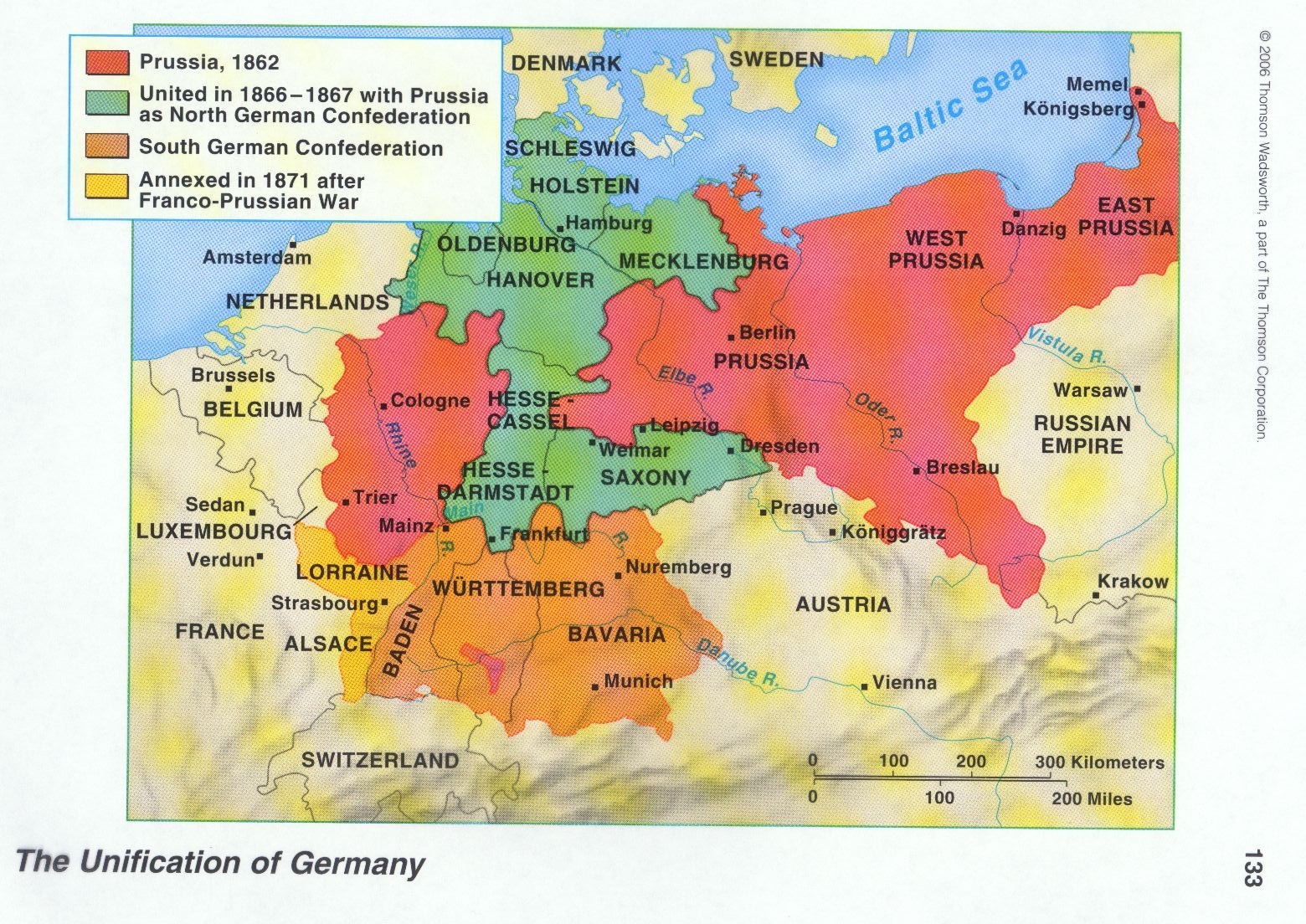
The Unification of Germany
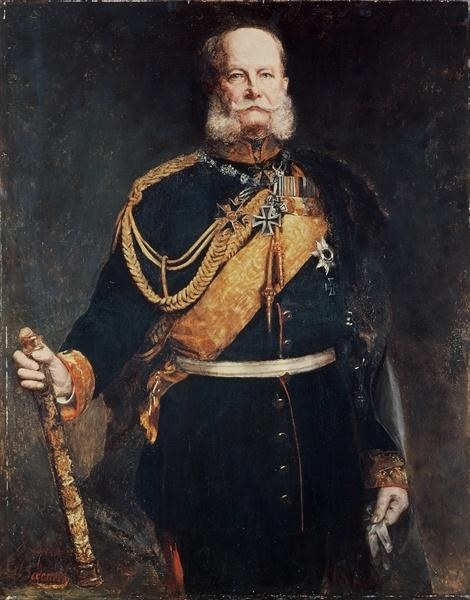
"Kaiser" William I of Germany
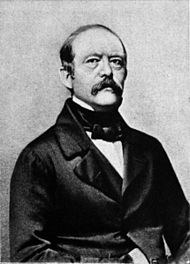
Otto Von Bismarck
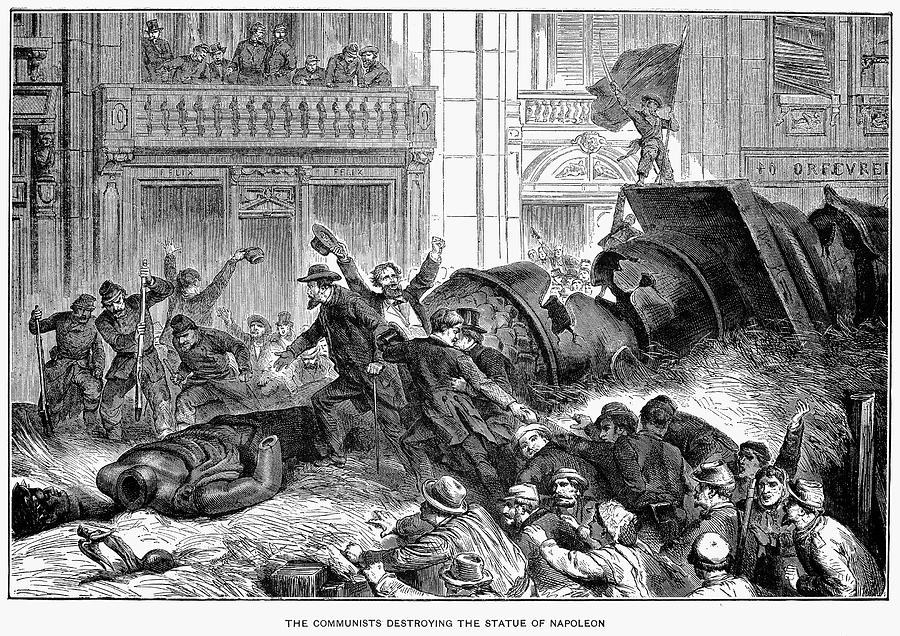
"Communists" in Paris in 1871
Camillo Paolo Filippo Giulio Benso, Count of Cavour, like Bismarck, was from an aristocratic family. Just as Bismarck wished to unite Germany under the leadership of the House of Hohenzollern of Prussia, Cavour envisioned the unification of northern Italy under the leadership of the House of Savoy of the Kingdom of Sardinia. Unlike Bismarck, however, Cavour embraced the principles of Liberalism. In 1848, the Kingdom of Sardinia adopted a Liberal constitution, which enabled the propertied classes to elect a legislature (Chamber of Deputies), which possessed the authority to pass laws and raise taxes. Cavour strongly supported this new constitution. In 1852 the king of Sardinia, Victor Emmanuel II, appointed Cavour to be prime minister since Cavour enjoyed strong support in the elected legislature. To achieve his goal of uniting northern Italy, Cavour realized that he would need to wage war against the Austrian Empire, which controlled much of northern Italy including the large cities of Milan and Venice. The Crimean War (1854 - 1856) provided Cavour with the opportunity to defeat Austria and achieve his objective.
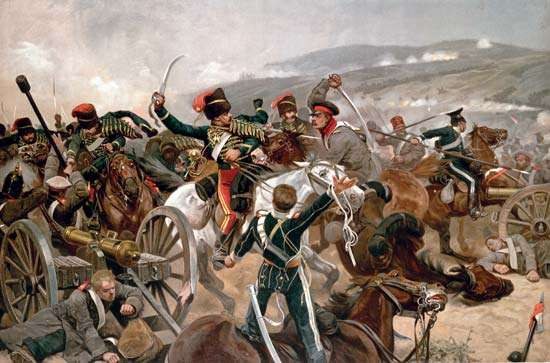
The Crimean War resulted from Russian aggression against the Ottoman Empire, which was the traditional enemy of the Russian Empire. In 1853, Russian forces threatened the Ottoman provinces of Moldavia and Wallachia. The population of these provinces were Vlachs, who spoke a Romance language, which derived from ancient Latin, like French and Spanish, but also included many Slavic and Albanian words. These Vlachs were also Orthodox Christians. Traditionally, the Ottoman Sultan appointed Orthodox Christians to govern the provinces as the Sultan's representatives. In 1853, the Czar of Russia, Nicholas I, however, as head of the Russian Orthodox Church, desired to free his fellow Orthodox Christians in Moldavia and Wallachia from Muslim rule. The United Kingdom was deeply concerned with this Russian aggression against the Ottoman Empire. The British government feared that such aggression might further weaken the Ottoman Empire and result in instability in the eastern Mediterranean, that could endanger the strategic routes linking the United Kingdom to its overseas empire in India. Napoleon III was also concerned with Russian aggression since Russia was the most powerful Conservative state in Europe, while Napoleon envisioned France as the most powerful Liberal state in Europe (even though Napoleon III was essentially a military dictator in France). In 1854, the United Kingdom and France declared war on Russia as allies of the Ottoman Empire. Most of the major military campaigns of the resulting war occurred in the Crimean Peninsula in the Black Sea region, which gave this war its name. After both sides had suffered heavy casualties with neither side able to claim victory in this conflict, the war ended in a draw. In the Treaty of Paris in 1856, Russia withdrew from Moldavia, while the allied forces agreed to return to Russia the cities in the Crimean Peninsula, that allied forces had occupied during the war.
The lack of success in this war for Russia convinced the new Czar, Alexander II (r. 1855 - 1881) to implement Liberal reforms within Russia as a way to strengthen the Russian state and military. Traditionally the Czar compensated Russian landowners whenever the Czar drafted their serfs into the army. In 1861 by imperial decree, Alexander II freed the serfs. These freed Russian peasants, however, were now required to serve in the Russian army as the price of their freedom. The emancipation of the serfs therefore strengthened the Russian military, as the Czar no longer needed to compensate Russian landowners when he drafted peasants into the army. However, these former serfs received no land when they were set free by the emperor. In addition, the villages of these freed serfs now paid the taxes, which had formerly been paid by their landlords. Consequently, these peasants became even more impoverished and worked for low wages as agricultural laborers. Millions of Russian peasants in the late 19th century migrated to the cities or overseas to North and South America and Australia to find employment and a better life. After the Crimean War, Alexander II also allowed for more freedom of the press as a way of winning support from the emerging Russian middle class. This reform, however, backfired when Polish nationalists took advantage of this new freedom to organize a massive uprising against Russian rule in 1863. Over 200,000 Russian troops crushed this revolt in Poland, and Alexander II quickly restored censorship.
Another result of the Crimean War was the creation of the nation of Romania. In 1858 at a conference in Paris, Napoleon III pressured his former ally, the Ottoman Empire, to allow the provinces of Moldavia and Wallachia to join together as the nation of Romania and to become autonomous with its own written constitution. In 1859 elected assemblies on Wallachia and Moldavia elected Alexander Cuza as the first prince of a united Romania. As prince (r. 1859 - 1866) Cuza successfully emancipated the serfs and tried to extend the right to vote to all adult males. However, conservative landowners opposed this plan, and the Romanian legislature forced Cuza to abdicate the throne in 1866. The legislature then offered the throne to a German prince, Karl of Hohenzollern-Sigmaringen, who was crowned prince as Carol I. The Crimean War also emboldened the United Kingdom to advance its own influence in the eastern Mediterranean at the expense of the weakened Ottoman Empire. In 1863 with the blessing of the United Kingdom, the unpopular king of Greece, Otto I, abdicated the throne, and a Danish prince, George I became the king of Greece in his place. George I was a blood relative and personal friend to the British royal family. However, the British government in 1866 would not allow the Greek government to provide assistance to Greek rebels on the island of Crete, when they rebelled against the Ottoman Empire, for fear that the loss of Crete could destabilize the Ottoman Empire.
Cavour saw the Crimean War and its aftermath as an opportunity to advance his own plans. First, the Crimean War demonstrated that France under Napoleon III might support the Kingdom of Sardinia's war against Conservative Austria since Napoleon III had portrayed himself as a champion of Nationalism and Liberalism. Second, the war had resulted in a rift between traditional allies, the Conservative Russian and Austrian empires. During the Crimean War, Austria did not stand by its ally, Russia, when Russia had faced a war against France, the United Kingdom, and the Ottoman Empire. Austria feared that the Russians at some point in the future might champion the cause of the oppressed Orthodox Christians in the Roman Catholic Austrian Empire, just like they were supporting the Orthodox populations in the Muslim Ottoman Empire. Austria therefore chose to remain neutral in the Crimean War. The Russian government felt betrayed by this neutrality since Russian military intervention had saved the Austrian Empire in 1849 during the Hungarian and Italian rebellions. Due to this rift between these two empires, Cavour was confident that Austria couldn't rely on Russian military assistance in a war between the Kingdom of Sardinia and Austria.
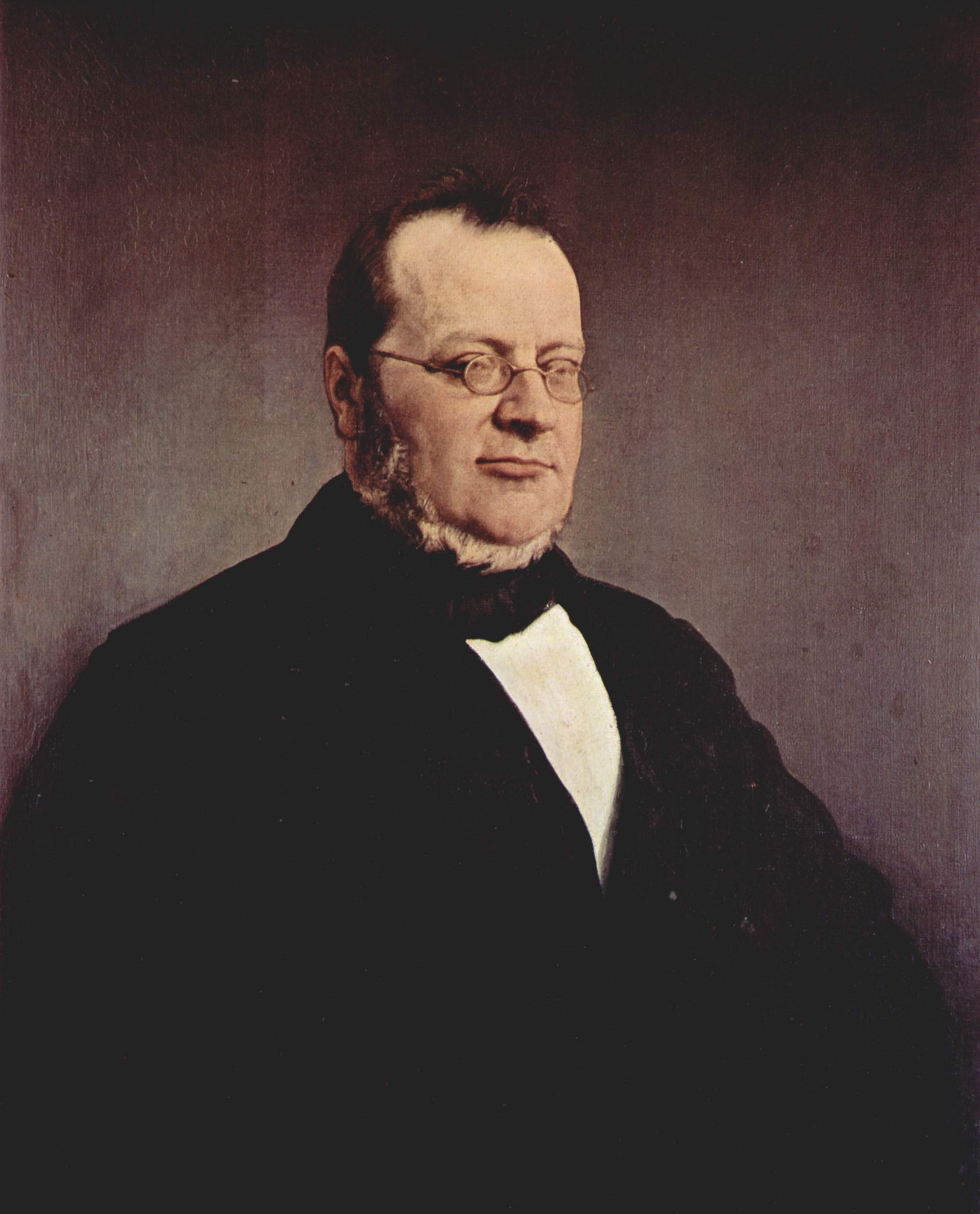
Camillo Paolo Filippo Giulio Benso, Count of Cavour
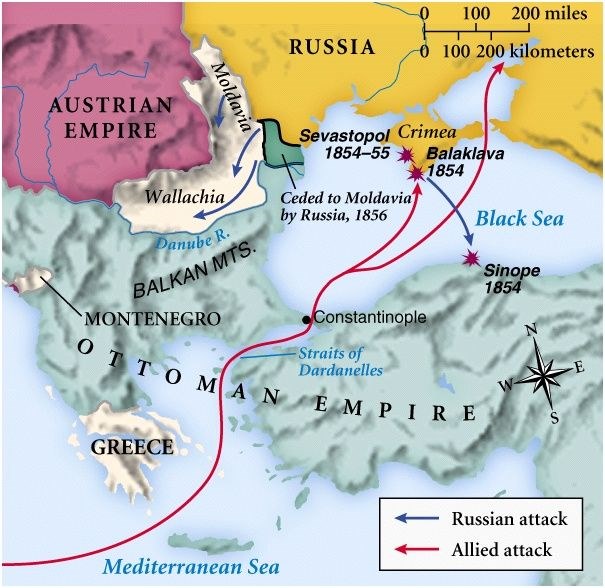
The Crimean War
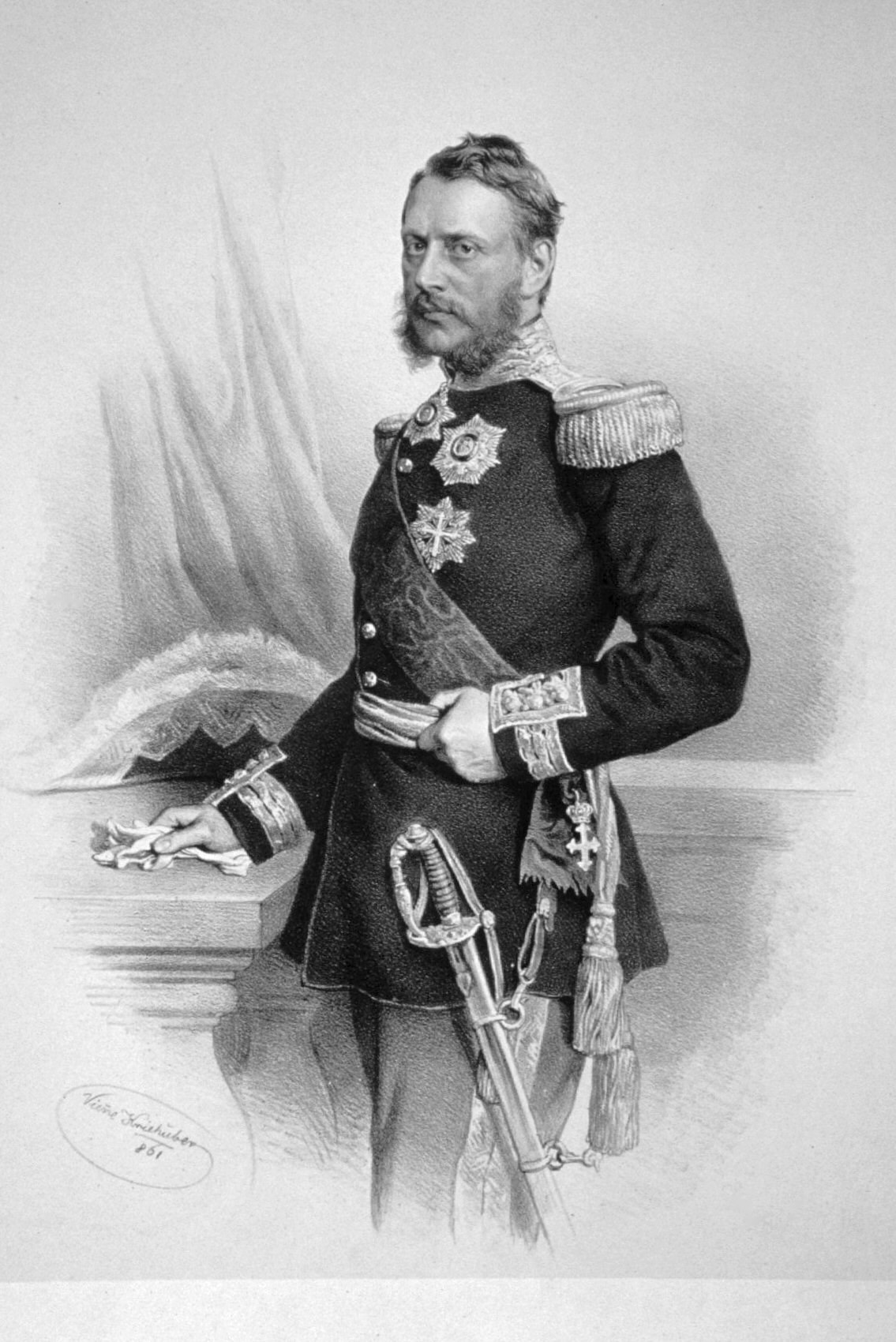
Alexander Cuza
In 1858 Cavour through negotiations with Napoleon III reached an agreement between the Kingdom of Sardinia and France. French forces agreed to support the Kingdom of Sardinia in a war against Austria. The Kingdom of Sardinia would annex all the Austrian territories in northern Italy at the successful conclusion of this war, while the Hapsburg duchies in central Italy (i.e Tuscany, Parma) would be handed over to members of Napoleon's family to rule. In 1859 allied French and Sardinian armies defeated Austrian forces in northern Italy at the battles of Magnento and Solferino. In the summer of 1859, however, Napoleon III called for a truce with Austria, the Truce of Villa Franca, which left Austrian forces still in control of Venice in northeast Italy. This unexpected truce resulted from concurrent events in central Italy. In Tuscany and other Hapsburg duchies, news of the defeat of Austrian armies had resulted in spontaneous uprisings by the people in these regions against their Hapsburg rulers. Cavour in response to these uprisings sent Sardinian troops to these regions, who were greeted by the populace as liberators. When Napoleon received news that the Kingdom of Sardinia was annexing regions that had been promised by the earlier agreement to him, Napoleon III made peace with Austria as the Kingdom of Sardinia had reneged on this agreement. In 1860 to appease Napoleon III, Cavour agreed to cede to France the alpine region of Savoy along with the Mediterranean port of Nice.
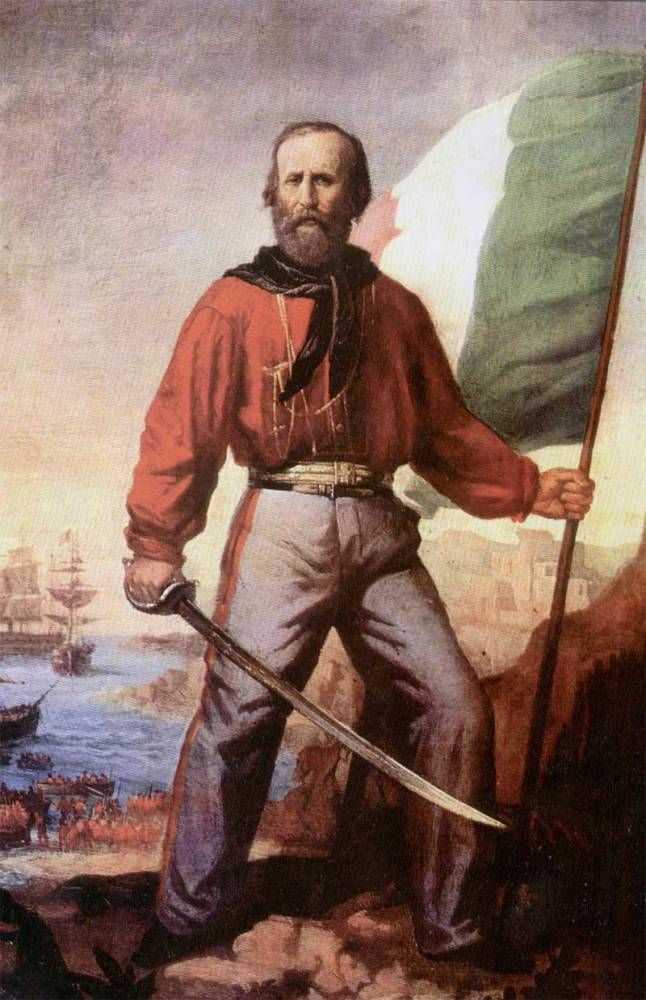
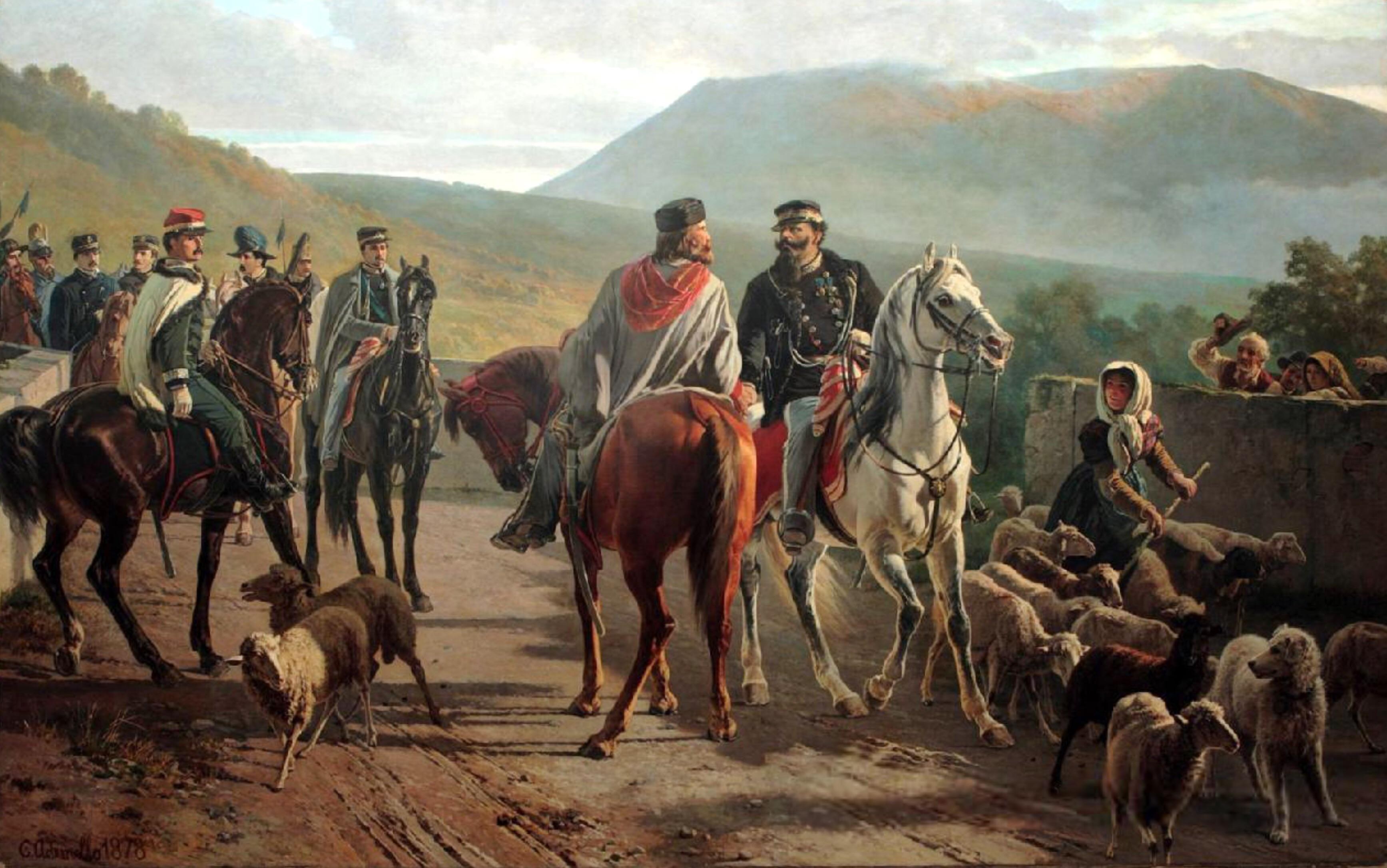
By 1860 Cavour had largely achieved his goal of uniting northern Italy under one government. Over the next decade, the entire Italian Peninsula joined together to create a unified Kingdom of Italy even after the death of Cavour in 1861. Giuseppe Garibaldi (1807-1882) was inspired by Mazzini's "Young Italy" movement, and he dreamed of uniting all Italians under a republican form of government. The events of 1859, the war with Austria and the popular uprisings in Italian cities, prompted Garibaldi in 1860 to lead a group of 1000 like-minded volunteers to the island of Sicily with the purpose of uniting all of Italy through a popular revolution. When Garibaldi and his 1000 volunteers arrived on Sicily, the local impoverished peasants quickly rallied around this charismatic figure. Garibaldi's revolutionary force rapidly grew in numbers and advanced into southern Italy and Naples. The government of Francis II of the Kingdom of Two Sicilies collapsed, and Garibaldi's revolutionary army entered Naples virtually unopposed. Cavour was committed to a constitutional monarchy for Italy, and he was very worried by Garibaldi's support for a republic. Consequently, he advised King Victor Emmanuel II to advance southward with an army into southern Italy to assume control of the region. Victor Emmanuel II listened to the prime minister and marched his army south. When the armies of Garibaldi and Victor Emmanuel II met in southern Italy, Garibaldi decided to hand over control of the area to Victor Emmanuel II and to retire from public life. Even though Garibaldi disliked the constitutional monarchy of Victor Emmanuel II and Cavour and was angry over the loss of Nice (his hometown) to France, he didn't want to risk a civil war. After the occupation of southern Italy and Sicily by Victor Emmanuel's forces in 1860, Cavour pushed quickly to extend the existing constitution for the Kingdom of Sardinia as the constitution for the new Kingdom of Italy; he wished to avoid a constitutional convention to draft an entirely new constitution since the outcome of such a convention would have been uncertain. After 1860, Venice still remained under Austrian control, while the Papal State still possessed Rome in central Italy. In 1866, when Prussia and Austria were at war, Italian forces occupied and annexed Venice, while Austria was too busy fighting Prussia. In 1870 with outbreak of the Franco-Prussian War, Napoleon III ordered French troops to withdraw from Rome, so that these troops could be deployed against Prussia. Without the support of the French army, the government of the Papal state collapsed, and Italian forces quickly moved in and annexed Rome. Afterwards, Victor Emmanuel II moved the capital of the kingdom of Italy from Florence to Rome. By 1870, the unification of Italy (the Risorgimento) was complete.
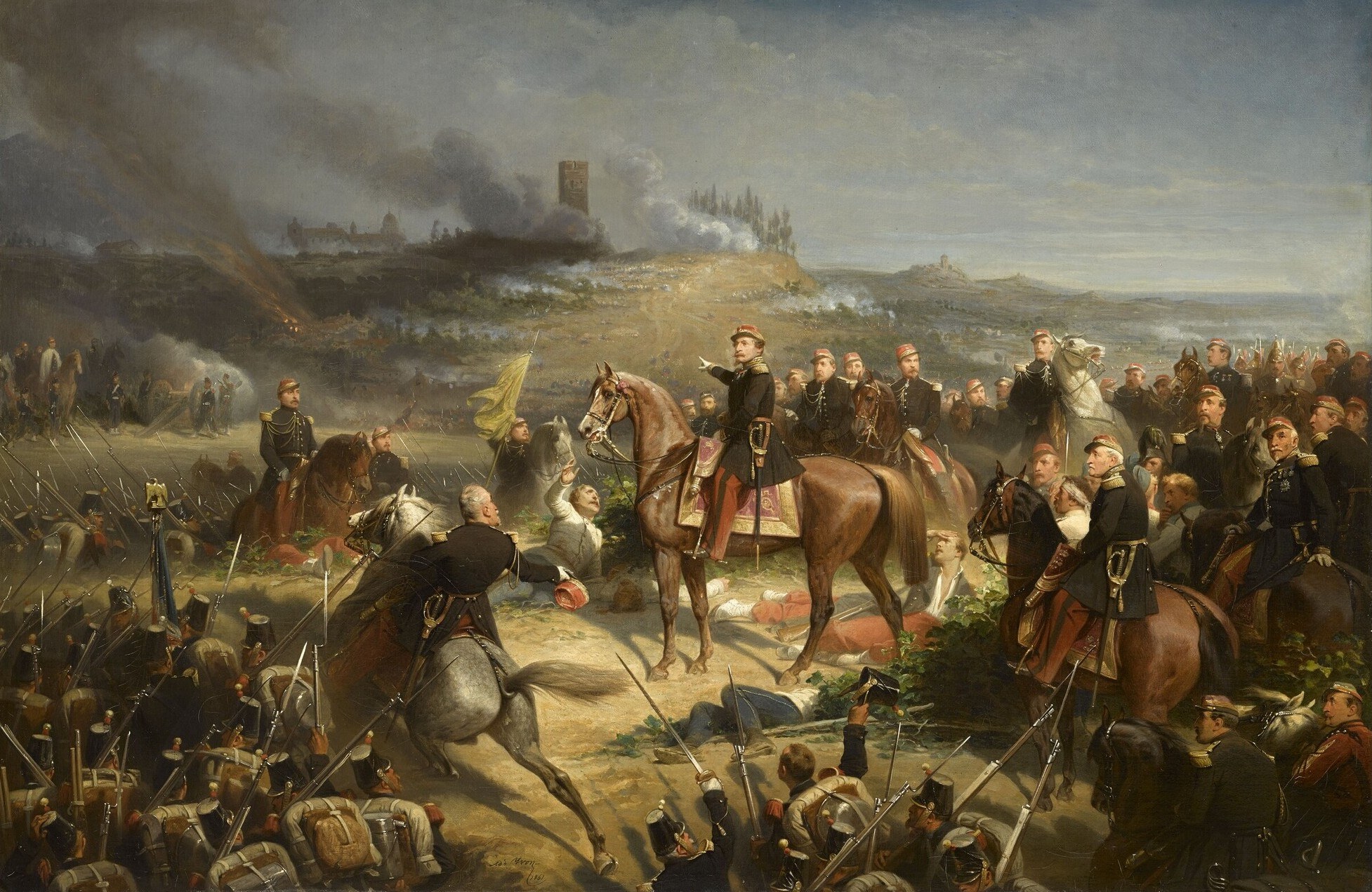
Battle of Solferino
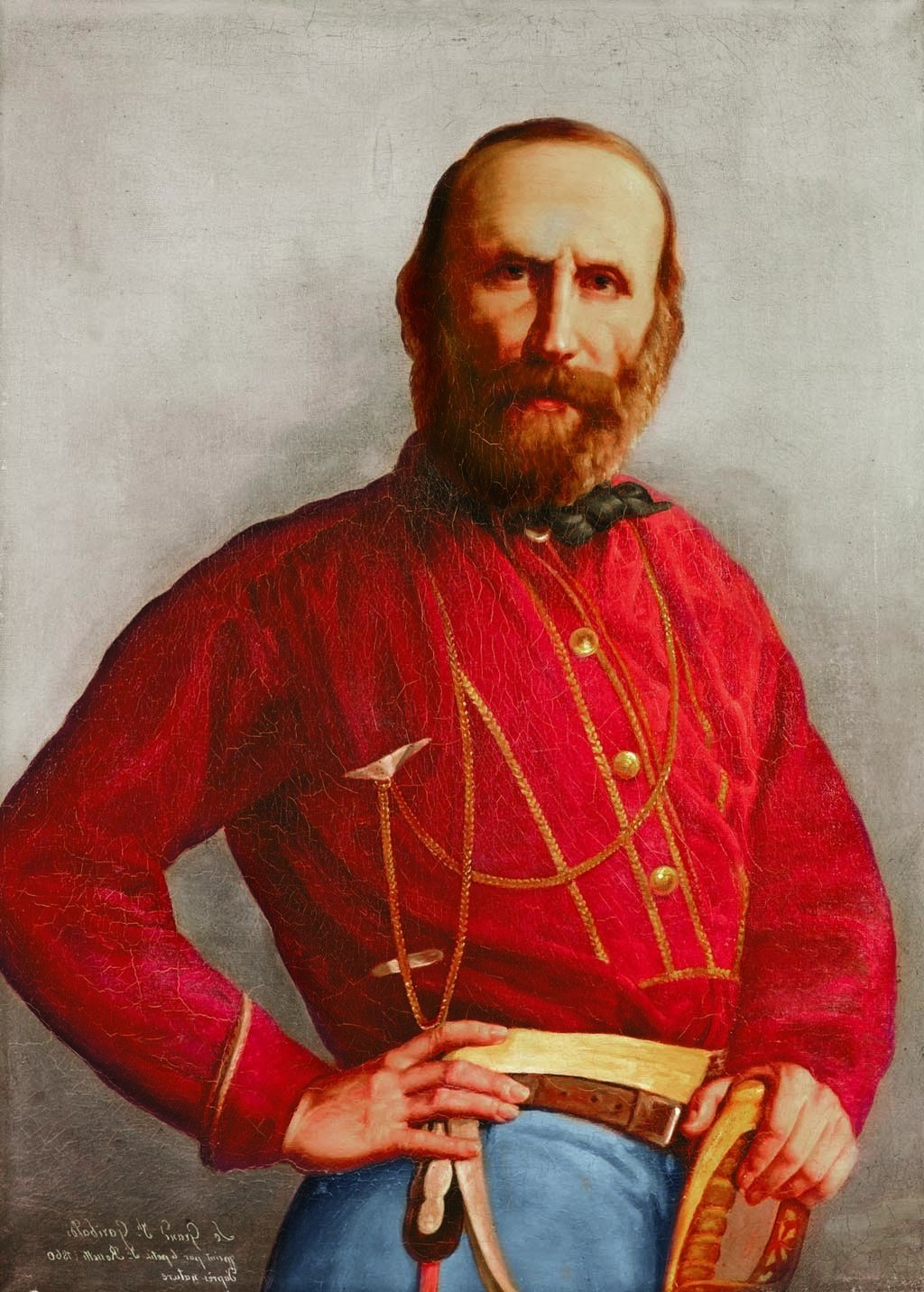
Guiseppe Garibaldi
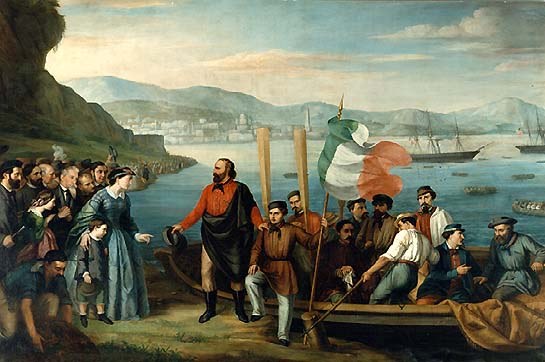
Garibaldi and the One Thousand in Sicily
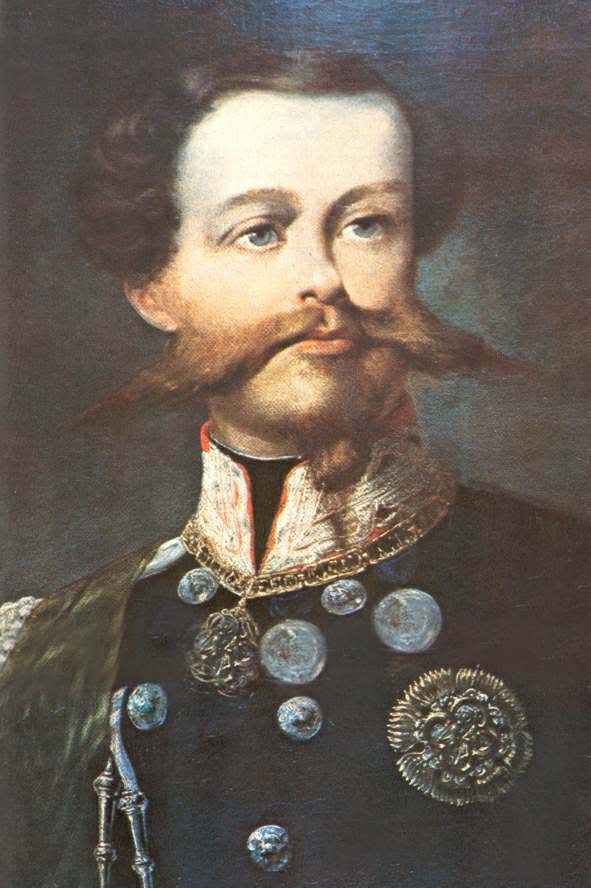
Victor Emmanuel II
In the United Kingdom and across the Atlantic in North America, Liberal reforms were achieved in the middle decades of the 19th century, not through revolution, but through the actions of the state through laws and warfare. In the United Kingdom, the wealth and size of the middle class continued to expand over this period due to the ongoing market revolution. The constitutional monarch, Queen Victoria (r. 1837 - 1901) won broad popular support in the kingdom by adopting the mannerisms and lifestyle of middle class matrons in this Victorian Age. The Queen's subjects came to see her as the embodiment of their national spirit. Queen Victoria didn't play an active role in government during her reign other than asking the party that controlled Parliament after elections to form a government under the leadership of the prime minister. In the Victorian age, the leaders of the Conservative (Tory) Party and Liberal (Whig) Party, Benjamin Disraeli (1804-1881) and William Gladstone (1809 - 1898) often served as prime ministers in this period. Gladstone and the Liberal Party enjoyed support from middle class industrialists and businessmen, whereas Disraeli and the Conservative Party represented the interests of the landowning aristocracy. In the 1860's Gladstone lobbied Parliament to pass Liberal reform by lowering the property requirement to vote, so that small businessmen and skilled tradesmen could vote in elections to Parliament. Disraeli, however, succeeded in persuading Parliament to pass the Reform Act of 1867, which eliminated all property requirements and effectively extended the right to vote to all adult males. This Reform Act benefited the Conservative Party since poor, agricultural laborers in rural areas, who could now vote, were often still deferential to local aristocrats and elected them to public office.
Gladstone and Disraeli also clashed on the issue of allowing overseas areas of the British Empire to possess self-government. Gladstone wished to grant Ireland self-government through "home-rule", whereas Disraeli and the Conservative party opposed this idea. In Roman Catholic Ireland, the so-called Fenians were Irish nationalists who opposed the British government and envisioned an independent Irish republic. In the end, Gladstone was unsuccessful in his efforts to establish home rule in Ireland, but the Fenians were a factor in Parliament's decision in 1867 to grant Canada self government through the creation of the Dominion of Canada. Many Irish Fenians had emigrated from Ireland to Canada as well as the United States as a result of the terrible Potato Famine of the 1840's and 1850's. These Fenians saw Canada as a potential free homeland for the Irish. To avoid a possible uprising in Canada, the British Parliament granted Canada autonomy and self- government. In the Dominion of Canada, the British monarch was still the ceremonial head of state, but the Canadians were now free to form their own government. Parliament didn't want to repeat the mistakes of the American Revolution and face an armed rebellion overseas. Parliament also took this action out of fear that the United States could attempt to annex Canada for itself. In 1867, the United States purchased Alaska from Russia and did have its sights set on other territory to its north. In Canada, the new Dominion government, however, didn't enjoy support from the Metis, Canadians, who were of mixed French and Native American ancestry, who spoke French and were Roman Catholic. The Metis resented that the new Canadian national government was dominated by English speaking Protestants. 1869 the Metis in western Canada rebelled against the new government during the Red River Rebellion. Under the leadership of a Louis Riel, the Metis set up an independent provisional government known as the Metis National Committee. In response the Canadian government in 1870 organized this territory into the new province of Manitoba and sent troops to the region to restore the authority of the national Canadian government.
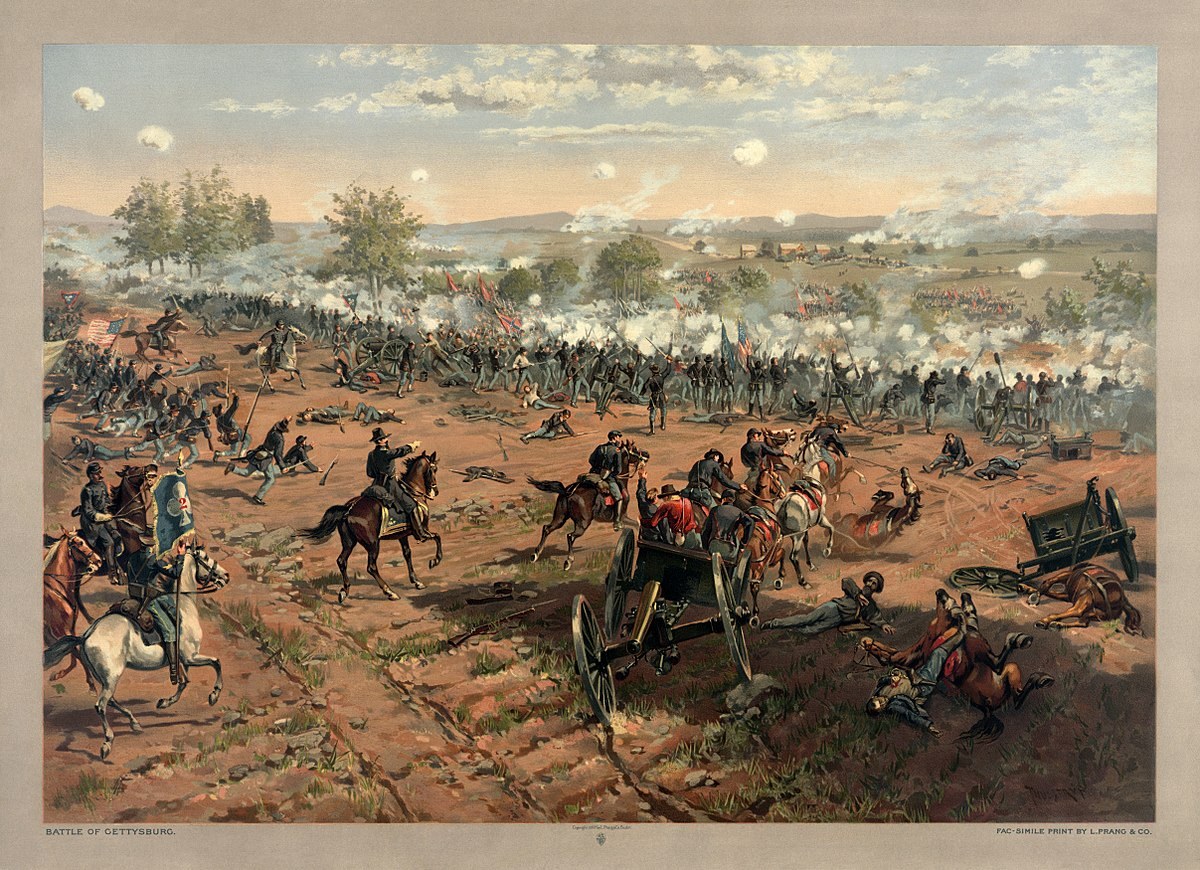
Canada was not the only region of North America in the mid-19th century facing a rebellion. The American Civil War (1861- 1865) in the United States was one of the bloodiest wars of the 19th century, resulting in the deaths of over 600,000 people. Due to the ongoing Market Revolution, the northern portion of the United States experienced rapid economic expansion in the early 19th century with the growth of factories and cities, whereas in the rural south, the economy was based on agriculture and the production and export of cash crops such as cotton and tobacco. Wealthy plantation owners in the south profited greatly by employing slave labor on their farms (Before the Civil War, the majority of the wealthiest Americans lived in the south). By the mid-19th century, however, many northerners viewed slavery as an evil and immoral institution that violated the Liberal principles on which the nation had been founded. Southern defenders of slavery, however, maintained that the African slaves were racially inferior and not worthy of receiving equal rights as citizens. In the north, a new political party arose in the 1850's, the Republican Party, which opposed slavery. In 1860 the Republican candidate for president, Abraham Lincoln, won the election. In response, the southern states in 1861 seceded from the Federal Union of the United States and formed an independent government, the Confederate States of America since they viewed Lincoln's election as a threat to the institution of slavery. Lincoln and the United States government in the north resolved this political crisis through blood and iron. The north with its larger population and industrial capacity was able to raise and equip larger armies than the south. Union armies by 1865 had invaded and occupied the south, resulting in the collapse of the Confederacy. In the immediate aftermath of this conflict, the victorious Union government implemented Liberal reforms through new amendments (13th, 14th, and 15th Amendments) to the United States Constitution, which abolished slavery and granted equal rights to the former slaves, including the right to vote. However, since the United States government didn't provide any land for the freed slaves (the freedmen), most freedmen, like the former serfs in Russia, remained poor, landless agricultural laborers (sharecroppers) in the south. By the late 19th century, local state governments in the south even passed laws that denied black people in these states their civil rights.
War and rebellion also gripped Mexico in the mid-19th century. In Mexico the elite creole population still dominated the government even after independence. People of mixed European and native ancestry and the indigenous peoples constituted the majority of the population in Mexico and desired equal rights and a voice in the government. In 1856 Mexican Liberals under the leadership of Benito Juarez (1806-1872) drafted a new federal constitution for Mexico that ended the privileges formally enjoyed by the military and the Roman Catholic Church, which were historically dominated by the creole elite. In 1858 Conservatives in Mexico with the support of the Roman Catholic Church rebelled against the new government, resulting in the Mexican War of Reform (1858 -1861). In 1862 Napoleon III of France decided to intervene in this struggle in Mexico in support of the Roman Catholic Church. In France Napoleon won popular support from Conservatives and the peasants through his strong support of the Roman Catholic Church and the Papacy. Napoleon III also saw the outbreak of the American Civil War in 1861 as an opportunity to advance French interests in the Western Hemisphere at the expense of the United States, which was weakened by civil war. French troops invaded Mexico with the support of Conservatives, and in 1864 installed Maximilian of Austria as the Emperor of Mexico. Maximilian was the brother of the Austrian Hapsburg Emperor, Francis Joseph I. Benito Suarez and the Liberals, however, continued to wage war against this new government. With the end of the American Civil War in 1865, Napoleon withdrew French troops in 1866 and in the next year, Mexico City fell to Liberal forces, which captured Maximilian and executed him in 1867.
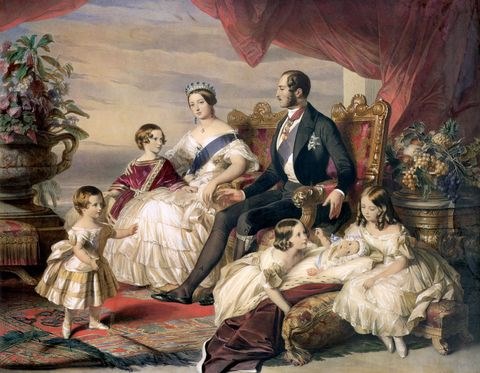
Queen Victoria
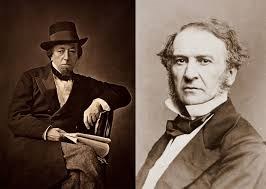
Disraeli and Gladstone
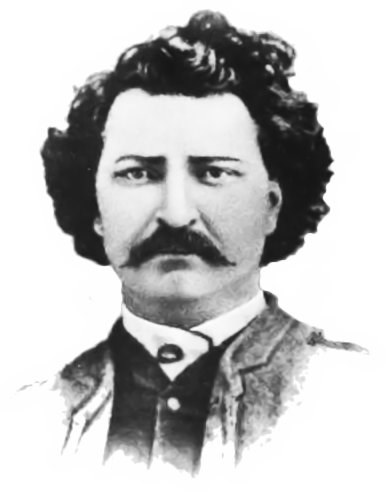
Louis Riel
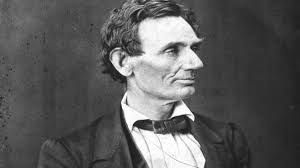
Abraham Lincoln
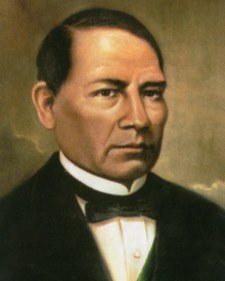
Benito Juarez
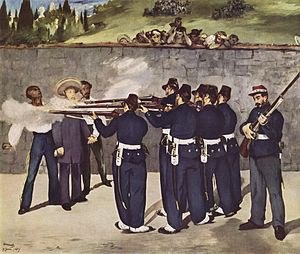
Execution of Maximilian of Mexico