Competing Alliances
Modern World19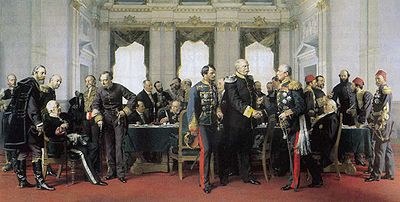
In the face of internal ethnic turmoil and class tensions and strife, fervent nationalism provided European states with a way to find unity and strength. In the late 19th century, European powers each sought to advance their own national interests through building up their armed forces and forming military alliances with other nations against common enemies. In this period Otto Von Bismarck, the German Chancellor played a decisive role in the diplomatic efforts to build such alliances, so much so, that historians have referred to this era as the "Age of Bismarck". Following the end of the Franco-Prussian War in 1871, Bismarck knew that France would seek revenge against Germany for this humiliating defeat and seek to recover the region of Alsace-Lorraine. Bismarck therefore set out to form military alliances with other European powers to keep France in check and to maintain peace in Europe. Despite his famous reference to "Blood and Iron" during the unification of Germany, Bismarck was a devout Christian and no warmonger. Unfortunately, Bismarck's diplomatic efforts would ultimately be in vain. In 1891 after Bismarck's retirement in 1890, Republican France and Imperial Russia formed a powerful military alliance despite their very different political ideologies. This alliance against Germany and Austro-Hungary would set the stage for the outbreak of war in 1914.
In his efforts to isolate France diplomatically and to deter a future war, Bismarck sought to forge alliances with Austro-Hungary and Russia. Bismarck didn't seek to involve the United Kingdom in a system of alliances since that state historically only became involved in the affairs of the European continent when its overseas empire was in any way endangered. In 1873, Bismarck successfully negotiated the League of the Three Emperors, which linked Germany, Austro-Hungary, and Russia in a military alliance. These three states all shared common values and concerns. All three emperors of these states were staunch Conservatives. Moreover, all three states had previously partitioned Poland in the late 18th century and were all concerned with suppressing Polish nationalism. Bismarck hoped that this league would restore the traditional alliance between the Hapsburg and Romanov Dynasties that had been damaged by the Crimean War.
Unfortunately for Bismarck, the Russo-Turkish War in 1877 strained relations between Russia and Austro-Hungary since Austro-Hungary feared that Russian support for Slavic nations in the Balkans against the Ottoman Empire might stir up revolts by Slavic peoples in the Austro-Hungarian Empire. During the reigns of the Sultans Mehmud II (r. 1808-1839), and his son Abdulmejid I (r. 1839-1861) the Ottoman government instituted sweeping reforms (the Tanzimat - "re-organization") of the military and the bureaucracy, using western European states as a model. The sons of top Ottoman bureaucrats who attended universities in France and the United Kingdom soon desired the Ottoman Empire to adopt Liberal reform. These "Young Turks", just like other young Liberals in 19th century Europe, were also fervent nationalists. They embraced their Turkish heritage along with a strong commitment to their Muslim faith. In 1876 the new Sultan, Abdul Hamid II (r. 1876 - 1909) with the support of these Young Turks, adopted a written constitution for the Ottoman Empire. Under this new constitution, local councils across the empire elected delegates to a Chamber of Deputies as the lower house of the legislature, while the Sultan appointed members to a Senate, the upper house of the legislature. The Ottoman Empire at this time in 1876 had engaged its new and improved military in brutally crushing uprisings in Bulgaria and Bosnia by Orthodox Christian Bulgarians and Serbs, who were also inspired by nationalism to seek independence from Ottoman rule. In response to these revolts and the massacres by Ottoman troops, the Ottoman province of Serbia declared its independence from the Ottoman Empire and went to war against the Sultan. In 1815 the Sultan had granted the Ottoman province of Serbia self government and autonomy after the Serbs in 1804 had risen up against Ottoman rule under the leadership of Milos Obrenovich and Darde Petrovic "Karadorde" or "Black George". Under this 1815 agreement, the local Serb nobles or voivodes elected a prince (Knez) to govern the province as the vassal of the Sultan. In 1876, the Knez of Serbia, Milan Obrenovich, a grand nephew of Milos Obrenovich, declared war on the Sultan. In this conflict, the superior Ottoman army quickly defeated Serb forces. The brutal suppression of these revolts in Bosnia, Bulgaria, and Serbia and the slaughter of Slavic, Orthodox Christians by Ottoman forces angered Russia, whose Czar was also a Slav and the head of the Orthodox Church in the Russian Empire.
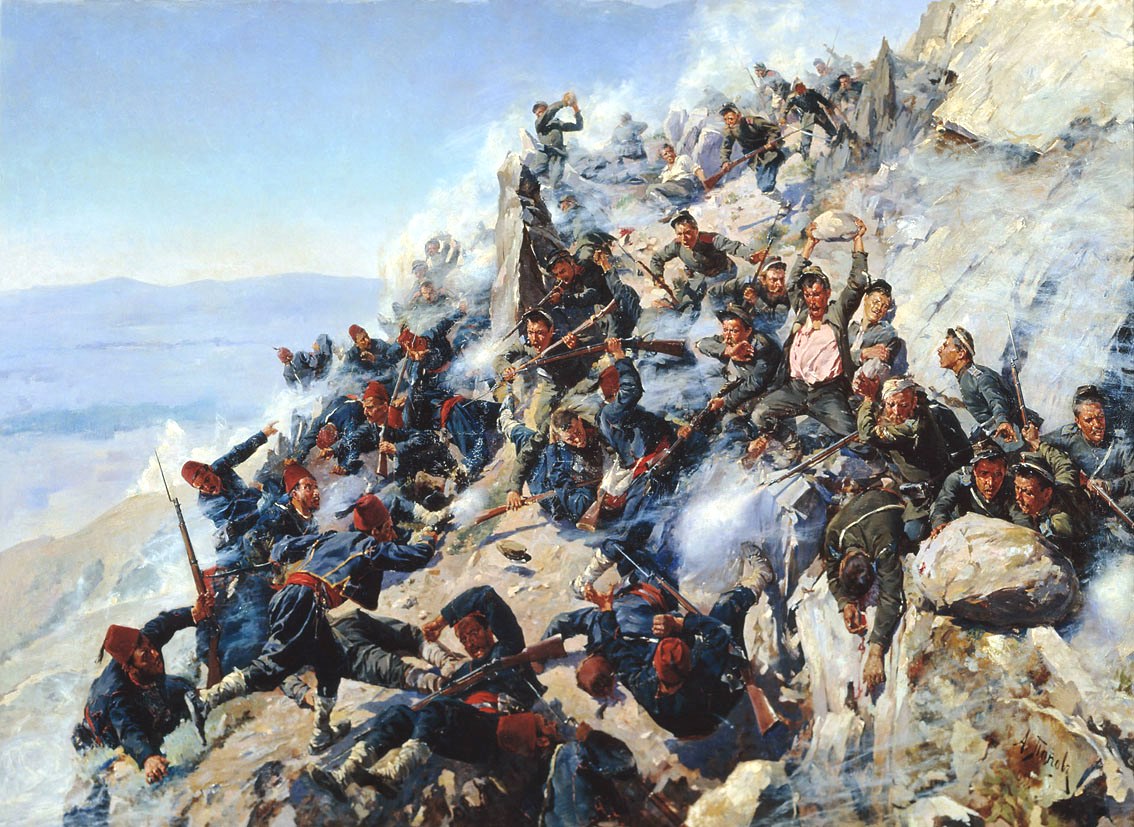
In 1877 Russia declared war on the Ottoman Empire. The emancipation of the serfs in 1861 had enabled the Russian state to draft and train millions of former serfs into an immense army. Russian forces quickly defeated the outmanned Ottoman armies, and the Ottoman capital, Istanbul, was in peril of falling. In 1878 the Ottoman Empire sued for peace, and the Russian government dictated the terms of the Treaty of San Stephano. Under the terms of this treaty, Romania and Serbia became independent nations instead of Ottoman vassal states, and Bulgaria became autonomous principality within the Ottoman Empire, but under Russian occupation. The Russian victory over the Ottoman Empire resulted in an international crisis. The United Kingdom feared that this weakening of the Ottoman Empire would destabilize the eastern Mediterranean and put strategic routes between the United Kingdom and its Indian empire at risk. Austro-Hungary feared that this Russian victory and independence for Slavic nations in the Balkans would inspire revolts by the Slavic populations within its own empire. Bismarck was worried that Germany would have to choose to support either Russia or Austro-Hungary in a conflict between these two empires, and the one not chosen consequently would ally with Germany's enemy, France. In 1878 Bismarck invited the European states to send delegates to Berlin, the capital of Germany, to resolve the problems that had arisen due to the Russo-Turkish War.
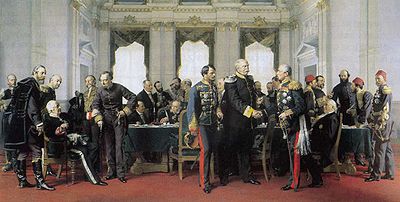
In 1878 delegates from European nations convened at the Congress of Berlin and negotiated an end to the current crisis under the leadership of Bismarck. Under agreements reached at this congress, the Ottoman Empire ceded the island of Cyprus in the eastern Mediterranean to the United Kingdom, so that the United Kingdom could station a fleet on the island and therefore secure the routes that linked the United Kingdom to the Indian Ocean and India. To strengthen the Ottoman Empire after this devastating defeat and maintain regional stability, this congress shrank the size of the Bulgarian nation created by the Treaty of San Stephano. The congress returned to the Ottoman Empire, the southern section of Bulgaria , known as Eastern Rumelia. The Congress also installed a German prince, Alexander of Battenberg as the new constitutional monarch of Bulgaria. He was related to both the British and Russian royal families. To balance the influence of Russia in the Balkans through their influence over Bulgaria, the congress permitted Austro-Hungary to occupy and administer the Ottoman province of Bosnia-Herzegovina in the Balkans as a protectorate. The Congress of Berlin was effective in meeting the concerns of the European powers and Bismarck in particular. In 1879 the League of the Three Emperors was renewed for another three years, and France remained diplomatically isolated and without allies.
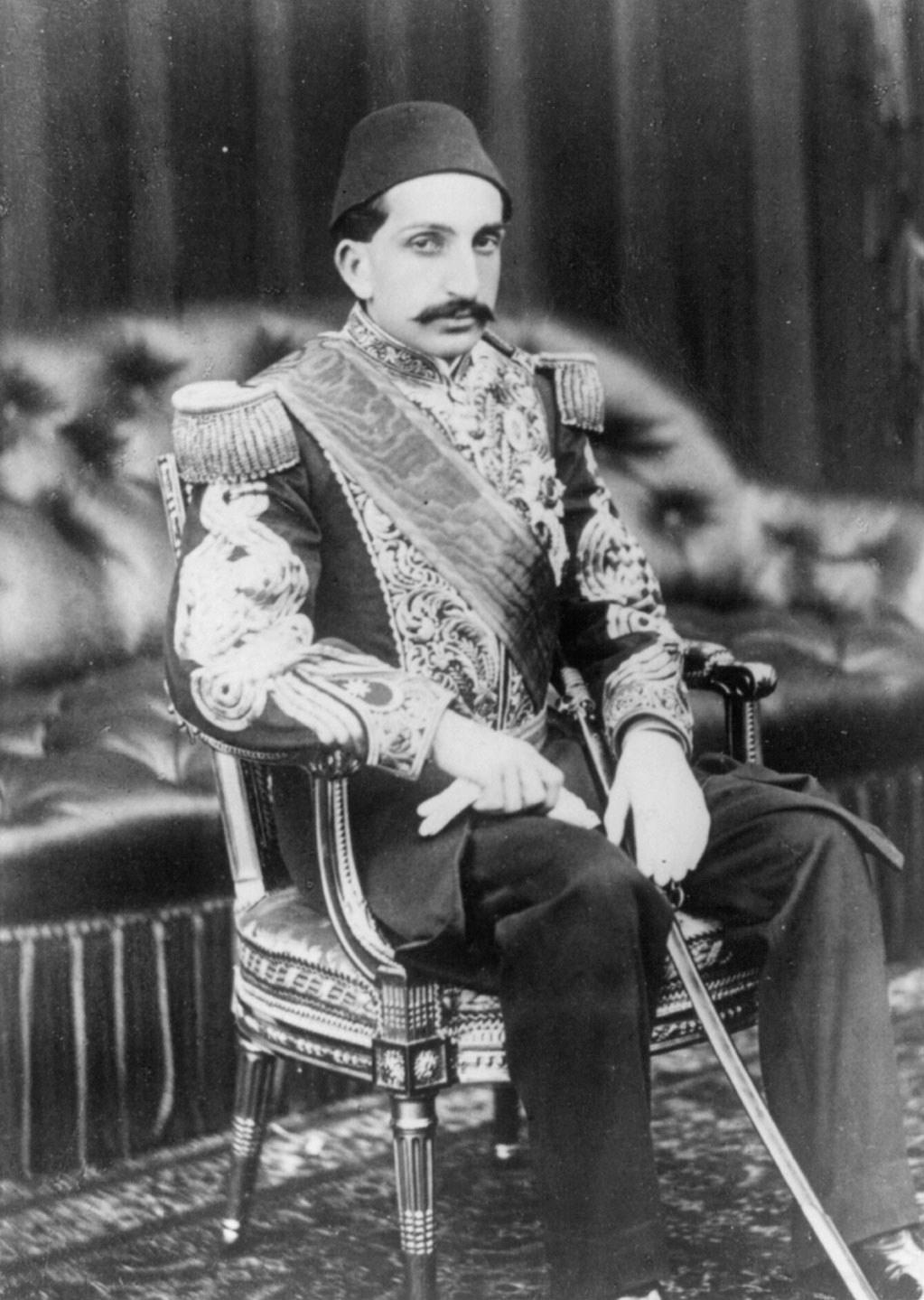
Abdul Hamid II
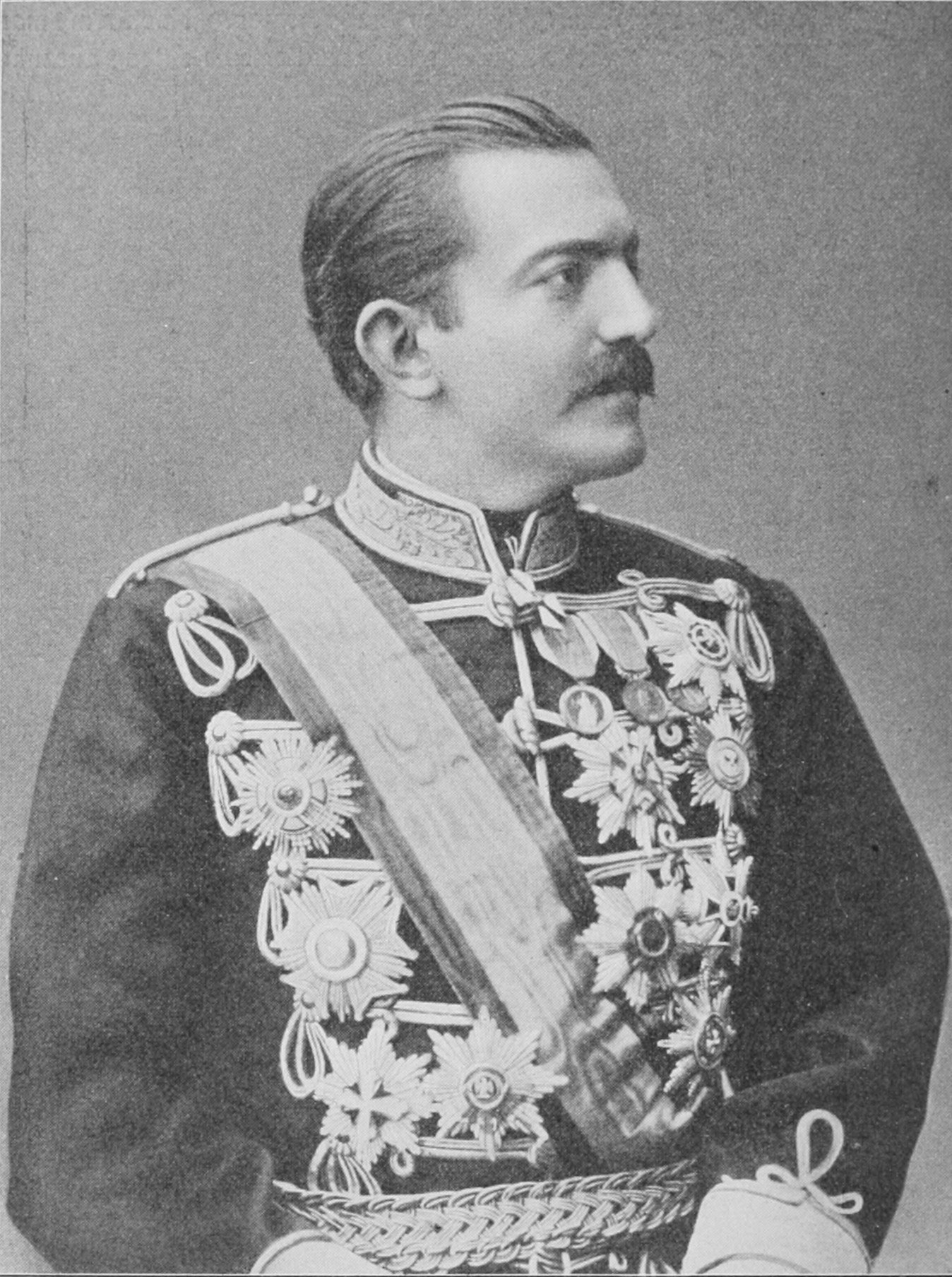
Milan Obrenovich
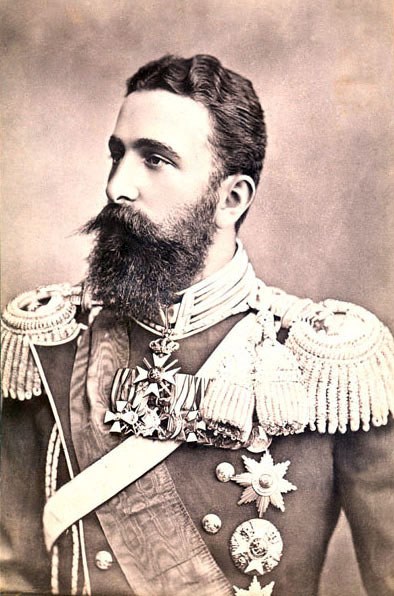
Alexander of Battenberg
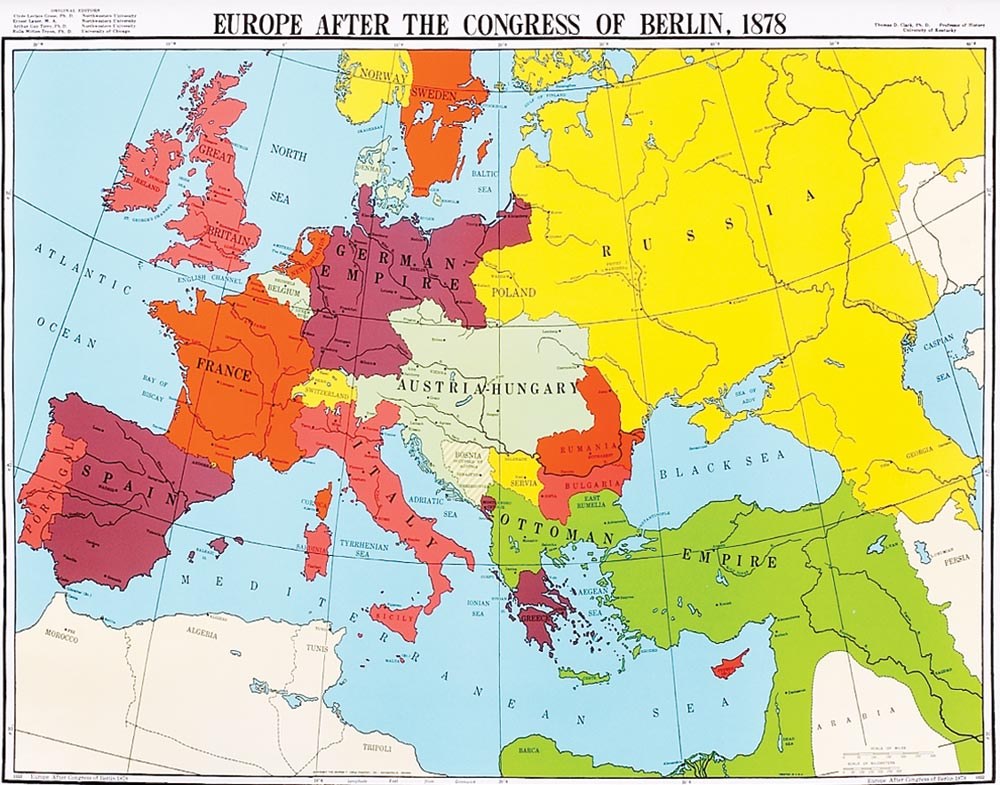
Europe in 1878
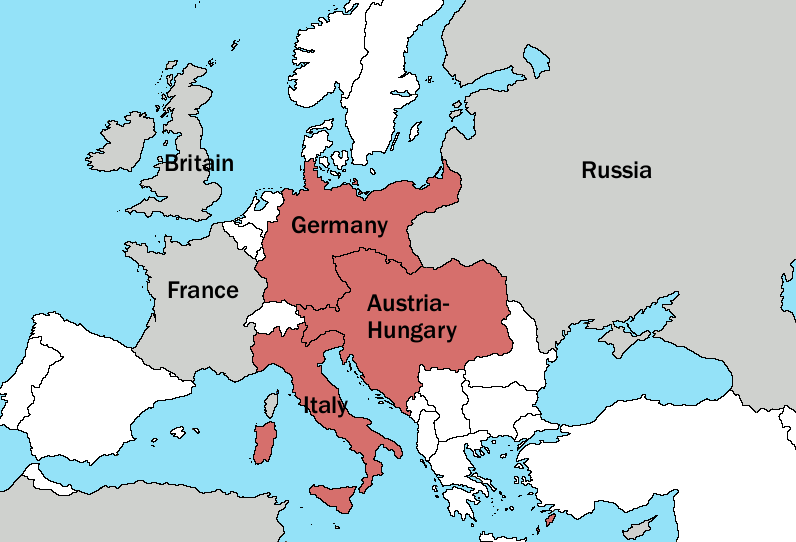
After the Russo-Turkish War, Bismarck decided to expand Germany's system of alliances to keep France in check, as he was now unsure about keeping both Austro-Hungary and Russia as German allies due to their hostility to one another. In 1879 Bismarck successfully negotiated an alliance between Germany and Austro-Hungary alone, known as the Dual Alliance. Since the German Austrians shared a common culture and Roman Catholic faith with Germans in southern Germany, the maintenance of this alliance was key to promoting unity within the German Empire, especially with the ongoing Kulturkampf within Germany. The German alliance with Austro-Hungary therefore took precedence over any alliance with Russia.
In 1881 rocky relations between Italy and France opened up an opportunity for Germany to forge a new alliance with Italy. In 1881 France occupied Tunis in North Africa and established a protectorate over this region. Back in 1830, France had conquered and annexed neighboring Algiers to suppress the Barbary Pirates. The presence of French colonists in Algiers resulted in increasing commercial relations between France and Tunis. In Tunis, the local prince, the Bey, ruled over the region as the vassal of the Ottoman Sultan. Since 1705 the Husainid dynasty had governed as the hereditary Beys of Tunis. By 1881, the current Bey of Tunis, Muhammad III as-Sadiq had become heavily indebted to French bankers to finance his government. Consequently, French troops occupied Tunis to insure that the Bey's government honored its debts to French banks and their investors. This occupation infuriated Italian nationalists, who envisioned Italy recreating the glory of the ancient Roman Empire and dominating the Mediterranean Sea. French conquests in North Africa was a threat to Italy's own plans for expansion. In 1882, Bismarck convinced Italy to join Germany and Austro-Hungary in a Triple Alliance, which was directed against France.
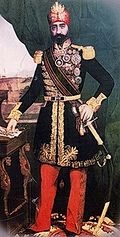
Muhammad III as-Sadiq
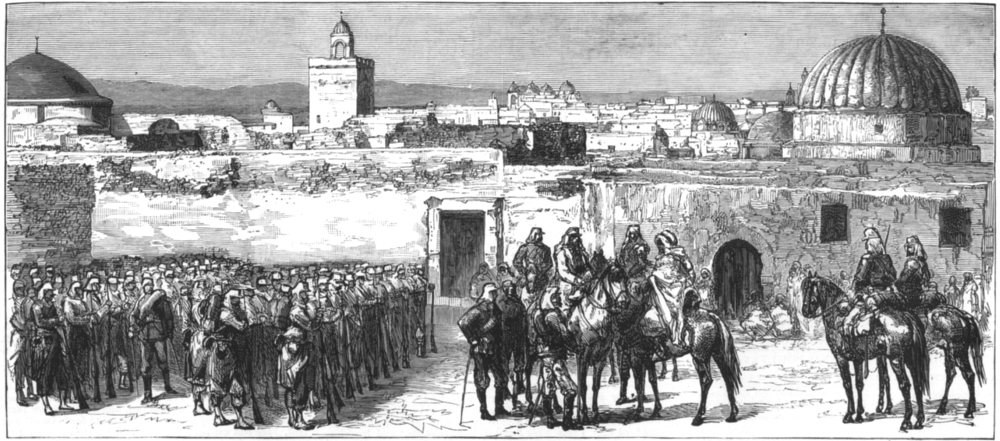
1881 French occupation of Tunis
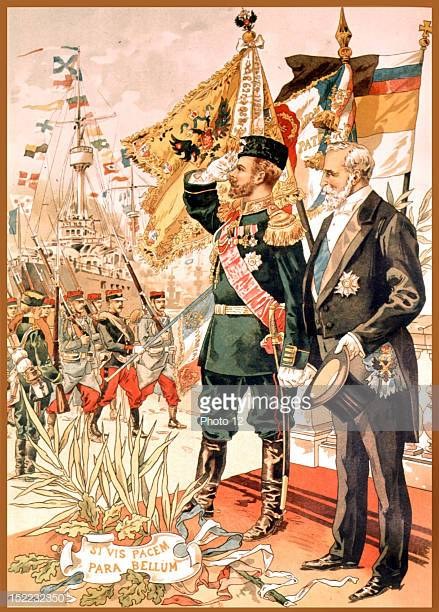
As relations between Austro-Hungary and Russia further deteriorated in the 1880's, ultimately Germany had no choice but to side with Austro-Hungary, thereby opening up a military alliance between France and Russia and an end to France's diplomatic isolation. By 1885 the Bulgarian government of Alexander of Battenberg had dismissed its Russian advisers and embarked on an independent course. In that year also, Bulgarian nationalists in Eastern Rumelia revolted against the Ottoman government, and in response, the Bulgarian government sent troops to the region and annexed it. This expansion of Bulgaria worried both Serbia and Greece, who feared that Bulgaria was seeking to recreate the Medieval Bulgarian Empire of the 9th century, which had dominated the Balkans. The new king of Serbia, Milan I Obrenovich , consequently, pushed Serbia into a war with Bulgaria in 1885 to hold in check possible Bulgarian territorial expansion. Austro-Hungary, however, feared that a protracted war in the Balkans involving Serbia might inspire ethnic Serbs in Austro-Hungary to revolt in the hope of uniting with their fellow Serbs in Serbia. The Austro-Hungarian government therefore pressured both Serbia and Bulgaria to end the war through negotiations.
Russia was incensed by the decrease of their influence in the Balkans and the increase in Austro-Hungary's standing. From the perspective of Russian nationalists, the Slavic, Orthodox Christians in the Balkans were the natural allies of "Mother" Russia. In 1886, Russian agents kidnapped Alexander of Battenberg, transported him to Russia, and tortured him until he agreed to abdicate the throne. The Russian government hoped that this action would result in the creation of a new, pro-Russian government in Bulgaria. Almost all European governments, however, including Germany and Austro-Hungary, denounced the Russian state for taking this action. France, however, alone publicly supported Russia. France was by this point desperate to win an ally for a possible war against Germany. Within France, an influential national organization, the League of Patriots lobbied the French government to wage war of revenge on Germany and recover Alsace -Lorraine. In response to France's support for Russia in this crisis, Bismarck warned the German Reichstag that Germany might soon face war against both France and Russia. Historians, however, assert that Bismarck was exaggerating the threat of war at this point since he was trying to convince the Reichstag to approve a massive ten year spending plan for the German military. Once the German parliament approved Bismarck's military spending plan, Bismarck began downplaying the possibility of war. Bismarck always wanted to make sure that his fellow Prussian Junkers in the German military possessed power and influence. When the whole affair had blown over, the Russians were not even able to secure a pro- Russian government in Bulgaria. The Bulgarian parliament in 1887 offered the throne to another German prince, Ferdinand of Saxe-Coburg and Gotha, who was native to Austro-Hungary.
After the events of 1886, Bismarck knew that he could not renew the League of the Three Emperors due to the antagonism between Russia and Austria-Hungary. He still wanted to avoid an alliance between France and Russia. In 1887, Bismarck negotiated the Re- insurance Treaty between Russia and Germany, which established a non-aggression pact between the two empires for three years. In 1888 however, Bismarck's plan to keep the peace was derailed by the deaths of his friend, William I , and William's son, Frederick III, which resulted in the accession of William II (r. 1888 - 1918) , his grandson, as the new Kaiser. William II embraced popular racial theories in Germany at that time that maintained that Germans were a racially superior nation. William II didn't understand why Bismarck feared an alliance between racially inferior Frenchmen and Russians. When the Re-insurance treaty was up for renewal in 1890, William II dismissed Bismarck as Chancellor and refused to renew this treaty with Russia.
When the Re-insurance treaty between Russia and Germany lapsed in 1890, France and Russia quickly reached an agreement to become allies in 1891. This agreement also involved a commitment by the French government to invest in railroads and industry in Russia. In 1892 William II asked the general staff of the German army to develop a plan to fight a potential two-front war against Russia to the east and France to the west. Over the years, the general Alfred von Schlieffen developed a plan that required the German army to invade France through neutral Belgium rather than the route during the Franco-Prussian War through the Ardennes Mountains between the borders of Germany and France. The invasion of France through Belgium was necessary so that German troops could invade France and capture Paris, the French capital, as quickly as possible, so that the German army could then direct its full attention on Russian forces to the east before the Russian government could fully mobilize its massive armies. The development of this ambitious plan set the stage for the rapid escalation of World War I in the summer of 1914.
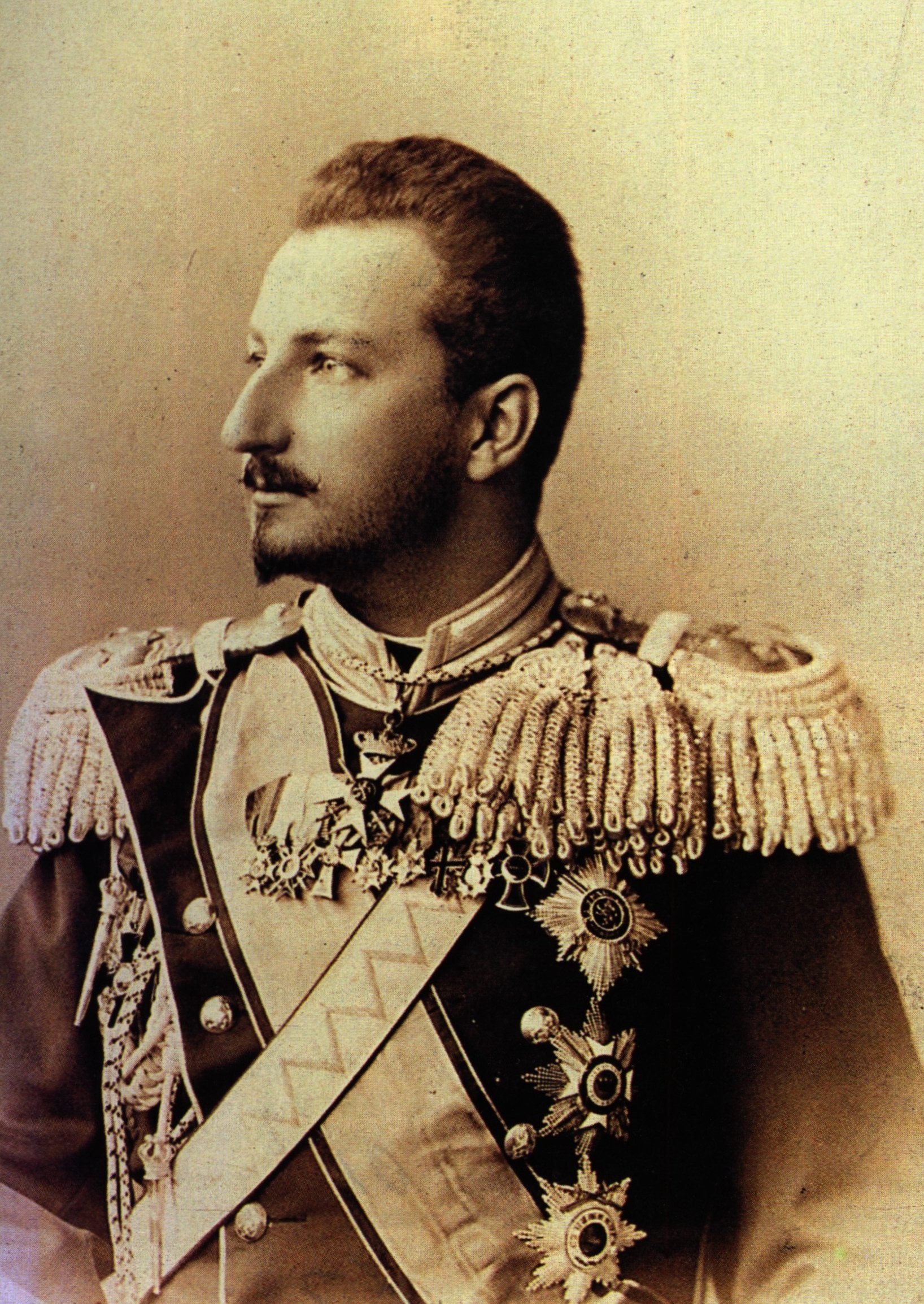
Ferdinand of Saxe-Coburg and Gotha
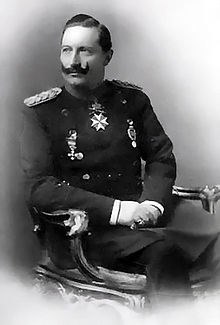
William II
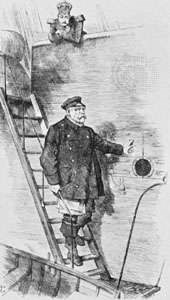
Satirical cartoon depicting Bismarck's dismissal
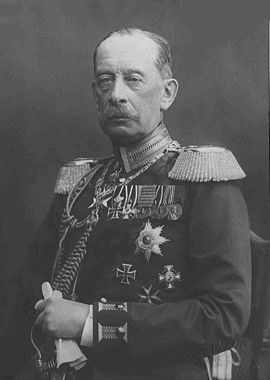
Alfred von Schlieffen
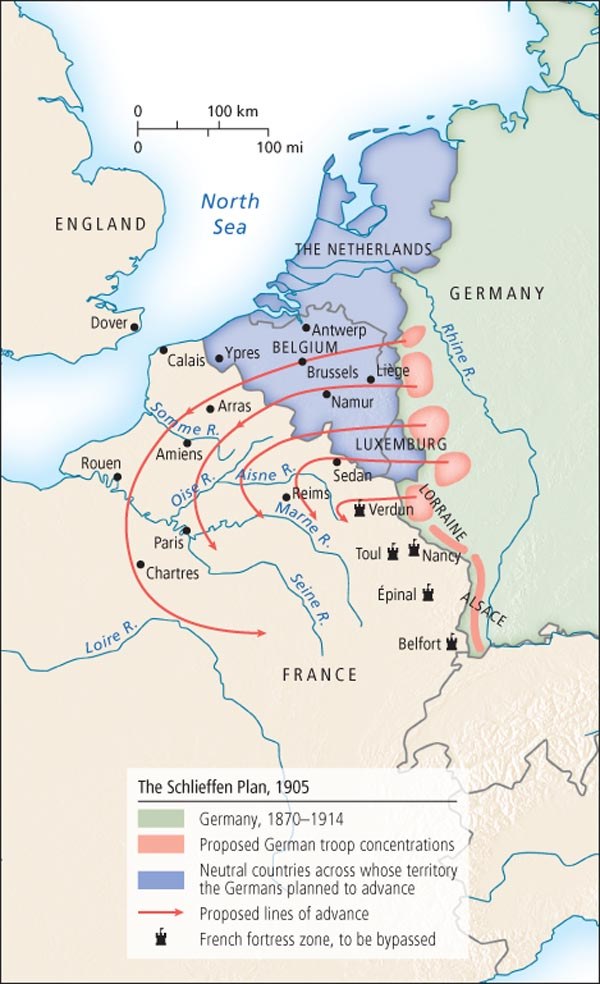
Von Schlieffen Plan