Imperialism: The Race for Africa
Modern World20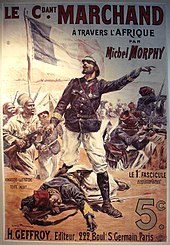
In 1886 Bismarck proposed an alliance between Germany and the United Kingdom since both states shared a common enemy in France, but the British Prime Minister, Robert Cecil, rejected such a proposal,as the United Kingdom had traditionally avoided "entangling alliances" with states on the European continent. Less than 20 years later, however, in 1904 the United Kingdom and France put aside their differences with the Entente Cordiale agreement. This historic reconciliation between these two ancient rivals resulted from British fears regarding the rapid expansion of the German economy as well as the German fleet and overseas empire by 1900; Germany was thus in a position to replace the United Kingdom as the dominant economic and naval world power. This alliance between France and the United Kingdom would later become a key factor in the victory of these two allies over Germany in World War I.
The growing rivalry between Germany and the United Kingdom arose at the very end of the 19th century due to imperialism, as European powers competed with one another to acquire control over overseas territory. This race to conquer lands was focused primarily on the continent of Africa as well as east Asia, and China in particular.
Historians have drawn a distinction between the "new" imperialism among European powers at the close of the 19th century and the "old" Imperialism which preceded it. Whereas "new" imperialism involved the conquest and direct control over overseas territory, old imperialism was concerned primarily with advancing economic interests of European states overseas and securing markets for luxury goods. Since the 17th century due to the influence of the concept of mercantilism and continuing well into the 19th century, the United Kingdom and France were the two main commercial rivals during the era of old imperialism.
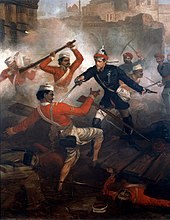
Since the late 18th century, the British East India Company had profited by exercising control over the various native states of the Indian subcontinent through its private mercenary soldiers, the Sepoys, which the company recruited among local Muslims and Hindus and trained, employing British military officers to lead these troops. In the early 19th century, the British East India Company profited greatly from the export of opium from India to China. In 1819 the British East India Company founded a naval base and colony on the island of Singapore off the Malay Peninsula, so that the company could secure the Straits of Malacca, a strategic route for trade between China and India. The government of the Qing Dynasty under the emperor Daoguang (r. 1820 -1850), however, was concerned with the addiction of so many of his subjects to smoking opium. When this emperor decided to ban the importation of this drug, the government of the United Kingdom went to war against China in the First Opium War (1839-1842) to protect the drug trade for the British East India Company. The superior British army and fleet crushed Chinese forces, and the Chinese government sued for peace. In the Treaty of Nanking (1842) the Chinese government agreed to open up its major ports to British trade and ceded to the United Kingdom the island of Hong Kong off the southern coast of China for a British naval base and port. The British East India Company, however, ceased to exist shortly thereafter due to the Indian Mutiny in 1857. The Hindu and Muslim Sepoys were increasingly resentful of the arrival of Christian missionaries in India and the support that they received from the British East India Company as well as inadequate pay and the insensitivity of company officials to their religious practices. In 1857 these Sepoys mutinied against their British commanding officers, and declared their allegiance to the last reigning Mughal Emperor in Delhi, Bahadur Shah Zafar (r. 1837-1857). During this uprising, the mutineers brutally massacred the wives and children of company officials. British forces, however, by the end of the year defeated the Sepoys and ended the revolt. The British Parliament with the Government of India Act in 1858 dissolved the British East India Company and established a new British administration over India, known as the Raj. With the exile of the last Mughal Shah, Bahadur Shah Zafar, the British Queen Victoria became the new Empress of India.
Like the United Kingdom, France also expanded its territories in the 19th century, primarily to advance its commercial interests. In addition to the conquest and colonization of Algiers in 1830, France under the reign of Napoleon III in 1858 went to war against China and Vietnam in an effort to secure a steady supply of silk for the French cloth industry. In 1856, the United Kingdom declared war on China in the Second Opium War (1856-1860) after Chinese officials tried unsuccessfully again to ban the importation of opium. With China under British attack, French forces in 1858 targeted Vietnam, a Chinese vassal state. In the Treaty of Saigon in 1862, the Vietnamese Emperor, Duc Tong, of the Nguyen Dynasty ceded much of South Vietnam to France.
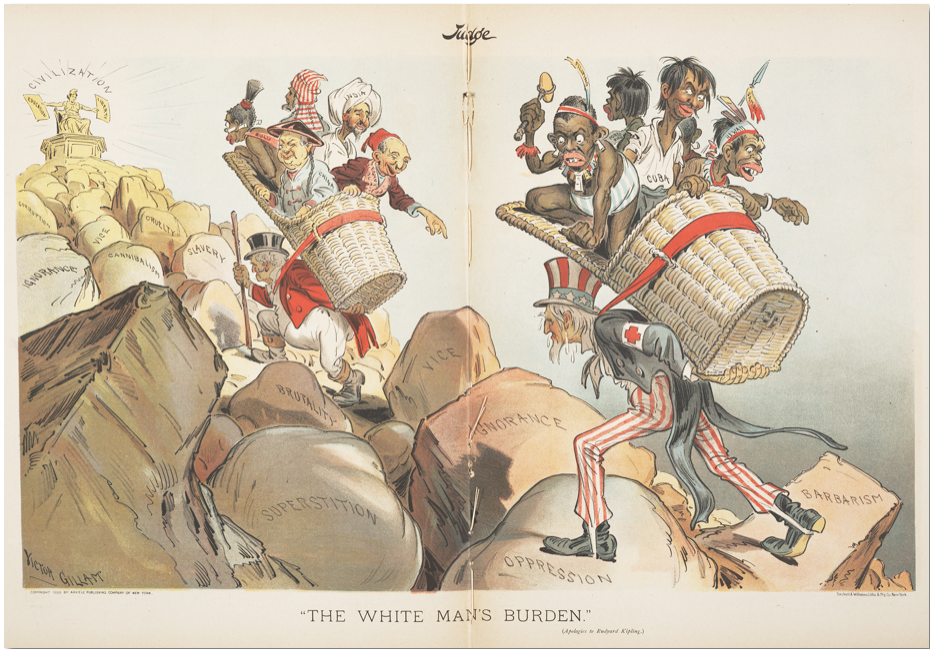
Toward the end of the 19th century with the advent of this new imperialism, the great world powers were more concerned with conquering and controlling territory rather than simply advancing their commercial interests overseas. Historians attribute the emergence of this new imperialism to a host of factors. First, these powers increasingly saw the acquisition of territories as a matter of national honor and pride. In 1890 the American historian, Alfred Thayer Mahan published his influential book, The Influence of Sea Power Upon History. This book maintained that the power and size of a state's navy historically measured that state's status and position in world affairs. Policy makers at this time consequently supported the expansion of naval forces and the acquisition of strategic naval bases overseas. In 1903, for example, the United States under President Theodore Roosevelt, through military intervention, secured the independence of Panama from the South American nation of Columbia, and in 1904 began construction of the Panama Canal. By the late 19th century, imperialists also maintained that the conquest of overseas territory could solve the economic problem of overproduction, which had caused "panics". Advanced industrialized nations, they believed, could simply export their surplus goods to their overseas colonies. These colonies could also supply these nations with important raw materials for their economies such as oil and rubber. Modern studies of imperialism, suggest, however, that the high cost of conquering and maintaining these overseas colonies actually was greater than the actual economic benefit of these colonies for imperialist nations. Imperialists also were under the influence of the pervasive ideas of Social Darwinism. According to this line of reasoning, nations, like species in nature, were locked in a struggle for survival. Only the "fittest" nations would be able to evolve to a more advanced state, just as species adapted and evolved into more complex species over time. Many Imperialists maintained that a nation had to acquire new territories and compete with other rival nations in order to survive and evolve. Social Darwinism also provided imperialist powers with a justification for conquering overseas territories. European nations, they maintained, were more evolved than the "primitive", less advanced cultures of Asia and Africa. Imperialists even argued that "superior" European nations had a moral obligation to bless the indigenous peoples of these regions with their advanced civilization. For example, The British poet and novelist, Rudyard Kipling (1865 - 1936) in his 1899 poem, The White Man's Burden urged the American public to do their duty and to civilize the "primitive" peoples of the Philippines in southeast Asia, which the United States had just annexed in 1898. The race among the European powers to acquire territories also resulted from internal class tensions in European society. European aristocrats, whose influence in society was in decline, often served as high ranking military officers. Wars of conquest overseas provided these aristocrats with a way to achieve glory as well as political influence at a time when their economic fortunes were falling.
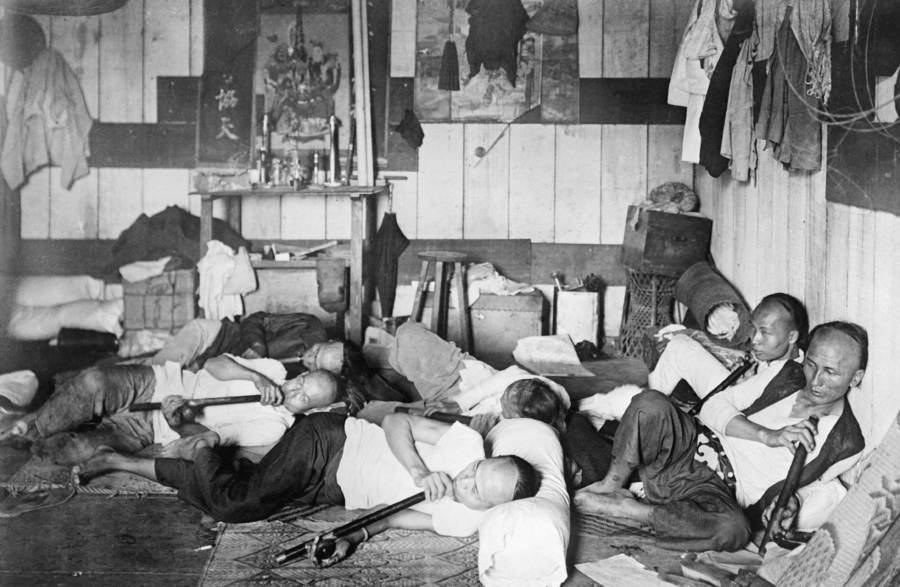
Chinese "opium den"
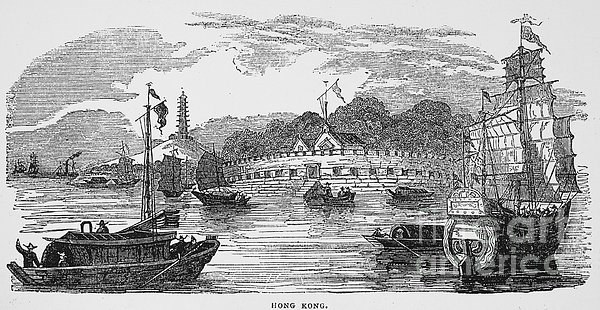
Hong Kong in 1842
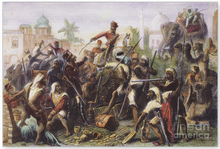
The Indian Mutiny of 1857
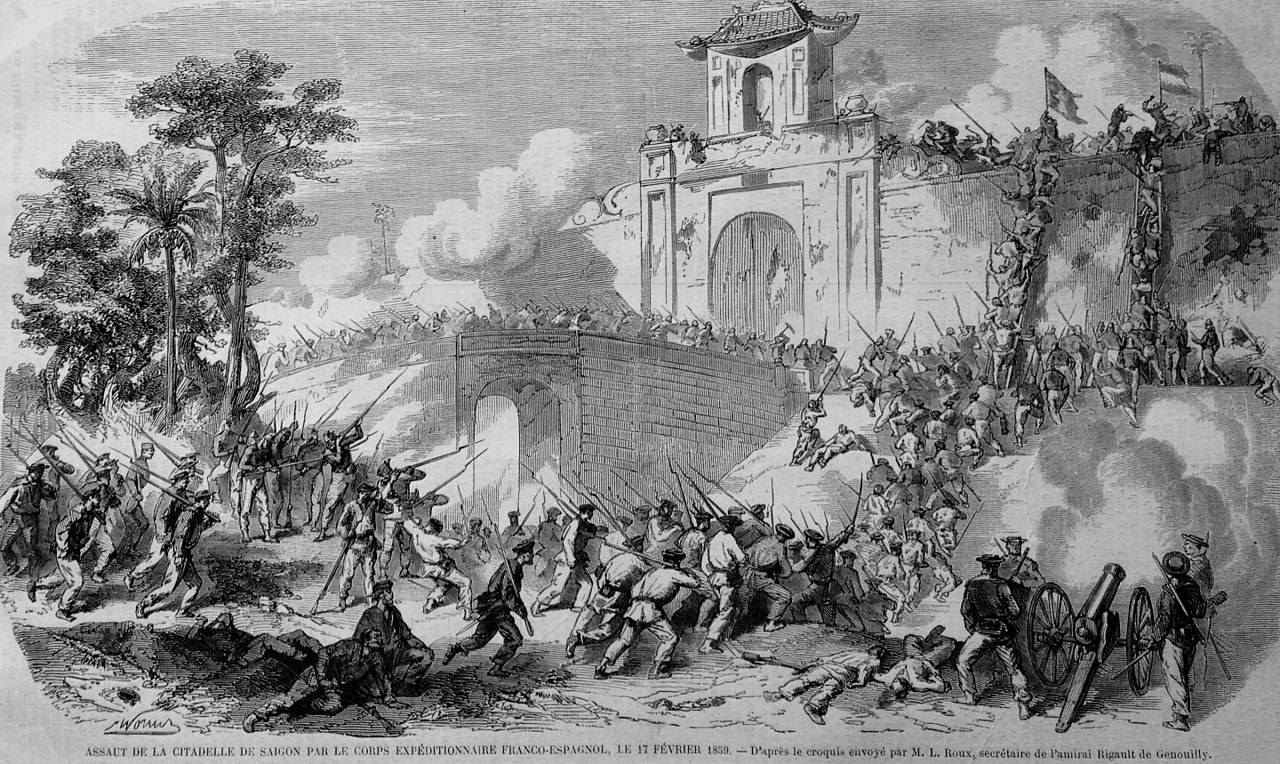
1858 French siege of Saigon
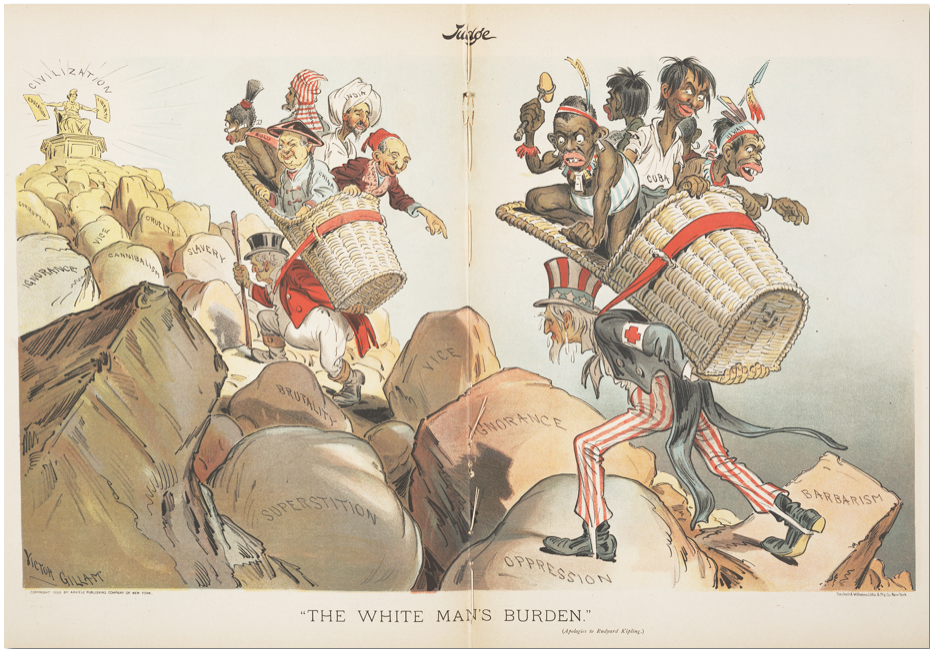
Cartoon satirizing "White Man's Burden"
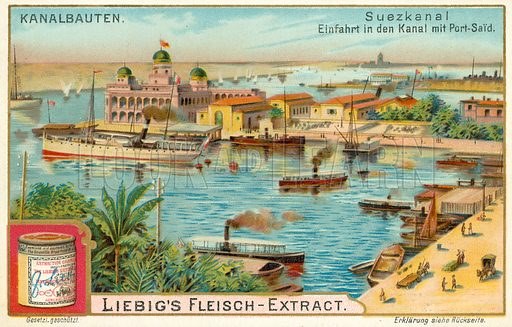
The race among European powers to conquer and annex territory in the continent of Africa began with the occupation of the Ottoman provinces of Tunis (See Course Lecture 19) and Egypt In North Africa by French and British forces in 1881 and 1882. The governments of France and the United Kingdom in both Tunis and Egypt initially acted to protect their economic interests. In the case of Egypt, an Anglo-French company between 1859 and 1869 financed the construction of the Suez Canal, which linked the eastern Mediterranean Sea to the Indian Ocean. The completion of this canal resulted in increased British and French investment in Egypt. Consequently, the Ottoman viceroy, the reigning Khedive of Egypt, Ismail Pasha (r. 1863 - 1879), the grandson of Mohammed Ali, became reliant on British and French bank loans to finance his government. In 1876, when Ismail Pasha was unable to pay his government's heavy debts, the British government demanded that British and French officials oversee the administration of the Khedive's government, so that the Egypt could honor its debts. In Muslim Egypt, however, the presence of these Christian officials in the Khedive's administration was very unpopular. In 1882, riots in Cairo by angry Muslim students and a mutiny among the Egyptian army paralyzed the Egyptian government. In response, British troops quickly occupied the country and set up a protectorate over Egypt with Mohammed Tewfik Pasha (r. 1879-1892) as the nominal Khedive.
Over the next two decades in the 1880's and 1890's France and the United Kingdom as well as other European powers, scrambled to occupy territory in Africa. French military forces conquered a vast area of northern and western Africa, which became known as French West Africa and French Equatorial Africa and included such modern African nations as Chad, Mali, Niger, and the Central African Republic. British armies advanced inland from naval bases along the West African coast, which the British had originally established in the mid-19th century to suppress the African slave trade. By 1901 the United Kingdom had established a protectorate over the small kingdoms and Muslim states of Nigeria in central Africa. This rapid expansion of European powers in Africa at this time resulted from recent European advances in technology and science. In the past, fast flowing African rivers such as the Congo and the Niger, had made it difficult for European ships to penetrate upstream into the African interior. In the late 19th century, however, Europeans' steam powered ships could transport men and supplies on these rivers relatively quickly. The invention of the first machine gun by the British-American inventor Hiram Stevens Maxim in 1884 enabled European forces to outgun native armies even when these European forces were greatly outnumbered. In the past, diseases such as Malaria and Yellow Fever decimated Europeans living in Africa. By the late 19th century, however, European doctors knew that these diseases were carried by insects, mosquitoes, and Europeans in Africa took protective measures to prevent mosquito attacks, such as consuming quinine in tonic water, which made their blood less attractive to mosquitoes.
The scramble for Africa and the intense competition for territory among Europeans almost resulted in a war between France and the United Kingdom due to the Fashoda incident in 1898. In 1881 in the Sudan in the Nile River Valley, south of Egypt, the followers of the Muslim religious leader, Muhammad Ahmad rebelled against the rule of the Khedive of Egypt in a Jihad, and in 1885 expelled the Khedive's government from Sudan. His followers claimed that Muhammed Ahmad was the Mahdi, whose appearance, according to Islamic tradition, in the end of days preceded the return of the prophet Jesus and the Last Judgement. In 1898 a British force under the command of Horatio Herbert Kitchener advanced south from Egypt, up the Nile River, to restore the rule of the Khedive, whose government was under British control. The French saw the rebellion and war in the Sudan as an opportunity to advance French control in the Upper Nile Valley. The French feared that British control of the entire Nile Valley would enable the United Kingdom to control an extensive stretch of territory, running the length of Africa from north to south. In 1896, therefore, the French government had instructed Captain Jean-Baptiste Marchand to lead French forces from French West Africa to the Upper Nile Valley to claim this this territory for France. When Marchand's French army arrived in the Sudan, however, in September, 1898, British forces had just crushed the Muslim army of the Mahdi at the Battle of Omdurman. At Fashoda to the south of the site of this battle, the armies of Kitchener and Marchand encountered one another. Kitchener consequently informed Marchand that British forces were now in control of the region, and he ordered Marchand to withdraw his army. Marchand didn't want to start a war between France and the United Kingdom, so he withdrew his force from the Upper Nile Valley. In France after this incident at Fashoda, public opinion favored a declaration of war against the United Kingdom. Cooler heads prevailed in the French Republic, and the two countries reconciled just six years later with the Entente Cordiale in 1904.
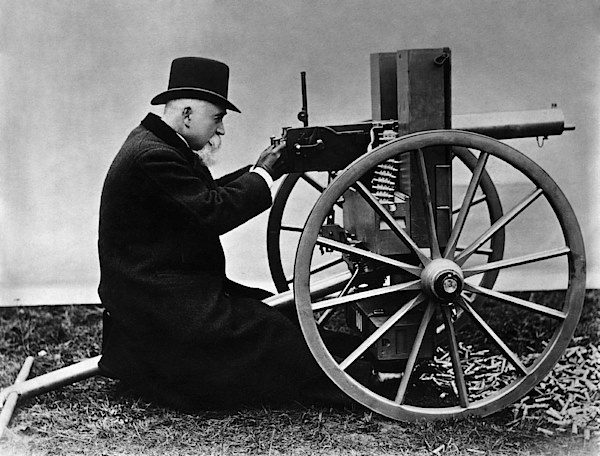
Maxim machine gun
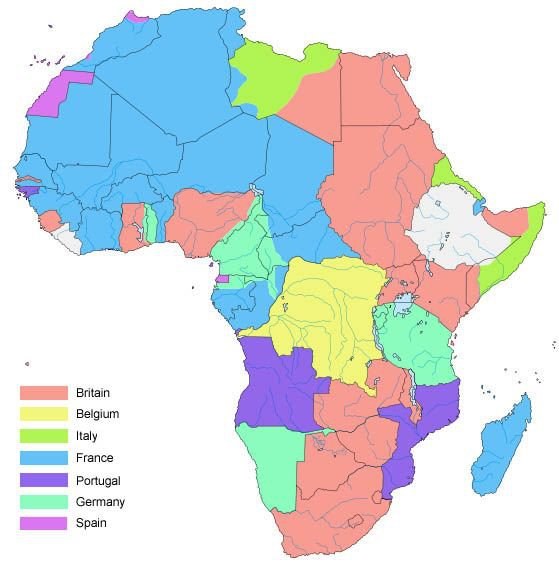
European Colonies in Africa
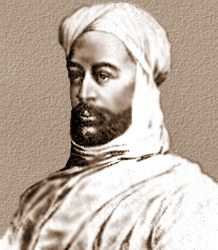
Muhammed Ahmad, the "Mahdi"
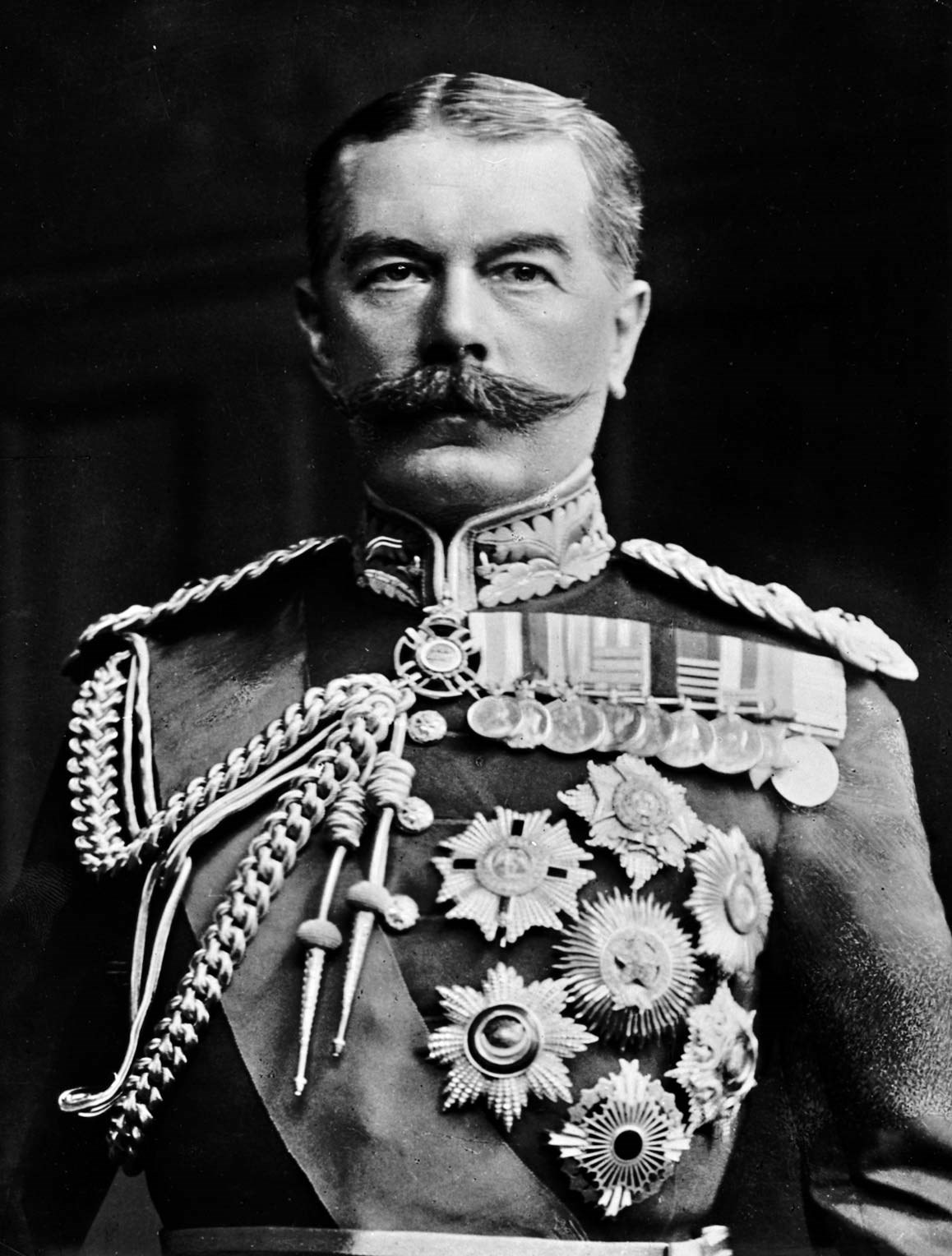
Herbert Kitchener
Jean-Baptist Marchand
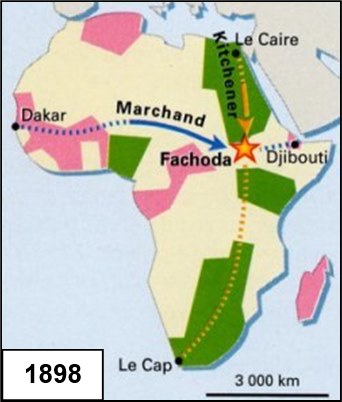
The Fashoda Incident
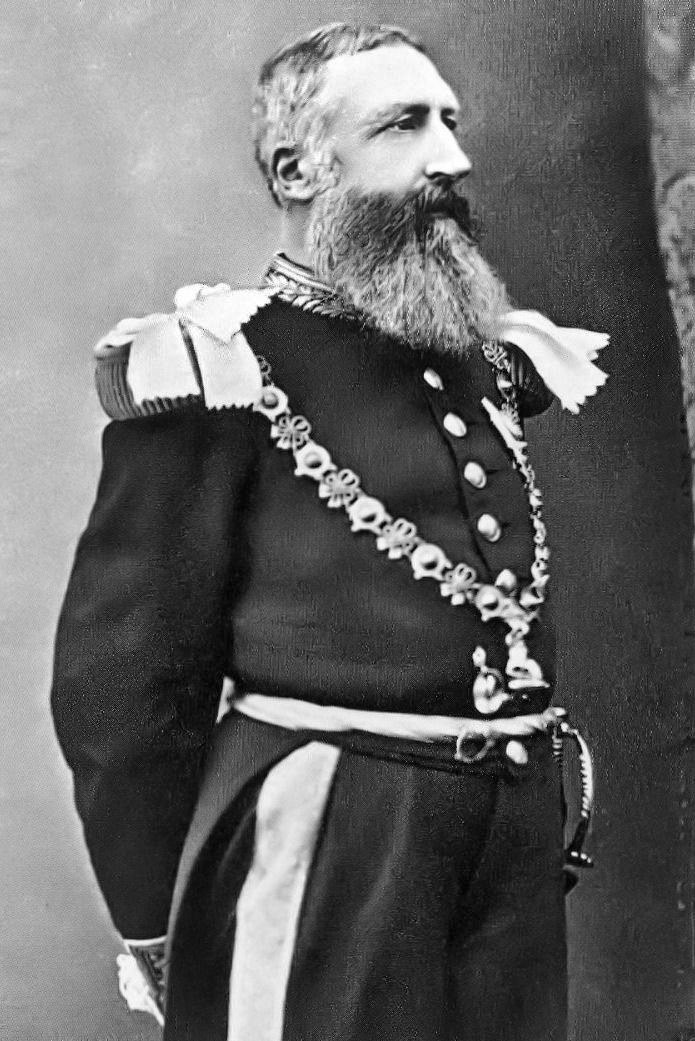
During this "scramble for Africa", at the close of the 19th century, two African regions were not occupied by a European power, the Congo Free State and Ethiopia, but under very different circumstances. In 1884 Bismarck convened a Berlin Conference in an effort to resolve conflicting claims by European powers to African territories. At this conference, the king of Belgium, Leopold II (r. 1865 - 1909) received international support for his plan to establish a protectorate over the native rulers of the Congo for the supposedly humanitarian purpose of bringing advanced civilization to these "primitive" peoples. In 1885 Leopold enlisted the aid of the famed British-American explorer, Henry Morton Stanley, who had explored the Congo River Basin in Central Africa in the previous decade. Stanley traveled to this region in 1885 and met with native rulers, who signed agreements recognizing the authority of Leopold, thereby creating the Congo Free State. Afterwards, Leopold founded his own private army, recruiting mercenaries from across Africa. This Force Publique (Public Force) employed brutal methods to coerce the native population into working as slaves, as they were expected to provide Leopold's administration with quotas of rubber and ivory. The profits from the export of rubber and ivory from the Congo Free State personally enriched Leopold II, and not the nation of Belgium. Historians estimate that as many as 10 million people may have died in the Congo Free State due directly to this violent and brutal regime. In the 1890's an African American Presbyterian missionary, William Sheppard (1865 -1927), traveled and worked in the Congo. His reports regarding the atrocities committed by the Force Publique by 1900 were featured in major newspapers around the world. In 1904 various journalists and writers from Europe and the United States, including the American novelist, Mark Twain, founded the Congo Reform Association to end the abuses and injustice in the Congo Free State. Bowing to international pressure, the government of Belgium abolished Leopold II's regime in 1908 and took over the administration of the region, which now became the Belgian Congo. Leopold died the following year and never received any punishment for his actions in the Congo.
Ethiopia or Abyssinia in East Africa originated from ruins of the once mighty Aksum Empire (3rd - 7th century CE). Even when this Christian Empire collapsed with the rise of Islam as the dominant religion in the surrounding region in the 7th century CE, the Amhara people in the remote mountains of Ethiopia remained true to the Ethiopian Orthodox Church, whose religious doctrines were the same as the Egyptian Coptic Orthodox Church. The Ethiopian rulers after 1000 CE, beginning with the Zagwe Dynasty claimed descent from Solomon, the Biblical king of ancient Israel. During the reign of the emperor, Theodore II (1855 - 1872), Ethiopia became a large multi-ethnic empire, which included Muslims and Christians. In 1882, the Italian government seized control of Eritrea, a territory located northeast of Ethiopia along the coast of the Red Sea. In 1896 at the height of the scramble for Africa, Italian forces invaded Ethiopia and suffered a devastating defeat at the Battle of Adowa. Consequently, Ethiopia remained the only native African state that was not controlled by Europeans in the 19th century.
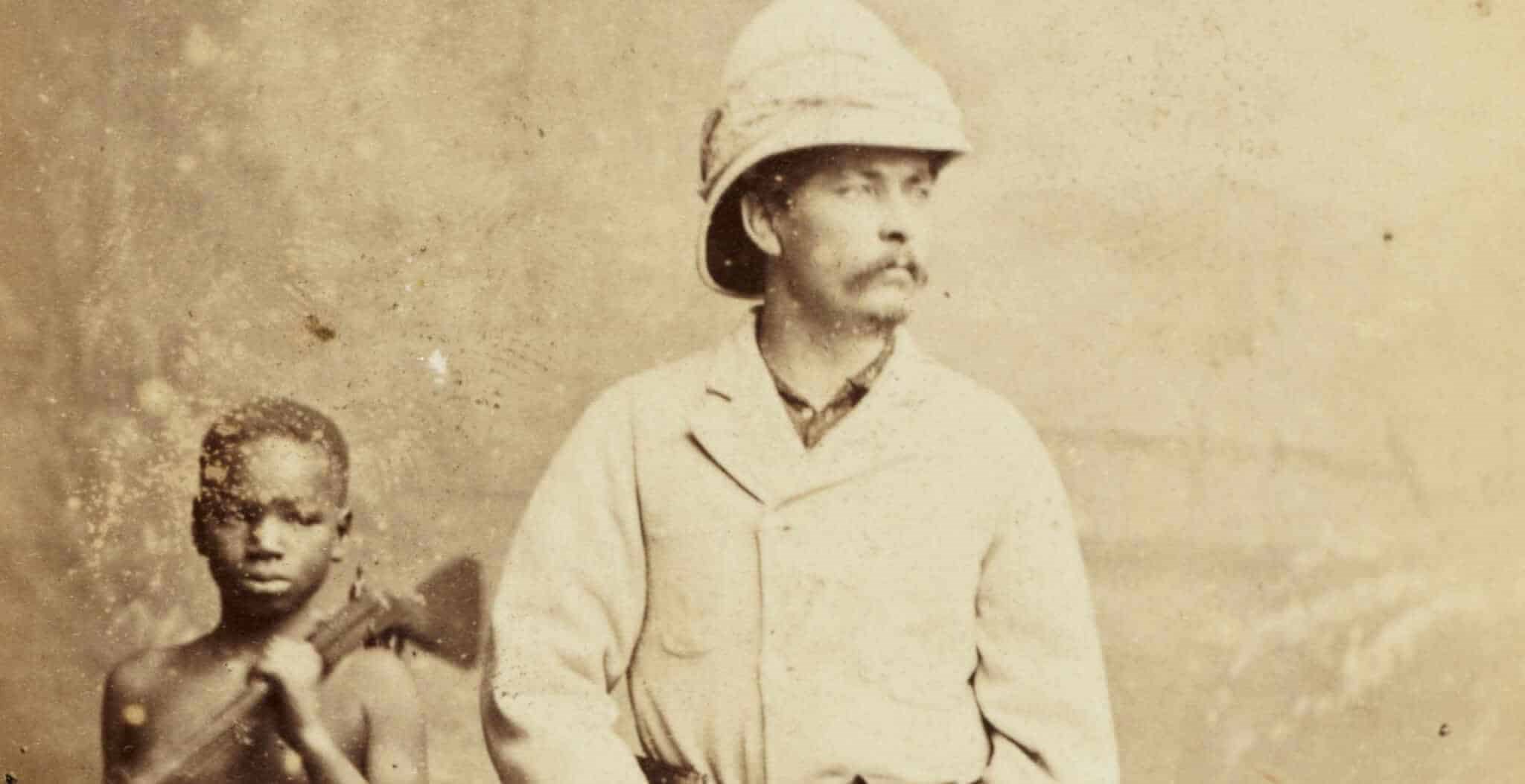
Henry Morton Stanley
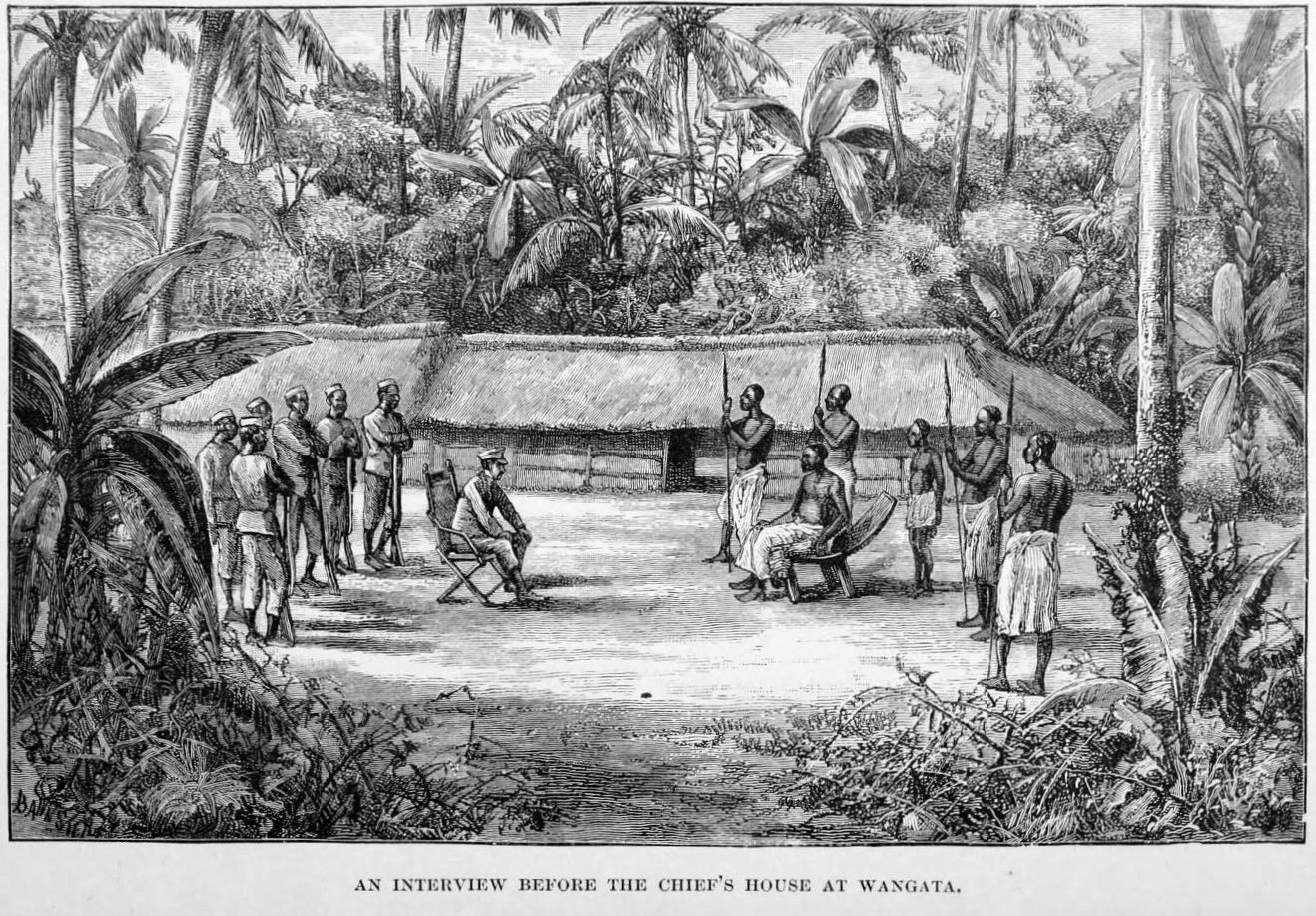
Stanley meeting with a native chief
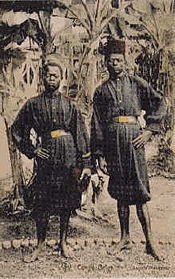
Soldiers of the Force Publique
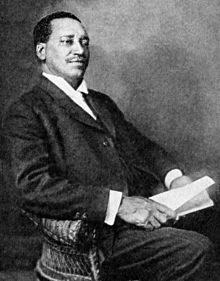
William Sheppard
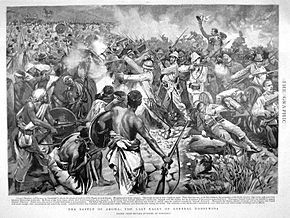
Battle of Adowa
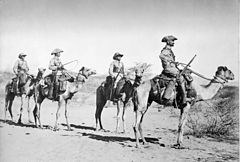
Germany, like other European powers, enthusiastically entered into the scramble for Africa at the close of the 19th century. In 1882, German imperialists organized the Colonial League to lobby the German government to establish overseas colonies. Bismarck at this time was not personally interested in obtaining such colonies, but he realized that strong support for this enterprise existed in the Reichstag, the German parliament, whose votes he needed to secure funding for the German military. Consequently in 1884 Germany began acquiring control of Togo and Cameroon in West Africa as well as German East Africa (Tanzania) and German Southwest Africa (Namibia). Unlike Bismarck, the new German emperor, William II, was an avid supporter of German colonial expansion and enlarging the German navy. In 1897 with the Kaiser's approval, Germany began a massive expansion of its navy with the production of a host of new battleships. The emperor's well publicized enthusiasm for the German navy and empire was very worrisome to the British government which took special pride in its status as the world's dominant sea power. Germany and the United Kingdom came to clash over their territorial claims in South Africa.
The Dutch United Provinces in 1652 established a colony at Capetown at the tip of South Africa to provide a rest stop for Dutch ships sailing from the Netherlands to the Dutch East Indies (modern Indonesia). The German, Dutch, and French Huguenot colonists in this colony over time developed their own distinct language (Afrikaner) and became known as Boers (farmers) since the colonists raised crops to provide supplies for the ships that stopped there. In 1806, British forces during the Napoleonic Wars seized control of the colony since the Kingdom of Holland at this time was allied with France. The Boers were unhappy with British rule because of their resentment toward the use the English language by the British colonial government. They were also opposed to the abolition of slavery in 1834 across the British Empire since Boers owned slaves as agricultural laborers on their farms. In the 1830's the Boers migrated northward into the interior of South Africa in the "Great Trek" and founded the Independent republics, the Orange Free State and the Transvaal Republic. In their new settlements the Boers faced wars with the African Zulu Empire, which had just recently formed under its ruler Shaka Zulu (1787 - 1828). In 1872 the British Parliament granted autonomy to the Capetown colony and created the Federation of South Africa, just like it had done previously in Canada in 1867 with the creation of the Dominion of Canada. The British government hoped that the independent Boer republics would join this new federation to obtain military assistance against the Zulus, whose empire also threatened the Capetown colony. The Boer republics, however, refused to join. In 1880 -1881 the United Kingdom attempted to annex the Transvaal by force in the First Boer War, but the Boers successfully resisted and remained independent.
During the scramble for Africa, the British government especially desired to incorporate the Boer republics into the British Empire. A major advocate of the expansion of the British Empire in Africa was Cecil Rhodes (1853-1902), who became the Prime Minister of the Capetown colony in 1890. Rhodes, the son of an Anglican minister, arrived in Capetown in 1870 from England, and over the next several decades made his fortune in diamond and gold mines. In 1889 Rhodes secured a charter from the British Parliament to create the British South Africa Company, whose purpose was to establish new colonies and plant English colonists in what became in the 1890's Rhodesia (modern Zimbabwe and Zambia). Rhodes also desired to absorb the Boer republics, especially after the the discovery of gold and the "gold rush" in the Transvaal in the 1880's. In 1895, Rhodes supported the Jameson Raid by troops from Capetown into Transvaal under the command of Leander Jameson. The purpose of the raid was to start a rebellion among the many Uitlanders ("foreigners") who had flooded Transvaal since the onset of the gold rush since these immigrants were intensely disliked by the Boers. Rhodes hoped that a rebellion would topple the government of this republic, so that this region could be incorporated into the British Empire. Instead, the raid was a complete failure and the Boer militia was able to capture these troops. Afterwards, William II, the German Kaiser very publicly sent Paul Kruger, the president of the Transvaal Republic his congratulations for this victory. The German emperor reportedly was delighted that the Boers, who were of German "stock", had won a victory over the English, whom the Kaiser reportedly detested (his mother was English). The British government and public was outraged that the German emperor supported the Boers, especially since the German government had territorial interests in South Africa with their claim to the territory of German Southwest Africa.
Following this international incident, the British government agreed to recognize German claims to German Southwest Africa in 1897 in exchange for the German government not supporting or aiding the Boer republics. The German government hoped to settle Southwest Africa with thousands of German settlers. When the native Herero and Nama peoples attacked these settlers in 1904, the German government sent troops to the region. The German forces crushed these peoples and massacred perhaps as many as 75,000 people from these two ethnic groups. With the Germans busy with their new colony, the British government declared war on the Boer republics in 1899 on the grounds that these governments were persecuting the Uitlanders. The (second) Boer War (1899 -1902) ended in a victory for the United Kingdom and the conquest of the Boer republics, but at a great cost. The Boers resorted to guerrilla warfare with constant hit and run attacks to fight the numerically superior British forces, which numbered over 400,000 troops. The Boer militia was an effective fighting force and over 22000 British troops died during this conflict, although many of these soldiers died of disease rather than in battle. To weaken the Boer militia, the British army placed many Boer families, including woman and children in concentration camps to prevent them from providing food and supplies to the Boer army. Newspapers across Europe described the tragedy of these starving woman and children in these camps, and public opinion worldwide turned against the United Kingdom. Unfortunately, the European and American press didn't spend any time revealing the later massacres of the Nama and Herero woman and children by the Germans, probably because they were not white and blonde like the Boers. The embarrassed British government in the end sought to win over the Boers through concessions to bring about a swift conclusion to the war. Following the war's conclusion, the new Union of South Africa in 1910, which included the Boer republics, was set up to concentrate political power in the hands of the Boers even though they were a minority in the total population. Overall, this war left a bad taste in the mouths of the British public and hostility towards Germany for their earlier support for the Boer republics.
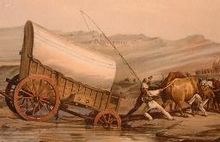
Boers in the "Great Trek"
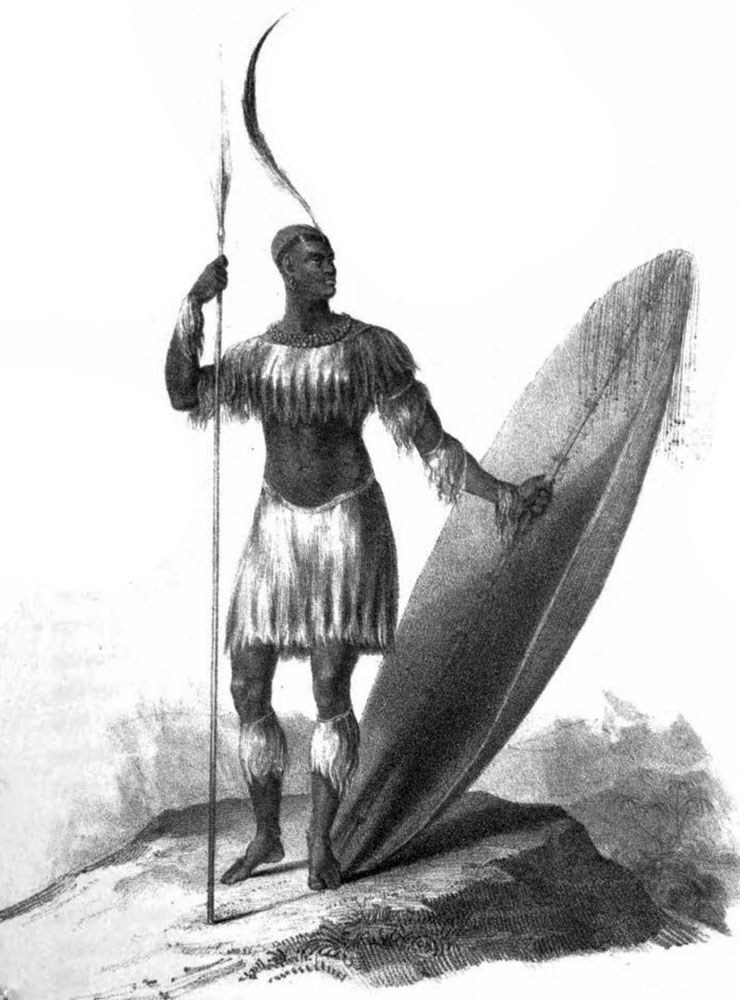
Shaka Zulu
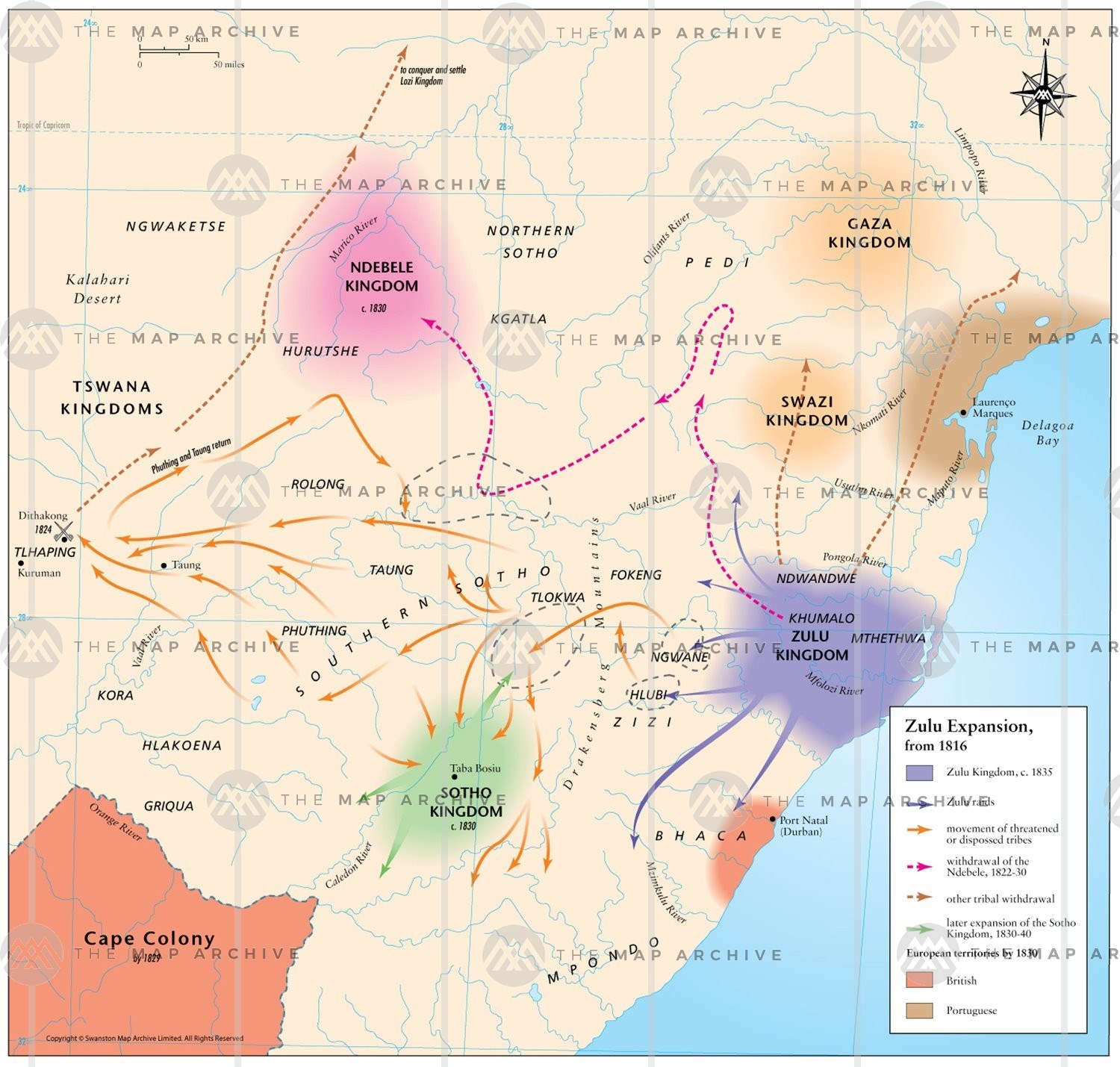
Expansion of the Zulu Empire
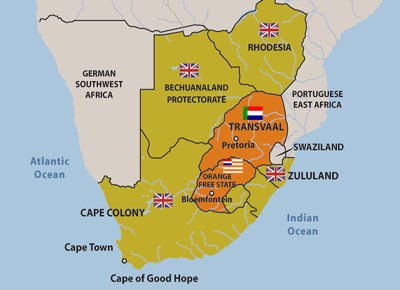
South Africa during the Boer War
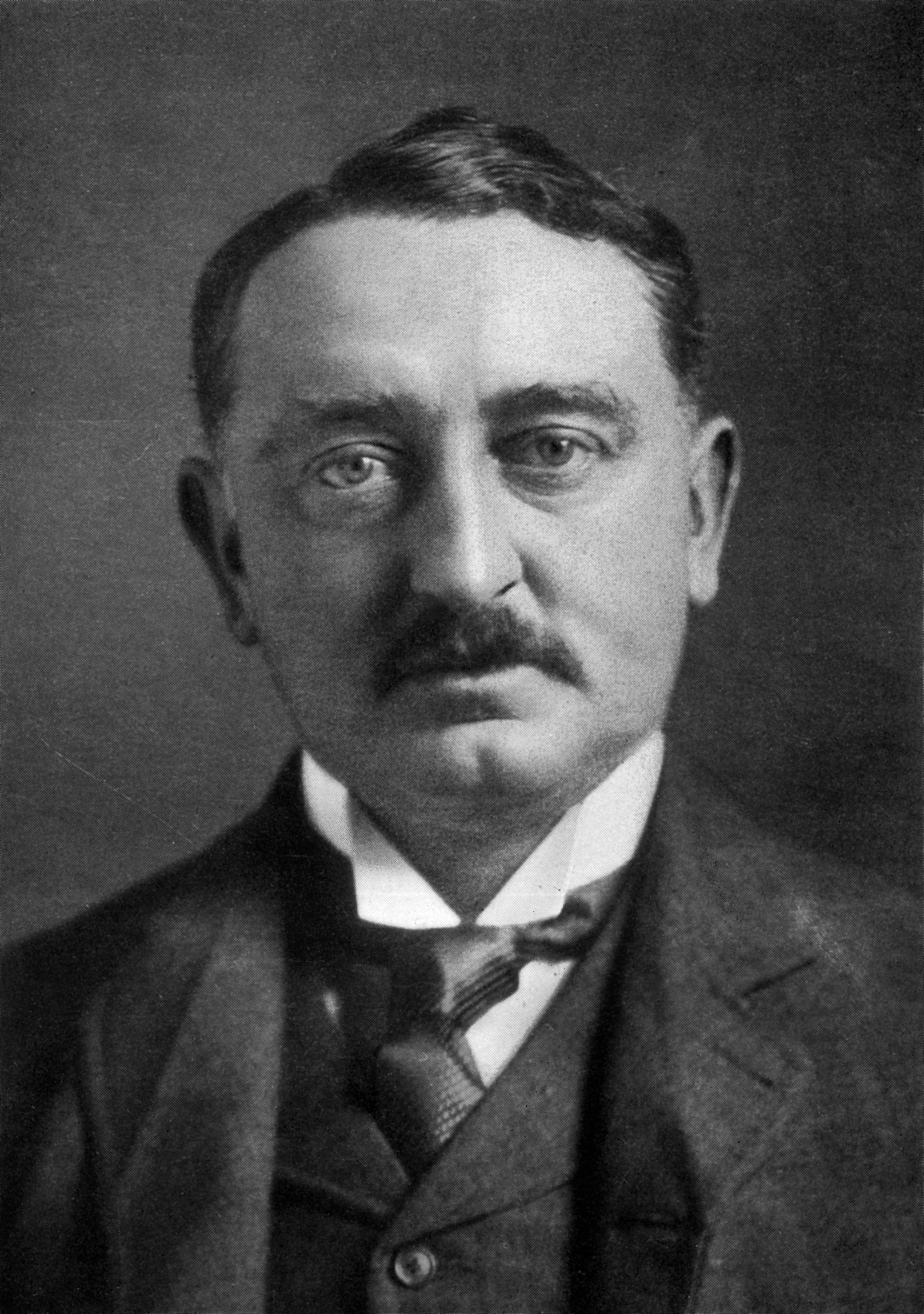
Cecil Rhodes
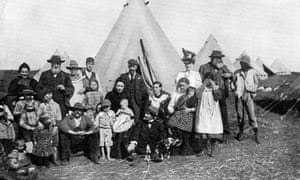
Boers in concentration camp