Imperialism: The Race for Asia
Modern World21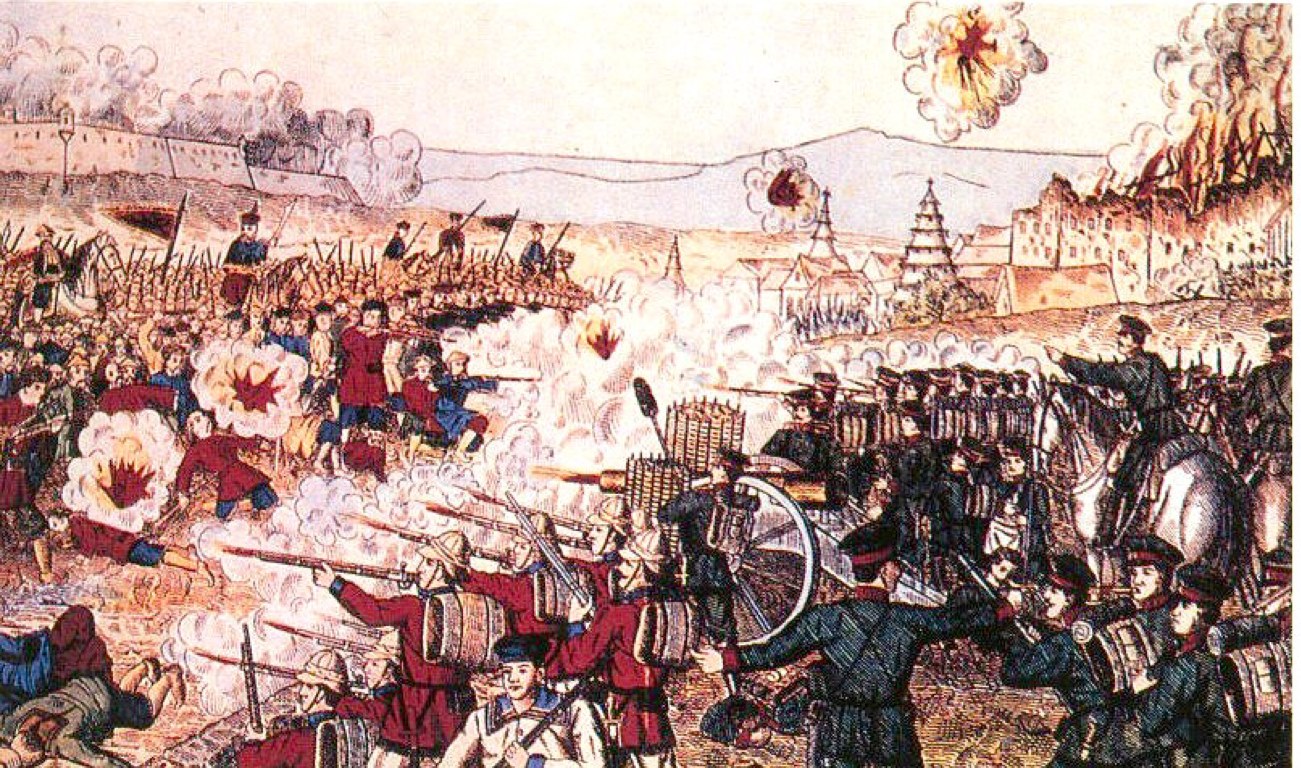
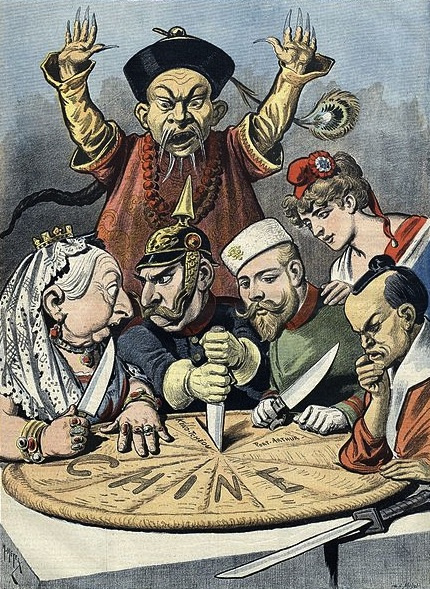
During the era of "new" Imperialism at the close of the 19th century, the great European powers, including the United Kingdom, France, Russia. and Germany, as well as the United States all competed for influence and territory in Asia and in China in particular, as the weakened Qing Dynasty of China faced destructive internal rebellions. In the late 19th century Japan underwent rapid industrialization and emerged as a major economic and military power that even joined this race to win influence and territory in China. Even though the United Kingdom was a rival to both France and Russia for control of territory in Asia, ultimately, the United Kingdom chose to set aside not only its differences with France with the Entente Cordiale in 1904, but also with Russia with the signing of a secret Anglo- Russian Entente in 1907, due primarily to British fears regarding Germany's rapid rise as a naval and imperial power. Consequently during World War I Germany would fight a prolonged two front war against both French and British forces along the "Western Front" and against the Russian army along the "Eastern Front".
During the 19th century the Russian Empire steadily expanded eastward across Asia, often employing the Cossacks of the Ukraine as both soldiers and settlers. In northeast Asia, Russia continued to colonize Siberia. In 1891 with assistance from French investors, the Russian government began construction of the Trans-Siberian Railway to run eastwards across Siberia all the way to the port of Vladivostok on the Pacific Ocean. In 1867 the Russian government forcibly removed over a million Muslim Circassians from the mountainous Caucasus region (the area between the Caspian and Black Seas), and settled Cossacks in their place. Many of these Circassians subsequently settled within the Ottoman Empire in what is today the countries of Jordan and Syria. In the 1860's and 1870's, Russian forces subdued the various Khanates who ruled over the Uzbecks, such as the Khanate of Khiva in 1873, and established protectorates over these local rulers. After 1863, the Russian Empire also began annexing the Kazakh Khanate, which had ruled over the Mongol-Turkish Kazakh tribes since the 15th century. Cossacks subsequently settled in large numbers both Uzbekistan and Kazakhstan.
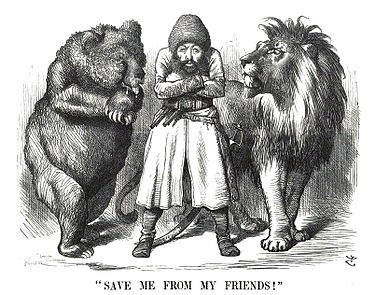
This expansion of the Russian Empire into Central Asia in the 19th century placed Russia on a collision course with the British Empire in India in Afghanistan. Historians have referred to the rivalry between these two empires in this region as "The Great Game" The Pashtuns were Iranian tribes that inhabited the Hindu Kush Mountains that separated Afghanistan from British India. The warlike Pashtuns often conducted raids into British India. In an effort to pacify this area and stop Russian influence in Afghanistan, the British East India Company in 1838 in alliance with the Sikh Empire in the Punjab sent its troops to restore Shah Shujah as Emir or "Prince" of Afghanistan since he had been recently overthrown by the pro-Russian warlord Dost Mohammad. This British expedition ended in disaster in 1841, and the British East India Company withdrew its forces from Afghanistan. In 1878, the Emir of Afghanistan, Sher Ali Khan, the son of Dost Mohammed, enjoyed friendly relations with Russia. In response the British government declared war on Afghanistan. In 1880, British forces successfully installed this Emir's nephew, Abdur Rahman Khan (r. 1880 -1901) as the new pro-British Emir. In 1885 Russian forces in opposition to this new Emir, briefly entered Afghanistan. Fighting between Afghan and Russian forces resulted in discussions of war between Russia and the United Kingdom. But Russian forces withdrew from the region, and war was averted.
In Southeast Asia, the United Kingdom competed with France for control and influence. In 1884 France declared war on China after the Chinese government opposed French efforts to annex Tonkin in North Vietnam. In 1885 the two states signed the Treaty of Tientsin in which China recognized French control over Tonkin. By 1887 France had established protectorates over Vietnam, Cambodia, and Laos, with native rulers nominally in power. This whole areas became known as French Indochina.To the west of this region, British forces annexed Burma (modern Myanmar) in 1885. Under king Bodawpaya (r. 1782 - 1819) of the Konbaung Dynasty, Burma had annexed territory bordering British India. Consequently, British forces attacked Burma in 1824 and again in 1852, forcing Burma to withdraw from these lands. In 1885, after the French annexation of Tonkin, the British army moved swiftly and occupied all of Burma, thereby ending the Konbaung Dynasty. The Kingdom of Siam, (modern Thailand) was under pressure from France, and French forces briefly invaded and occupied portions of the kingdom in 1893. The king of Siam, Rama V (r. 1873 -1910) of the Chakri Dynasty, however, appealed to other European nations such as the United Kingdom to preserve the independence of Siam. Since Rama had reformed his government based on European models, European states sympathized with the plight of the country. In 1896 France and the United Kingdom agreed that Siam should remain independent as a buffer state between their respective territories in Southeast Asia
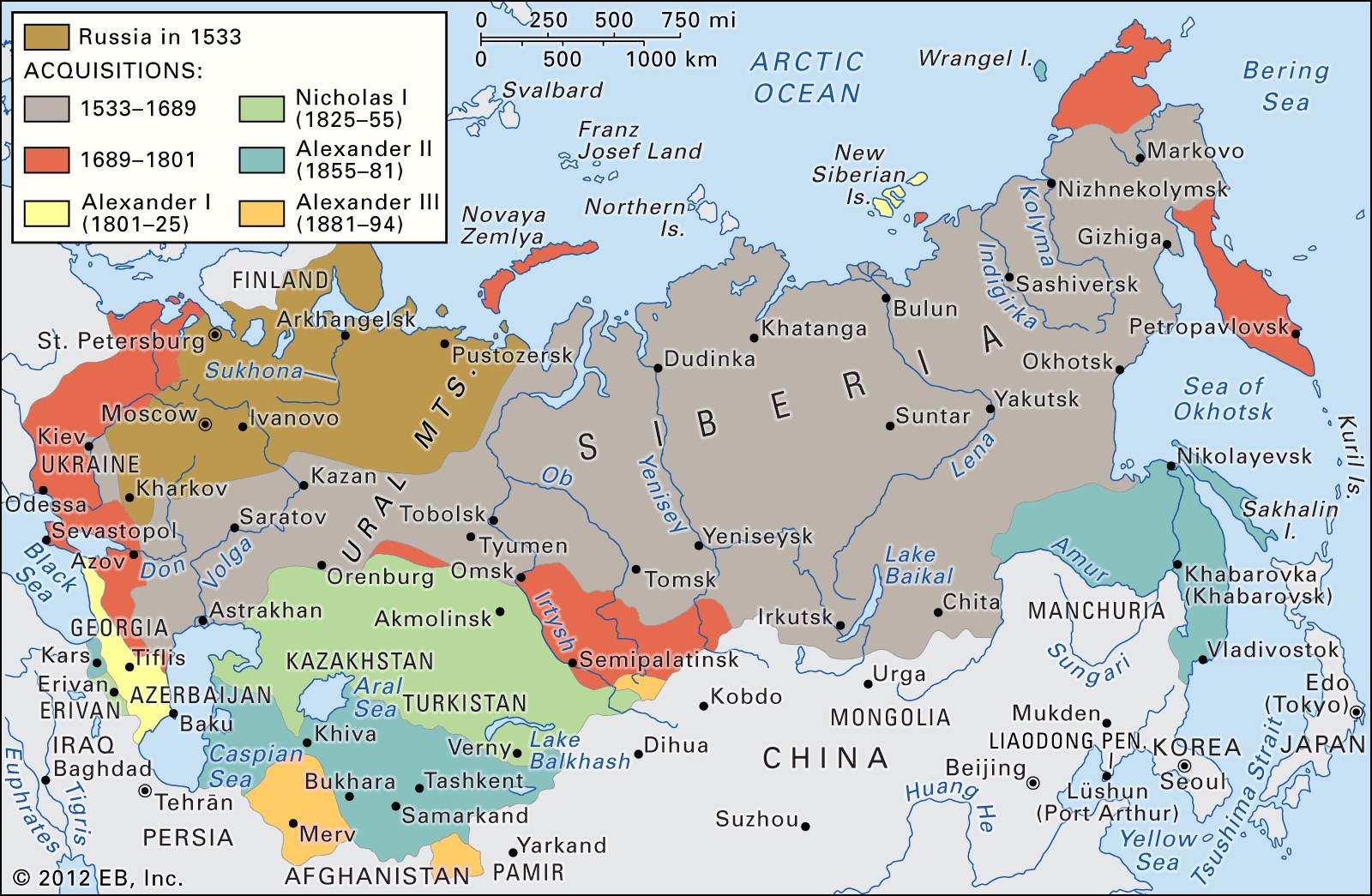
Russian Expansion
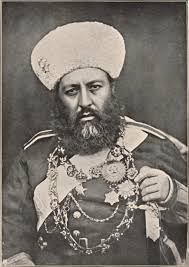
Abdur Rahman Khan, Emir of Afghanistan
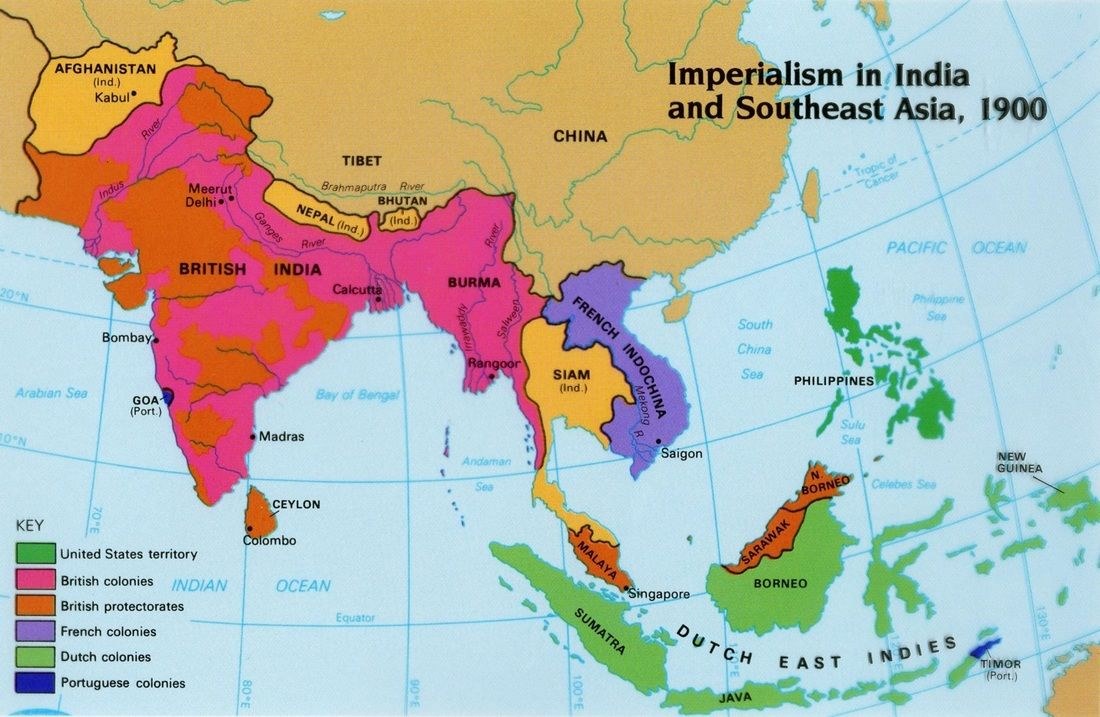
Southeast Asia in 1900
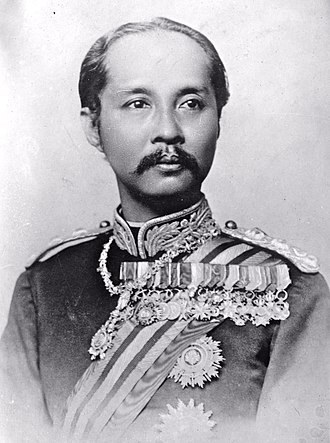
Rama V, king of Siam
The 19th century in China under the Qing Dynasty was a period of foreign war, internal rebellions, and ineffective government. The imperialist powers in their competition with each other viewed China's weakness by the end of this century as an opportunity to acquire territory and economic advantages for themselves. The Qing emperor, Daoguang (1820 - 1850) was a very conservative ruler, who, in the spirit of traditional Confucianism, looked with distaste and distrust upon foreign trade and foreigners in general with their strange ways. This emperor was also an incompetent administrator in a bureaucratic system where political power was concentrated in the hands of the emperor and his ministers. Due to his traditional outlook, Daoguang understandably banned the importation of opium by British merchants. But due in part to his incompetence, the Chinese military performed poorly in the First Opium War against the United Kingdom. This humiliating defeat at the hands of a foreign power stirred up concerns among the Chinese people that the Qing Dynasty had lost the Mandate of Heaven. During the reign of the next emperor, Xianfeng (r. 1850 -1861), the Qing Dynasty faced a massive rebellion and civil war known as the Taiping Rebellion (1851 -1864). This rebellion began when a certain Hong Xiuquan proclaimed himself to be the new emperor of China and assumed the title of Tianwang ("Heavenly King"). Hong Xiuquan claimed that heavenly visions had revealed to him that he was the younger brother of Jesus Christ. Hong Xiaquan proclaimed that he would bring about a new China that would be a "Heavenly Kingdom of Great Peace" (Taiping Tianguo). In his teachings, Hong Xiaquan combined Christian doctrines, which European and American Christian missionaries in China were circulating, with traditional Confucianism, as Hong Xiaquan had earlier studied Confucianism to become a Chun-Tzu or "gentleman", but had failed the examinations to enter the Chinese bureaucracy. Across southern China in the Yangtze River valley, many impoverished Chinese peasants rallied in support of this new emperor, and his army by 1853 numbered over a million men. Much of northern China and the Chinese capital of Beijing, however, remained under the control of the Qing Dynasty. The Chun-Tzu in China, the traditional, aristocratic elite in Chinese society, supported the Qing Dynasty in this struggle since they strongly opposed the unorthodox teachings of Hong Xiaquan. In 1864 the Qing army captured Nanjing, which Hong Xiaquan had made his capital and seat of government, and Hong Xiaquan committed suicide, resulting in the collapse of this rebellion. Over the course of this rebellion, an estimated twenty million people lost their lives.
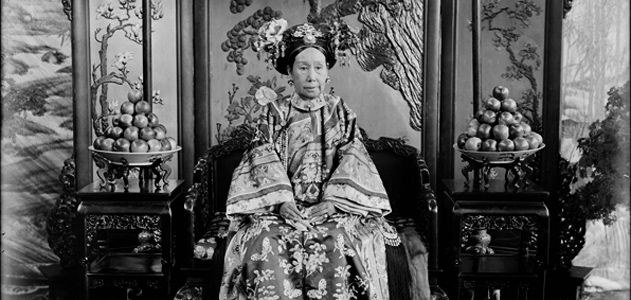
In the second half of the 19th century, the ruler of China was the notorious "Dowager Empress", Tzu Hsi (Cixi) (r. 1861 - 1908). In her own time, foreign observers denounced Cixi as a wicked, manipulative, power-hungry woman, who lived a life of luxury and ease, while her empire collapsed under the weight of her corrupt and oppressive regime. Historians more recently, however, have praised Cixi for her valiant efforts to hold the empire together in the face of foreign pressure. Upon the death of her husband, the emperor Xianfeng in 1861, Cixi became the regent for their young son, Tongzhi (1861 -1875). Tongzhi, however, died in 1875, aged only 20, without any son to succeed him on the throne. Cixi therefore arranged for her four year old nephew, Guangxu (r. 1875 - 1908) to become the new emperor, while she continued to serve as regent. After Guangxu reached adulthood and officially assumed the throne in 1889, this emperor in 1898 announced his plans for the radical reform of the Chinese government and society with his Hundred Days Reform. The emperor's vision included the transformation of the Qing Empire into a European style constitutional monarchy and the establishment of an educational system that emphasized the study of European science and technology. The emperor's plans faced fierce opposition from conservative bureaucrats in the Chinese government. Cixi therefore had her nephew arrested in 1898 and imprisoned until his death in 1908, so that his planned reforms were not carried out.
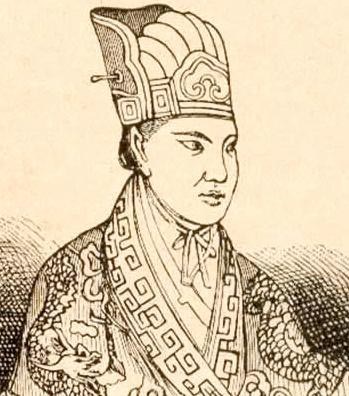
Hong Xiuquan
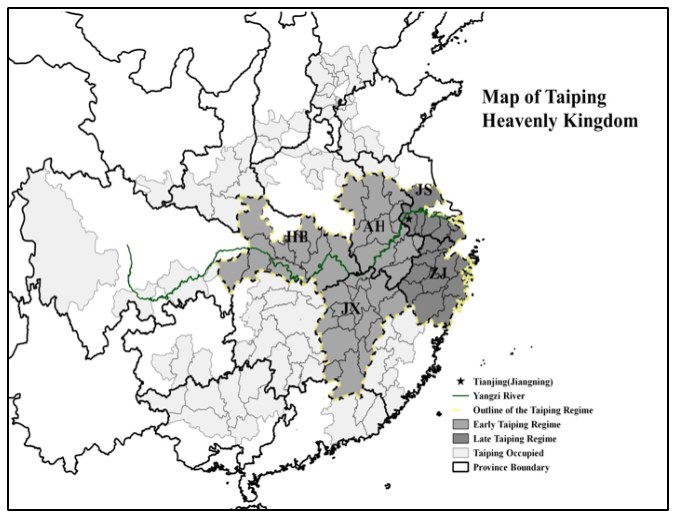
The Taiping Kingdom
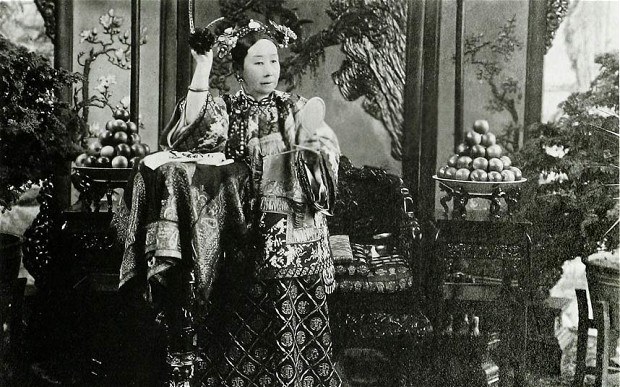
Cixi, the "Dowager Empress"
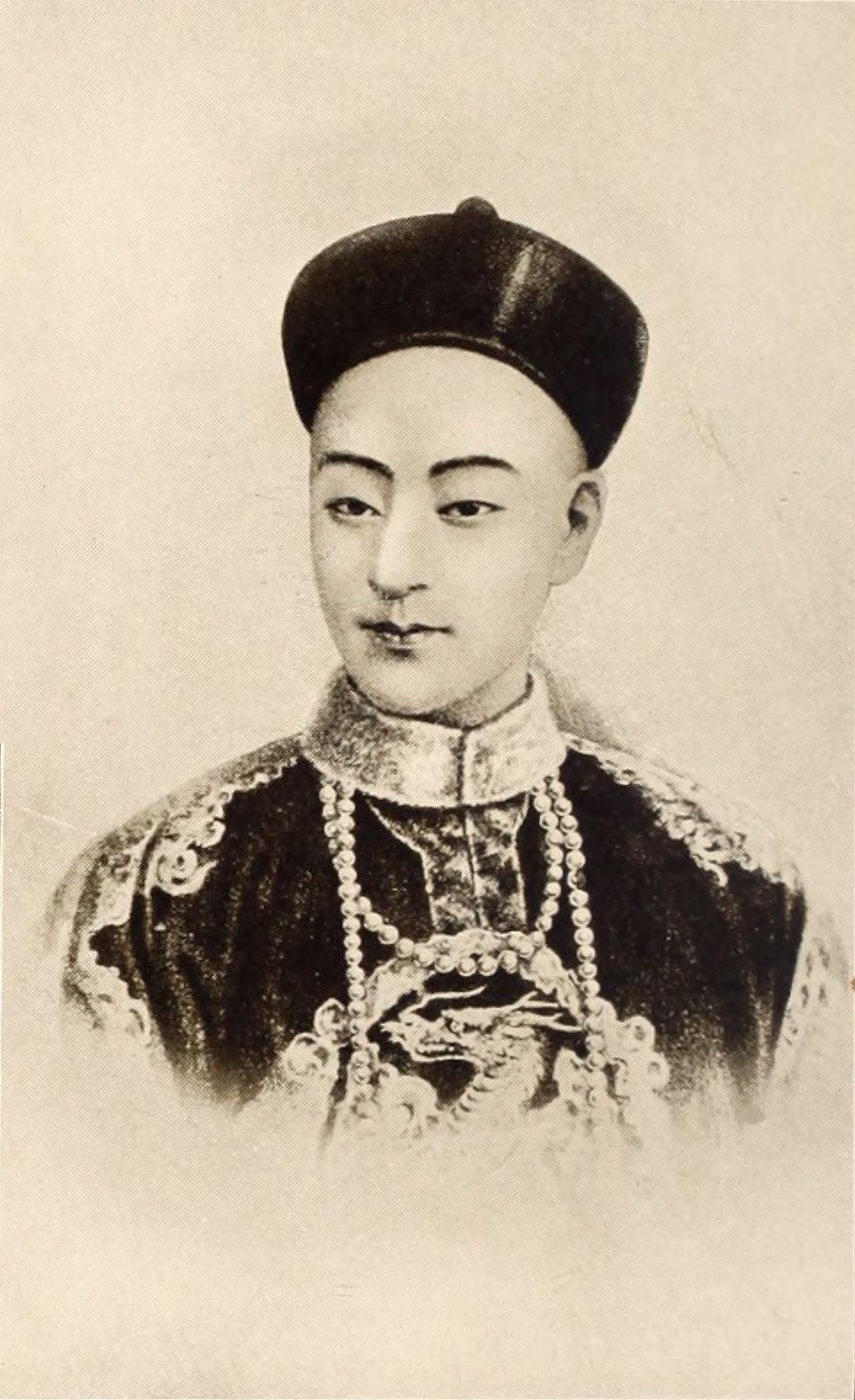
Emperor Guangxu
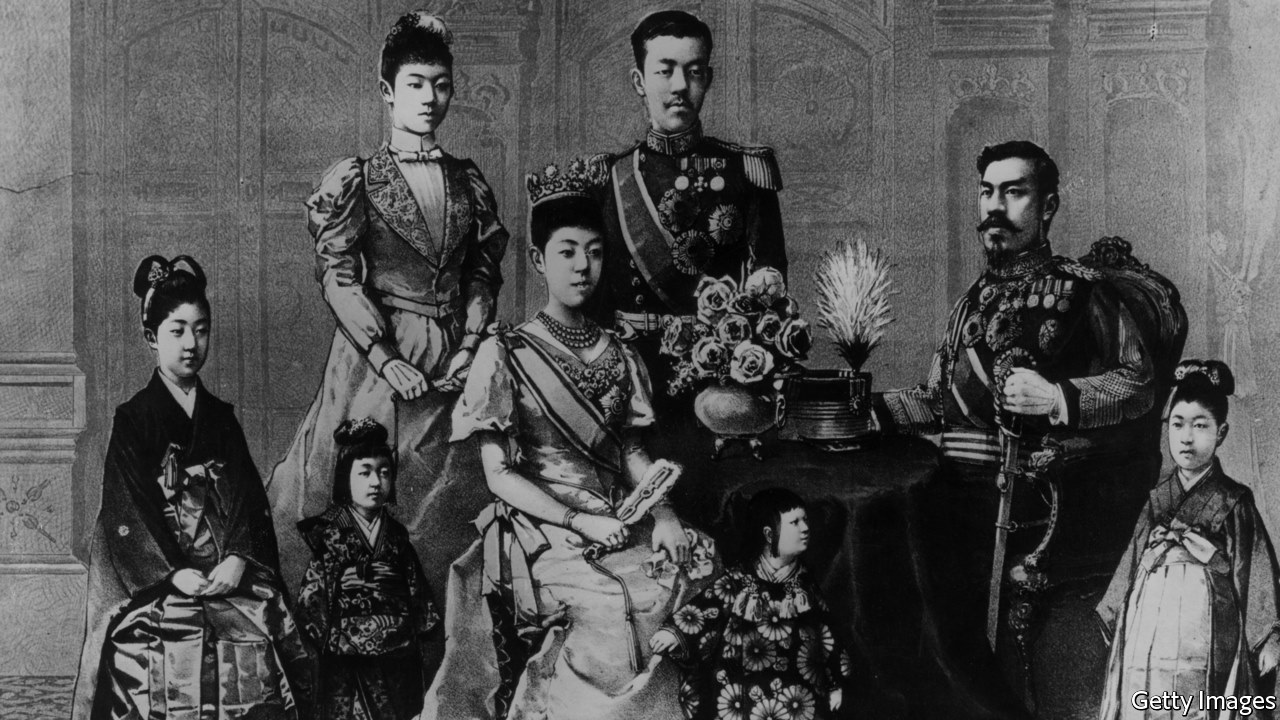
In contrast to the Chinese government's resistance and opposition to European (Western) ideas, Japan willingly embraced "westernization", while still maintaining their most cherished, ancient institutions and beliefs, as a result of the Meiji Restoration in 1868. Since the 17th century, the Tokugawa Shogunate had governed in Japan and isolated Japan largely from foreign contact and trade. In 1853 Matthew Perry, a Commodore in the United States Navy, arrived in a Japan with a fleet of ships under his command under orders from the President to open forcibly Japanese ports to American trade. The success of Perry's mission worried many members of the Japanese government, who feared that Japan may suffer the same fate as China, which had recently been humiliated by the United Kingdom in the First Opium War and forced to cede territory and open up its ports to European trade. These government officials became convinced that Japan must westernize to avoid foreign domination.Many of these Japanese officials were from the elite Samurai warrior class, who had served as bureaucrats under the Tokugawa Shogunate, such as Ito Hirobumi (1841 - 1909), who would later serve as the first prime minister under Japan's reformed, westernized government. In 1867, a group of these reformist Samurai bureaucrats forced the last Tokugawa Shogun, Tokugawa Yoshinobu to abdicate. The following year in 1868 the new regime announced that the young Japanese emperor, Meiji (r. 1867 - 1912) was assuming full power and authority in the government, as did previous Japanese emperors centuries earlier in the days prior to the establishment of the Shogunate.
In the decades following the Meiji Restoration, this new government sent observers to Western Europe and the United States to gather information on the government bureaucracy, military, industry, and educational institutions of these "western" states. The Japanese government then used this data to reform its own government, military, and economy. For example, since large trusts and cartels dominated the economy in the two of the largest industrialized economies, the United States and Germany, the Japanese government encouraged Japanese merchants to organize large corporations (Zaibatsu) which could amass the necessary capital to construct new factories and railroads in Japan. In 1889 Japan formally adopted a Liberal written constitution, which was modeled after Bismarck's 1871 German Constitution, except that in Japan only citizens with landed property could vote. Under this constitution, the prime minister and the Japanese military, whose officers were from the Samurai class, answered only to the Japanese emperor rather than to the elected bicameral legislature or Diet, just as the German Chancellor and German army, whose officers were largely from the class of Prussian Junkers, answered only to the Kaiser. Even though the Japanese government to a large degree "westernized" Japan, this government still maintained and strongly supported the ancient and traditional Shinto religion and cultivated great reverence among the Japanese people for the emperor, who performed Shinto rituals. Nonetheless in 1877 disaffected, conservative Samurai rebelled against this government and its reforms in the Satsuma Rebellion. However, the newly reformed Japanese national army, trained and equipped according to western military standards, crushed this uprising.
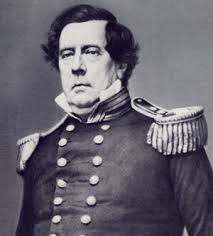
Matthew Perry
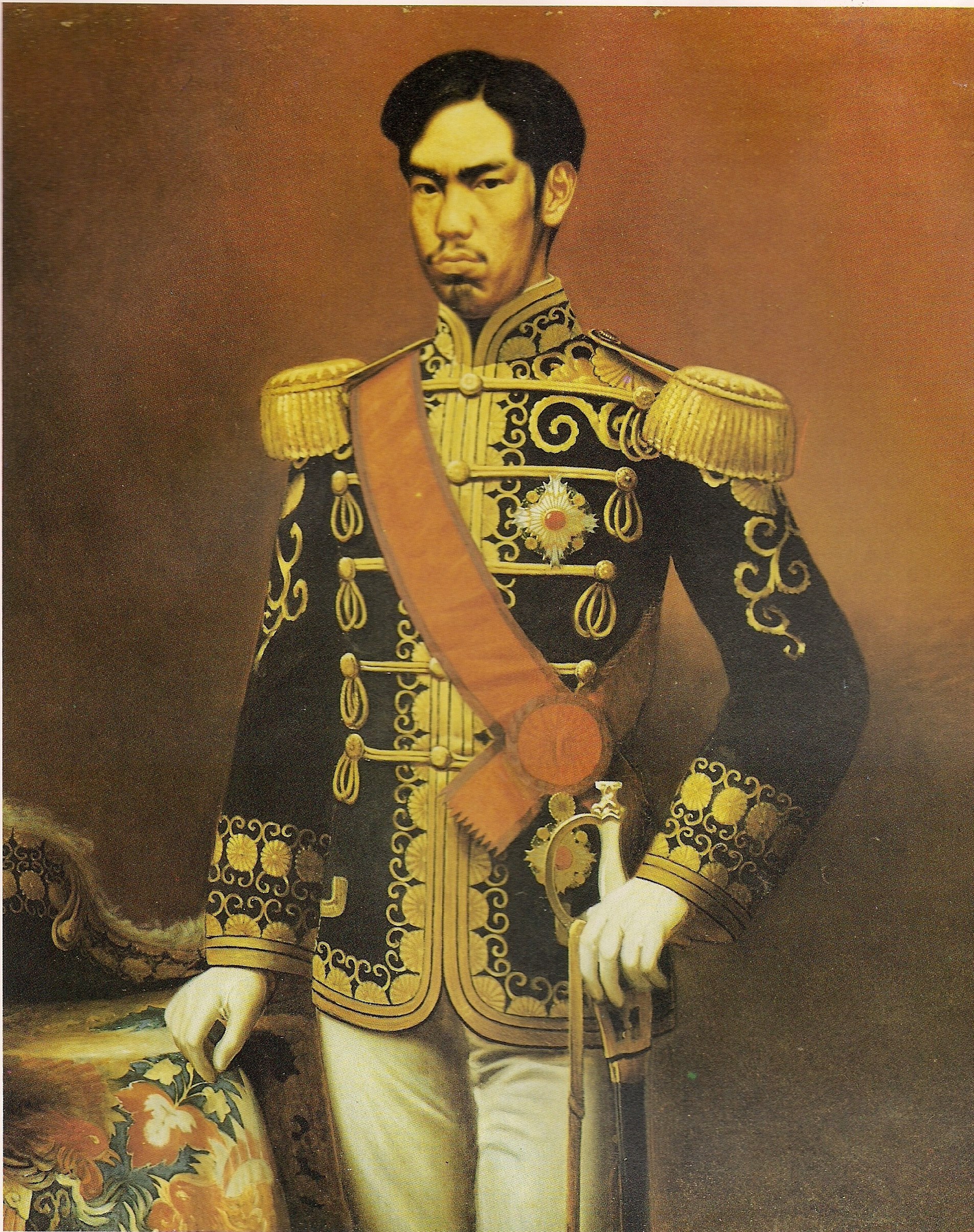
The Emperor Meiji
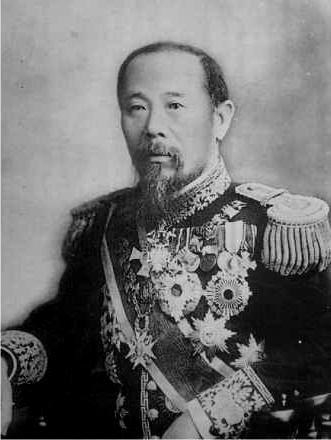
Ito Hirobumi
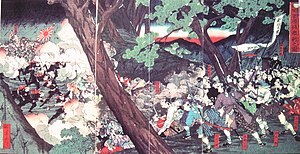
The Satsuma Rebellion
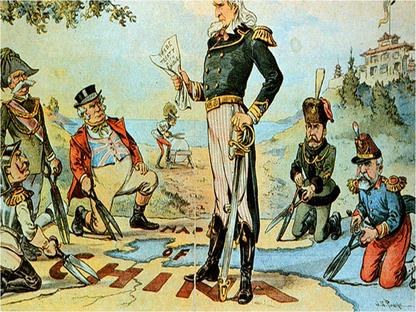
In the 1890's the competition among imperial powers for territory and economic influence in China intensified, as Japan entered into this race. The Japanese government, just like western states, viewed the acquisition of overseas territory as vital for the survival and honor of the nation. In 1894 Japan went to war against China to establish a protectorate over Korea under the Joseon Dynasty since the Korean kingdom was then a vassal state of Qing China. Under the 1895 Treaty of Shimonoseki that ended this First Sino- Japanese War, China recognized the "independence" of Korea, and ceded the island of Formosa (modern Taiwan) to Japan. Following Japan's success in forcing China to make territorial concessions, both Russia and Germany occupied Chinese territory. In 1898, Russia pressured China into ceding the Liaodong Peninsula in northern China, so that Russia could construct a new railway line linking Siberia to the port of Lushun, which Europeans had renamed Port Arthur. German troops in 1898 occupied Kiaochow and the Shandong Peninsula in northern China, ostensibly to protect Germans working in China after the brutal murder of two German Roman Catholic priests in that region.
The United Kingdom, who already controlled the port of Hong Kong in China, at this point appealed to other powers not to divide China further into "spheres of influence". Instead, the United Kingdom advocated for an "Open Door Policy" in regards to China, so that all foreign powers could conduct trade equally with an independent China. In 1898 the United Kingdom found an ally for this policy for China in the United States, which had just become a major power in Asia as a result of the Spanish-American War. In 1898 The United States went to war against Spain to help the Caribbean island of Cuba win its independence from Spain. The American public had been outraged by reports of atrocities committed by Spanish troops in concentration camps in Cuba holding Cuban rebels. According to the terms of the 1898 Treaty of Paris that ended this brief war, Spain recognized the independence of Cuba and ceded to the United States the Caribbean island of Puerto Rico as well as the Pacific Island of Guam and the Philippines in southeast Asia. In that same year, the United States annexed the former Kingdom of Hawaii. (Ironically, the United States placed rebels in the Philippines in concentration camps during the Philippine-American War (1899-1902) when the United States crushed efforts under the leadership of Emilio Aguinaldo (1869 -1964) to create an independent republic of the Philippines.)
Many Chinese by the 1890's were alarmed by the rising number of foreigners, including both Europeans and Americans, flooding their country to conduct business and work as missionaries. The imperialist powers forced China by treaty to grant their citizens living in China extraterritorial rights, so that they were not subject to local Chinese laws. Many Chinese were infuriated that these foreigners were thus effectively above the law. Beginning in 1896, Chinese nationalists organized a secret society, the Yihequan or the "Righteous and Harmonious Fists" across China. Europeans referred to members of this group as "Boxers" since members of this society regularly practiced martial arts. These Boxers were committed to expelling all foreigners from China. They often brutally assaulted and murdered Christian missionaries and Chinese converts to Christianity since they viewed Christianity as an offensive assault on Chinese traditional religion. By 1900 the Empress Cixi was secretly providing financial support for these Boxers as she approved of their activities. In that same year, the Boxers occupied the foreign embassies in the Chinese capital of Beijing in the so-called Boxer Rebellion. In response, European and American forces quickly captured and occupied Beijing. In 1901 European and American governments compelled the Chinese Empire to pay them reparations for their losses in life and property due to the Boxer Rebellion. Moreover, Russian forces occupied Manchuria, which was the ancestral home of the Qing Dynasty.
During this competition for China, the United Kingdom was especially worried by the aggressive moves by Germany, especially since Germany at this time was rapidly expanding its navy. In 1902, Japan and the United Kingdom formed an Anglo-Japanese Alliance. Whereas the United Kingdom saw this alliance as a way to keep German power in the region in check, Japan viewed this alliance as a means to rein in Russian aggression. The United Kingdom, however, secretly negotiated with Russia in 1907 the Anglo-Russian Entente, which was designed to resolve territorial disputes between these two nations in Asia. Russia agreed to accept a British protectorate over Afghanistan, while the United Kingdom would recognize a future Russian protectorate over Tibet, which at that time was still part of the Chinese Qing Empire. The two states agreed to establish a joint protectorate over Persia, which was still ruled by the Qajar Dynasty of Shahs. This agreement set the stage for the outbreak of World War I seven years later.
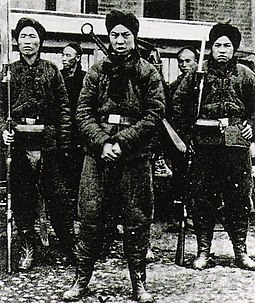
Chinese "Boxers"
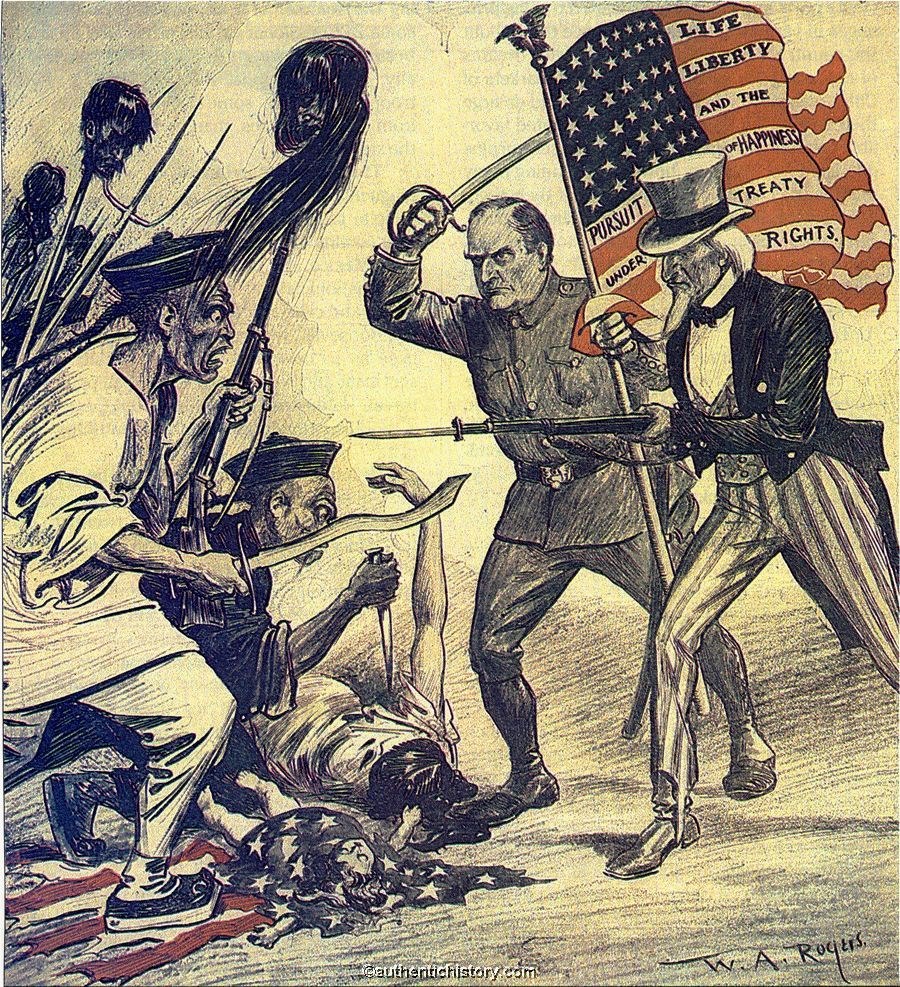
The Boxer Rebellion from an American perspective